✦ AI Summary
Table of Content
▲
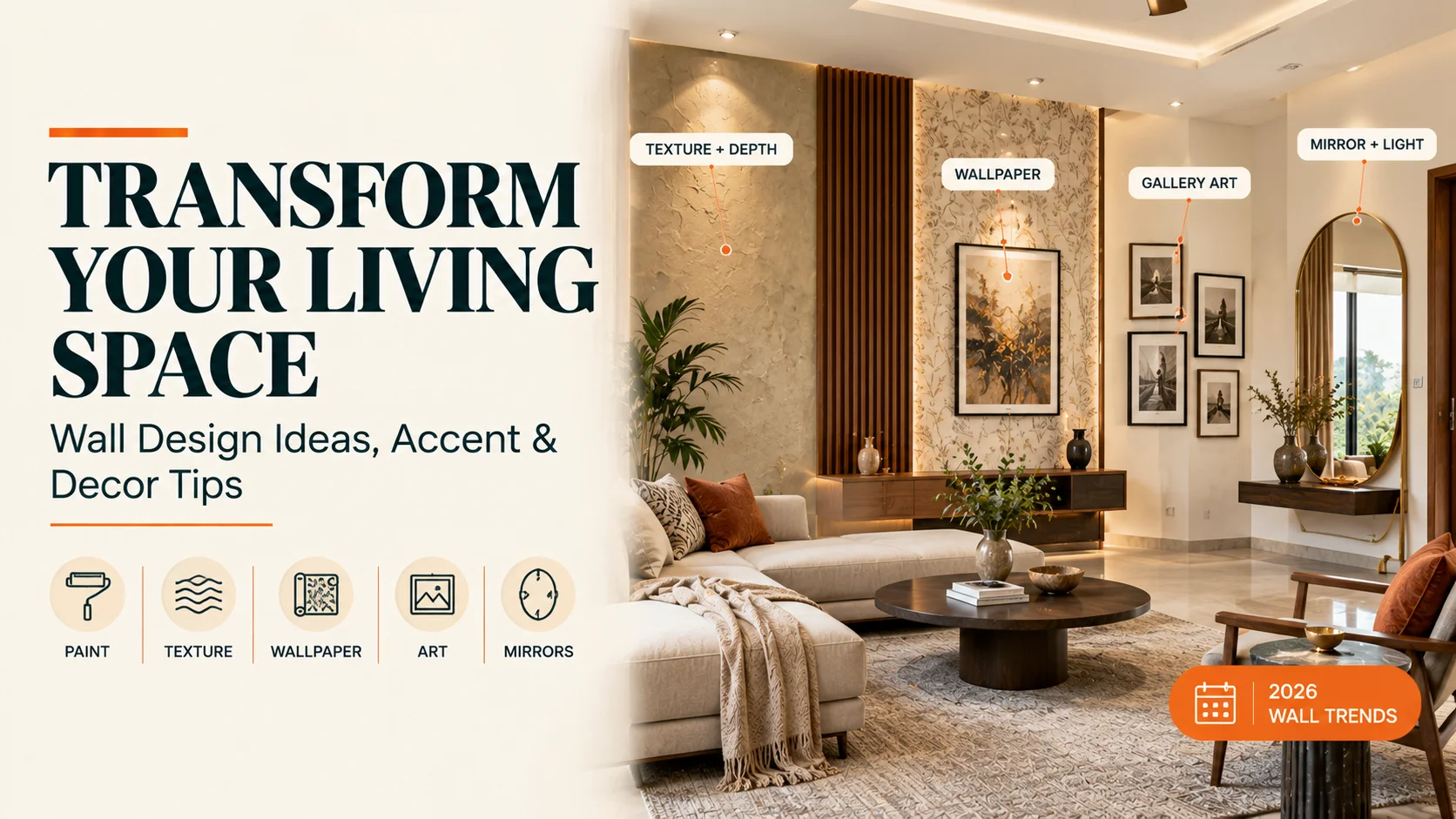
Some of 2026's loudest design commentary has declared the accent wall dead one well-known designer calls it "a lack of commitment," and at least two major design publications have listed it among the trends on their way out. Look closer, though, and what they're actually criticising is one specific version of it: a single wall painted a different flat colour while the other three stay plain. That version genuinely does look dated. Textured, architectural, and layered wall treatments the ones this content set has already covered in depth are doing the opposite, and are exactly what's replacing it.
This piece is your starting point across every major approach: which one fits your wall, budget, and effort level, and where to go for the full detail once you've decided.
Is the Accent Wall Actually Dated?
The distinction matters more than the headline. A flat, single-colour contrast wall with no texture, no architectural detail, and no clear reason for existing reads as an afterthought literally "like you ran out of paint," as one critique puts it. What's genuinely current instead is a wall with texture, depth, or material change: limewash, wood slats, panelling, stone veneer, or a considered wallpaper approaches with a clear job to do (making the room feel warmer, taller, calmer, or more grounded), rather than existing purely as a colour swap.
If you're planning a feature wall in 2026, the practical takeaway is simple: skip the flat single-colour version, and choose one of the textured or architectural approaches below instead.
Choosing Your Approach: A Decision Framework
Paint, including texture and colour-blocking: the most affordable, fastest, and easiest to redo if you're not satisfied with the sensible starting point for a first attempt, a rental, or a tight budget. For genuine texture beyond flat colour, see our dedicated guide on texture paint design ideas for walls, which covers cost tiers from a simple roller finish through to premium plaster.
Wallpaper: delivers the strongest single visual statement, particularly heritage-motif murals or grasscloth-style textures, at a higher upfront cost and less flexibility than paint. Our wallpaper versus paint guide covers the real cost-over-time comparison, humidity considerations, and when each makes more sense.
A dedicated accent wall treatment (wood slats, panelling, a single deliberate colour behind furniture): the classic feature-wall approach, best suited to the wall directly behind your main sofa. Our accent wall ideas guide covers current, India-specific colour and material trends alongside what's already dated.
Art and gallery arrangements: the right choice when you want a personal, evolving display rather than a fixed material change, and don't want to commit to paint or wallpaper at all. Our gallery wall art guide covers the precise height and spacing rules that determine whether this looks curated or accidental.
.jpg)
Mirrors, standalone or in a cluster: genuinely do double duty: decor plus amplified natural light, and is a strong option for a smaller or darker living room. Our mirror wall decor guide covers current shapes, sizing, and, for readers who want it, Vastu-conscious placement.
Choosing between them: if your wall gets direct sun and needs light control more than decoration, lean toward a calmer paint or texture treatment. If the wall is your room's clear focal point (behind the main sofa, facing the entrance), a dedicated accent treatment or wallpaper earns the investment. If you're renting or budget-limited, art, gallery arrangements, and paint are your lowest-risk, most reversible options.
Two Technical Details That Make Any Approach Look Intentional
Two specific, transferable tips apply regardless of which approach you choose, and both are genuinely easy to get wrong.
Match your paint sheen to the technique. A full accent wall in a high-gloss finish reflects every minor surface imperfection in the wall beneath it to preserve gloss and semi-gloss for trim, moulding, or a small textured accent, not a full flat-colour wall.
Wrap the colour or treatment 1-2 inches onto the inside edge of the adjacent walls at the corner. This small detail removes the harsh shadow line that otherwise makes a feature wall look like it stops abruptly rather than being a deliberate design choice, a genuinely simple fix that most first-time DIY attempts miss.

_1792140859.webp)


_1792151285.webp)