
✦ AI Summary
Table of Content
▲- Durability and Lifespan: What Actually Determines How Long Each Lasts
- The VOC and Health Question: What the Marketing on Both Sides Gets Wrong
- Humidity and Room-by-Room Suitability
- DIY vs Professional Installation
- Does It Affect Resale Value or Rental Appeal?
- The Hybrid Approach: Why Not Both?
- A Decision Framework
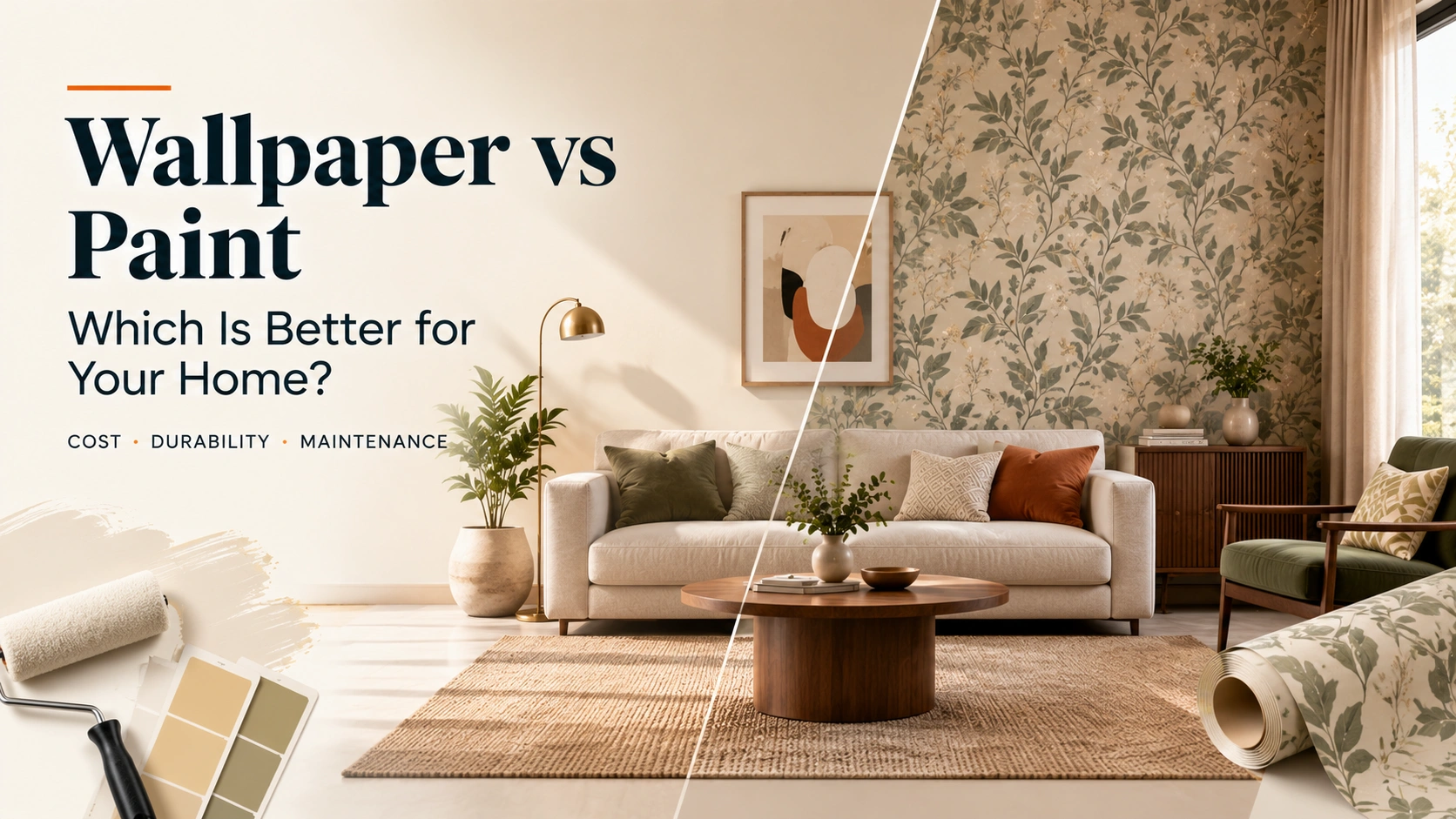
Comparing sticker price alone is misleading, since paint and wallpaper have genuinely different lifespans that change the real, long-term cost picture.
Paint: standard interior emulsion paint in India costs roughly ₹12-35 per sq ft, including material and labour. Good quality emulsion typically lasts 3-5 years before needing a fresh coat, stretching to 5-7 years for premium acrylic paints with proper surface preparation, and some premium exterior paint brands now offer 10-year performance warranties against chipping, peeling, or fading. Real-world lifespan depends heavily on climate and room use: humid conditions, kitchens, and high-traffic areas all shorten the realistic repainting cycle. Homeowners comparing paint options can also explore our guide to choosing the right paint for your home, including room-wise considerations and finish selection.
Wallpaper: costs considerably more upfront, roughly ₹20-150+ per sq ft depending on whether you choose basic or premium designer patterns, plus installation charges commonly around ₹30 per sq ft. In exchange, high-quality wallpaper, particularly vinyl-coated or solid vinyl options, can last 8-10 years, and in well-maintained conditions with proper installation, up to 15 years.
The honest takeaway over an 8-12 year ownership period: paint's lower upfront cost is partly offset by needing two to three repainting cycles across that span, while wallpaper's higher upfront cost may need no replacement at all across the same period if quality and installation are good. Neither is a universal winner on pure cost; the answer depends on how long you actually plan to stay in the space and how much upfront capital you're willing to commit versus spreading cost out over smaller, repeated repainting cycles.
Durability and Lifespan: What Actually Determines How Long Each Lasts
Beyond the headline lifespan figures, a few practical factors genuinely determine how each option holds up:
For paint: climate and room humidity are the biggest variables, standard emulsion in a humid, high-moisture room, or a home near a kitchen, will need repainting meaningfully sooner than the same paint in a drier, low-traffic room. Paint is also generally easier to touch up invisibly, a scuff or scratch can usually be patched without redoing the whole wall, though patch repairs on wallpaper often remain visibly mismatched due to pattern and colour variation.
For wallpaper: installation quality and ventilation matter enormously. A well-installed, good-quality wallpaper in a well-ventilated room can genuinely outlast several paint cycles. A poorly-prepared wall (wallpaper highlights, rather than hides, underlying surface imperfections in most cases, though it can also help conceal minor undulations if that specific pattern is chosen deliberately) or a humid, poorly-ventilated space can cause peeling and bubbling well before the product's genuine potential lifespan.
The VOC and Health Question: What the Marketing on Both Sides Gets Wrong
This is worth being direct about, since the marketing claims genuinely contradict each other. Wallpaper-affiliated content commonly states that wallpaper is "virtually devoid of chemicals" and the inherently healthier choice, pointing to VOCs released by traditional solvent-based paints. Paint-affiliated content, in turn, points out that modern paints increasingly offer zero-VOC and low-VOC formulations, while wallpaper installation itself introduces adhesive fumes, and cheap or poor-quality wallpaper materials can carry their own chemical content.
The honest, product-level answer: VOC risk is a function of the specific product you choose, not the category itself. Both paint and wallpaper now offer genuinely low-VOC and VOC-free options, certified against standards like Greenguard, Oeko-Tex, or similar labels, and both also have cheaper, lower-quality variants within the same category that carry meaningfully higher chemical content. Rather than choosing "paint" or "wallpaper" based on a category-wide health claim from either side's marketing, check the specific product's VOC certification or labelling directly, and ventilate the room well during and immediately after installation of either option, since some odour is genuinely unavoidable with both fresh paint and wallpaper adhesive regardless of how low-VOC the specific product is.
Humidity and Room-by-Room Suitability
This is where genuine, specific guidance matters more than a blanket category preference, and it's particularly relevant given India's climate variation.
Kitchens and bathrooms (high humidity): standard or paper-based wallpaper is genuinely unsuited here, prone to peeling, bubbling, and mould in sustained moisture and steam exposure. Moisture-resistant paint (acrylic or oil-based, specifically formulated for humidity) is generally the safer default. If you specifically want wallpaper in these spaces, vinyl or non-woven wallpaper, materials engineered to resist moisture and prevent mould formation, can work, but standard wallpaper should be avoided here regardless of how attractive the pattern is.
Bedrooms, dining rooms, and formal living spaces (low moisture): both paint and wallpaper work genuinely well here, and the choice comes down to the mood and style you want rather than any durability constraint, wallpaper can create a more dramatic or luxurious feel, while paint offers more everyday flexibility for future colour changes.
High-traffic areas and homes with children: paint, especially washable, semi-gloss, or high-gloss finishes, is generally more practical, since it's easier to clean and touch up invisibly than wallpaper, where small tears or marks are harder to repair without a visible mismatch.
Coastal or consistently humid cities (Mumbai, Chennai, Goa, and similar): this climate consideration applies to the whole home, not just kitchens and bathrooms, and either vinyl/non-woven wallpaper specifically, or a good-quality moisture-resistant paint, should be prioritised over standard, lower-grade versions of either product.
DIY vs Professional Installation
Paint remains meaningfully easier for a confident DIY project: a standard room can typically be painted in a day or two, and mistakes are more forgiving to correct along the way. Wallpaper installation is more technical, requires more extensive wall preparation (imperfections need fixing first, since wallpaper tends to highlight rather than hide them, with some textured exceptions), and is generally worth professional installation for a clean, properly aligned result, particularly for pattern-matched or premium designer wallpaper where a misaligned seam is highly visible.
Does It Affect Resale Value or Rental Appeal?
This is a genuinely underused consideration most pure decor content skips, but it matters directly for AquireAcres' audience. Neutral paint colours are broadly considered the safer, lower-risk choice for resale, since they don't alienate any specific buyer's taste and photograph well for listings. Tastefully executed wallpaper, by contrast, is increasingly seen as a premium marker in higher-end property markets specifically, luxury developments along corridors like Golf Course Road, DLF, and similar premium South Delhi or Gurgaon markets, where a well-chosen wallpapered drawing room can function as a genuine differentiator. The important caveat: this works in both directions; a poorly chosen, dated, or overly bold wallpaper pattern can be a real deterrent to a prospective buyer or tenant in the same way a well-chosen one adds appeal, so the specific pattern and execution quality matter considerably more here than in a straightforward paint decision.
For rental properties specifically, paint remains the standard, practical default, quick to apply, quick to repaint between tenants, and low-risk if a prospective tenant dislikes the exact shade. Wallpaper generally isn't recommended for entry-level or mid-range rental properties for this same reason, but in premium, serviced, or luxury rental segments, a wallpapered drawing room has been noted as a genuine rental premium driver, where the tenant profile is specifically seeking a more elevated, distinctive living environment.
For homeowners who also consider Vastu while selecting wall colours, our guide to Vastu-compliant colours for home walls provides room- and direction-wise suggestions.
The Hybrid Approach: Why Not Both?
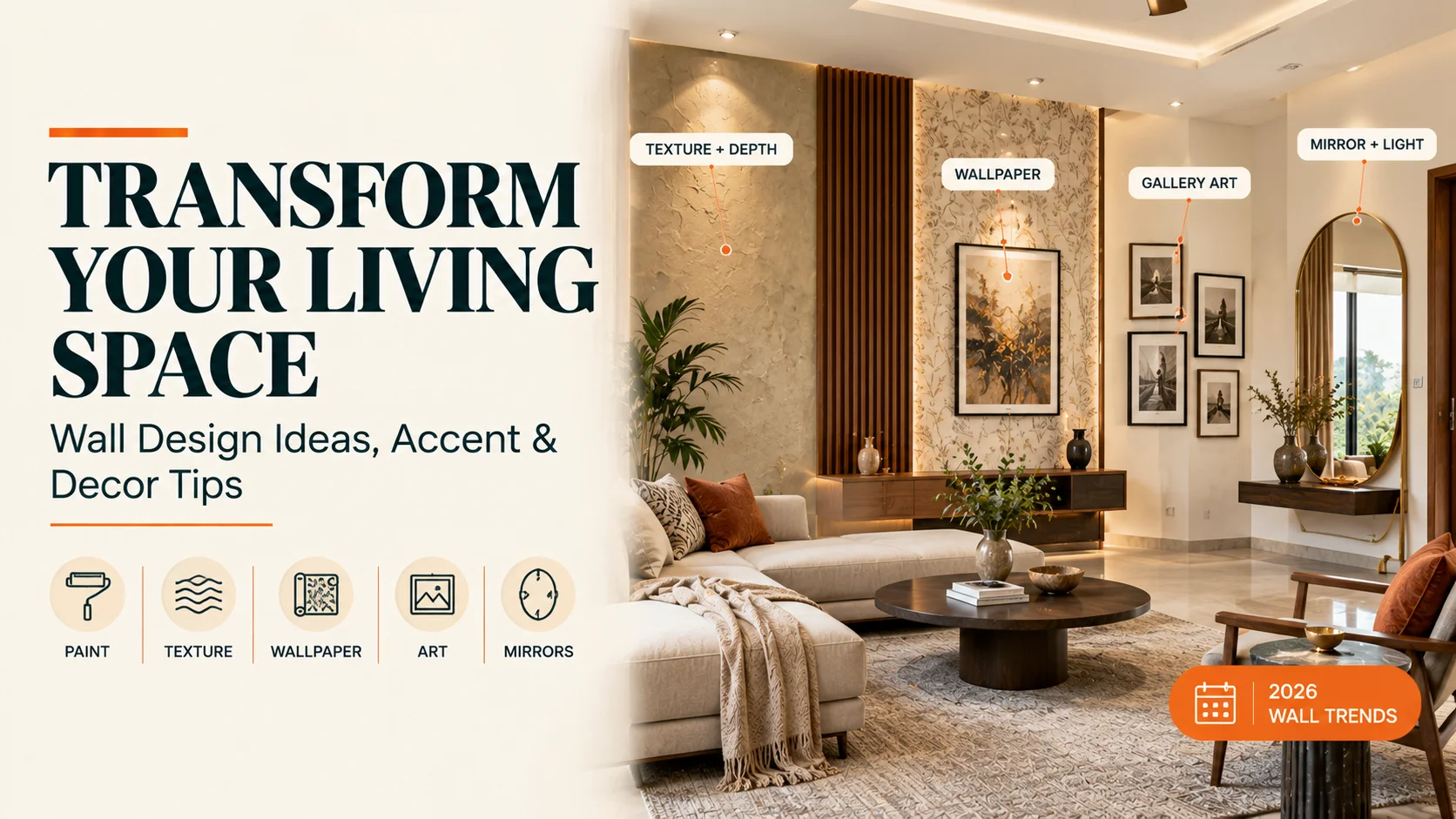
A genuinely common, sensible strategy is combining both: paint across the majority of a home's walls for practicality and cost-efficiency, with wallpaper reserved specifically for an accent or focal wall, typically the wall behind the main living room sofa, a dining feature wall, or a bedroom headboard wall. This captures wallpaper's stronger visual impact exactly where it matters most for a room's overall impression, while keeping the bulk of the home's maintenance and repainting burden on the simpler, cheaper, easier-to-touch-up option. For detailed guidance on choosing and executing this approach, see our guide to accent wall ideas for living rooms.
A Decision Framework
If you're renovating a kitchen, bathroom, or any consistently humid space: choose moisture-resistant paint as the safer default, or vinyl/non-woven wallpaper specifically if you want the pattern and are prepared for the slightly higher risk and cost.
If you're decorating a bedroom, dining room, or formal living space with low moisture exposure: both options genuinely work well; choose based on the mood you want and your appetite for the higher upfront cost and installation care wallpaper requires.
If you're preparing a rental property: default to paint for entry-level or mid-range rentals; consider wallpaper only for a premium or luxury rental positioning where it can function as a genuine differentiator.
If you're renovating with resale in mind and aren't certain of the eventual buyer's taste: lean toward neutral paint for the majority of the home, reserving any wallpaper for a single, tastefully chosen accent wall rather than a bold, room-wide statement that a future buyer might need to redo.
If you want the strongest visual impact without committing your entire home's maintenance cycle to a single approach: the hybrid strategy, paint throughout with wallpaper reserved for one or two genuine accent walls, is worth taking seriously as its own legitimate answer, not a compromise.







Ans 1. Paint is cheaper upfront (₹12-35 per sq ft versus ₹20-150+ per sq ft for wallpaper), but paint typically needs repainting every 3-7 years while quality wallpaper can last 8-15 years. Over a realistic 8-12 year ownership period, the real cost gap narrows considerably, or can even favour wallpaper, depending on quality and how many repainting cycles paint would otherwise need.
Ans 2. Neither category is inherently healthier; both paint and wallpaper now offer certified low-VOC and VOC-free options, and both also have lower-quality variants with meaningfully higher chemical content. Check the specific product's certification rather than assuming an entire category is automatically safer.
Ans 3. Standard or paper-based wallpaper is not recommended for these humid spaces, since it can peel, bubble, or develop mould. Vinyl or non-woven wallpaper, specifically engineered to resist moisture, can work in these rooms if you prefer wallpaper's look there; otherwise, moisture-resistant paint is the safer default.
Ans 4. It depends entirely on the execution. Tastefully chosen, well-installed wallpaper is increasingly seen as a premium marker in higher-end property markets, while a dated or overly bold pattern can be a genuine deterrent. Neutral paint remains the lower-risk, broadly safe default for resale.
Ans 5. Paint is the standard, practical default for rental properties given how quickly and cheaply it can be touched up between tenants. Wallpaper generally isn't recommended for entry-level or mid-range rentals, but can serve as a genuine premium driver in high-end serviced or luxury rental positioning.
Ans 6. Quality wallpaper, particularly vinyl-coated options, typically lasts 8-10 years and can reach 15 years with good installation and maintenance. Paint typically needs repainting every 3-5 years for standard emulsion, or 5-7 years for premium acrylic paint with good surface preparation.
Ans 7. Yes, this is a genuinely common and sensible strategy: paint across most walls for cost-efficiency and practicality, with wallpaper reserved for a specific accent or focal wall where its stronger visual impact matters most.
Ans 8. Paint is considerably easier for a confident DIY attempt, with more forgiving mistakes and a shorter project timeline. Wallpaper generally benefits from professional installation, since it requires more extensive wall preparation and careful, precise application, especially for pattern-matched designs.