
✦ AI Summary
Table of Content
▲- Navratri 2026 Dates and Colours
- 1. Day 1: Orange Marigold Entrance
- 2. Day 2: A Calm White Puja Corner
- 3. Day 3: Red Accents in the Living Room
- 4. Day 4: Royal Blue on the Centre Table
- 5. Day 5: Yellow on the Dining Table
- 6. Day 6: Green, Using Existing Plants
- 7. Day 7: Grey for Minimal Decor
- 8. Day 8: Purple for a Festive Corner
- 9. Day 9: Peacock Green Statement Corner
- Navratri Decoration Ideas for Small Homes and Apartments
- Budget-Friendly Navratri Decoration
- Protect Wooden Furniture During Festive Decoration
- Navratri Decoration Checklist
- Conclusion
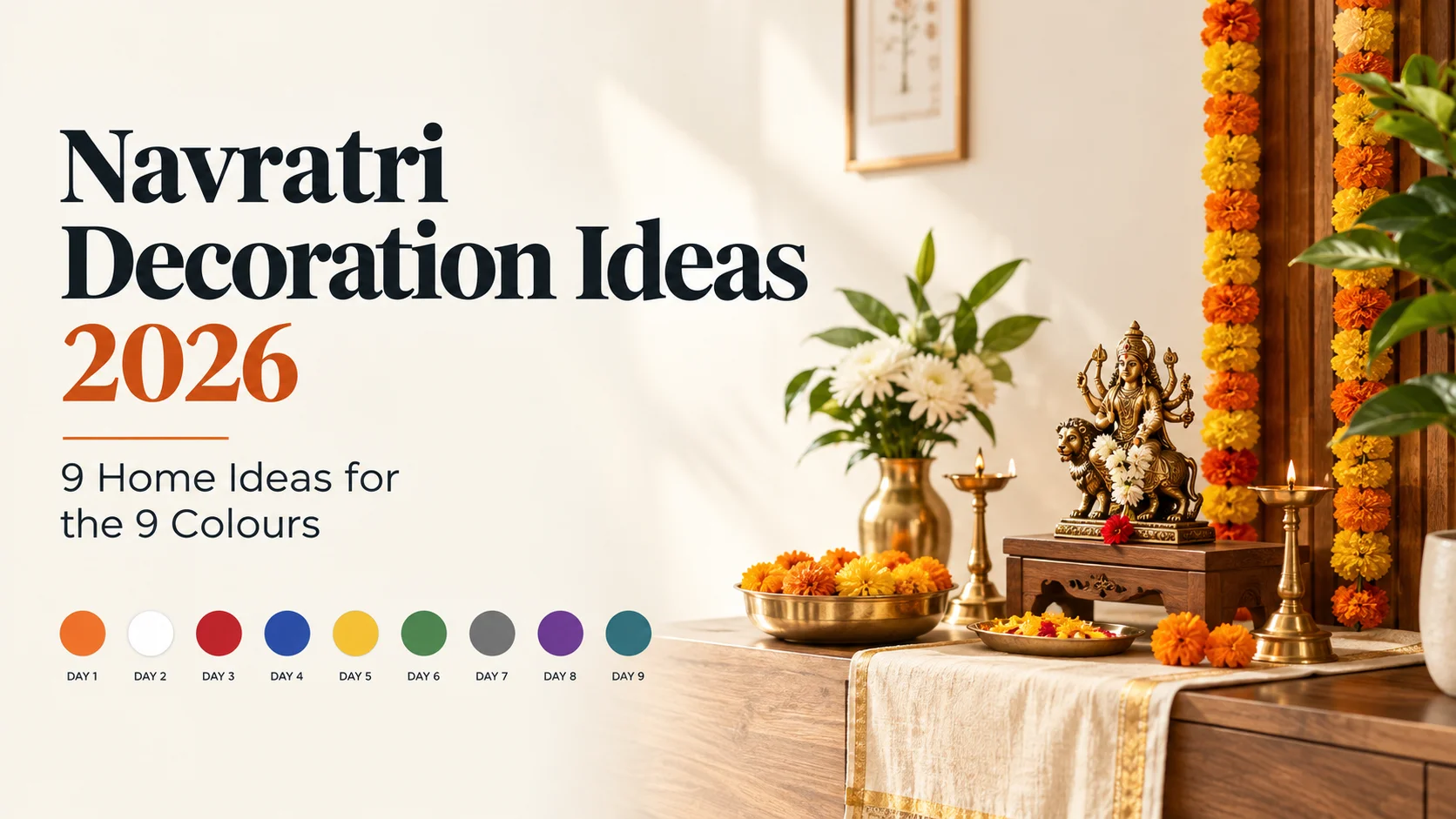
Navratri is a time when homes across India take on a festive look through flowers, lights, rangoli and small decorative touches. In 2026, Shardiya Navratri begins on Sunday, 11 October, and ends on Monday, 19 October, followed by Dussehra on 20 October. Each of the nine days is associated with a colour, offering an easy theme for decorating your home without making major changes.
These Navratri decoration ideas for 2026 focus on simple additions that work in Indian apartments and houses. You can use flowers, cushions, table runners, diyas and items already at home to create a different look each day.
Navratri 2026 Dates and Colours
Shardiya Navratri runs from 11 October to 19 October 2026. The nine colours provide a theme for each day’s decoration. You can use one or two accents rather than changing the entire room.
1. Day 1: Orange Marigold Entrance
Start Navratri with orange marigolds at the main entrance. A simple toran across the door, a small flower arrangement near the entrance console and a few petals around the rangoli can create a welcoming look.
Keep the arrangement compact if your entrance opens directly into a living room or a narrow passage. Avoid placing flowers where they obstruct the doorway.
2. Day 2: A Calm White Puja Corner
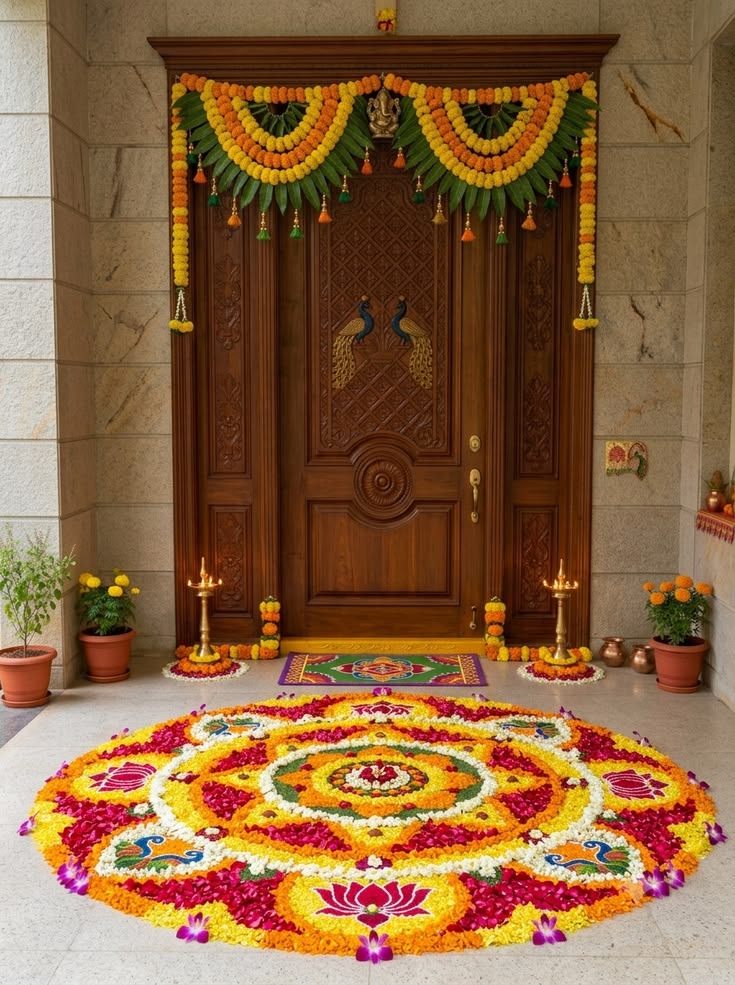
Use white flowers, a light-coloured cloth and warm lamp light to create a peaceful puja corner. A plain backdrop, one flower arrangement and lamp light look better than a crowded shelf.
If you are planning a more permanent prayer space, explore these modern pooja room designs for ideas that work in both dedicated rooms and compact apartments.
3. Day 3: Red Accents in the Living Room
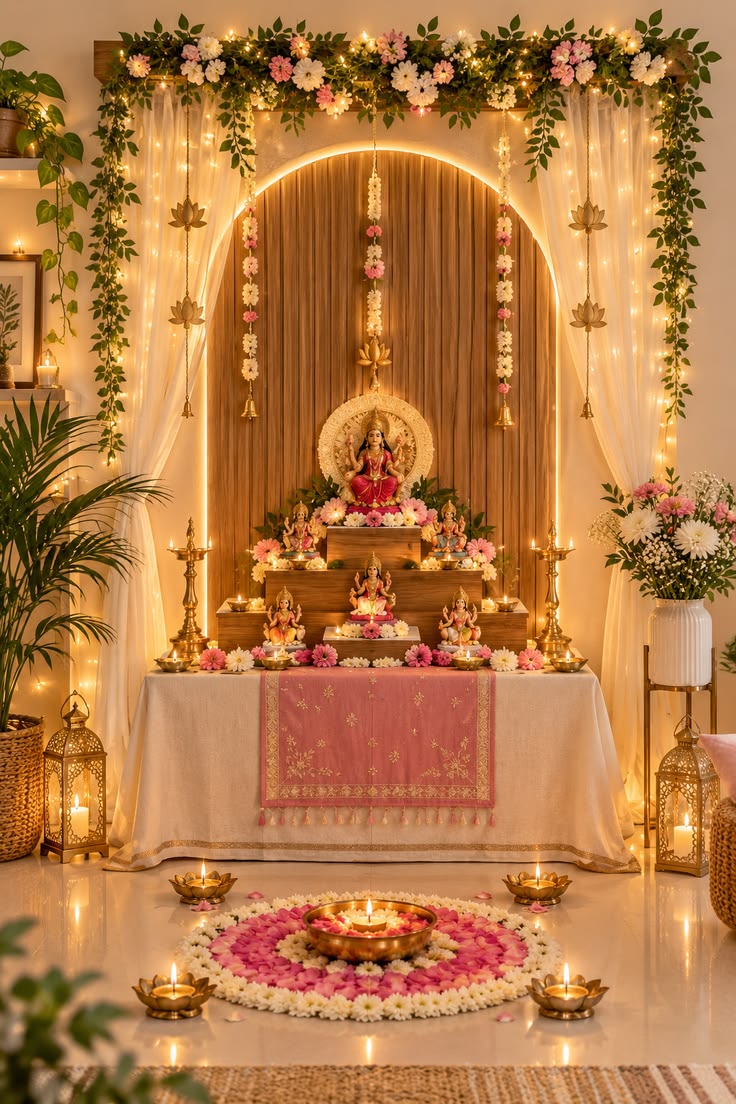
Bring in red through cushion covers, a vase of flowers or a small table runner. Two cushion covers and a vase of red flowers are enough, especially against neutral sofas or natural wood.
For a bigger refresh beyond festive accessories, these budget home decor ideas for a living room can help you coordinate colours, lighting and existing furniture.
4. Day 4: Royal Blue on the Centre Table
Use royal blue in a table runner, a decorative tray or a few cushions. Against a neutral background, one strong colour can stand out without making the room feel busy.
If you are using a tray, keep it clear of frequently used items so the centre table remains practical.
5. Day 5: Yellow on the Dining Table
A yellow runner, fresh flowers or simple napkins can bring a festive touch to the dining area. Keep the centrepiece low enough for people to see one another across the table.
You can reuse a yellow dupatta or fabric piece as a runner, provided it sits securely and remains away from candles or diyas.
6. Day 6: Green, Using Existing Plants
Use the green of your existing indoor plants as the main decoration. Grouping two or three plants together can create a natural focal point without adding artificial greenery. There is no need to buy artificial greenery. Real plants look better and stay after the festival.
To choose the right plants for different corners of your home, see this indoor plants for home decor placement guide, which covers light conditions and practical placement.
7. Day 7: Grey for Minimal Decor
Grey works well through cushion covers, a table runner or a neutral fabric backdrop. Pair it with white flowers or warm lighting to keep the space from looking too stark.
This is a useful theme for homes where you prefer understated decoration and want to avoid buying items for a single day.
8. Day 8: Purple for a Festive Corner
Add purple through flowers, cushions or a piece of fabric behind the puja area. Keep the remaining colours restrained so the purple accents remain the focus.
If you have limited space, use a side table or a small shelf instead of creating a separate decorative setup.
9. Day 9: Peacock Green Statement Corner
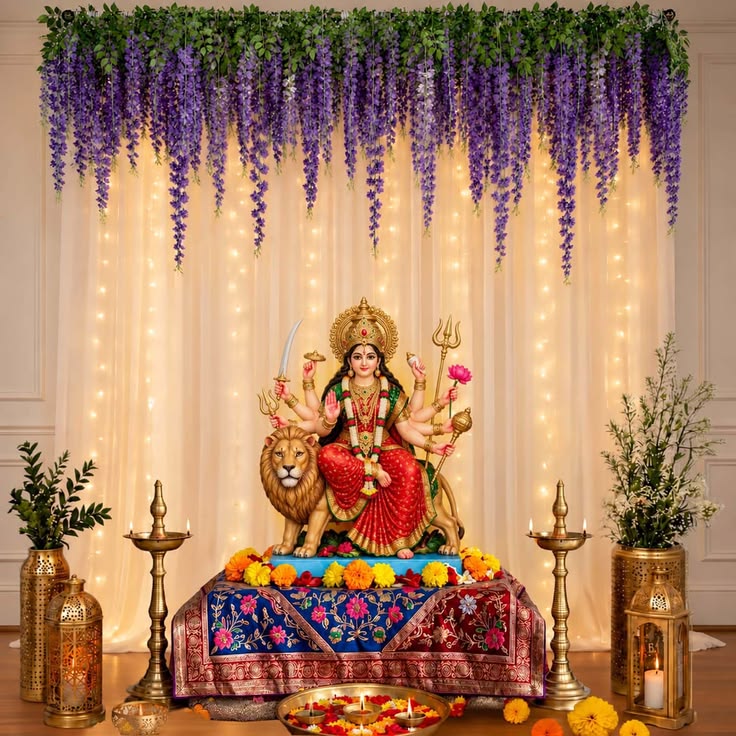
Finish the nine days with peacock green on a cushion, runner or decorative cloth. Pair it with brass-toned accessories or warm lights for a festive finish.
You can reuse the same tray, flowers or lighting from earlier days and change only the main colour accent.
Navratri Decoration Ideas for Small Homes and Apartments
You do not need a large room or a dedicated mandir to decorate for Navratri. The puja corner, the entrance console or a living room side table can all serve as the festive centre.
If you need inspiration for a compact prayer area, these simple mandir designs for middle-class Indian homes show ways to use corners, wall-mounted units and existing living spaces.
For small homes, try these practical ideas:
- Use a door toran instead of a large entrance arrangement.
- Decorate one shelf or side table rather than the entire room.
- Use cushions and runners to introduce each day’s colour.
- Keep walkways clear, especially near the entrance and puja area.
- Avoid placing diyas near curtains, loose fabric or artificial flowers.
Budget-Friendly Navratri Decoration
A festive look does not require buying new decorations for all nine days. Reuse sarees or dupattas as backdrops and runners, clean glass jars for flower arrangements, and existing trays for small decorative displays. Fairy lights and indoor plants can also be used across multiple days.
Buy flowers fresh from the local market, and buy only what is genuinely missing. You can also explore these eco-friendly home decor ideas for Diwali for ways to reuse materials and decorate with items you already own.
Protect Wooden Furniture During Festive Decoration
Wooden tables and cabinets can be affected by heat, oil, wax and moisture. Use a heat-resistant base beneath diyas and keep them away from wooden edges. Place flower arrangements on trays to prevent water from leaking onto the surface, and wipe spills promptly.
Do not leave burning diyas or candles unattended. Keep them away from curtains, paper decorations and loose fabric.
Navratri Decoration Checklist
Before Ghatasthapana, check that you have:
- Flowers or a toran for the entrance
- A clean puja surface and a suitable cloth
- A few colour accents for the nine days
- A tray or heat-resistant base for diyas
- Clear space around the entrance and puja area
- Reusable decorations stored safely for the next day
Preparing the basic setup in advance makes it easier to change the colour theme each morning.
Conclusion
Navratri decoration can be simple, affordable and easy to adapt to the size of your home. Use one or two colour accents each day, reuse items wherever possible, and keep safety in mind around diyas, flowers and wooden furniture. A small, thoughtful change can make each of the nine days feel distinct without requiring a complete home makeover.





Ans 1. Use one accent per day: marigolds for orange, a white cloth at the puja corner, red cushions, a blue bowl on the centre table, yellow flowers on the dining table, existing plants for green, grey linen with brass, a purple corner and a peacock green runner.
Ans 2. Orange, since day one falls on a Sunday. Colour orders vary slightly by source, so check against your family’s tradition.
Ans 3. No. One mandap, a decorated entrance and one daily accent are enough.
Ans 4. Reuse sarees, dupattas, jars, trays, fairy lights and indoor plants, and buy only fresh flowers.
Ans 5. Place each diya on a metal or stone base and use a tray to catch oil and wax drips.
Ans 6. Before the Ghatasthapana muhurat on day one. For Delhi, the main window on 11 October is 6:19 am to 10:12 am, and other cities differ.