
✦ AI Summary
Table of Content
▲
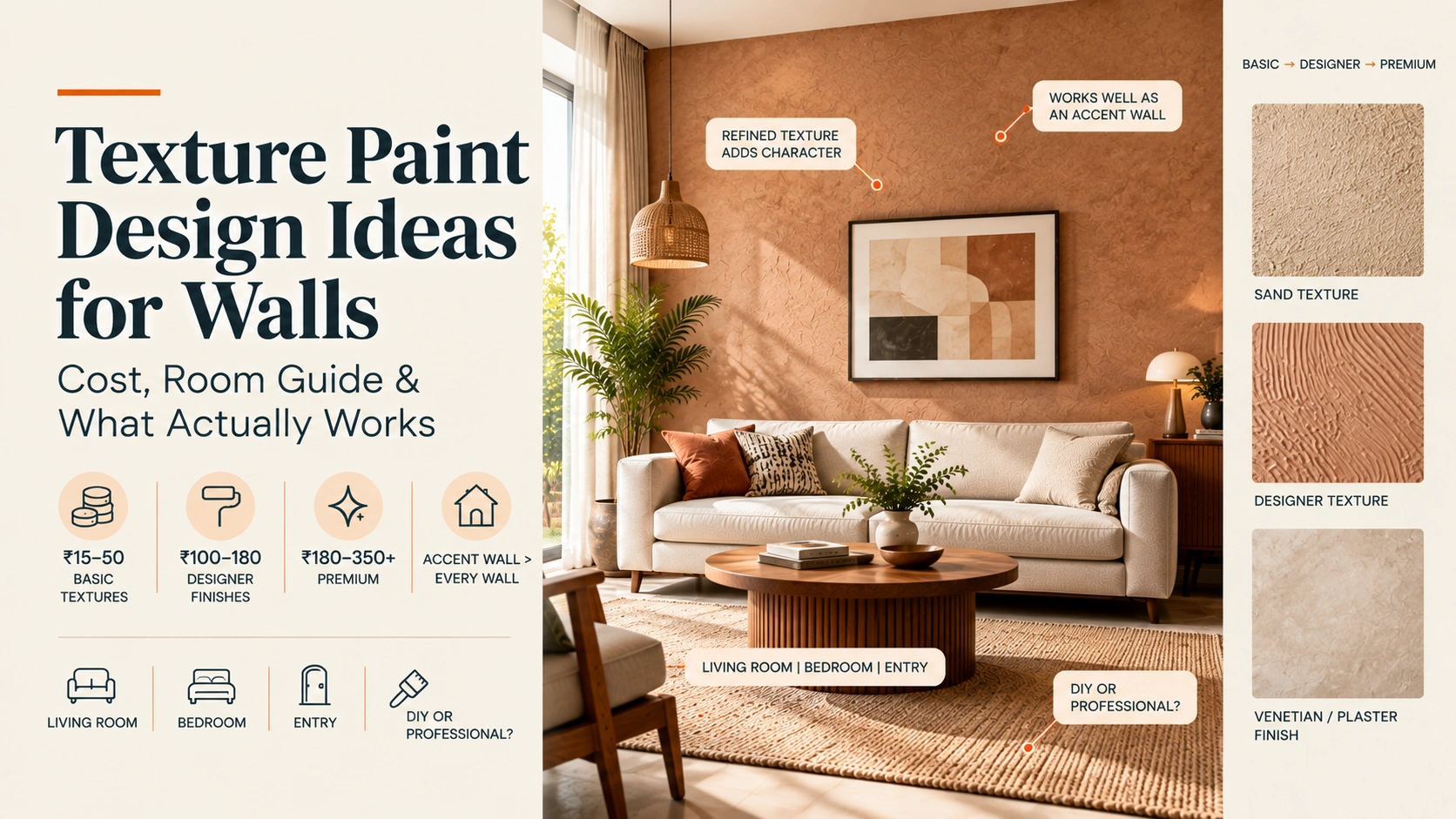
Texture paint pricing online looks chaotic at first glance one source says ₹15 extra per sq ft, another says ₹350. Both are correct, because "texture paint" covers everything from a light roller pattern to a hand-trowelled plaster finish, and these sit at genuinely different price points and commitment levels. Sorting texture ideas by what they actually cost and how permanent they are makes the decision far easier than browsing photos alone.
If you're considering texture for just one feature wall, these accent wall ideas for living rooms can help you decide where the treatment will have the most visual impact.
The Three Cost Tiers, and What You Actually Get in Each
Tier 1: Simple roller and sand textures (₹15–50 per sq ft over base paint). This covers sponging, stippling, dapple patterns, and sand texture applied with a roller, the most commonly used texture finish in Indian homes. It's affordable, hides minor wall cracks and surface irregularities common in older masonry, and works in almost any room. Sand texture specifically is the single most applied finish nationally, largely because it's durable, weather-tolerant, and inexpensive enough to use on an exterior boundary wall as easily as an interior accent wall.
Tier 2: Mid-range designer textures (₹100–180 per sq ft). This is where branded ranges like Asian Paints' Royal Play sit for their standard finishes: sand-effect (Dune), fabric-effect (Suede), and comb or patterned applications. These are applied in stages (a base coat, the texture coat, then a glaze or wax finish) and give a noticeably more refined, "designed" look than a Tier 1 roller finish. Expect 7–9 years of durability with proper surface preparation.
Tier 3: Premium and hand-crafted finishes (₹180–350+ per sq ft). Venetian plaster, marble-effect finishes, metallic glazes (Royal Play Metallica), and painted stone-effect cladding all sit here. These are genuinely labour-intensive; real Venetian plaster and hand-trowelled finishes require a specialist who has practised the specific technique, not a general painter, and the cost reflects that skill rather than material alone.
For additional visual references, explore these texture paint designs for hall before finalising a pattern or finish.
Which Texture Suits Which Room
Living room: a single accent wall in a mid-range finish, Royal Play Dune or a comb-pattern texture works well behind a sofa or TV unit. For living rooms specifically, current trend content also points to deep, jewel-toned colours (charcoal, deep teal, forest green) paired with a rough or metallic texture as the current "statement wall" look, rather than the neutral tones that dominated for years.
If the textured wall is behind your television, see these modern TV unit designs for living rooms for ideas on combining the finish with storage and furniture.
Bedroom: softer, lower-relief textures, ragging or a subtle sand finish, suit a bedroom better than a heavy 3D or stone-effect wall, since the room is meant to feel calm rather than visually loud. Ragging specifically, made by pressing crumpled cloth into wet paint, works particularly well with deep colours like burgundy or navy.
If Vastu is part of your colour-selection process, you can also refer to our guide to Vastu-compliant colours for home walls before choosing the final shade.
Entrance and passage areas: stone-effect or Venetian plaster finishes are commonly used here specifically because these are lower-traffic, smaller surfaces where a premium finish's higher cost per sq ft is easier to justify than covering an entire living room wall with it.
A genuine caution worth repeating from multiple sources: stone-effect or heavy textures on every wall in a 2BHK or 3BHK apartment reads as heavy rather than premium. This treatment consistently works best confined to a single accent wall.
Is Texture Paint Reversible?
This is the one honest question most texture-paint content, understandably given who's usually writing it, doesn't emphasise enough. A flat geometric design stripes, blocking, a painted pattern using ordinary emulsion and tape sits close to plain paint in cost and can be painted over with a fresh coat of emulsion if you change your mind. A genuine texture or plaster finish is a different commitment entirely: the price gap between a flat painted design and an actual plaster texture is often five to ten times, not a modest step up, and a plaster or heavily textured wall is also the hardest of all these options to remove or paint over cleanly later.
If you're not fully certain about a bold texture choice, or you're renting, a flat geometric design gives you most of the visual impact of a "designed" wall at a fraction of the cost and with a genuine exit option. Reserve premium plaster and stone-effect textures for a wall you're confident you'll want to keep for years.
DIY or Professional?
Simple roller-based textures, sand, sponging, stippling are reasonably approachable for a confident DIYer with some patience, since the tools are basic and mistakes are relatively forgiving. Anything beyond that tier genuinely isn't: Royal Play-style multi-stage finishes and hand-trowelled plaster require consistent pressure, speed, and technique that take real practice to get right, and a botched attempt on a large feature wall is expensive to correct, since it usually means stripping the failed texture entirely before starting over. For any Tier 2 or Tier 3 finish, budgeting for a trained specialist rather than a general painter is worth it.






Ans 1. It depends heavily on the technique: ₹15–50 per sq ft for simple roller/sand textures, ₹100–180 for mid-range designer finishes like Royal Play, and ₹180–350+ for premium plaster or metallic finishes.
Ans 2. Sand texture is a simpler, single-stage, roller-applied finish and the most affordable, widely used option. Royal Play is a branded, multi-stage premium range (base coat, texture coat, glaze) offering a more refined, designed look at a higher cost.
Ans 3. A flat painted geometric design can be painted over easily with emulsion. A genuine plaster or heavy texture finish is much harder to remove and typically needs to be stripped before repainting treats it as a longer-term commitment.
Ans 4. Softer, lower-relief finishes like ragging or a subtle sand texture suit a bedroom better than heavy 3D or stone-effect textures, which read as too visually loud for a room meant to feel calm.
Ans 5. Simple roller-based textures are approachable for a confident DIYer. Multi-stage designer finishes and plaster effects require practised technique mistakes on a large wall are costly to fix, so these are better left to a trained specialist.
Ans 6. Typically 5–8 years for standard finishes, with mid-range designer textures lasting 7–9 years with proper surface preparation. Exterior applications wear slightly faster due to sun and weather exposure.
Ans 7. No, multiple sources agree that heavy textures on every wall in a standard apartment feel overwhelming. Confine premium or heavy textures to a single accent wall.