

✦ AI Summary
Table of Content
▲
The best wooden wall panel designs for Indian homes depend as much on the material behind the pattern as on the pattern itself. Fluted, slat and herringbone are looks. MDF, plywood, veneer, WPC and solid wood decide whether the wall still looks good after a monsoon.
Below are ten designs, a material and cost guide, and the checks to make before a carpenter drills into your wall.
Which material should you choose?
Many wooden-look panels are engineered boards with a veneer or laminate face. Solid wood sits at the top of the price range.
|
Material |
Indicative material cost per sq ft |
Best for |
Watch out |
|
MDF (laminate or veneer face) |
₹150 to ₹400 |
Dry living rooms, bedrooms, TV walls |
Swells when damp and does not recover |
|
WPC (wood plastic composite) |
₹200 to ₹600 |
Humid or ground-floor walls |
Looks less like real wood up close |
|
BWR or BWP plywood with veneer |
Varies by finish |
Walls that must survive humidity |
Needs sealed edges and a good finish |
|
Solid or veneered wood |
₹500 to ₹2,500 |
Premium feature walls |
Highest cost, needs upkeep |
These are 2026 material ranges from one design-firm guide. Other contractor guides quote different figures, and framing and installation are extra. At ₹200 to ₹600 per sq ft, the material for an 80 sq ft WPC wall comes to ₹16,000 to ₹48,000. Ask for written quotes that list material, framing and labour separately.
A panel is a finish, not a waterproofing layer. If the wall is external or on the ground floor and shows seepage, fix the leak first.
10 wooden wall panel designs for Indian homes
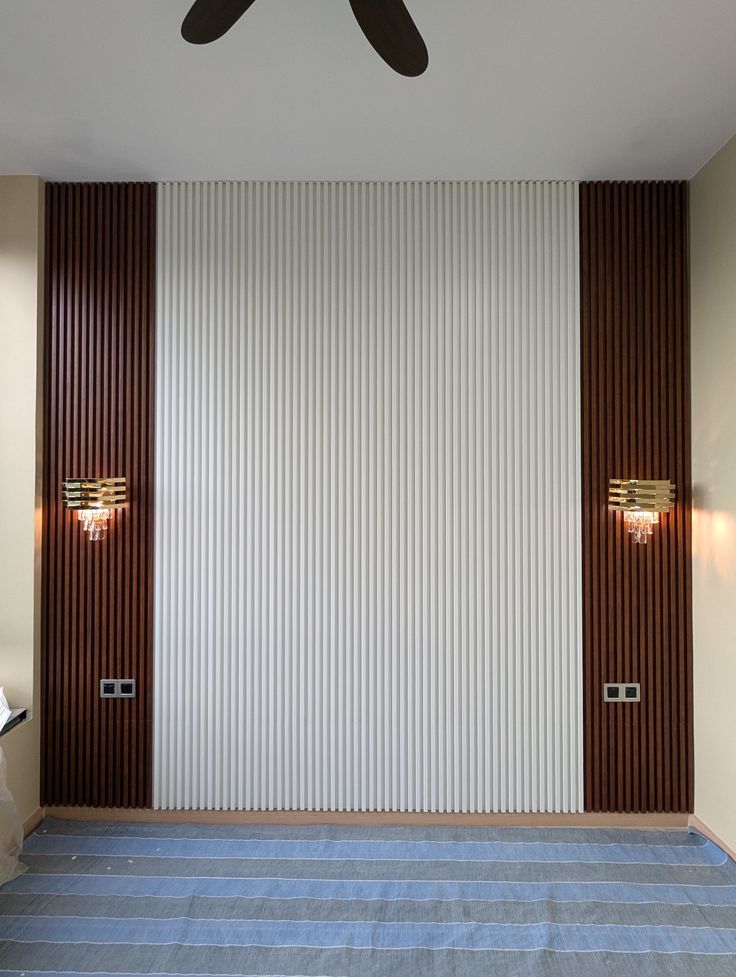
1. Fluted panels
Evenly spaced vertical grooves add texture and shadow. They suit TV walls and bedroom headboards.
- Why it works: The grooves read as a pattern from a distance and as texture up close, so plain paint and simple furniture are enough.
- Pro Tip: Alignment matters. Small gaps break the repeating line, so ask for exact measurements before cutting.
2. Slat panels
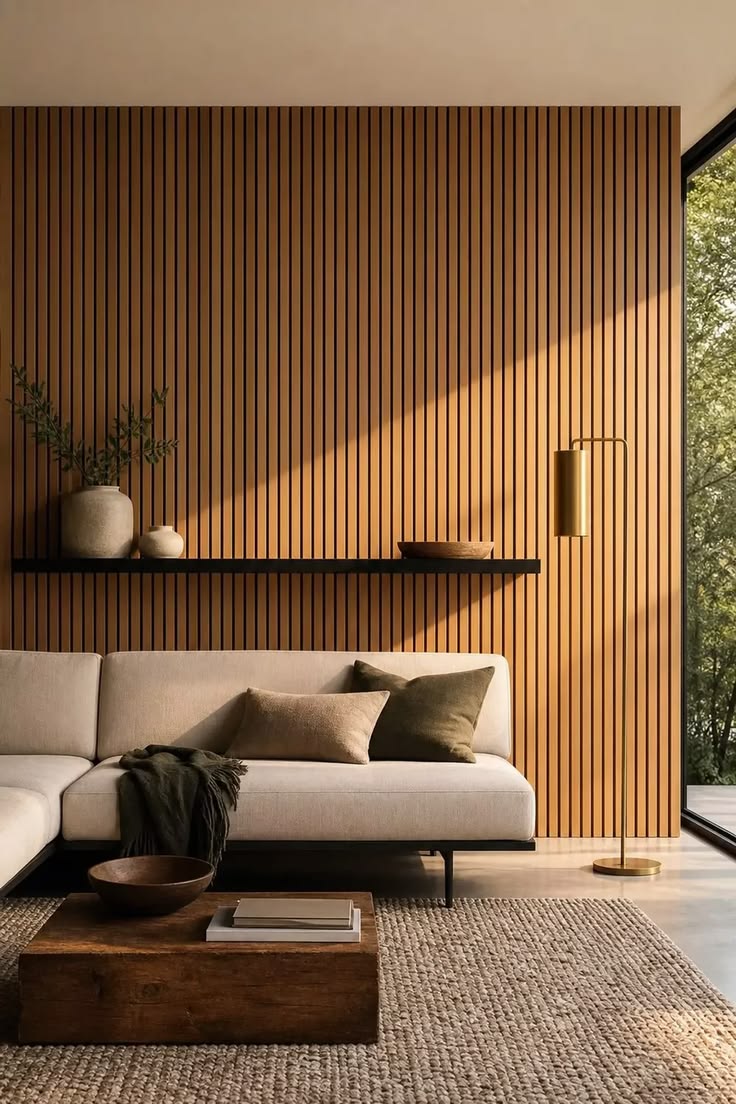
Thin strips with gaps between them, fixed vertically, horizontally or diagonally. A felt backing behind the gaps is an option.
- Why it works: The open look suits living rooms, home offices and TV areas, and a backing can reduce echo somewhat.
3. Geometric panels
Triangles, squares, diamonds and hexagons, often in two or three wood tones. Keep the rest of the room plain, as in our trendy wall design ideas.
- Why it works: The pattern does the work, so one wall is enough.
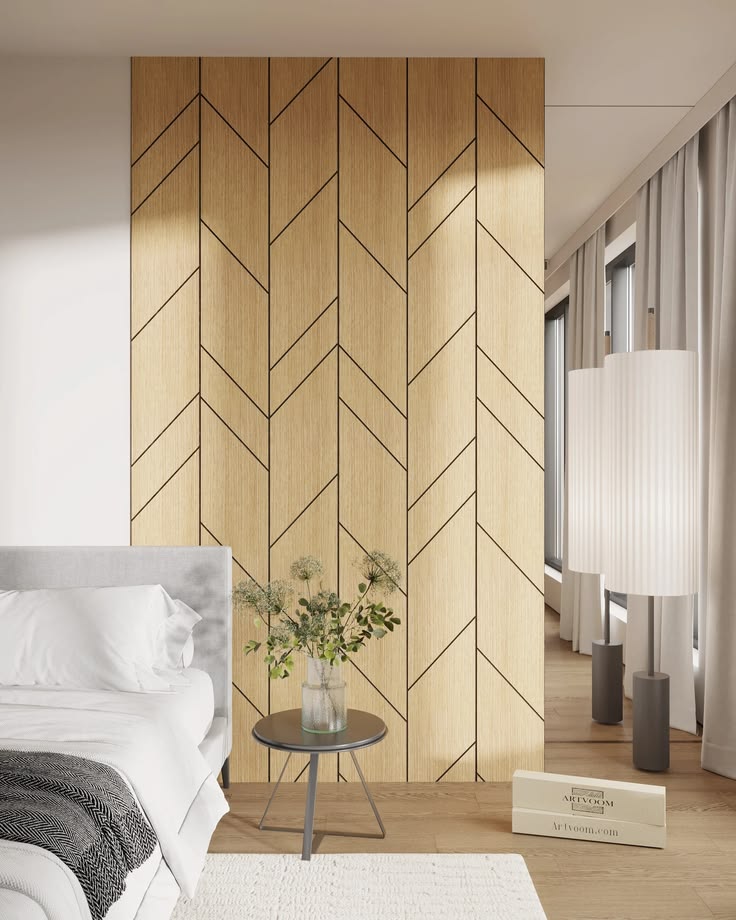
4. Chevron panels
V-shaped boards that create a sense of flow. Light tones lean Scandinavian and dark walnut feels richer.
- Why it works: They give a pattern without much complexity, and sit well behind a bed, sofa or dining table.
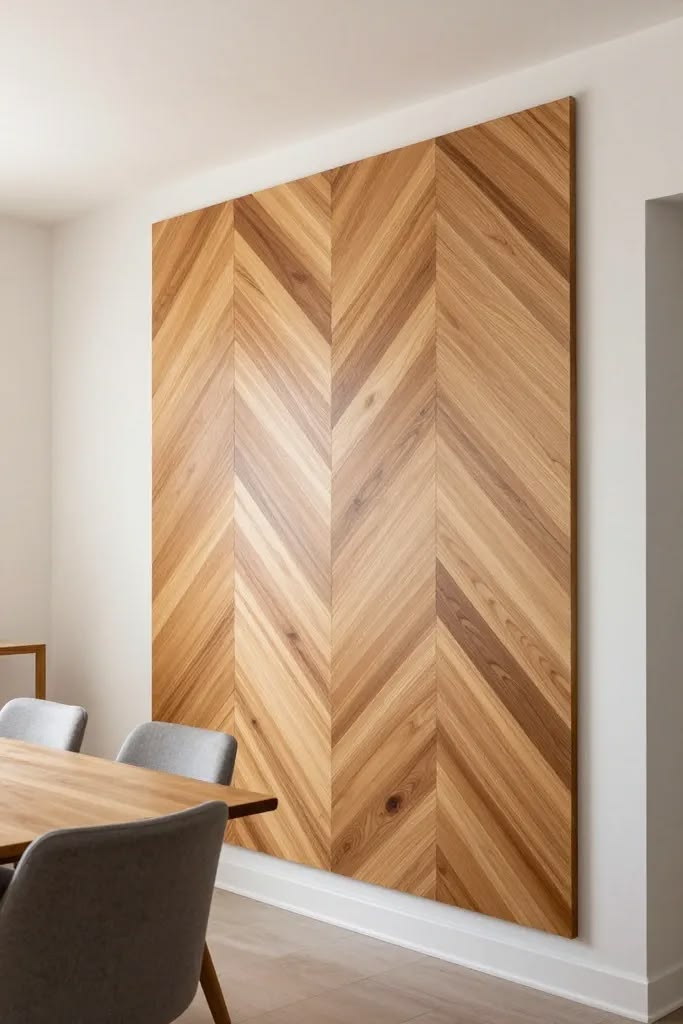
5. Herringbone panels
Short rectangles laid in a staggered zig-zag, a classic floor pattern moved to the wall.
- Why it works: The detail suits a small feature wall in modern or traditional rooms.
6. 3D carved panels
Waves, cubes and layered cuts that cast shadows as light moves across them.
- Why it works: Soft, warm lighting brings out the relief. Pick a scale that suits the room, since deep carving can crowd a small space.
7. Panel moulding (frame) designs
Rectangular or square frames fixed to the wall, in solid wood or MDF, painted or left natural.
- Why it works: They give a classic look without carving, and can run as a half wall.
8. Woven panels
Thin wooden strips in a basket-like weave, which suit cane furniture and earthy colours.
- Why it works: The handmade texture warms a room. Check the finish and joinery, since thin strips show poor work quickly.
9. Parquet-style panels
Small blocks of wood in basket-weave, diagonal or square patterns, sometimes in mixed shades.
- Why it works: They suit formal living rooms, dining areas and entrances. Match the pattern size to the wall and avoid busy prints nearby.
10. Reclaimed wood panels
Recycled planks with knots, nail marks and colour variation, so no two panels match.
- Why it works: They suit rustic and industrial rooms.
- Pro Tip: Ask for proof of treatment against termites and borers before you buy.
Check these before you install
- Damp: Fix seepage and treat damp walls first. Wood and MDF absorb moisture.
- Ventilation: On external walls, ask your carpenter about an air gap behind the panels.
- Wiring and lighting: Plan sockets, switches and any LED strips before fixing, so nothing is cut into finished panels.
- Termites: On the ground floor, confirm the board or frame has been treated.
- Upkeep: Dust with a dry cloth, wipe spills quickly, and avoid wet mopping near the panel base.
The right wooden wall panel designs balance pattern, room size and the wall behind them.
Choose MDF for dry rooms, WPC or BWR plywood where humidity is a risk, and solid wood only where budget allows.
Fix damp, plan wiring and confirm termite treatment before fixing a single panel.
Get itemised quotes so material, framing and labour are priced separately.








Ans 1. It depends on the room. Veneered BWR or BWP plywood suits humid areas, MDF suits dry rooms, and solid wood suits premium budgets.
Ans 2. One 2026 guide puts MDF at ₹150 to ₹400, WPC at ₹200 to ₹600 and wooden panels at ₹500 to ₹2,500 per sq ft. Other guides differ, and installation is extra.
Ans 3. Fix the damp first. A panel does not waterproof a wall.
Ans 4. MDF swells when it absorbs moisture, so it is better kept in dry rooms. Where humidity is a risk, ask about WPC or BWR plywood.
Ans 5. MDF costs less and suits dry, well-ventilated rooms. WPC is often chosen for humid or ground-floor walls.
Ans 6. A felt backing can reduce echo somewhat, but slat panels are not a substitute for soundproofing.