
✦ AI Summary
Table of Content
▲
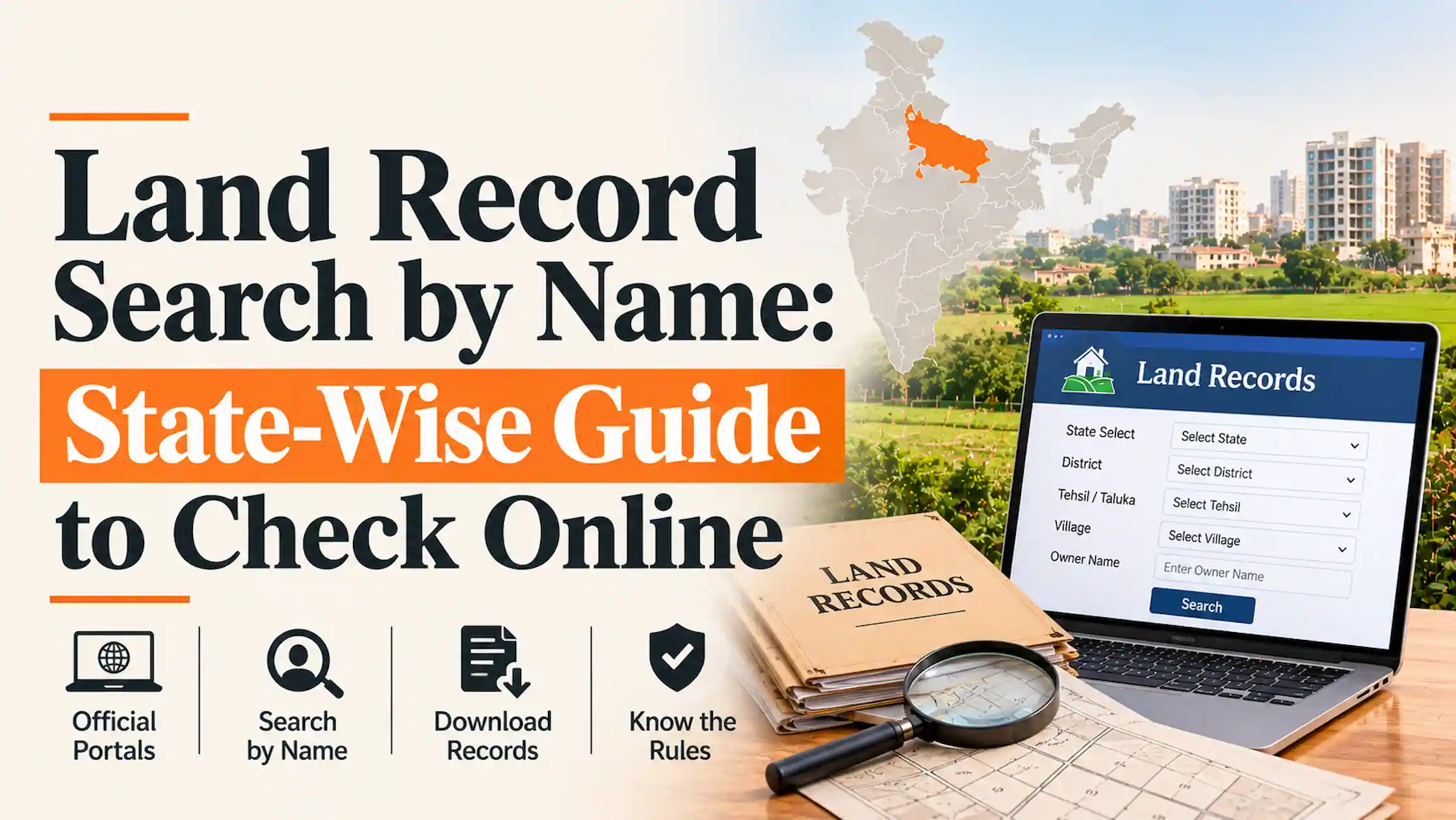
Land record search by name works on many state revenue portals, but not on all of them, and never as a single national search. You pick the state’s own portal, narrow down to a village, and type the owner’s name as the revenue record spells it.
Two cautions before you start. A name search finds a record but does not prove who owns the land. And an online view is often a reference copy, not the copy a bank or registrar will accept.
How does land record search by name work?
- Open the state’s official revenue portal. Search engines also return lookalike “bhulekh” sites that charge for free records, so use the portal addresses in the table below.
- Select district, tehsil or taluka, and village. No portal searches a whole state by name. Karnataka’s owner-name search, for example, runs one village at a time.
- Choose the owner-name option and type the name as it appears in the old record or sale deed.
- Try variants if nothing appears, including the local-language spelling and honorifics such as “Singh” and “Singh Ji”.
- Fall back to a number. Khasra, survey or khata numbers are more reliable than names.
- View and download, then compare owner, area and land type with the sale deed.
Which state portals let you search by name?
Portal details below come from published guides and press reports. Portals change, so confirm on the official site before relying on a step.
|
State |
Official portal |
Record you see |
Name search |
|
Uttar Pradesh |
upbhulekh.gov.in |
Khatauni |
Yes, an owner-name tab after district, tehsil and village |
|
Haryana |
jamabandi.nic.in |
Jamabandi |
Reported yes, alongside khewat and khasra |
|
Bihar |
biharbhumi.bihar.gov.in |
Jamabandi Panji (Register II) |
Reported yes, through Apna Khata |
|
Karnataka |
landrecords.karnataka.gov.in |
RTC (Pahani) |
Yes, “owner wise”, one village per query |
|
Maharashtra |
bhulekh.mahabhumi.gov.in |
7/12 and 8A |
Sources differ for 7/12. 8A lists one holder’s land in a village |
|
Telangana |
bhubharati.telangana.gov.in |
Pahani (ROR 1-B) |
Survey or passbook number is documented. Sources differ on name |
|
West Bengal |
banglarbhumi.gov.in |
Khatian |
Reported yes |
Other states have their own portals. We have separate guides for Gujarat’s AnyROR, Andhra Pradesh’s Meebhoomi and Rajasthan’s Apna Khata.
What changed recently?
- Telangana: Dharani was replaced by Bhu Bharati, which came into force on 14 April 2025 under the Telangana Bhu Bharati (Record of Rights in Land) Act. Guides that still say Dharani are out of date.
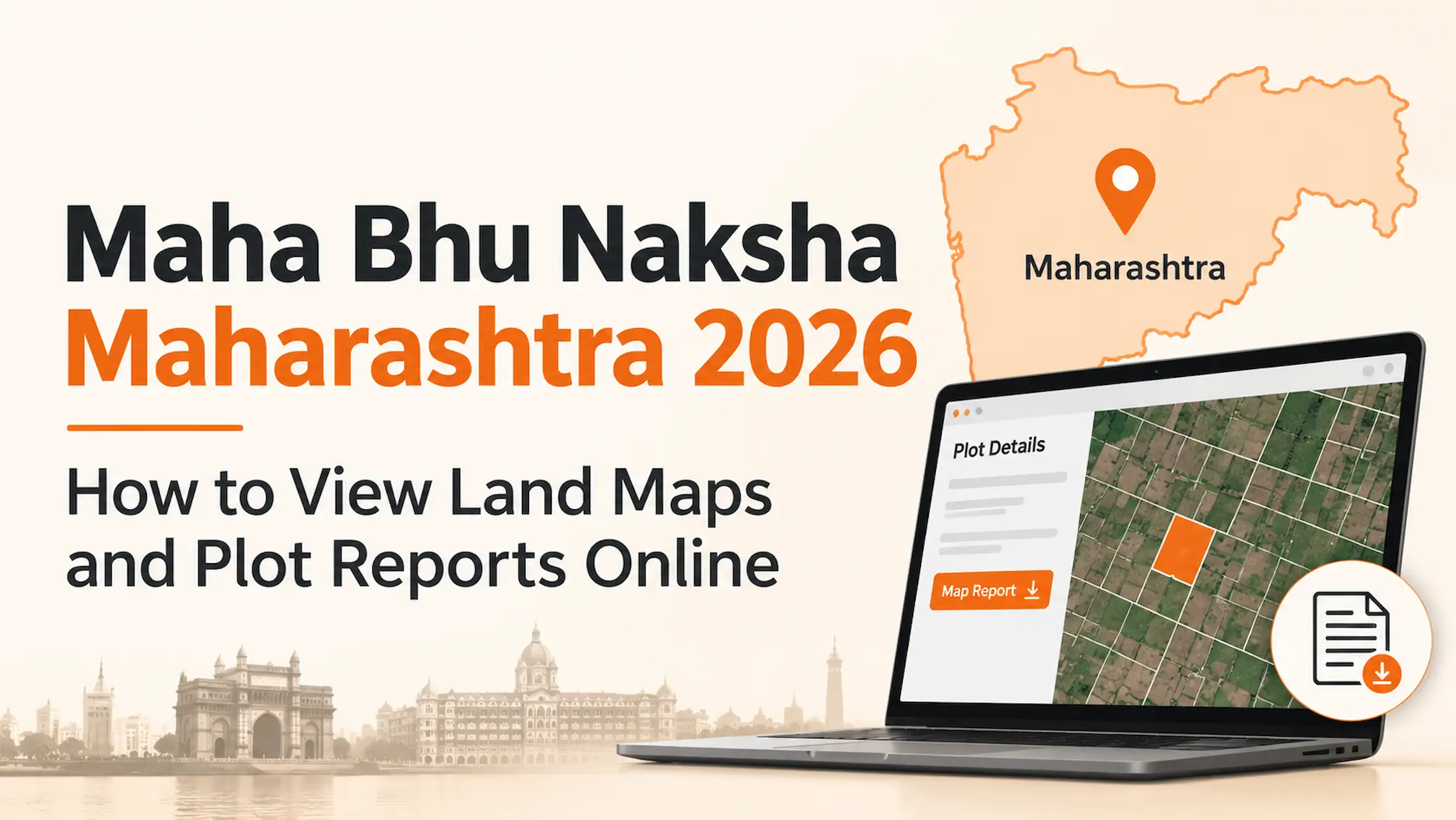
- Maharashtra: Two portals work together. Bhulekh Mahabhumi gives free, view-only extracts. Digital Satbara gives digitally signed copies, reported at Rs 15 each. For land maps, see our Maha Bhu Naksha guide.
- Karnataka: A digitally signed i-RTC is available separately from the free view.
Why does a name search fail?
- Spelling and language. Records are often in the local language, and a small difference blocks a match.
- Wrong village. The search is village-level, and revenue village names can differ from the postal name.
- A common name returns many holders. Use a khasra or khata number to narrow it.
- Renumbering after a resurvey. An old survey number may no longer match.
- Mutation lag. If a seller inherited the land but the record still shows the earlier owner, the transfer is not complete.
Is an online land record legally valid?
It depends on the state and the type of copy. A free online view is generally a reference. Where a state offers digital signing, as Maharashtra and Karnataka do, that copy is the one banks and registrars are more likely to accept. Elsewhere, a certified copy from the tehsil or revenue office is usually needed. Fees vary by state.
A land record also does not show the full ownership chain or court cases. Before paying money, check an encumbrance certificate for registered charges, search for litigation separately, and match the seller’s identity to the record.
Land record search by name works only inside the right state portal, village and spelling.
Use survey, khasra or khata numbers when the name returns nothing or too much.
Treat a free online view as a lead, not proof of title.
Get a signed or certified copy before any loan, sale or registration.




Ans 1. No. Each state runs its own portal, and searches are limited to a district, tehsil and village.
Ans 2. Viewing is generally free. Digitally signed or certified copies usually cost a fee, such as the reported Rs 15 per signed copy in Maharashtra.
Ans 3. Narrow it with a khasra, survey or khata number. UP Bhulekh guidance notes that common names return more results and that khasra or khata numbers are more precise.
Ans 4. Bhu Bharati, at bhubharati.telangana.gov.in, replaced Dharani in April 2025.
Ans 5. Only within the village you select. Maharashtra’s 8A and UP’s khatauni group a holder’s land in one place, but you still need to check each parcel against other documents.
Ans 6. Not on every portal. Karnataka guides say a basic RTC view needs no account. Signed copies and mutation services may need registration.
Ans 7. The digitally signed copy from Digital Satbara is the one reported as valid. The free view is for reference.