
_1765522271.webp)
Table of Content
▲
The Yamuna Expressway Industrial Development Authority (Yeida), under the initiative Yeida Evaluates RRTS Route, has begun a new feasibility study for a Rapid Rail Transit System (RRTS) corridor linking Delhi’s Sarai Kale Khan with the upcoming Noida International Airport in Jewar. The proposed corridor represents a significant shift in regional transport planning, aimed at creating a fast, direct, and future-ready connection between the national capital and one of India’s largest upcoming airports.
The move, part of the broader Yeida Evaluates RRTS Route effort, follows concerns raised by the Union Ministry of Housing and Urban Affairs (MoHUA) over the earlier Ghaziabad–Sidharth Vihar alignment, which officials noted failed to deliver the critical requirement of seamless Delhi–Jewar connectivity.
Why the New RRTS Alignment Is Being Considered
.jpg)
According to Yeida officials, the decision to explore a new alignment from Sarai Kale Khan was taken after a high-level review meeting chaired by MoHUA.
Shailendra Bhatia, Additional CEO of Yeida, confirmed that the authority will soon engage with the National Capital Region Transport Corporation (NCRTC) to initiate detailed feasibility work.
The new alignment is expected to begin from Delhi’s Sarai Kale Khan, already a major hub for the Delhi–Meerut RRTS corridor, and pass through several high-density Noida and Greater Noida locations before reaching the Noida International Airport.
Key reasons for changing the route
- The earlier Ghaziabad–Jewar corridor lacked a direct Delhi to airport link.
- MoHUA raised 10 major objections, including the absence of demand surveys and alignment duplication with existing and proposed metro routes.
- Running Rapid Rail and Metro on a shared corridor was found to be technically and operationally impractical.
- Passenger volumes on the Ghaziabad alignment were projected to be insufficient to justify airport connectivity.
- The lack of a Delhi-Jewar link would reduce the corridor’s effectiveness and economic viability.
Officials emphasized that the new alignment is essential for creating a robust airport access system comparable to international standards.
Also Read: Prime Plots Near Yamuna Expressway Up for Auction by YEIDA on Jan 20
Why the Ghaziabad–Jewar Corridor Was Rejected
A Detailed Project Report (DPR) had earlier been prepared for a 72.2 km elevated corridor connecting Ghaziabad to Jewar. The plan included:
- 11 Rapid Rail stations
- 11 Metro stations
- Shared infrastructure for both systems
- In-principle approval from the Uttar Pradesh government
However, MoHUA’s technical review highlighted significant issues:
Major objections raised by MoHUA
- Questionable logic of connecting the airport via Ghaziabad instead of Delhi
- No destination/demand survey to justify ridership
- The proposed Aqua Line Metro extension overlaps the same route
- Operational challenges of running Metro and Rapid Rail on one shared elevated corridor
- The alignment is failing to support Delhi-bound international and domestic passengers
During the review meeting attended by representatives of the UP government, Noida International Airport Ltd (NIAL), Yamuna International Airport Pvt Ltd (YIAPL), Noida Metro Rail Corporation (NMRC), NCRTC, and Yeida, it was unanimously acknowledged that the earlier proposal did not fulfill the core requirement of direct Delhi–Jewar integration.
The Proposed New Alignment
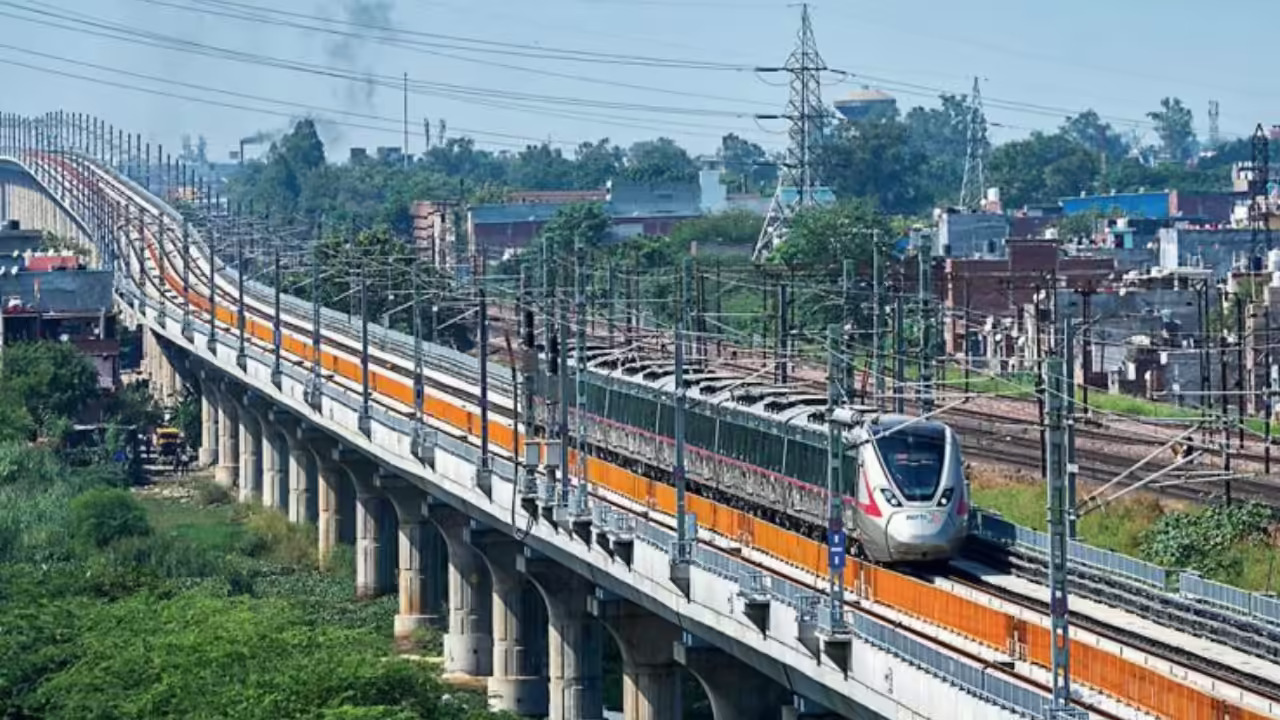
Preliminary discussions suggest that the new RRTS corridor may start from Sarai Kale Khan, Delhi’s emerging multi-modal transport hub, and travel through several key nodes in Noida and Greater Noida.
Possible stations along the new route
- Sarai Kale Khan
- DND corridor
- Noida City Centre
- Noida Phase II
- Surajpur
- Pari Chowk
- Ecotech-6
- Dankaur
- Yeida Sectors 18 and 21
- Noida International Airport
Officials stated that the exact route length, station locations, and required land acquisition will be finalized only after NCRTC completes the feasibility assessment.
Alternate starting point
If technical constraints arise at Sarai Kale Khan, New Ashok Nagar may be considered as an alternate terminal station, offering another strong connection point with Delhi and the existing metro network.
Why Extending Through Greater Noida West Was Dropped
One of the options previously examined was an extension through Greater Noida West. However, this was rejected due to concerns about route duplication.
The Noida Metro Rail Corporation (NMRC) is already planning an Aqua Line extension from Sector 51 to Knowledge Park-5. Extending the RRTS through the same stretch would:
- Duplicate infrastructure
- Reduce ridership efficiency
- Increase project cost
- Offer little benefit to Delhi-bound airport passengers
Therefore, officials concluded that this alignment would neither be economically viable nor strategically useful.
Benefits of the New RRTS Corridor
The revised alignment is being planned to bring several transformative advantages to the region.
1. Direct Delhi–Jewar Connectivity
A direct Rapid Rail link will significantly cut travel time between Delhi and the airport, matching global best practices for airport transit systems.
2. Seamless Integration With the NCR Network
Starting from Sarai Kale Khan, already a major transit interchange, will enable passengers to switch between:
- Delhi Metro
- Inter-state buses
- Existing and future RRTS corridors
- Indian Railways
3. Improved Airport Accessibility
With Noida International Airport expected to serve millions of passengers annually, the corridor will be key in managing passenger traffic efficiently.
Also Read: Yamuna Expressway's Real Estate Boom with Noida Airport
4. Economic Boost for the Region
Enhanced mobility will support business, tourism, and real estate development across Noida, Greater Noida, and the Yamuna Expressway region.
5. Reduced Road Congestion
A high-speed transit option will reduce dependence on private vehicles, easing traffic on the Yamuna Expressway and surrounding road networks.
Key Points at a Glance
- Yeida will conduct a feasibility study for a Rapid Rail link from Sarai Kale Khan to Noida International Airport.
- MoHUA rejected the earlier Ghaziabad–Jewar alignment due to major design and demand concerns.
- The new alignment may cover central Noida, Greater Noida, and YEIDA sectors before reaching the airport.
- NCRTC will prepare the report in coordination with Yeida.
- The corridor aims to provide direct Delhi-to-airport connectivity, improve passenger volumes, and integrate with NCR transport networks.
Conclusion
The decision to explore a new RRTS alignment from Delhi’s Sarai Kale Khan, under the ongoing Yeida Evaluates RRTS Route initiative, marks a critical course correction in planning long-term airport connectivity for the National Capital Region. By prioritizing a direct link to Delhi, Yeida and NCRTC aim to ensure that the Noida International Airport is supported by a fast, efficient, and high-capacity public transport system from day one.
As part of the broader Yeida Evaluates RRTS Route assessment, the feasibility study will now determine the technical, operational, and financial viability of the proposed corridor. If approved, the new route will not only streamline airport access but also strengthen the mobility framework of Noida, Greater Noida, and the wider NCR, aligning the region with global standards in integrated transport planning.



Ans 1. Yeida is conducting a feasibility study for a new Rapid Rail Transit System (RRTS) corridor connecting Delhi’s Sarai Kale Khan with the upcoming Noida International Airport in Jewar.
Ans 2. MoHUA raised several objections, including lack of direct Delhi connectivity, route duplication with the Aqua Line extension, and operational issues with sharing infrastructure between Metro and Rapid Rail.
Ans 3. The National Capital Region Transport Corporation (NCRTC), in coordination with Yeida, will prepare the feasibility study for the revised RRTS route.
Ans 4. The proposed alignment may run through DND, Noida City Centre, Noida Phase II, Surajpur, Pari Chowk, Ecotech-6, Dankaur, and Yeida Sectors 18 and 21 before reaching the airport.
Ans 5. The revised alignment will provide a fast, direct link from Delhi to Noida International Airport, offering better passenger flow, greater convenience, and stronger integration with the NCR transport network.