
Table of Content
▲- Background: Sector 53 and the Role of the Chandigarh Housing Board
- What the New Proposal Involves
- Resident's Bodies Object: Fear of Master Plan Violation
- Administrator’s Intervention and Site Inspections
- Housing Scheme Delays and Rising Costs
- A History of Delays in Sector 53
- What Happens Next?
- Conclusion
For the first time in years, the Chandigarh Housing Board has moved to divide a key residential parcel in Sector 53, proposing to auction nearly half of it to a private developer. What may seem like a routine administrative step has triggered a major debate in Chandigarh’s real estate and urban planning circles. Resident bodies argue that the shift violates the city’s master plan, compromises affordability, and pushes the CHB closer to functioning like a commercial developer rather than a public housing agency.
As the Board sends its zoning request to the UT chief architect, questions mount over whether this move aligns with the purpose for which CHB was established in the first place.
Background: Sector 53 and the Role of the Chandigarh Housing Board
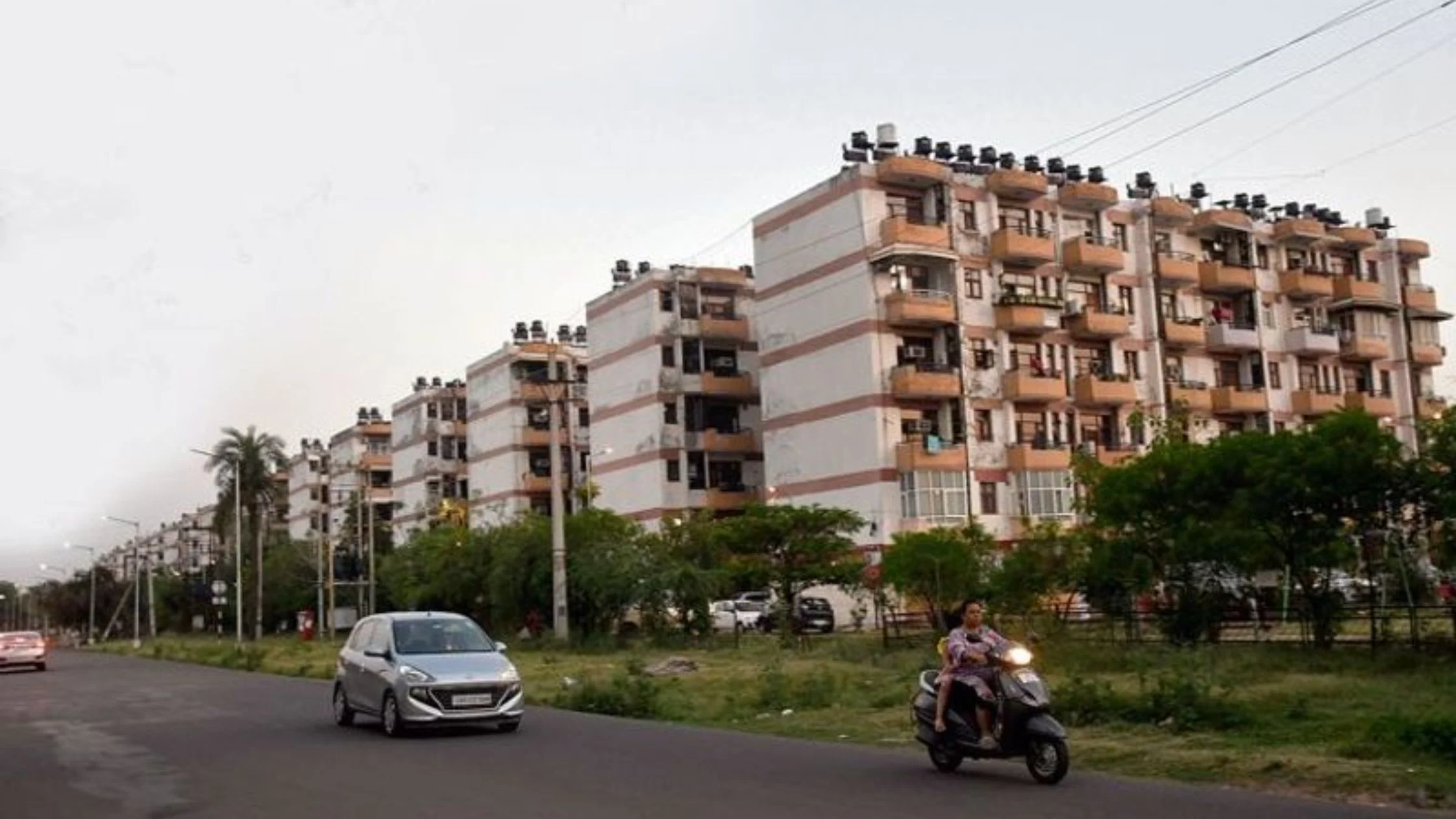
Sector 53 has long been part of the city’s planned residential expansion, with approximately 21 acres earmarked for housing. Out of this, around 11 acres are reserved for a general housing scheme meant primarily for UT employees. The remaining land, however, has now become the centre of controversy.
The Chandigarh Housing Board, established in 1976, was created to provide affordable, good-quality housing to the city’s residents. Over the decades, its schemes have attracted significant demand due to relatively regulated prices and transparent allocation processes. Sector 53 was expected to be one of CHB’s significant offerings, but delays since 2018 and repeated administrative revisions have pushed it into uncertainty.
Also Read: YEIDA to Offer Nearly 1,000 Residential Plots Near Upcoming Noida International Airport
What the New Proposal Involves
Acting on directions from UT Administrator Gulab Chand Kataria, the Chandigarh Housing Board has begun dividing the remaining land in Sector 53 into two pockets. One of these pockets would continue to be used for a housing scheme, while the second would be auctioned to a private builder.
On December 9, CHB’s CEO, Pardeep Kumar, sent a formal letter to the UT chief architect seeking zoning details for the auctionable portion. This is the first administrative step required before land can be offered to private developers.
Officials believe that selling part of the land may help the Board balance financial feasibility, especially as construction costs and collector rates have surged sharply over the last year.
Resident's Bodies Object: Fear of Master Plan Violation
The proposal has not gone down well with Chandigarh’s resident welfare groups. The Federation of Sector Welfare Associations Chandigarh (FOSWAC), led by chairperson Baljinder Singh Bittu, has strongly criticised the Board’s move.
According to FOSWAC, the Master Plan 2031 clearly states that the land in Sector 53 is reserved for a housing scheme. Auctioning it off to a private developer, they argue, would be a direct violation of the approved land-use plan.
Bittu stated that the Chandigarh Housing Board appears to be shifting away from its original public-welfare mandate and is beginning to operate like a profit-oriented real estate developer. He further added that residents expect CHB to deliver affordable housing, not participate in private land sales that could escalate prices even further.
Administrator’s Intervention and Site Inspections
The recent proposal is not an isolated instruction; it is part of a broader review of housing and land utilisation by the UT Administration. In October, Administrator Kataria had directed officials to explore the feasibility of dividing nearly eight acres of land into two parts one for auction and the other for housing.
He also asked the planning team to study whether the second pocket could support an increased floor area ratio (FAR), greater building heights and higher density. The intention was to improve financial viability without compromising affordability for economically weaker sections.
On December 7, the Administrator inspected multiple key sites, including the IT Habitat Project in Manimajra, Sanjay Colony in Industrial Area Phase I, the sub-city centre in Sector 43, CHB projects in Sectors 53 and 54, and the land vacated by the furniture market in Sector 54. Shortly after this inspection, the CHB submitted its zoning request for Sector 53.
Housing Scheme Delays and Rising Costs
What was supposed to be a housing scheme launched before Diwali is now facing fresh delays. The Chandigarh Housing Board has acknowledged that rising construction costs are straining the project’s financial model.
Tentative flat prices have increased significantly:
- ₹2.30 crore for a three-bedroom unit
- ₹1.97 crore for a two-bedroom flat
- ₹74 lakh for an EWS unit
Compared to the demand survey earlier this year, prices have shot up by more than 35–40%, primarily due to higher collector rates introduced in April. These price revisions raise concerns about whether the scheme will remain affordable for the intended beneficiaries.
Yet demand remains remarkably strong. During the demand survey, CHB received 7,468 applications for just 372 flats—almost 20 applicants per unit. Applicants had deposited ₹10,000 (for HIG and MIG) and ₹5,000 (for EWS), demonstrating persistent public interest in CHB schemes.
A History of Delays in Sector 53
Sector 53 has faced hurdles for nearly a decade. The first scheme proposed in 2018 attracted only 178 applications for 492 flats, mainly because prices were considered too high at the time ₹1.8 crore for a three-bedroom, ₹1.5 crore for a two-bedroom, and ₹95 lakh for a one-bedroom unit. Due to the poor response, the Chandigarh Housing Board shelved the scheme.
In 2023, the Board attempted to revive it, but then UT Administrator Banwarilal Purohit halted the plan, stating that Chandigarh did not immediately need another housing project. His successor, Kataria, revived it again in late 2024, prompting officials to restart the land assessment and viability studies.
By October 2025, the Administrator recommended revisiting land-use options, leading to the current proposal to auction part of the land.
Also Read: Why Tier 2 Cities Are Emerging as Strong Contenders in India’s Retail Growth
What Happens Next?
With the Chandigarh Housing Board awaiting zoning approval from the UT chief architect, the proposal is now one step closer to implementation. If approved, the land auction would represent a major shift in how CHB manages its assets.
However, the move could also spark more friction between residents, urban planners and the administration. Many believe that once a public housing agency begins divesting land to private builders, it risks setting a precedent that may alter long-term housing affordability in Chandigarh.
Conclusion
The Sector 53 proposal marks a significant turning point for the Chandigarh Housing Board. While rising costs and financial pressures may justify exploring new strategies, auctioning public-purpose land to private builders has raised genuine concerns about transparency, affordability and adherence to the Master Plan.
As the administration weighs zoning approvals, Chandigarh stands at a crossroads: Should CHB remain focused on delivering affordable public housing, or should it evolve into a commercially driven land-development entity?
The answer will define the city’s housing landscape for years to come.



Ans 1. CHB plans to divide about 21 acres in Sector 53, auctioning nearly half to a private developer while keeping the rest for a housing scheme, aiming to balance financial feasibility amid rising construction costs.
Ans 2. Resident groups argue that auctioning the land violates the Master Plan 2031, undermines affordability, and shifts CHB from its public-welfare mandate toward a profit-driven developer model.
Ans 3. The scheme has faced repeated delays since 2018 due to high costs and administrative changes. Tentative flat prices have risen significantly, with demand remaining strong.
Ans 4. Prices have risen by 35–40% in the latest revision: ₹2.30 crore for a three-bedroom, ₹1.97 crore for a two-bedroom, and ₹74 lakh for EWS units.
Ans 5. During the latest demand survey, CHB received 7,468 applications for just 372 flats, almost 20 applicants per unit, demonstrating strong demand.
Ans 6. UT Administrator Gulab Chand Kataria directed the division of land, conducted site inspections, and suggested evaluating options like higher FAR and building density to improve financial viability.
Ans 7. Critics fear that selling public housing land to private builders may reduce affordable housing availability, compromise transparency, and set a precedent for commercialisation of CHB assets.
Ans 8. CHB is awaiting zoning approval from the UT chief architect. If approved, the auction to private developers could proceed, while the remaining portion continues as a housing scheme.
Ans 9. Delays stem from high flat prices, administrative halts, changing UT leadership, and rising construction costs, with schemes being shelved or revived multiple times since 2018.
Ans 10. The outcome will influence long-term affordability, CHB’s role as a public housing provider, and the precedent for handling city-owned residential land in future developments.