
Table of Content
▲
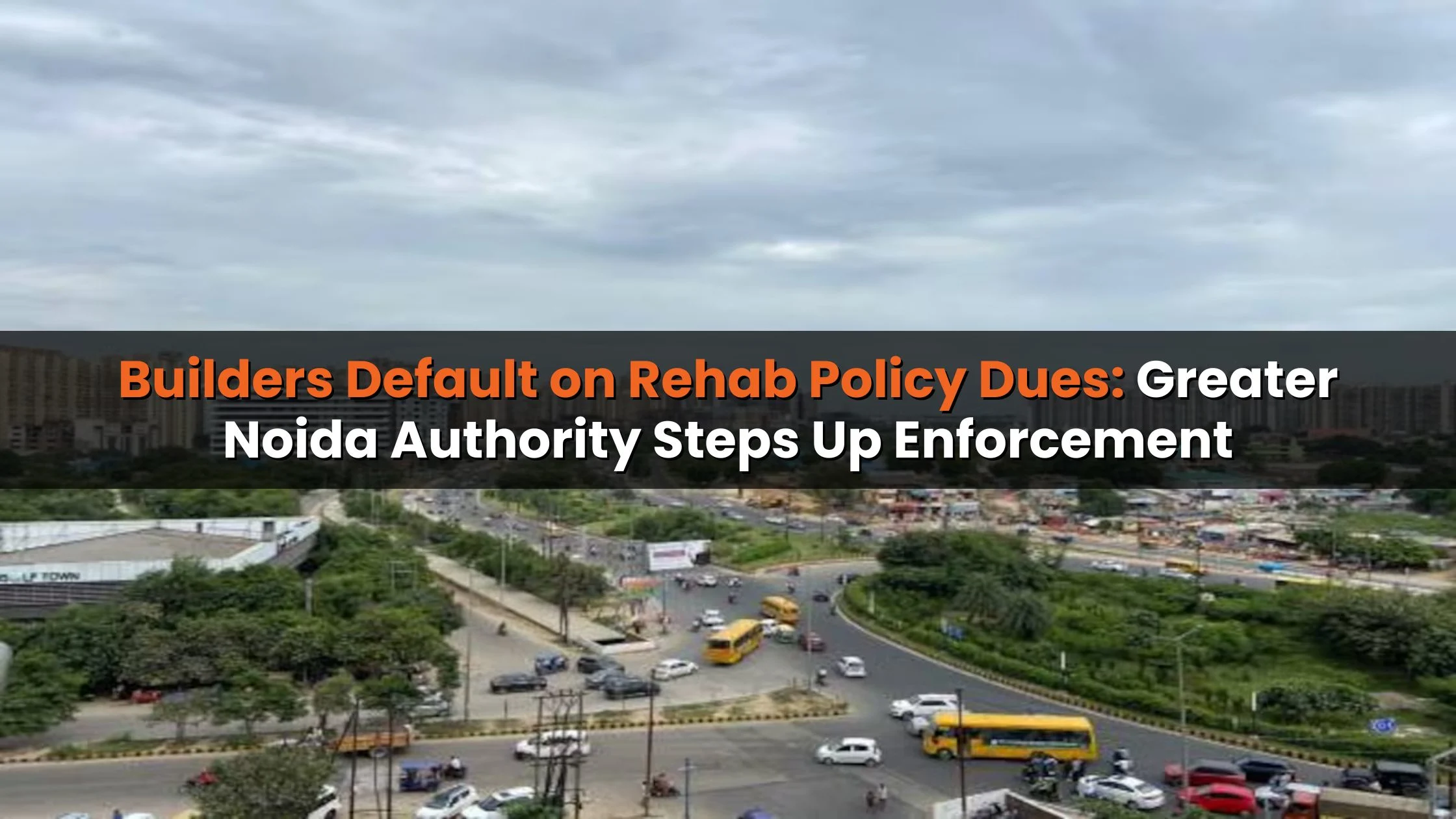
The Greater Noida Industrial Development Authority (GNIDA) has initiated a major crackdown on developers who have failed to comply with dues mandated under the rehab policy for stalled real estate projects. After years of delays and pending payments, the Authority has started withdrawing benefits from non-compliant builders, aiming to accelerate the revival of long-stalled housing projects across the region.
As part of this renewed enforcement effort, GNIDA has so far recovered ₹1,382 crore from the estimated ₹4,749 crore in outstanding dues. However, the Authority maintains that a significant portion remains unpaid, slowing progress on several critical projects and impacting thousands of homebuyers.
Why GNIDA Is Acting Now
Last month, the GNIDA board unanimously decided to strip all benefits granted under the rehab policy from developers who neither paid dues nor responded to repeated notices. Introduced in December 2023, the policy was designed to revive 98 legacy stalled projects by offering structured relief, extended timelines, and financial restructuring opportunities.
While 13 developers have paid their dues in full and received a three-year extension to complete construction, 85 projects remain in various stages of non-compliance. Court stays have added another layer of complexity, freezing recovery efforts in more than half the identified cases.
Also Read: No Home Demolition Without Legal Procedure: Allahabad High Court
Third-Party Assessment to Map Actual Ground Reality
To ensure transparent and accurate evaluation, GNIDA has appointed global consultancy Currie & Brown to carry out physical assessments of all projects covered under the rehab policy. Using ground inspections and drone-based surveys, the consultant will examine construction status, pending work, buyer impact, and the creation of any third-party rights.
This detailed verification is expected to help GNIDA decide the next course of action for each project, particularly those caught in legal or financial disputes.
How GNIDA Has Categorised the 98 Stalled Projects
GNIDA has divided all projects under the rehab policy into four distinct groups based on dues paid, project status, and legal constraints:
1. Fully Paid or Largely Compliant Projects
- 13 projects have deposited 100% dues.
- 21 projects have cleared premium and lease rent but are entangled in court disputes over additional compensation.
- Construction status assessments are ongoing to accelerate completion and delivery.
2. Projects Paying 25% and Partially Clearing Remaining Dues
- 22 developers fall under this category.
- Of ₹960 crore owed, ₹482 crore has been recovered.
- Two developers, AIMS Golf Town and SJP Infracon, together account for nearly ₹300 crore in unpaid dues.
- Multiple stay orders have restricted coercive recovery, prompting GNIDA to initiate one-to-one negotiations.
3. Projects That Paid Only the Initial 25%
- 16 projects in total, with ₹987 crore in dues.
- Developers have paid just ₹230 crore collectively.
- Recovery certificates (RCs) have been issued in three cases.
- Many projects are shielded by High Court stays related to additional compensation.
4. Projects With No Payment at All
- 13 projects have not paid even the mandatory 25% under the rehab policy.
- Only ₹3 crore has been deposited so far.
- Five of these projects are under court protection.
- GNIDA is seeking legal clarity to recover premium, lease rent, and other charges even if the compensation recovery is stayed.
Legal Hurdles and GNIDA’s Strategy to Overcome Them
A major obstacle is the stay on additional farmer compensation, which accounts for ₹865 crore of the total dues. This prevents GNIDA from proceeding with full-fledged recovery. To address this, the Authority has sought legal opinion from the state’s Additional Advocate General and plans to file applications before the High Court to allow partial recovery where possible.
GNIDA is also reevaluating projects where developers paid only the initial 25% but continued selling units, creating third-party rights. The Authority plans to issue final notices before initiating coercive action and withdrawing all rehab policy benefits.
Also Read: Supreme Court Rules: No GST on Leasing Residential Properties for Student Hostels
Implications for Homebuyers and the Market
For thousands of homebuyers awaiting possession, GNIDA’s crackdown is a much-needed push to revive stuck inventories. The rehab policy was designed to bring stalled projects back on track, and strict enforcement now signals that the Authority is prioritising buyer interests over developer non-compliance.
If the consultant’s report is submitted on schedule, GNIDA is expected to hold CEO-level meetings with developers and finalise decisions regarding recovery, cancellation, or further relief measures.
Conclusion
The Greater Noida Authority’s decision to act firmly against defaulting builders marks a significant shift in the implementation of the rehab policy. With physical assessments underway, legal strategies evolving, and non-compliant developers facing stricter scrutiny, the Authority aims to ensure accountability and speed up the revival of long-delayed real estate projects. For homebuyers, this crackdown offers renewed hope that long-pending homes may finally move toward completion.



Ans 1. GNIDA is enforcing the rehab policy to recover dues from developers of stalled projects, ensuring timely completion and protecting homebuyer's interests.
Ans 2. The Authority has recovered ₹1,382 crore out of an estimated ₹4,749 crore in outstanding dues from non-compliant developers.
Ans 3. Non-compliant developers face withdrawal of all benefits under the rehab policy, including extensions and financial relief, and may face coercive action after final notices.
Ans 4. GNIDA has divided 98 projects into four categories: fully paid/compliant, partially paid (25% or more), partially paid (initial 25%), and non-paying projects.
Ans 5. Yes. Several projects are under High Court stays, especially related to additional farmer compensation, which limits GNIDA’s ability to enforce full recovery.
Ans 6. Consultancy Currie & Brown is conducting physical and drone-based surveys to assess project status, pending work, buyer impact, and third-party rights, aiding GNIDA in planning recovery or enforcement.
Ans 7. Homebuyers benefit as GNIDA’s enforcement aims to revive stalled projects, accelerate construction, and ensure developers comply with policy obligations.
Ans 8. Yes. GNIDA is engaging in one-to-one discussions with developers, especially those partially compliant, before taking coercive action or cancelling policy benefits.
Ans 9. The total estimated dues amount to ₹4,749 crore, including premium, lease rent, and additional compensation for farmers.
Ans 10. The Authority aims to ensure accountability, accelerate project completion, safeguard buyer interests, and restore trust in stalled real estate projects in Greater Noida.