

✦ AI Summary
Table of Content
▲- What Is PMAY Gramin and How Does It Work?
- How Much Financial Support Do You Get Under PMAY Gramin?
- What Is the Eligibility Criteria for PMAY Gramin 2026?
- What Documents Are Required for PMAY Gramin?
- How to Apply for PMAY Gramin 2026? Step-by-Step
- How to Claim the Home Loan Subsidy Under PMAY Gramin?
- PMAY Gramin vs PMAY Urban: Key Differences
- How to Track Your PMAY Gramin Application Status?
- What If Your Name Is Not in the Beneficiary List?
- Common Mistakes to Avoid
- Conclusion
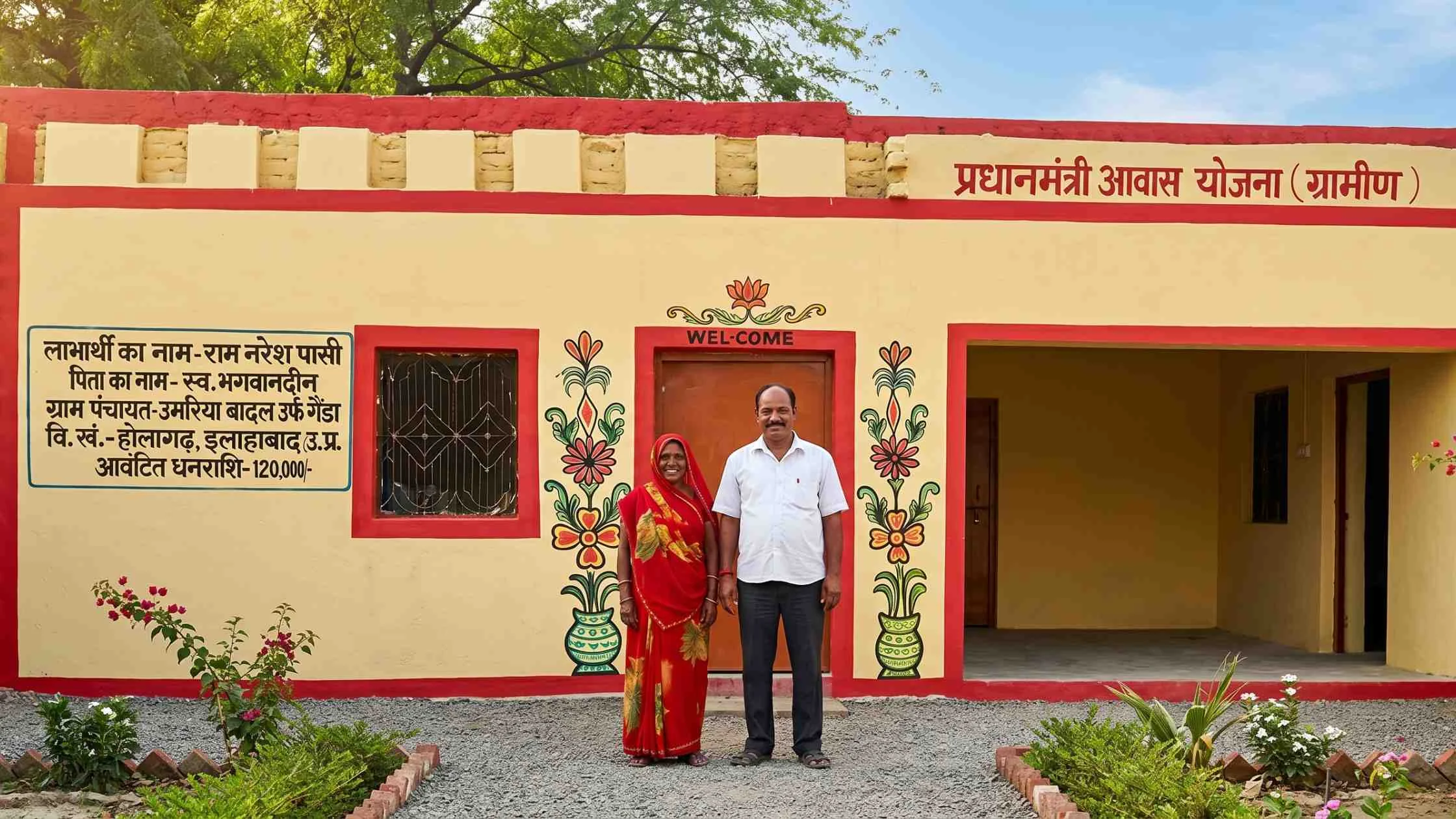
The Pradhan Mantri Awas Yojana Gramin PMAY Gramin scheme establishes itself as India's most effective rural housing initiative because it provides financial aid to families residing in unsafe or kutcha houses. The Ministry of Rural Development launched this scheme in 2016 and it currently operates in Phase 2 with new target approvals and modified eligibility requirements and expanded home construction throughout rural India.
This guide covers everything, how much you get, who qualifies, what documents you need, and the exact steps to claim your home loan subsidy under PMAY Gramin 2026.
What Is PMAY Gramin and How Does It Work?
The PMAY Gramin program provides direct financial aid which goes to your bank account that links to your Aadhaar number while PMAY Urban program gives home loan interest subsidies. The payment structure disburses funds through construction-based installments instead of providing a total amount at once.
The selection process for beneficiaries uses SECC 2011 data together with Awaas+ Survey results which the Gram Sabha verifies at the village level to guarantee transparent and equal distribution methods.
Also Read: How to Get Home Loan for Gram Panchayat-Approved Patta Land
How Much Financial Support Do You Get Under PMAY Gramin?
|
Benefit |
Amount |
|---|---|
|
Financial assistance, Plain areas |
Rs. 1.20 lakh |
|
Financial assistance: Hilly/NE/J&K/Ladakh |
Rs. 1.30 lakh |
|
Toilet construction support (SBM-G) |
Rs. 12,000 |
|
Loan available from financial institutions |
Up to Rs. 70,000 |
|
Maximum subsidy on principal (loan) |
Rs. 2 lakh |
|
Maximum subsidy on payable EMI |
Rs. 38,359 |
All payments are made through electronic transfers which go directly to your bank account that is linked to your Aadhaar number. The scheme does not provide any cash payments to recipients.
What Is the Eligibility Criteria for PMAY Gramin 2026?
|
Eligibility Factor |
Requirement |
|---|---|
|
Housing condition |
Kutcha or one/two-room unsafe house |
|
Monthly household income |
Below Rs. 15,000 |
|
Government employment |
No family member in government job |
|
Income tax |
No family member should be an income taxpayer |
|
Four-wheeler/machinery ownership |
Must not own one |
|
KCC limit |
Below Rs. 50,000 |
Revised rules in Phase 2: You are NOT disqualified if:
- You own a motorized two-wheeler
- You own a refrigerator
Priority is given to:
- Female-headed households with no able-bodied adult male
- Households with no adult between 16 and 59 years of age
- SC/ST families and manual scavengers
- Persons with disabilities in rural areas
Example: A family in rural Maharashtra living in a kutcha house with a monthly income of Rs. 12,000, no four-wheeler, and no government employee in the household, and whose name appears in the SECC 2011 list, would be directly eligible for PMAY Gramin 2026.
What Documents Are Required for PMAY Gramin?
Identity and KYC Documents
- Aadhaar card, mandatory for all adult family members
- Voter ID or any government-issued address proof
- PAN card (if applicable)
Financial and Property Documents
- Active bank account details (Aadhaar-linked)
- Income certificate or last 6 months bank statements
- Land ownership or site allotment documents
- MGNREGA job card number
- Swachh Bharat Mission (SBM) registration number
- Aadhaar consent form
Also Read: Fixed vs. Floating Interest Rate: A 20-Year Cost Breakdown for 2026
How to Apply for PMAY Gramin 2026? Step-by-Step
- Check Your Name in the Beneficiary List: You need to visit pmayg.nic.in and use your Aadhaar number or registration number to search for your name. You can also use the Advanced Search option by selecting your state, district, block, and Gram Panchayat.
- Visit Your Gram Panchayat Office: After your name gets confirmed, you should go to your local Gram Panchayat. Officials will register your details directly into the PMAY-G system. You need to bring all documents that have been mentioned above.
- Submit Your Application: submit your name, gender, address, SECC reference number, and active bank account details. The applicant must provide all necessary identity and declaration documents.
- Link Aadhaar to Your Bank Account: All payments are transferred to bank accounts linked with Aadhaar because that system functions as the sole method for payments. The application requires you to complete this task before submission because your installments will not be processed without it.
- Add Loan Details (If Applicable): You need to choose 'Yes' when the system requests your loan amount because you want to borrow more than the standard financial aid.
- Gram Sabha Verification: The village-level verification process confirms your eligibility through Gram Sabha Verification. The system maintains transparent operations while protecting proper distribution of resources to eligible families.
- Funds Released in Installments: Funds will be released in multiple payments because the disbursement process starts after receiving project approval and continues until construction work reaches completion. You will receive SMS updates on each installment credited to your account.
How to Claim the Home Loan Subsidy Under PMAY Gramin?
PMAY Gramin provides direct financial aid, not an interest subsidy like PMAY Urban. However, if you are taking a loan to build beyond the basic structure, here is how the subsidy claim works:
- Choose a PMAY-certified lender, known as a Primary Lending Institution (PLI)
- Inform your lender upfront that you want to claim the PMAY-G subsidy
- Submit your eligibility proof and required documents to the lender
- Sign a declaration confirming you meet all criteria, your lender files the claim on your behalf
- The PLI must claim the first subsidy within 30 days of loan disbursal
- On approval, the subsidy is directly credited to your loan account, reducing the outstanding principal
PMAY Gramin vs PMAY Urban: Key Differences
|
Feature |
PMAY Gramin |
PMAY Urban |
|---|---|---|
|
Target group |
Rural households |
Urban households |
|
Ministry |
Rural Development |
Housing & Urban Affairs |
|
Type of support |
Direct financial aid |
Interest subsidy on home loan |
|
Beneficiary selection |
SECC 2011 + Awaas+ Survey |
Income-based self-application |
|
Verification process |
Gram Sabha |
ULB/Municipality |
|
Maximum assistance |
Rs. 1.30 lakh + extras |
Up to Rs. 2.67 lakh subsidy |
How to Track Your PMAY Gramin Application Status?
- Go to pmayg.nic.in
- Click on Stakeholders > Search Beneficiary
- Enter your registration number
- No registration number? Use Advanced Search: select state, district, block, and Gram Panchayat
Your screen will show sanction status, installment history, and current construction stage in real time.
What If Your Name Is Not in the Beneficiary List?
|
Escalation Route |
What to Do |
|---|---|
|
Gram Panchayat office |
Request written confirmation; ask Sarpanch to escalate to Block level |
|
BDO/Block office |
Submit application with Aadhaar, land documents, and income certificate |
|
CSC Centre (Common Service Centre) |
File a formal complaint on the PMAY-G grievance portal with a trackable reference number |
Common Mistakes to Avoid
- Not linking Aadhaar to your bank account before applying
- Skipping Gram Sabha verification, your application will not proceed without it
- Applying without confirming your name in the SECC 2011 or Awaas+ list
- Claiming subsidy on an existing home loan, PMAY-G applies only to new constructions
- Having previously received benefits under any central or state housing scheme, this directly disqualifies you
Conclusion
PMAY Gramin stands as the most effective rural housing program which provides multiple benefits to Indian villagers, and its implementation will continue through 2026. Beneficiaries need to complete three steps which include Aadhaar-bank linkage and Gram Panchayat visit and following seven guide steps. The government currently pursues active development of Phase 2 targets which Results in immediate approval of additional housing units. Visit pmayg.nic.in today to verify your application status and begin your journey to owning a permanent home.




Ans 1. PMAY Gramin is a central government scheme that provides direct financial assistance to rural families for constructing pucca houses. It offers up to Rs. 1.30 lakh in hilly regions and Rs. 1.20 lakh in plain areas, along with toilet support and loan subsidy.
Ans 2. Families living in kutcha or unsafe homes, with a monthly income below Rs. 15,000, no government employee or income taxpayer in the household, and whose names appear in the SECC 2011 or Awaas+ survey list are eligible.
Ans 3. Visit pmayg.nic.in, go to Stakeholders, click Search Beneficiary, and enter your Aadhaar or registration number to check your status instantly.
Ans 4. Direct assistance of up to Rs. 1.30 lakh, plus Rs. 12,000 for toilet construction and a loan subsidy of up to Rs. 2 lakh on the principal amount for eligible borrowers taking a home loan.
Ans 5. Aadhaar card, Aadhaar-linked bank account details, MGNREGA job card, SBM registration number, income certificate, land documents, and the Aadhaar consent form.
Ans 6. Yes. Phase 2 is currently active with fresh sanction targets and revised eligibility rules across all states in India.
Ans 7. PMAY Gramin gives direct financial aid to rural families through Gram Panchayat verification, while PMAY Urban offers interest subsidies on home loans for urban applicants based on income category.
Ans 8. No. The PMAY-G subsidy applies only to new home construction. You cannot claim it on an existing or already disbursed home loan.
Ans 9. You can escalate through your Gram Panchayat office, the Block Development Officer (BDO), or a Common Service Centre (CSC) where a formal grievance can be filed with a trackable reference number.
Ans 10. Funds are released in installments directly into your Aadhaar-linked bank account based on the progress of construction, not as a one-time payment.