
✦ AI Summary
Table of Content
▲- What Is Gram Panchayat Approved Patta Land?
- Can You Get a Home Loan on Gram Panchayat Property?
- What Are the Key Challenges of Getting a Home Loan on Patta Land?
- What Is the Eligibility Criteria for a Home Loan on Patta Land?
- What Documents Are Required for Home Loan on Patta Land?
- How to Apply for a Home Loan on Gram Panchayat Property? Step-by-Step
- Which Banks and NBFCs Offer Home Loans for Gram Panchayat Land?
- Which Government Schemes Can Help You Get a Home Loan on Patta Land?
- How Can You Improve Your Chances of Loan Approval?
- Conclusion
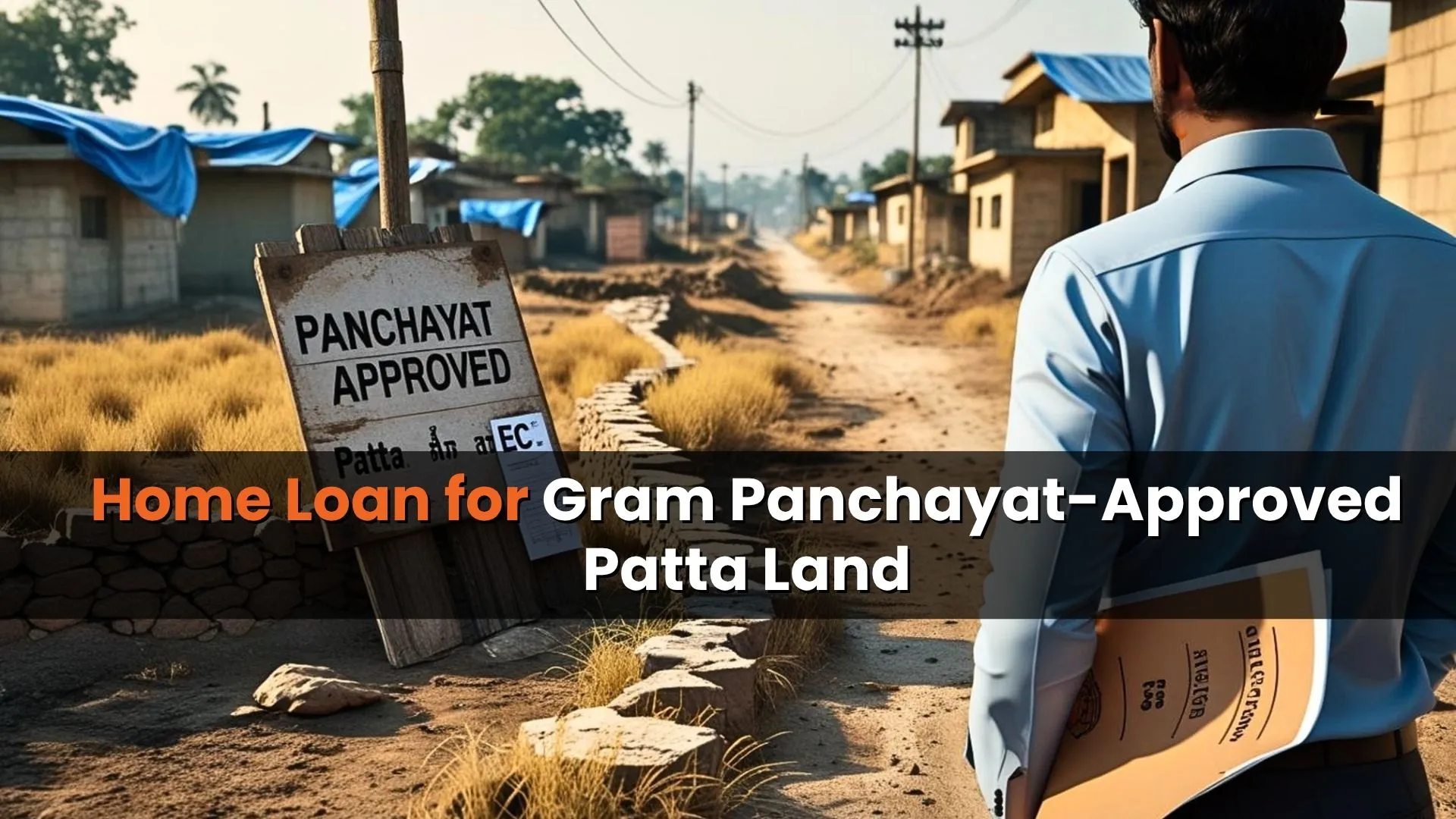
The majority of rural land in India belongs to Gram Panchayat approved Patta land, which homebuyers use to secure home loans for their building and purchasing needs. A home loan for Gram Panchayat Patta land is possible, provided the property has a clear title, a valid Patta document, and the required NOC from the local Panchayat.
This guide explains all necessary eligibility requirements and required documents together with lender information and government schemes while providing detailed instructions for obtaining a home loan on Gram Panchayat approved Patta land in India.
What Is Gram Panchayat Approved Patta Land?
A Patta (also called Record of Rights) serves as a legal land ownership document that the government issues to establish land ownership rights. The term Gram Panchayat-approved Patta land describes land that the local self-governing rural body known as Gram Panchayat manages through its administrative authority.
These categorical zones and property classifications do not fall within the purview of the municipal governments and follow different sets of legal norms, therefore receiving apprehensive perspectives from the part of many lenders.
Also Read: Fixed vs. Floating Interest Rate: A 20-Year Cost Breakdown for 2026
What Are the Different Types of Patta?
|
Patta Type |
Description |
Home Loan Eligible? |
|---|---|---|
|
Freehold Patta |
Clear ownership with no transfer restrictions |
Yes, preferred by lenders |
|
Leasehold Patta |
Government-owned land leased for a fixed period |
Conditional, lender-specific |
|
Conditional Patta |
Restrictions on construction or transfer apply |
Difficult, needs conversion |
Can You Get a Home Loan on Gram Panchayat Property?
Yes, you can get a home loan on Gram Panchayat property, but not all lenders offer this facility. Several banks and NBFCs now extend home loan funding specifically for rural and Gram Panchayat area properties.
This loan can be used for:
- Purchasing a house, plot, or flat up to the 3rd floor
- Constructing a house on owned Patta land
- Transferring an existing high-interest loan to a lower-rate lender
- Refinancing money already spent on property construction or purchase (last 12 months)
- Taking a top-up loan on existing mortgage for personal use or debt consolidation
However, rural properties come with a higher risk profile in lenders' eyes, which directly affects interest rates, loan-to-value ratios, and the number of lenders willing to fund your application.
What Are the Key Challenges of Getting a Home Loan on Patta Land?
|
Challenge |
Impact on Your Loan |
|---|---|
|
Fewer lender options |
Not all banks finance Gram Panchayat properties |
|
Lower LTV ratio |
Rural loans cover only 50–60% vs. 80–90% for urban properties |
|
Higher interest rates |
Risk premium applied due to rural classification |
|
Agricultural land restrictions |
NA conversion mandatory before applying |
|
Infrastructure gaps |
Poor amenities can reduce or delay approval |
The ability to comprehend these challenges from the beginning enables you to create better preparation methods, which will help you avoid rejection during future assessment stages.
Also Read: Step-Up EMI: How It Works and Who Can Benefit from It
What Is the Eligibility Criteria for a Home Loan on Patta Land?
Before applying, confirm you meet the following baseline requirements:
|
Eligibility Factor |
Requirement |
|---|---|
|
Age |
18 to 70 years at loan maturity |
|
Credit Score |
750 or above (CIBIL) |
|
Minimum Annual Income |
₹1 lakh per annum (varies by lender) |
|
Employment Type |
Salaried, self-employed, or agriculturist |
|
Land Title |
Clear, dispute-free Patta |
|
Land Status |
Non-agricultural (NA) conversion mandatory if previously agri-land |
Example: A 35-year-old salaried borrower earning ₹50,000/month with a CIBIL score of 780 and a freehold Patta would qualify for a loan with most rural-focused lenders.
What Documents Are Required for Home Loan on Patta Land?
Property Documents
- Original Patta / Title Deed
- Gram Panchayat No Objection Certificate (NOC)
- Encumbrance Certificate (EC): confirms no pending liabilities
- Khata Certificate and Khata Extract
- Land Conversion Certificate (if formerly agricultural land)
- Latest Property Tax Receipts
- Approved Building Plan from Town Planning Authority
- Sale Agreement between buyer and seller
Personal and Financial Documents
- KYC proof: Aadhaar Card, PAN Card, Passport, or Voter ID
- Income proof: Salary slips (last 3 months) or ITR (last 2 years)
- Bank statements for the last 6 months
- Recent passport-size photographs
How to Apply for a Home Loan on Gram Panchayat Property? Step-by-Step
- Check your credit score: Aim for 750+ before applying. You must fix all mistakes which exist in your credit report before applying for credit.
- Verify the property title: The property title verification process requires a real estate lawyer who will perform a 30-year title search to ensure no existing disputes or encumbrances affect the property.
- Obtain NOC from Gram Panchayat: Obtain NOC from Gram Panchayat: This certificate confirms the land is legally compliant and free from local disputes. Most lenders require this document as a mandatory requirement.
- Convert agricultural land (if applicable): The process starts with applying for Non-Agricultural (NA) status through your state's revenue or land department before visiting any bank to convert agricultural land.
- Choose the right lender: The correct lender selection process requires people to approach banks and NBFCs which specialize in providing loans for rural areas and Gram Panchayat properties.
- Submit complete documentation: The applicant needs to provide all necessary paperwork which must be verified and current and must match all official documents.
- Property valuation by lender: The bank hires a valuer to determine both market value and legal status of the property.
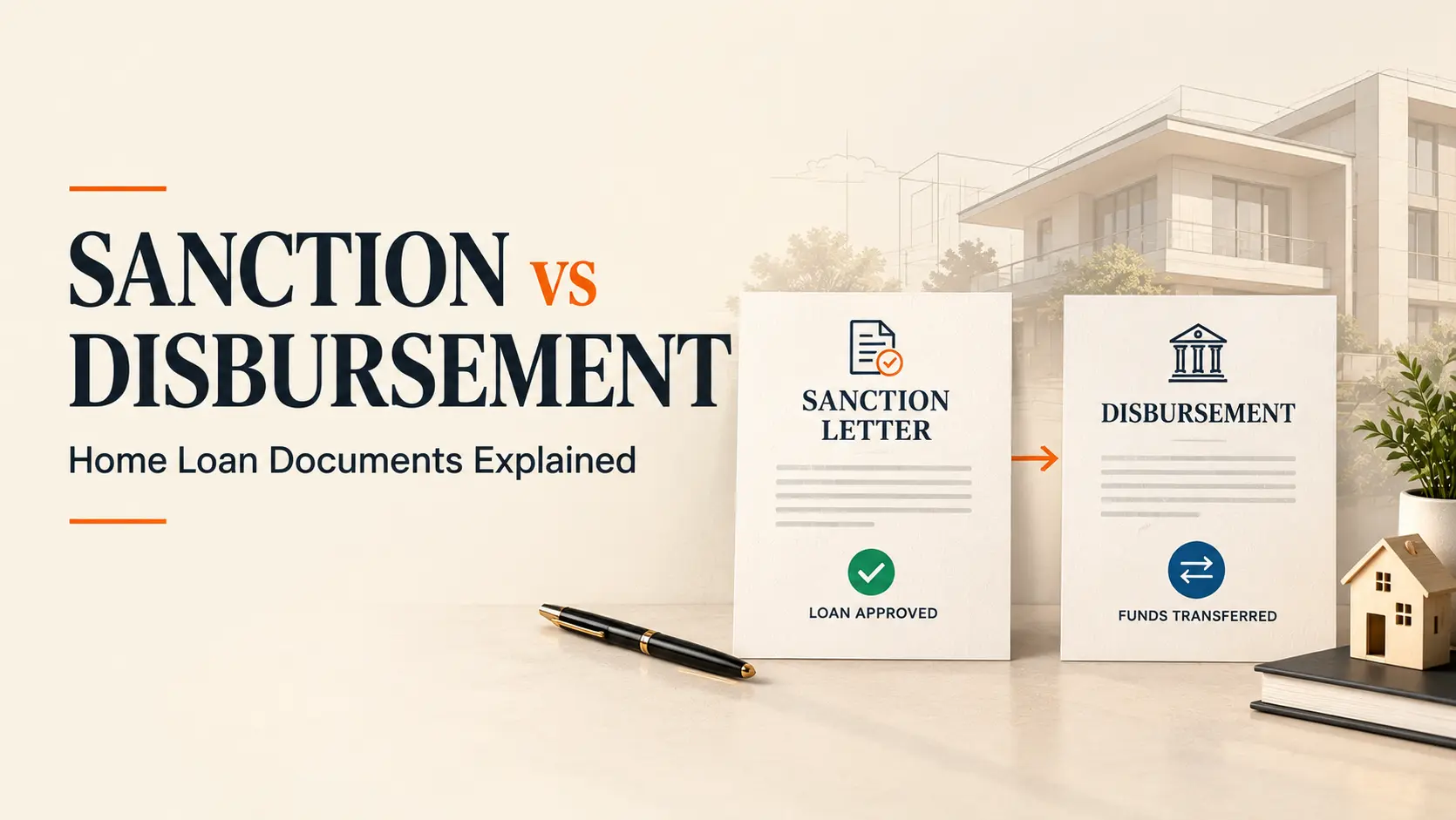
- Loan approval and disbursement: The loan becomes accessible to you in either complete payment or construction-related payments after you receive loan approval.
Which Banks and NBFCs Offer Home Loans for Gram Panchayat Land?
|
Lender |
Type |
Key Strength |
|---|---|---|
|
SBI |
Public Sector Bank |
Rural housing under PMAY-G and government schemes |
|
HDFC Bank |
Private Bank |
Dedicated rural housing finance division |
|
Hero Housing Finance |
Housing Finance Co. |
Funds Gram Panchayat, Lal Dora, and Gunthewari properties |
|
Star HFL |
Housing Finance Co. |
Accepts Panchayat ownership certificates for equitable mortgage |
|
Bajaj Finserv |
NBFC |
Flexible eligibility for rural and semi-urban borrowers |
|
NABARD-linked Banks |
Cooperative / RRB |
Specialised in agricultural and rural borrower profiles |
Which Government Schemes Can Help You Get a Home Loan on Patta Land?
- Gramin consists of interest subsidies to eligible rural applicants in the construction or purchase of permanent homes (pucca) on Patta lands.
- Rural Housing Fund (RHF): It is implemented by the NHB, and it gives refinance support to lenders extending rural housing credit.
- NABARD Rural Housing Finance: helps home loans to be taken in the village through cooperative banks and regional rural banks.
- State Government Schemes: Numerous states provide home loan borrowers from rural areas with stamp duty exemptions together with decreased registration fees and extra financial assistance. The current benefits are available through your state's housing department portal.
You can enjoy reduced financial benefits by coupling PMAY-G with your home loan like elevated housing finance interest rates and monthly EMIs.
How Can You Improve Your Chances of Loan Approval?
- Maintain a CIBIL score of 750 or above before applying
- Ensure your Patta details exactly match your KYC documents
- Complete NA (Non-Agricultural) land conversion before submitting the loan application
- Keep 40–50% of the property value ready as a down payment, given the lower LTV on rural loans
- Add a co-applicant (spouse or earning family member) to increase combined income eligibility
- Engage a certified real estate lawyer for thorough title verification
- Apply under PMAY-G to reduce EMI burden through interest subsidies
Small steps taken before applying can make a significant difference in approval speed and loan terms.
Conclusion
You can get approved for a home loan because you possess the necessary documents and a clear property title and you have selected the appropriate lending organization. The foundation of every successful application is a valid NOC from the Gram Panchayat, an updated freehold Patta, a credit score above 750, and completed agricultural land conversion where applicable. The availability of government schemes such as PMAY-G together with dedicated rural lenders who now support these properties makes homeownership on your Gram Panchayat Patta land feasible through proper planning.




Ans 1. Yes, you can get a home loan on Gram Panchayat approved Patta land. Several banks and NBFCs including SBI, HDFC, Hero Housing Finance, and Bajaj Finserv offer rural home loans, provided the property has a clear title, valid Patta, and a NOC from the local Gram Panchayat.
Ans 2. Most lenders require a minimum CIBIL score of 750 for a home loan on Patta land. A higher score improves approval chances and may also help you negotiate better interest rates.
Ans 3. Yes, a No Objection Certificate (NOC) from the Gram Panchayat is mandatory for most lenders before they can process a home loan application on rural Patta land. It confirms the property is legally compliant and free from local disputes.
Ans 4. No, you cannot get a home loan on agricultural Patta land without first converting it to Non-Agricultural (NA) status. This conversion must be completed through your state's revenue or land department before approaching any lender.
Ans 5. For Gram Panchayat and rural properties, lenders typically offer a lower LTV ratio of 50–60% of the property's market value, compared to 80–90% for urban properties. Borrowers should be prepared to arrange a larger down payment of 40–50%.
Ans 6. PMAY-G (Pradhan Mantri Awas Yojana – Gramin) offers interest subsidies for eligible rural borrowers constructing or purchasing a permanent (pucca) home. NABARD-linked banks and the Rural Housing Fund (RHF) also support rural home loan financing.
Ans 7. Patta, NOC, EC, Khata, tax receipts, building plan, KYC, income proof, and bank statements.
Ans 8. Yes, lenders may charge slightly higher rates due to higher perceived risk.
Ans 9. Yes, loans are available for house construction on owned Patta land with proper approvals.
Ans 10. Yes, salaried, self-employed individuals, and agriculturists can apply if they meet income criteria.