
_1794900172.webp)
✦ AI Summary
Table of Content
▲- What Are the Best Modern Kitchen Handle Designs for Indian Homes?
- What Size Kitchen Handles Should You Choose?
- Which Material Is Best for Kitchen Handles in India?
- How Much Do Kitchen Handles Cost in India?
- Where Should You Place Kitchen Handles on Cabinets and Drawers?
- How Do You Clean Kitchen Handles in an Oily Indian Kitchen?
Kitchen handles change how a modular kitchen looks for very little money, and they are also the part you touch with oily hands every day. So style is only the first decision. Size, material and placement decide whether a handle still looks and feels right two years later.
What Are the Best Modern Kitchen Handle Designs for Indian Homes?
1. Slim bar handles
Brushed steel, chrome or satin nickel bars suit flat-panel drawers, tall units and overhead cabinets. They are easy to grip and strong enough for heavier loads, which makes them the safest all-rounder.
DERN DETAILS________.jpg)
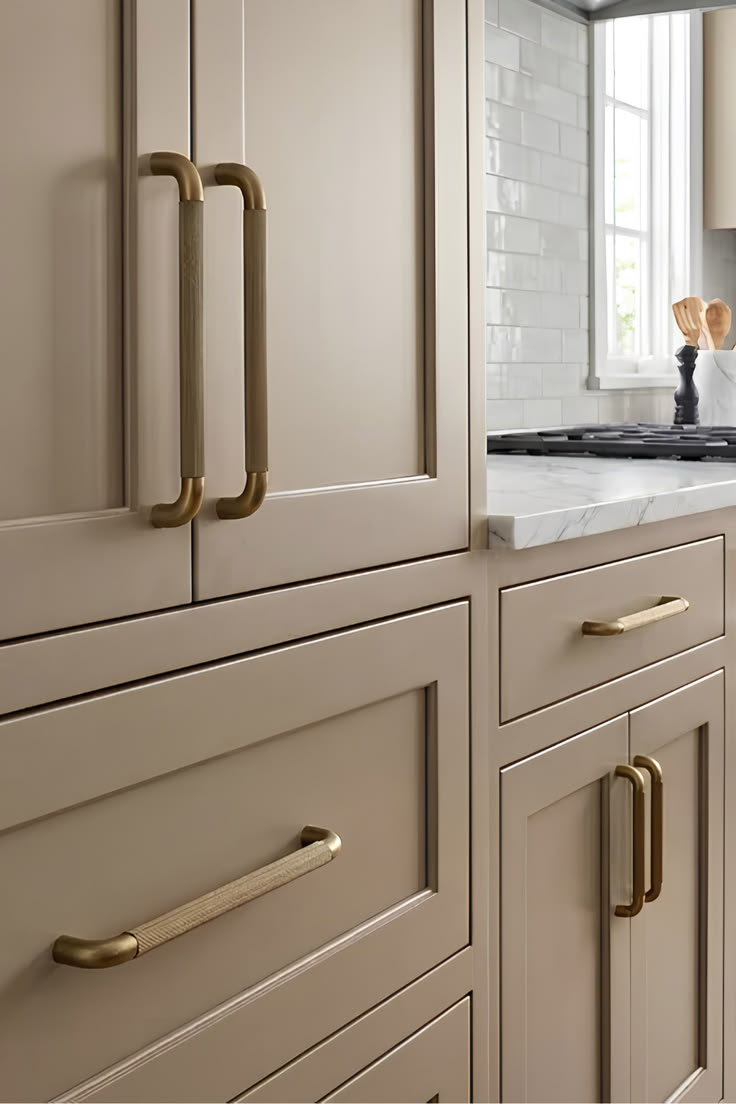
2. Antique brass handles
Aged brass adds warmth to sage green, cream, white and dark wood cabinets. The finish is softer than polished metal and darkens with use, so ask whether it is lacquered if you want it to stay uniform.
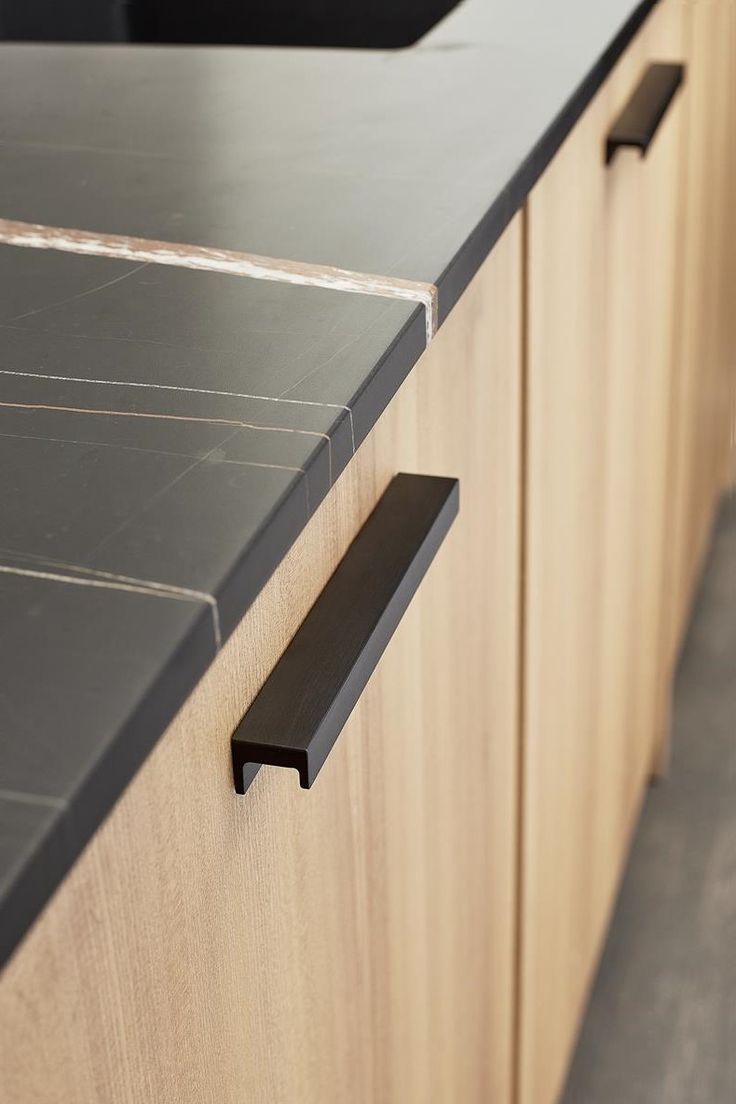
3. Matte black handles
They give strong contrast on white, beige and light grey cabinets, and they also work on charcoal, navy and forest green. Match taps and pendant lights to keep the look balanced. Matte black shows greasy marks, so plan to wipe it regularly, and choose a durable coating because painted finishes can chip.
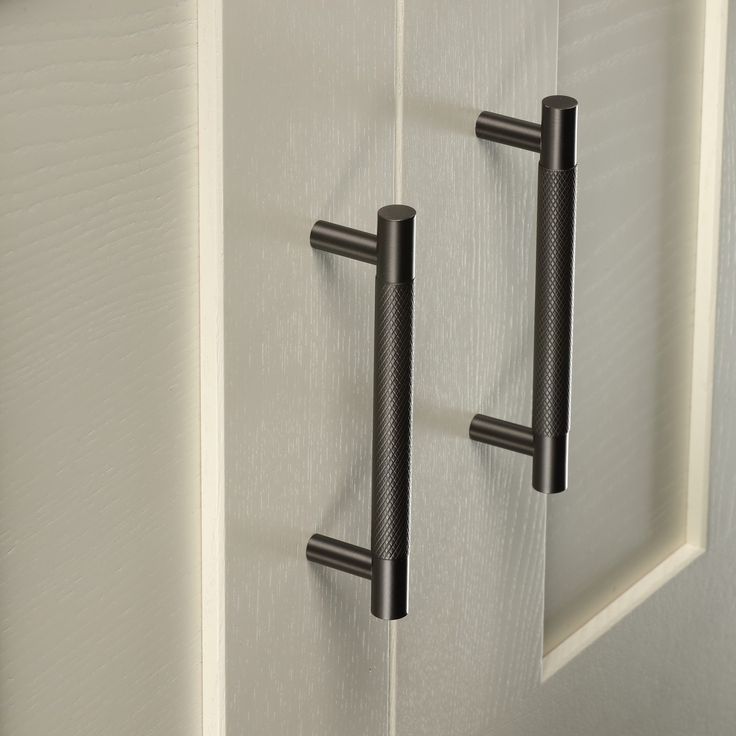
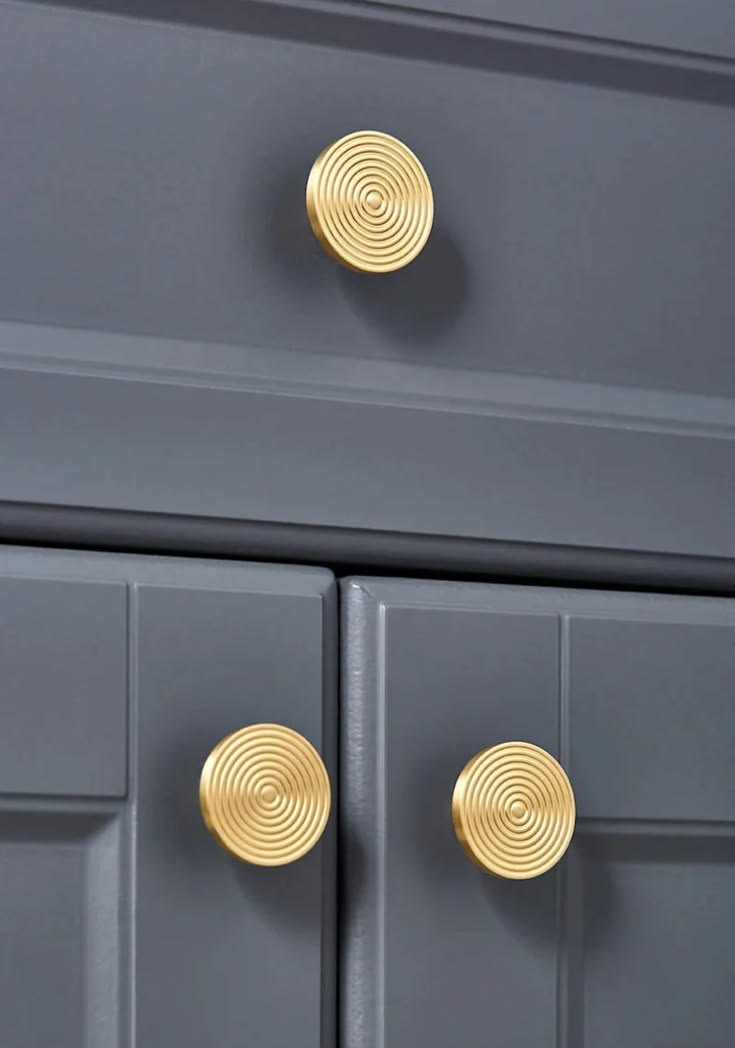
4. Knurled handles
Fine patterns add texture and grip, in brass, bronze, black or nickel. The grooves can hold oil, so clean them with a soft brush.
5. Integrated handles
Gola profiles, inset grooves and cut-outs give a handle-free look on flat-panel modular kitchens. Aluminium profiles come in champagne gold, silver and black. They must be planned at the design stage, because the cabinet profile has to match.
.jpg)
6. Edge pull handles
Slim pulls on the top or side edge keep fronts minimal and suit compact kitchens. Choose edges that are easy to grip.
.jpg)
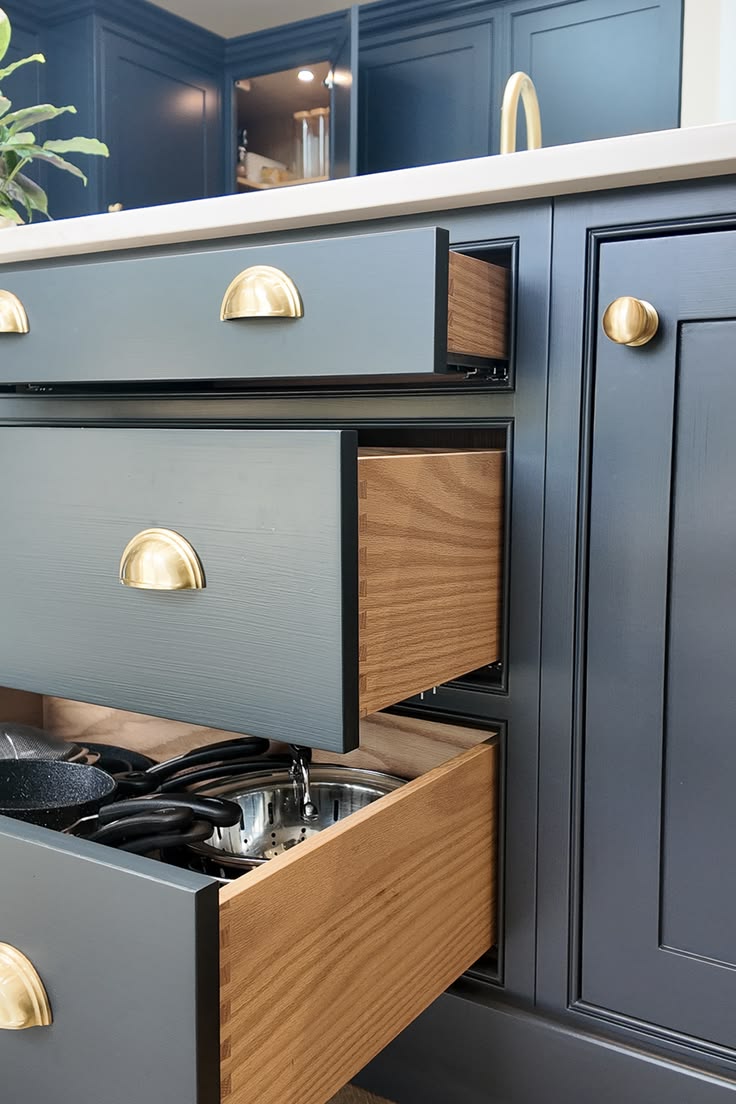
7. Cup pull handles
A curved, semi-circular pull gives drawers a vintage touch and is easy to grip. Use brushed brass or matte black to keep it modern, and it suits Shaker, wooden or pastel cabinets.
8. Sculptural knobs
Geometric, hammered or organic knobs work as accents on neutral cabinets. Use them on smaller doors and in small numbers. Knobs give less grip than pulls, so avoid them on heavy pan drawers.
For more contemporary cabinet finishes and colour combinations, explore these modern kitchen design ideas for Indian homes.
What Size Kitchen Handles Should You Choose?
Handles are sized by centre-to-centre (CTC) spacing, the distance between the two screw holes. It is not the same as overall length, and a handle sold as “160 mm” may have 128 mm hole spacing, so check the CTC.
|
Drawer or door width |
Suggested handle CTC |
|
Under 300 mm |
96 to 128 mm |
|
300 to 600 mm |
128 to 160 mm |
|
600 to 900 mm |
256 to 320 mm, or two 128 mm pulls |
A common rule of thumb is a pull about one-third of the drawer width. Knobs typically run 25 to 38 mm across. If you are replacing handles, measure the existing CTC first. These sizes come from standard hardware practice in other markets, so confirm hole spacing in the listing.
Which Material Is Best for Kitchen Handles in India?
|
Material |
Best for |
Watch for |
Indicative trade price |
|
SS 304 |
Humid and coastal homes |
Higher cost |
Higher than SS 202 |
|
SS 202 |
Dry, inland kitchens |
Less corrosion resistant, not for coastal use |
about ₹25 to ₹90 |
|
Zinc alloy |
Budget decorative finishes |
Plating can wear |
about ₹70 to ₹300 |
|
Brass |
Warm, aging look |
Patina and cost |
Premium designs about ₹1,000 |
Indian kitchens deal with oil, steam and, on the coast, salt air, so corrosion resistance matters more than it does in a dry showroom. These are trade listing prices, and retail prices are usually higher.
How Much Do Kitchen Handles Cost in India?
As a rough example for 20 handles:
- SS 202 at ₹50 each comes to about ₹1,000.
- Zinc alloy at ₹150 each comes to about ₹3,000.
- Premium designer handles at ₹1,000 each come to about ₹20,000.
Handles are a small share of a kitchen budget, so put the money into the drawers you open most. Ask whether the quote includes GST and fitting.
Before finalising your hardware, compare the overall modular kitchen price and installation requirements
Where Should You Place Kitchen Handles on Cabinets and Drawers?
Place handles horizontally on drawers, centred, and vertically on doors. On wide drawers, use one long pull or two shorter ones. Keep the same position and size across a run of cabinets so the lines look deliberate. Limit the kitchen to two metal finishes and match them to taps and fittings. For a similar restrained use of metal, see industrial style home decor ideas.
How Do You Clean Kitchen Handles in an Oily Indian Kitchen?
Wipe weekly with a damp microfibre cloth and mild detergent, then dry. Avoid abrasive pads on brushed, black or brass finishes, and use a soft brush on knurled grooves. Handles near the hob collect grease faster, so wipe those more often.






_1794900172.webp)
Ans 1. A 128 to 160 mm CTC pull is a common choice. A rule of thumb is about one-third of the drawer width.
Ans 2. It is the distance between the two screw holes, which is the measurement you need when buying or replacing a handle.
Ans 3. SS 304 resists corrosion better, so it suits humid and coastal homes. SS 202 is cheaper and acceptable in dry, inland kitchens.
Ans 4. It depends on the coating. Painted black can chip, and black finishes show grease, so choose a hard-wearing coating and wipe regularly.
Ans 5. Yes. Match the existing CTC, or choose handles with a backplate that covers the old holes.
Ans 6. They work well with flat-panel modular cabinets, but the profiles must be planned at the design stage and the edges need a comfortable grip.