
✦ AI Summary
Table of Content
▲
Industrial style was born in converted Brooklyn lofts and London warehouses buildings with soaring ceilings, cold winters, and genuine exposed ductwork left over from their factory days. None of that describes a standard Indian apartment with a 9-10 foot ceiling and a genuinely hot climate for most of the year. That doesn't mean the look doesn't work here, it means a few things need honest adaptation before you commit to it.
Does Industrial Style Actually Work in an Indian Climate?
This is worth addressing directly, since most industrial-style content simply doesn't have to think about it. Exposed concrete and brick have high thermal mass in a cold climate, that mass helps retain warmth, which is part of why the look originated where it did. In direct Indian summer heat, the same materials can absorb warmth through the day and radiate it back into the room, working against you rather than for you, particularly on a west-facing wall that gets strong afternoon sun.
This isn't a reason to avoid the style, it's a reason to be selective about where you use raw, heat-retentive surfaces. An exposed brick or concrete feature on an interior wall, away from direct sun exposure, avoids this problem largely, while the same treatment on an exterior-facing wall in full sun deserves more thought, or a lighter-toned finish that reflects rather than absorbs heat.
Getting the Exposed Brick Look Safely
The most authentic version of this look is achieved by removing sections of plaster from an existing wall to reveal the brick underneath. Before doing this, confirm the wall isn't load-bearing, ideally with a contractor's assessment removing plaster from a structural wall without checking this first is a genuine safety risk, not just a cosmetic decision, and it's a step most decor-focused content skips entirely in its rush to the finished photo.
If you'd rather not take on structural work at all, brick-effect veneer panels or textured wallpaper achieve a visually similar result without touching the wall's structure, and are considerably easier to reverse later if you change your mind a genuinely sensible starting point for renters or anyone not ready to commit to permanent demolition work.
Another way to create the look without structural work is textured brick wallpaper, which can reproduce the exposed-brick effect without removing existing plaster.
Once you have the brick surface, whether real or veneer, current guidance favours letting it do the visual work rather than covering it with too much else: pick a few contrasting decor pieces to display against it, or paint it a single deliberate colour (black for drama, white or light grey to keep the texture while making the space feel more finished) rather than leaving every wall in the room raw.
What's Current in 2026: Soft Industrial
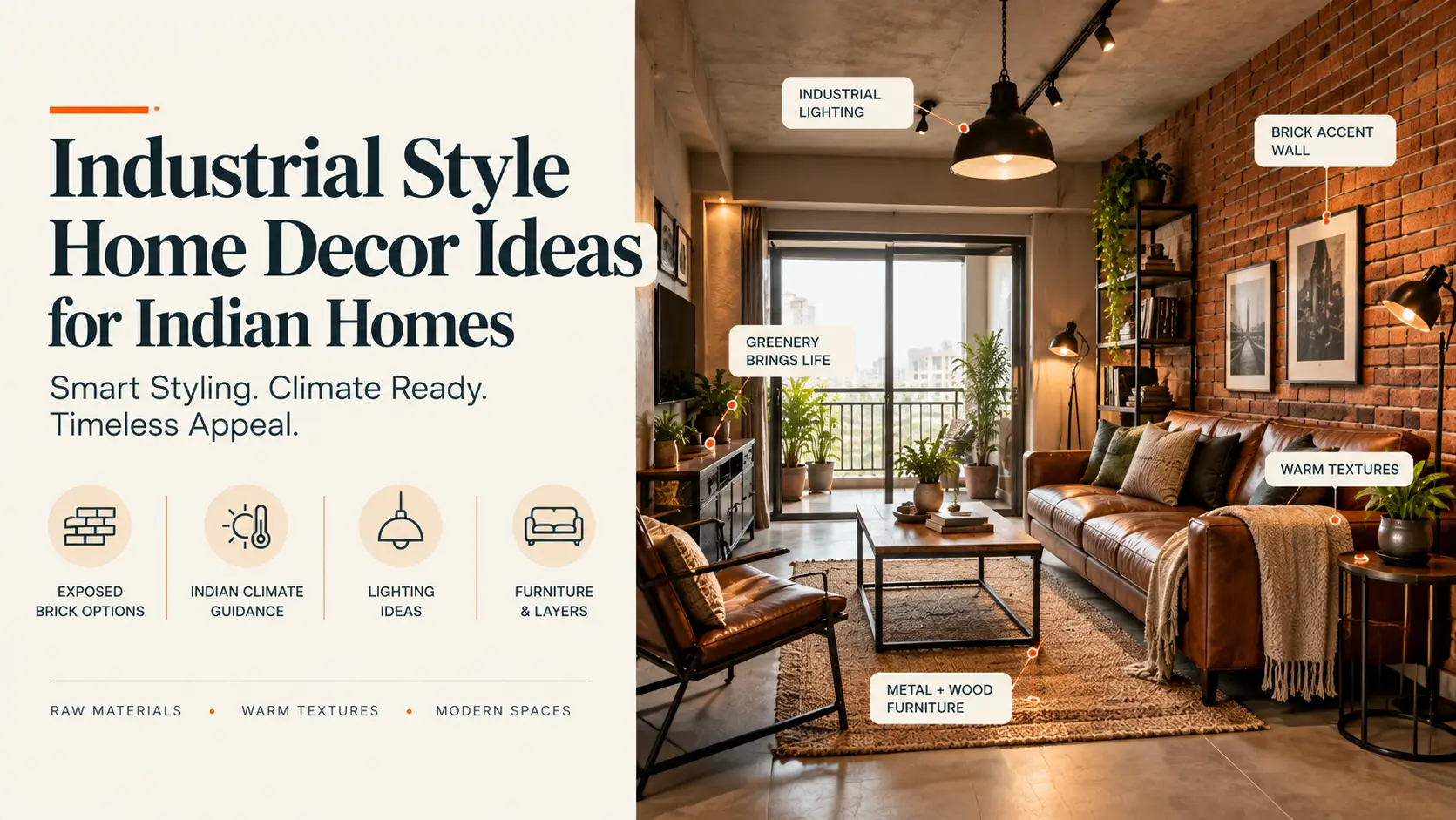
Industrial style has genuinely moved on from its coldest, most utilitarian phase. The current direction, sometimes called "soft industrial" or "industrial boho," layers the same raw materials brick, concrete, metal with warm textures: a shearling throw over a metal-framed chair, a hand-woven rug softening a concrete or hardwood floor, reclaimed wood furniture paired with brushed brass or copper fixtures rather than only matte black. This warmer, more layered version suits Indian homes considerably better than the starkest original loft aesthetic; it keeps the raw character of the style while avoiding the cold, showroom feel that can make a room feel unwelcoming rather than characterful.
Lighting is where this shift shows up most clearly: exposed-bulb fixtures with wire cages, oversized metal pendants, and vintage-inspired fixtures remain the signature choice, but bright metal finishes brushed brass, satin bronze, aged nickel are increasingly favoured over the all-matte-black look that dominated for years.
Lighting can make or break an industrial room, so see our guide to lighting ideas for Indian homes for room-wise fixture and layering options.
Start With One or Two Elements, Not the Whole Room
This is genuinely sound advice worth taking seriously in an Indian apartment specifically, where rooms tend to be smaller than the lofts this style was designed for. Choose one or two signature elements: a striking metal pendant light, a single exposed or veneer brick accent wall, a reclaimed wood dining table rather than combining exposed brick, concrete flooring, metal shelving, and industrial lighting all in the same room. For more ideas, explore these industrial living room design ideas for Indian homes. In a smaller Indian living room or bedroom, committing fully to every element at once can read as heavy and cold rather than characterful, while one or two well-chosen pieces against otherwise clean, neutral walls achieve the same effect with more restraint, and considerably more warmth.
If you're comparing industrial with other contemporary styles, see our guide to trending living room themes for 2026.





Ans 1. Yes, with some adaptation the style translates well, but exposed concrete and brick retain heat in direct Indian sun, so it's worth being selective about which walls carry a raw finish, especially on west-facing surfaces.
Ans 2. Not necessarily. Removing plaster to expose real brick requires confirming the wall isn't load-bearing first. Brick-effect veneer panels or textured wallpaper achieve a similar look without any structural work.
Ans 3. Not the current 2026 direction: "soft industrial" pairs raw materials like brick and concrete with warm textures (rugs, shearling, reclaimed wood) and warmer metal finishes like brushed brass, moving away from the all-matte-black, purely utilitarian original look.
Ans 4. Choose one or two signature elements: a metal pendant light, a single accent wall, or a reclaimed wood table rather than combining every industrial element in one room, which can feel heavy in a smaller Indian space.
Ans 5. It can, particularly in direct sun on an exterior-facing wall, due to brick and concrete's high thermal mass. An interior wall away from direct sun exposure avoids most of this effect.
Ans 6. Exposed-bulb fixtures with wire cages and oversized metal pendants remain signature choices, with bright metal finishes like brushed brass and satin bronze increasingly favoured over the all-matte-black look.
Ans 7. Yes, if you scale back to one or two elements rather than the full-room treatment a full commitment tends to overwhelm a smaller Indian apartment room in a way it wouldn't in the large, open lofts the style originated in.