
✦ AI Summary
Table of Content
▲
The kitchen of your home shows no changes from its appearance from the last five years, having the same appearance with crowded surfaces, old cabinets, and no space for movement. Indian homeowners delay kitchen upgrades because of high expenses, and it creates excessive interruptions. The complete destruction of existing spaces does not define modern kitchen design for 2026.
Indian kitchens have emerged as the most architecturally designed space throughout, which range from compact urban apartments to large suburban residences. The complete kitchen transformation process became accessible to users through the combination of better kitchen designs, matte finishes and smart storage solutions with low-cost smart kitchen appliances. This guide provides complete coverage of all decisions required for a modular kitchen renovation project and their respective execution methods.
Choosing the Right Kitchen Layout
The layout is the most important decision in any kitchen renovation. When you make a mistake in your kitchen’s layout, all your expensive materials become useless. The correct design enables compact kitchens to provide users with a seamless cooking experience throughout the day.
|
Layout |
Best For |
Key Advantage |
|---|---|---|
|
L-Shaped |
Small to mid-size homes |
Ergonomic work triangle, open feel |
|
U-Shaped |
Families with heavy cooking |
Maximum storage and counter space |
|
Parallel / Galley |
Compact apartments |
Space-efficient, easy workflow |
|
Open Kitchen |
Modern open-plan homes |
Social, spacious, light-filled |
|
Island Kitchen |
Large or luxury homes |
Multi-functional prep + dining zone |
The Top Pick for Urban India: The L-shaped modular kitchen remains the most popular choice for mid-sized homes. The design establishes a tidy work triangle that connects the stove and sink and refrigerator, while the breakfast counter, which extends into the dining area, occupies no additional space.
Also Read: 15 Walk-In Wardrobe Ideas for Modern Homes That Maximize Space and Style
Top Modern Kitchen Design Trends for 2026
The Indian kitchen design of 2026 shows its design direction through two primary elements which include warm minimalism and cultural design traditions that use straight architectural lines and practical elements which maintain their aesthetic appeal. The following trends currently determine the display patterns used by all modular kitchen showrooms.
1. Handle-less cabinets
Push-to-open mechanisms create a completely flat surface that maintains an uninterrupted appearance because it lacks any visible hardware that would attract dirt or oil.
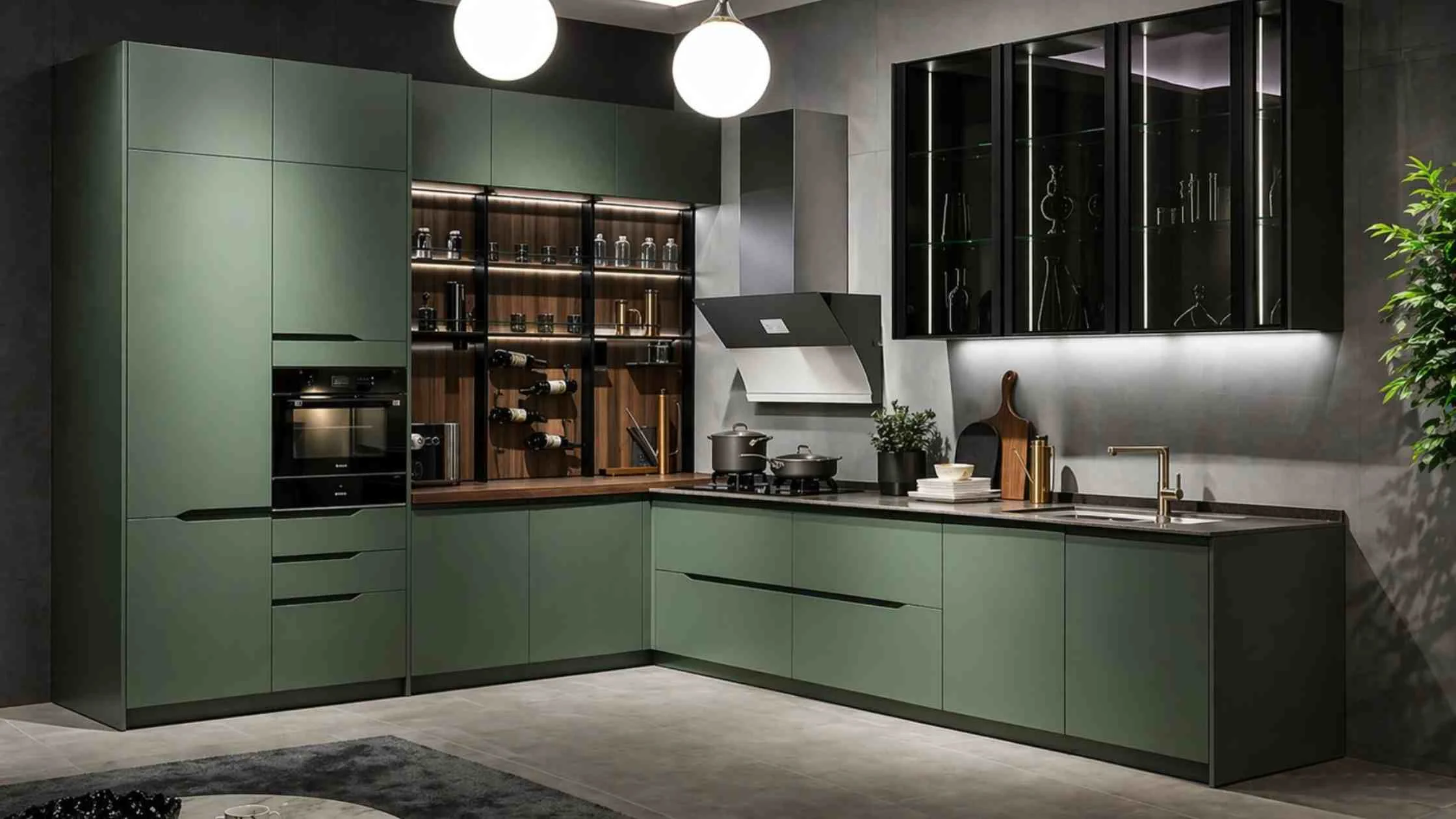
2. Matte finishes
The primary options for shutter and cabinet door materials currently available in the market use matte laminates and earth-tone polyurethane finishes as their main materials because high-gloss surfaces have become outdated.
.webp)
3. Two-tone kitchens
The kitchen design uses different colors for its upper and lower cabinets, which creates visual interest through white upper cabinets and deep forest green lower cabinets.
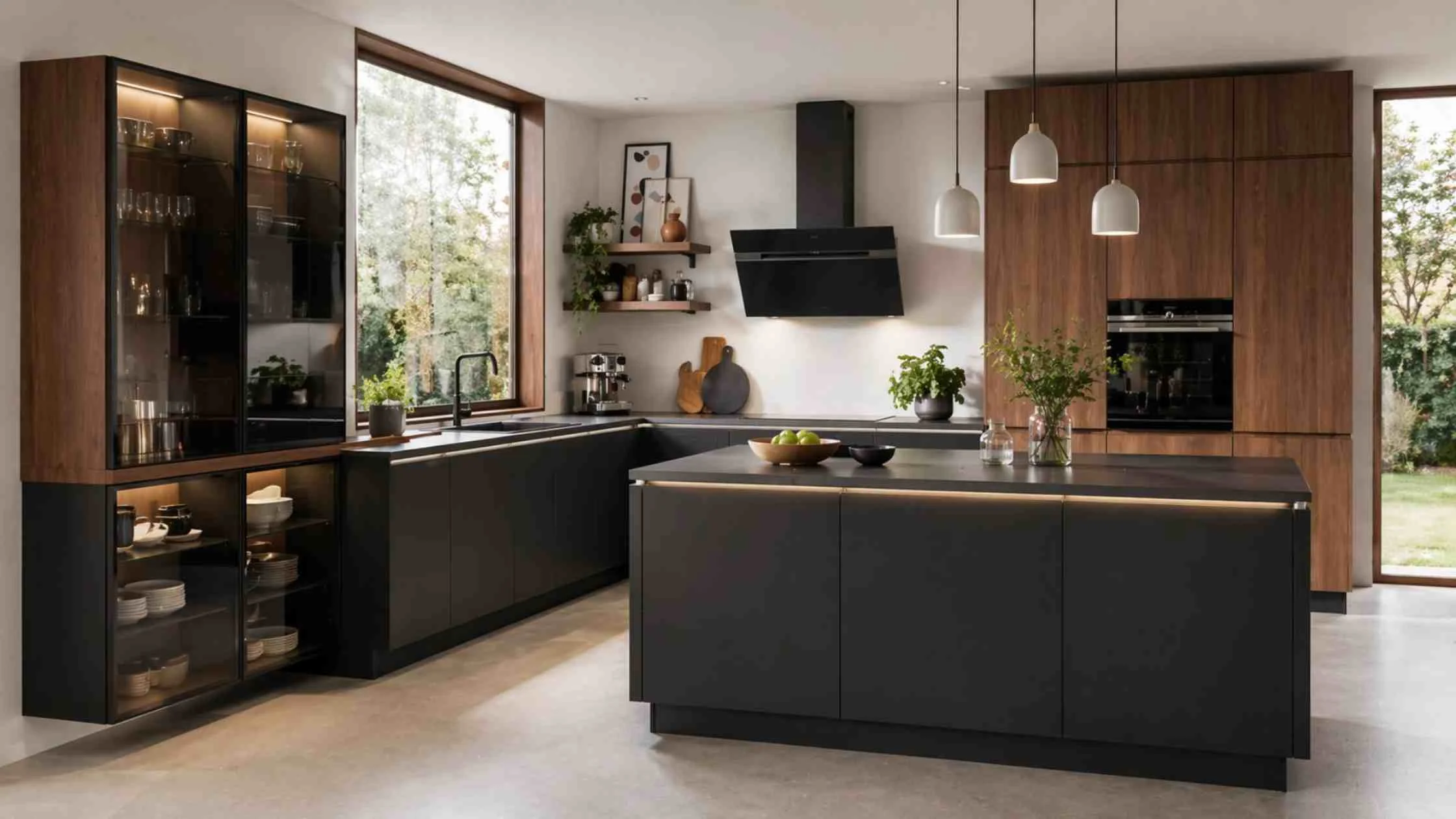
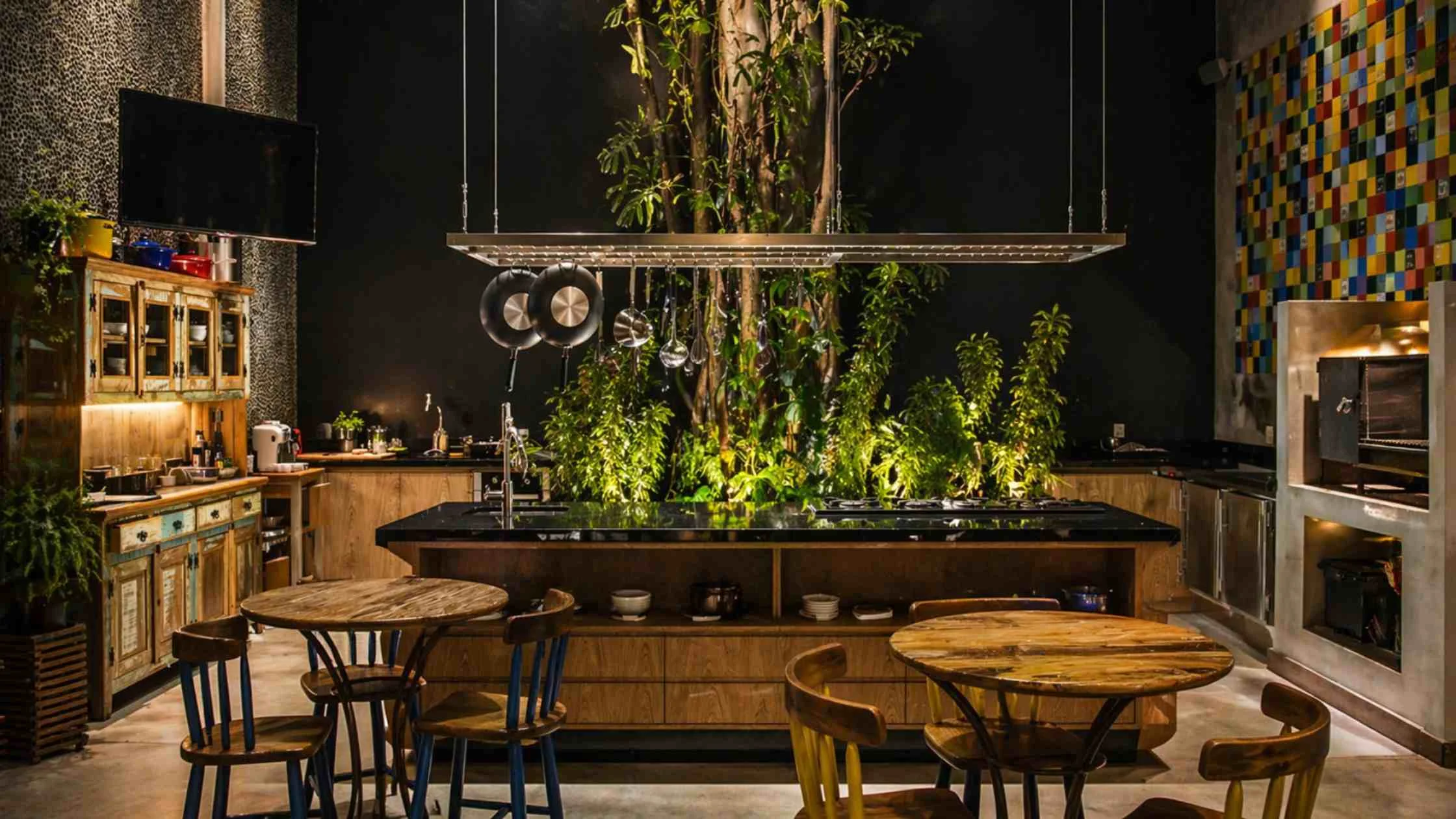
4. Biophilic design
Establishes a connection with nature through its design elements, which include indoor plants and large windows and natural wood textures and stone surfaces. The kitchen design needs indoor plants and large windows and natural wood textures and stone surfaces, which create an enclosed atmosphere to achieve its intended open space.
5. Quiet luxury aesthetic
Achieves its theme through two elements, which include high-quality materials and hidden appliances and clean surfaces. The product delivers exceptional quality through its absence of noticeable hardware and its use of understated color schemes.
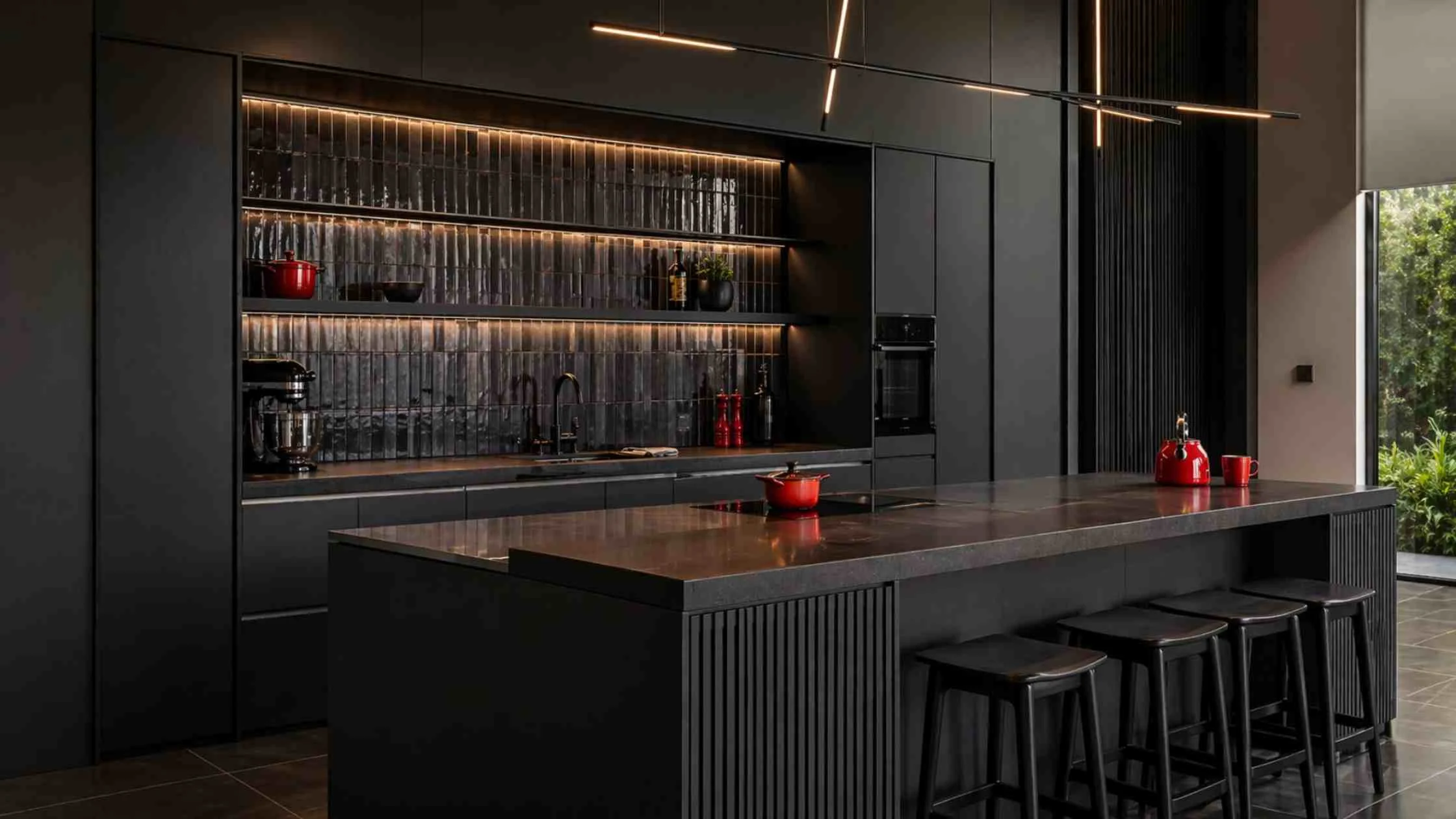
6. Curved counters and fluted cabinets
Smooth curves and vertical grooves are incorporated into treatments, replacing sharp, boxy geometries in order to give a cozy, more solemn finish.
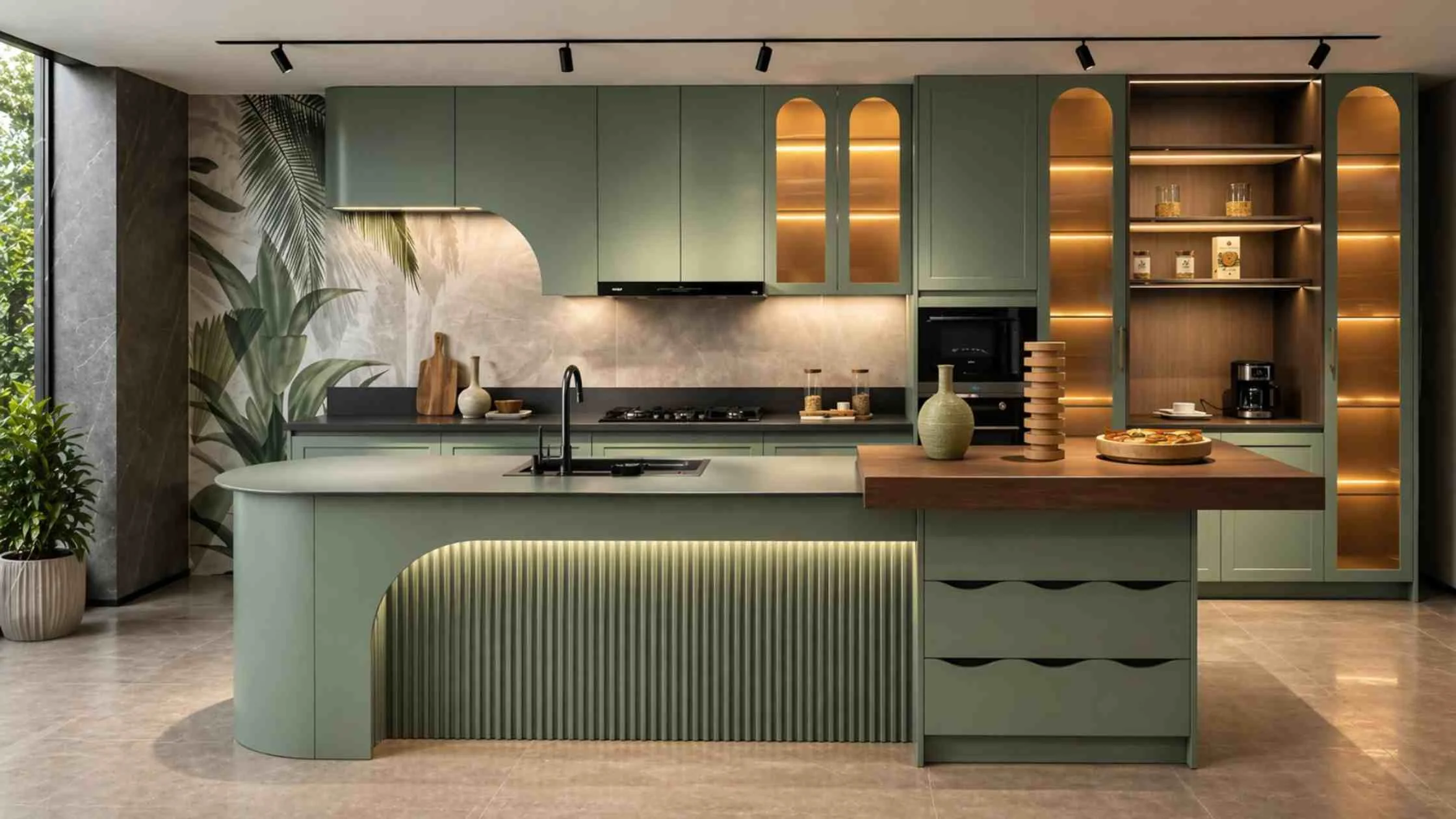
7. Metal accents
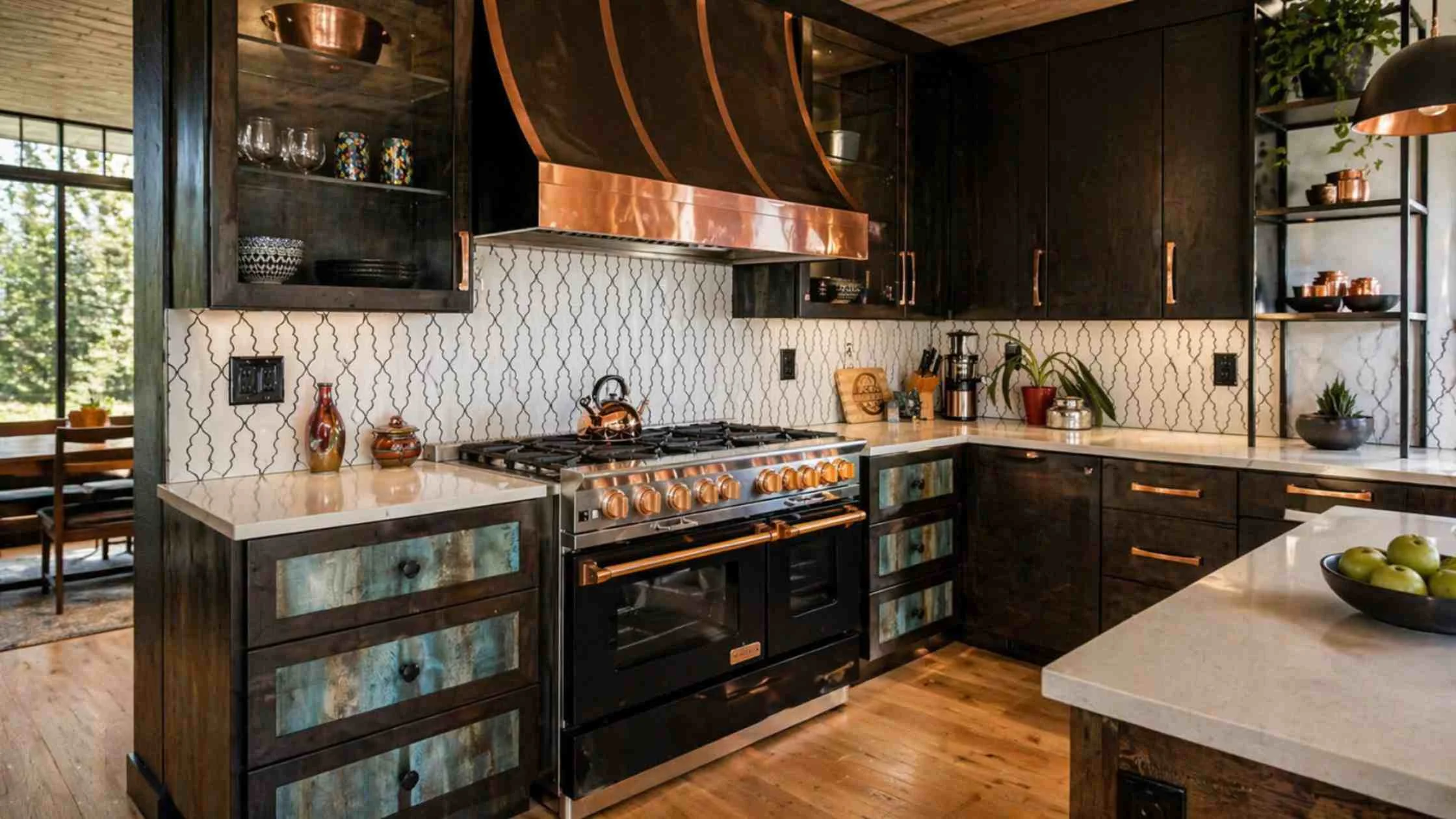
Brass and gold and copper hardware serve as metal accents that provide kitchens with neutral color schemes and a contemporary elegant style that complements Indian design elements.
Colours and Finishes That Work Best in Indian Kitchens
The color of your kitchen space determines its daily experience of spaciousness and cleanliness and welcoming atmosphere. The wrong palette in a compact Indian kitchen can make it feel tighter, darker, and more oppressive than it actually is.
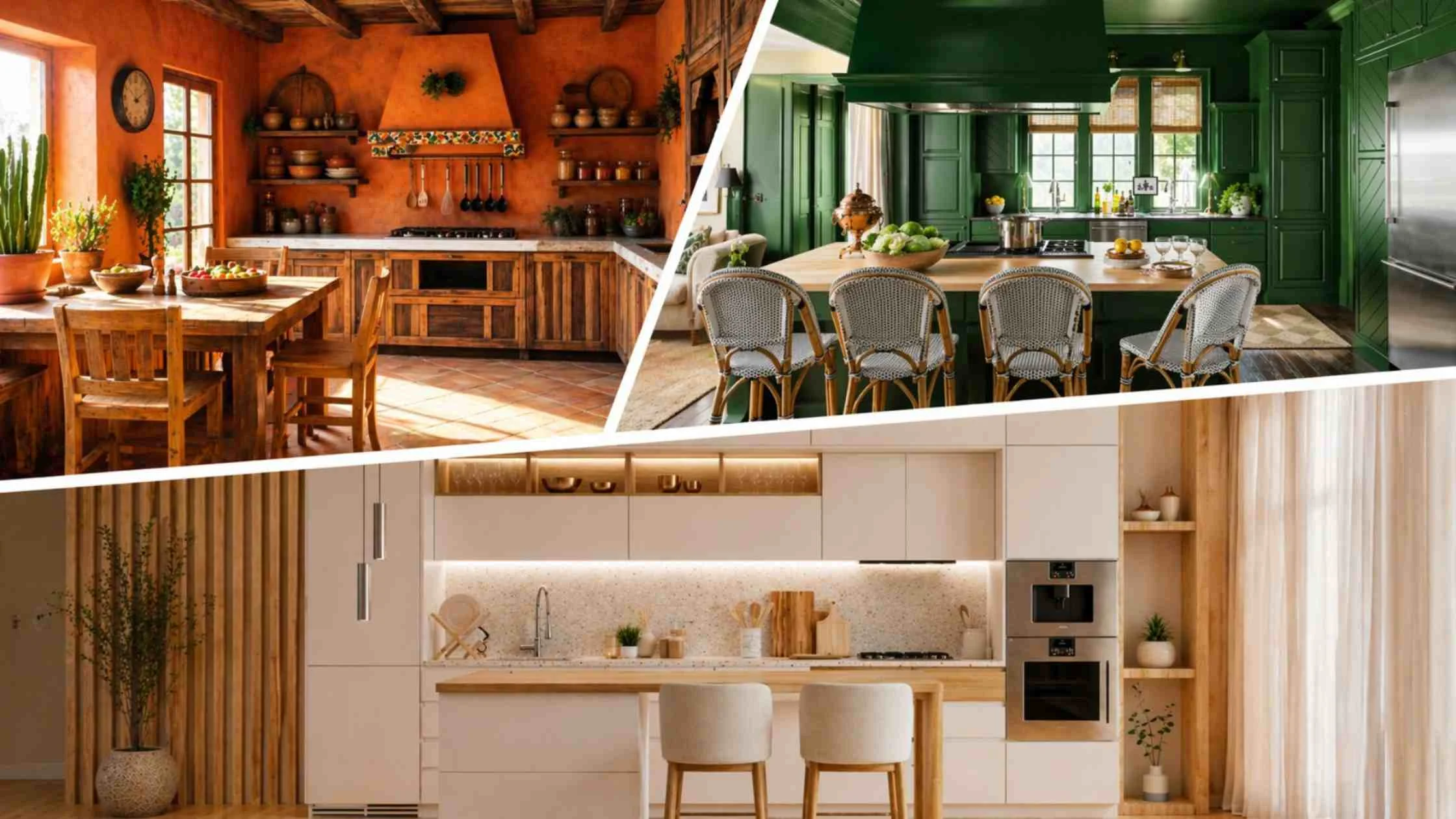
Neutral base palette
Beige, white, warm grey, and off-white create an atmosphere that maintains timeless beauty throughout the space. Using light colors in kitchens can make the space look 20% larger, making this design choice the safest option for apartment kitchens.
Bold accent colours
The combination of deep green, navy blue, terracotta, and dusty rose produces an ideal color scheme that designers use to create permanent lower cabinet and backsplash designs that enhance their projects.
Warm earth tones
The combination of ochre and clay and sand tones creates warm earth tones that respect traditional Indian design elements while maintaining their modern appeal. The design elements of South Indian and Maharashtra-style homes show particular compatibility with these materials.
The finishing tip for material combinations recommends using matte cabinets together with either glossy finishes or stone-textured backsplashes. The two surfaces create visual interest through their contrast, which does not require any extra colors or patterns to achieve this effect.
Best Materials for Countertops and Cabinets
Indian kitchens create challenges that require all kitchen staff to work under extreme conditions. The kitchen environment requires materials that can withstand continuous exposure to heat and oil and turmeric and tamarind and extreme pressure from cooking equipment.
|
Material |
Durability |
Best Used For |
Estimated Cost |
|---|---|---|---|
|
Quartz |
Very High |
Countertops |
Rs. 350-800/sq ft |
|
Granite |
High |
Countertops |
Rs. 150-500/sq ft |
|
Acrylic |
Medium |
Cabinet Shutters |
Rs. 900-1,500/sq ft |
|
Laminate |
Medium-High |
Cabinet Shutters |
Rs. 600-1,200/sq ft |
|
PU (Polyurethane) |
High |
Premium Cabinets |
Rs. 1,200-2,000/sq ft |
|
Wood Veneer |
Medium |
Accent Cabinets |
Rs. 800-1,500/sq ft |
The best countertop material for 2026 is quartz because it offers non-porous and stain-resistant and heat-tolerant features while presenting design options that accurately imitate marble and concrete and natural stone. The primary material choice for South Indian households is granite because it delivers a cost-effective solution which provides exceptional strength. Homeowners who want to protect the environment now prefer bamboo and reclaimed wood as their sustainable accent choices.
Also Read: Urban Indian Decor Ideas for Stylish Homes in 2025
Common Mistakes to Avoid in Modern Kitchen Design
The kitchen renovation process, which people approach with positive plans leads to unexpected challenges. These are the mistakes that Indian homeowners most frequently regret after the work is done:
- Choosing layout last instead of first: Homeowners usually select their finishing material and color before they establish their layout design. The correct procedure should proceed from design layout to creation of architectural spaces. Designing work requires layout to serve as the basic element which enables all other design elements to function.
- Ignoring the Indian cooking reality: The kitchen requires European design which will not withstand daily use of Indian cooking. The kitchen should be designed according to your actual cooking methods which you currently use instead of your imagined cooking methods for the future.
- Under-budgeting on the chimney: People who design open kitchens usually make one major mistake when they design the kitchen space because they forget to include the chimney. The weak unit design allows all kitchen cooking smells to enter the living room space which creates instant regret for the user.
- Skipping task lighting: Overhead lights alone leave your counter in shadow every time you stand at it. Under-cabinet LED strips are inexpensive and fix this completely.
- Overloading the design with trends: Handleless cabinets work. Fluted fronts work. Curved counters work. All of them together in one kitchen do not. Pick two trends and commit to them.
- Using low-grade laminates to save budget: In an Indian kitchen, cheap laminates bubble, stain, and peel in about 18 months. The cost of replacing them will always be higher than what you saved upfront.
Final Thoughts
A great Indian kitchen in 2026 requires design which uses existing kitchen space to create actual cooking space for your household cooking needs. The correct layout should be established first before constructing storage solutions, which should be designed to withstand daily cooking activities, including tadkas and pressure cooker operations. The selection of colours and finishes together with hardware components should occur at the end of the design process. The sequence execution process enables you to design a kitchen space which combines both aesthetic appeal and practical utility while creating a personalized atmosphere that feels familiar from the start.




Ans 1. The L-shaped layout is the top choice for most Indian homes. It creates an efficient work triangle between the stove, sink, and refrigerator, suits mid-sized spaces well, and can integrate a breakfast counter. U-shaped kitchens work best for families who cook extensively and need maximum counter space and storage.
Ans 2. Parallel or L shaped layouts work best for small kitchens as they optimize space and improve movement.
Ans 3. Matte finishes handle less cabinets two tone colors and smart storage solutions are trending in 2026.
Ans 4. Quartz is considered the best due to its durability stain resistance and low maintenance.
Ans 5. Yes granite remains a popular choice because it is strong affordable and heat resistant.
Ans 6. Neutral shades like white beige and grey with bold accents like green or navy work best.
Ans 7. A modular kitchen uses pre designed cabinets and units that are easy to install and customize.
Ans 8. Costs vary but a modular kitchen typically ranges from affordable to premium based on materials and size.
Ans 9. Smart storage proper lighting durable materials and efficient layout are essential features.
Ans 10. Avoid poor layout planning low quality materials and ignoring lighting and ventilation.