
✦ AI Summary
Table of Content
▲
Retro home decor ideas work best in Indian homes when you borrow a few pieces from the 1950s to the 1980s and let the rest of the room stay modern. One good floor, chair or lamp does more than a full theme.
Most guides show Western bedrooms. This one starts from what many Indian homes already have: terrazzo and mosaic floors, cane chairs, wooden almirahs, brass and terracotta.
What counts as retro?
Retro describes new or recent pieces styled after past decades. Vintage describes items that are genuinely old, commonly 20 to 100 years, and antique starts at about 100 years. Mid-century modern is a subset of retro, centred on the 1930s to the 1960s.
So a new cane chair in a 1970s shape is retro, and a 1970s almirah is vintage. You can use either.
Retro colours and materials
Retro palettes run warm: avocado green, mustard, burnt orange, brown and terracotta, often with teal or deep blue as contrast. Typical materials include wood, cane, chrome, laminate, velvet and shag rugs. In Indian homes, add terrazzo, mosaic and red oxide floors.
10 retro home decor ideas
1. Restore the old floor
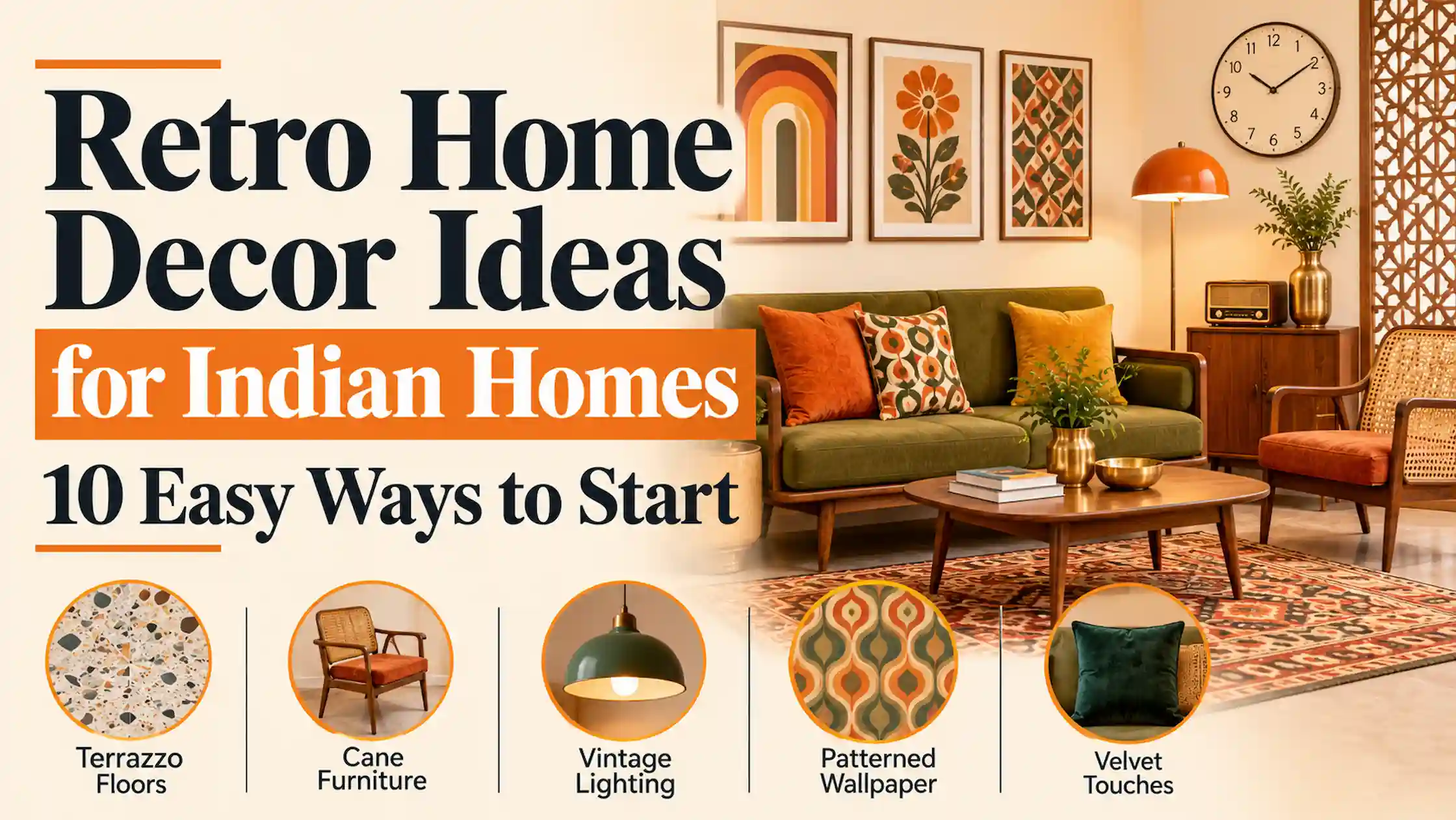
Terrazzo, mosaic and red oxide floors were common in older Indian homes. If you have one, repair and polish it before covering it with new tiles. If not, patterned or terrazzo-look tiles give a similar feel.
- Why it works: The floor sets the era, so the furniture can stay simple.
2. Add one cane chair
A cane armchair or stool in a 1970s shape lifts a plain corner.
- Why it works: Cane is light, so it adds character without crowding a room.
- Pro Tip: Pair it with a darker wooden side table for contrast.
3. Make the almirah the statement
A wooden almirah or cabinet with a good finish can anchor a bedroom or living room. Polished wood reads classic, and a rustic finish reads older.
- Why it works: One large wooden piece is enough, so everything else can be quiet.
4. Use a vintage print on one wall
Geometric, floral or striped wallpaper in muted tones gives a retro backdrop at low cost. For other accent wall options, see our trendy wall design ideas.
- Why it works: A single printed wall gives the era without overwhelming the room.
- Pro Tip: Wallpaper peels on damp walls, so fix any seepage first.
5. Pick an earthy palette
Terracotta, mustard and avocado green work well with cream or brown. Choose one bold colour per room and keep the rest neutral.
- Why it works: Warm colours read retro even without props.
6. Change the lighting
Low-hanging pendants and large table lamps with fabric or glass shades suit the look, and brass or wooden bases add warmth.
- Why it works: Lighting is a quick swap that changes the whole mood.
7. Frame posters and hang a clock
Vintage-style posters in wooden frames and an analog wall clock add era at low cost.
- Why it works: They are easy to rearrange or remove.
8. Add a shag or patterned rug
A shaggy or geometric rug brings the texture that retro rooms rely on.
- Why it works: A rug adds colour and texture without touching the furniture.
- Pro Tip: Shag holds dust, so choose a size you can clean easily.
9. Try curves and velvet
A curved sofa or velvet cushions soften a boxy flat. Curved furniture is a 1970s staple, and velvet has returned in recent years.
- Why it works: Rounded shapes break up rectangular rooms.
10. Pick a statement bed or headboard
A sunburst headboard or a wrought iron bed frame gives the bedroom a retro focus.
- Why it works: The bed anchors the room, so the rest can stay simple.
How to keep it from looking dated
- Use one or two retro pieces per room, not ten.
- Keep walls and floors calm if the furniture is bold.
- Mix retro pieces with contemporary ones and leave open space around them.
Retro home decor ideas work best when you start small and keep one era in mind.
Restore what your home already has, such as old floors, cane and wooden cabinets.
Add warm colour and one statement light or print.
Leave space around each piece so the room feels collected, not staged.








Ans 1. It is decor styled after past decades, usually the 1950s to the 1980s, using new or recent pieces that echo that era’s colours, shapes and materials.
Ans 2. Retro is a style borrowed from the past, so pieces can be new. Vintage means the item is genuinely old, commonly 20 to 100 years.
Ans 3. Not exactly. Mid-century modern is a subset of retro, focused on the 1930s to the 1960s, while retro covers more decades.
Ans 4. Avocado green, mustard, burnt orange, brown and terracotta, with teal or deep blue as contrast.
Ans 5. Yes. Start with one piece, such as a lamp, a cane chair or a printed rug, and keep the rest of the room plain.
Ans 6. Cane furniture, wooden almirahs, terrazzo or mosaic floors, brass accents and terracotta tones tend to fit well.