
✦ AI Summary
Table of Content
▲- Why Parapet Wall Design Matters in Modern Homes
-
Top 10 Modern Parapet Wall Designs for Independent Houses
- 1. Minimalist Simple Parapet Design
- 2. Glass Parapet Wall Design
- 3. Geometric Cutout Parapet Design
- 4. Stone Cladding Parapet Wall
- 5. Planter Parapet Wall Design
- 6. Slatted Wooden Finish Parapet Design
- 7. Textured Tile Finish Parapet Wall
- 8. Perforated Screen Parapet Design
- 9. Integrated Lighting Parapet Design
- 10. Border Style Parapet Wall Design
- Important Things to Consider Before Choosing a Parapet Wall
- Why Modern Parapet Walls Are Becoming Popular
- Final Thoughts
Parapet walls are no longer just safety barriers placed around rooftops and balconies. In modern homes, they have become an important part of exterior elevation design. A well designed parapet wall can completely change how an independent house looks from outside while also improving privacy, ventilation, and terrace usability.
Homeowners prefer parapet wall designs which combine practical use with contemporary design elements. Indian homes offer various stylish solutions which range from glass parapets to textured tile finishes. Selecting an appropriate parapet design will enhance property appearance while matching building design and boosting market worth.
Why Parapet Wall Design Matters in Modern Homes
Parapet walls are installed mainly for safety purposes, especially on terraces, balconies and rooftop edges. However, modern architecture now uses them as a major design element.
A good parapet wall design can help:
- Improve home elevation appearance
- Enhance rooftop safety
- Add privacy to terrace spaces
- Support rooftop gardens and seating
- Improve ventilation and airflow
- Increase exterior aesthetic value
Modern Indian homes increasingly use parapet walls as part of overall facade styling instead of keeping plain concrete borders.
Also Read: How Much Does a False Ceiling Cost Per Square Foot in India?
Top 10 Modern Parapet Wall Designs for Independent Houses
1. Minimalist Simple Parapet Design
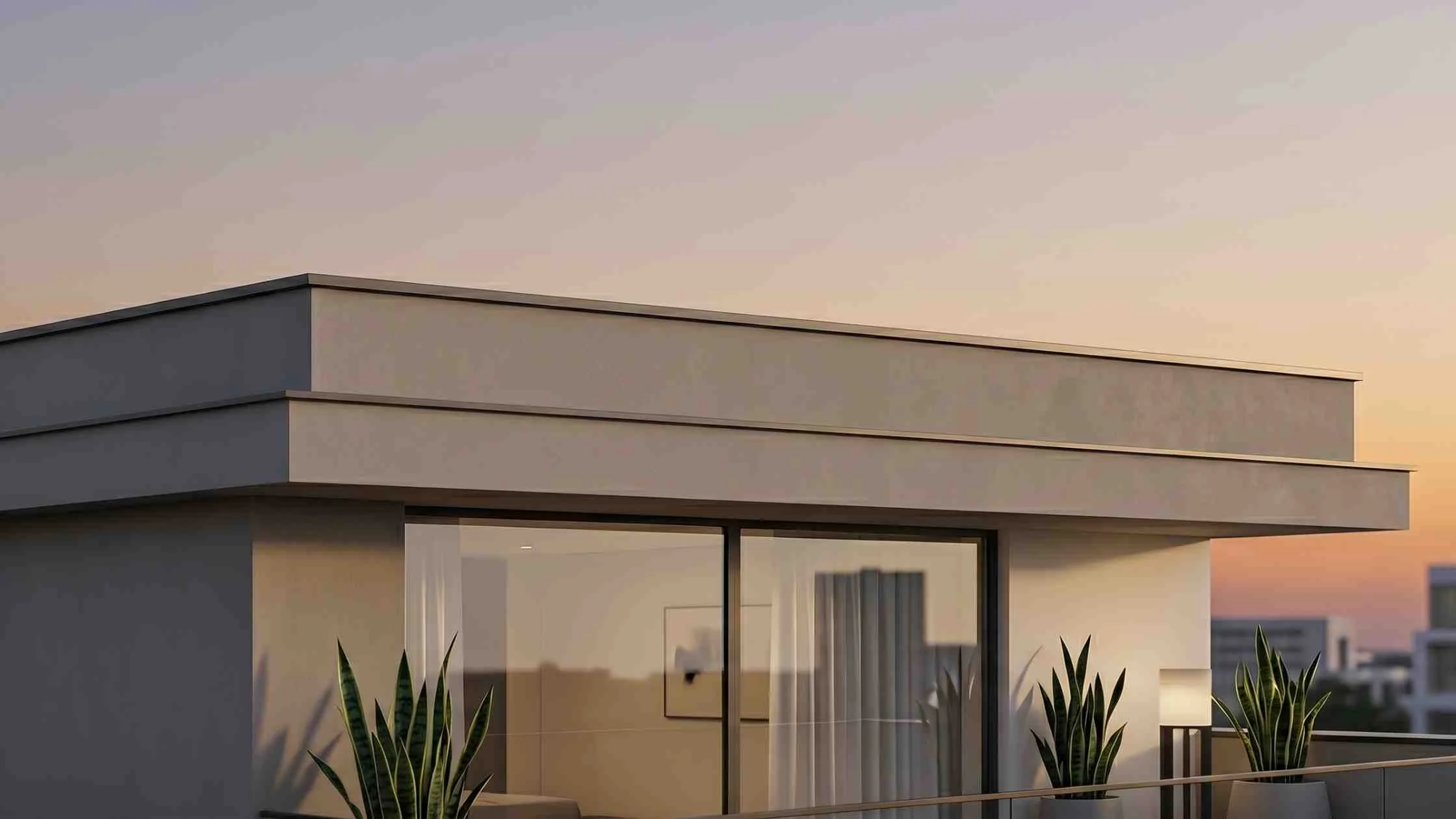
Minimal parapet walls are highly popular in contemporary independent houses. The most effective design solution often emerges through its restrained implementation. Modern Indian home design prefers minimalist parapet walls that display horizontal lines and smooth plaster textures together with their neutral color schemes because these elements of design harmonize with all other parts of the building. The facade treatment provides a neat appearance which avoids introducing any visual elements that would create design conflicts.
Common features include:
- Neutral colour combinations
- Smooth plaster finish
- Straight horizontal patterns
- Matte textures
This style works best for:
- Modern villas
- Duplex houses
- Urban independent homes
Minimalist parapets create a clean and premium exterior appearance.
2. Glass Parapet Wall Design
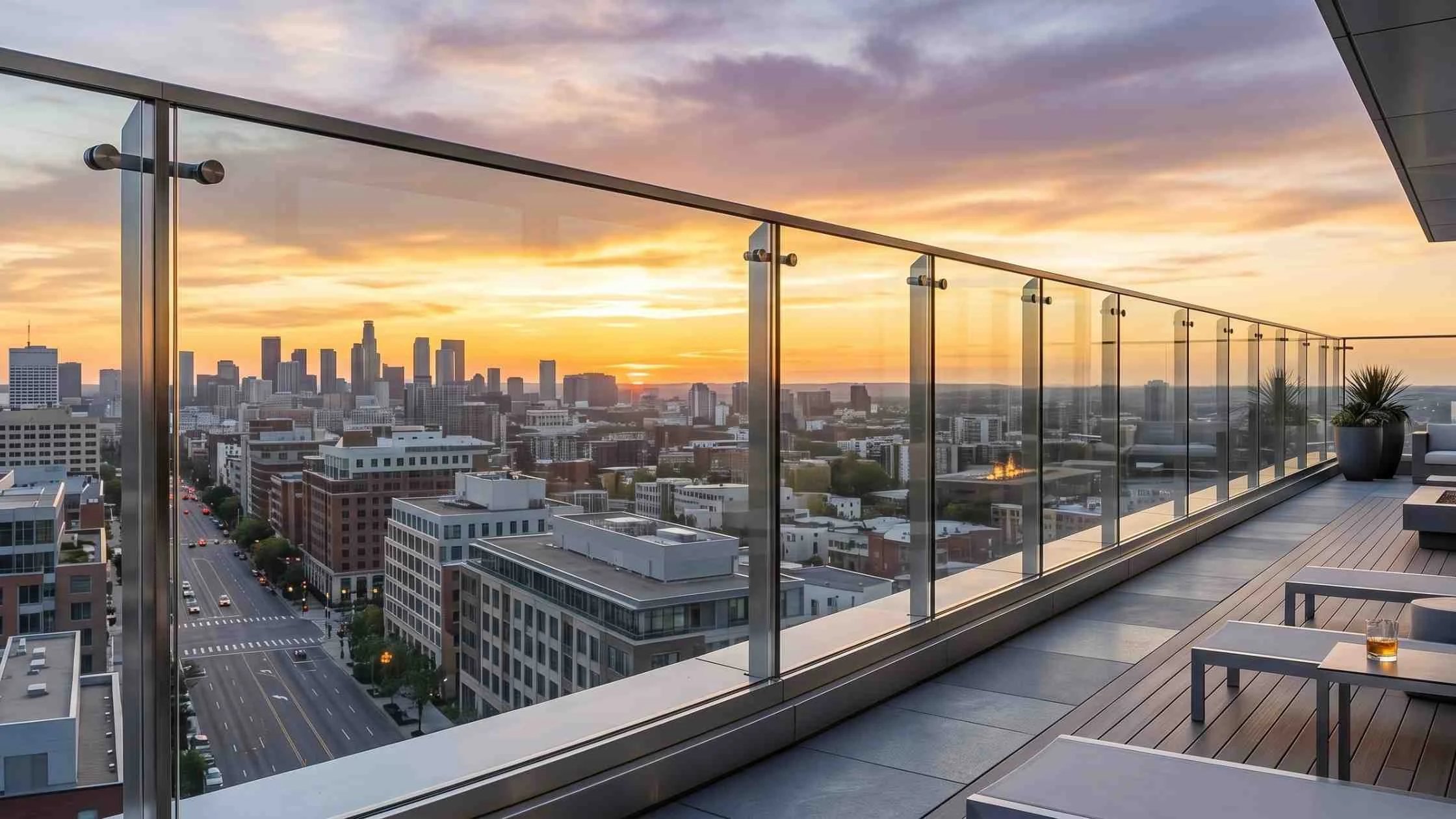
Glass parapet walls give homes a luxury and open appearance. Toughened glass panels are commonly combined with steel or aluminium framing.
They represent a high-end design option and when implemented correctly in the suitable home, they can be truly stunning. The installation of reinforced safety glass panels which use steel or aluminum frame systems creates a rooftop barrier that maintains an unobstructed skyline view while showing complete terrace space and adding an upscale appearance which becomes visible to everyone from the street.
Benefits of glass parapets:
- Modern luxury appearance
- Better visibility
- Open terrace feel
- Enhanced natural light
These designs are commonly seen in:
- Premium villas
- Terrace lounges
- Rooftop seating areas
Toughened glass makes the structure safe for Indian weather conditions.
3. Geometric Cutout Parapet Design
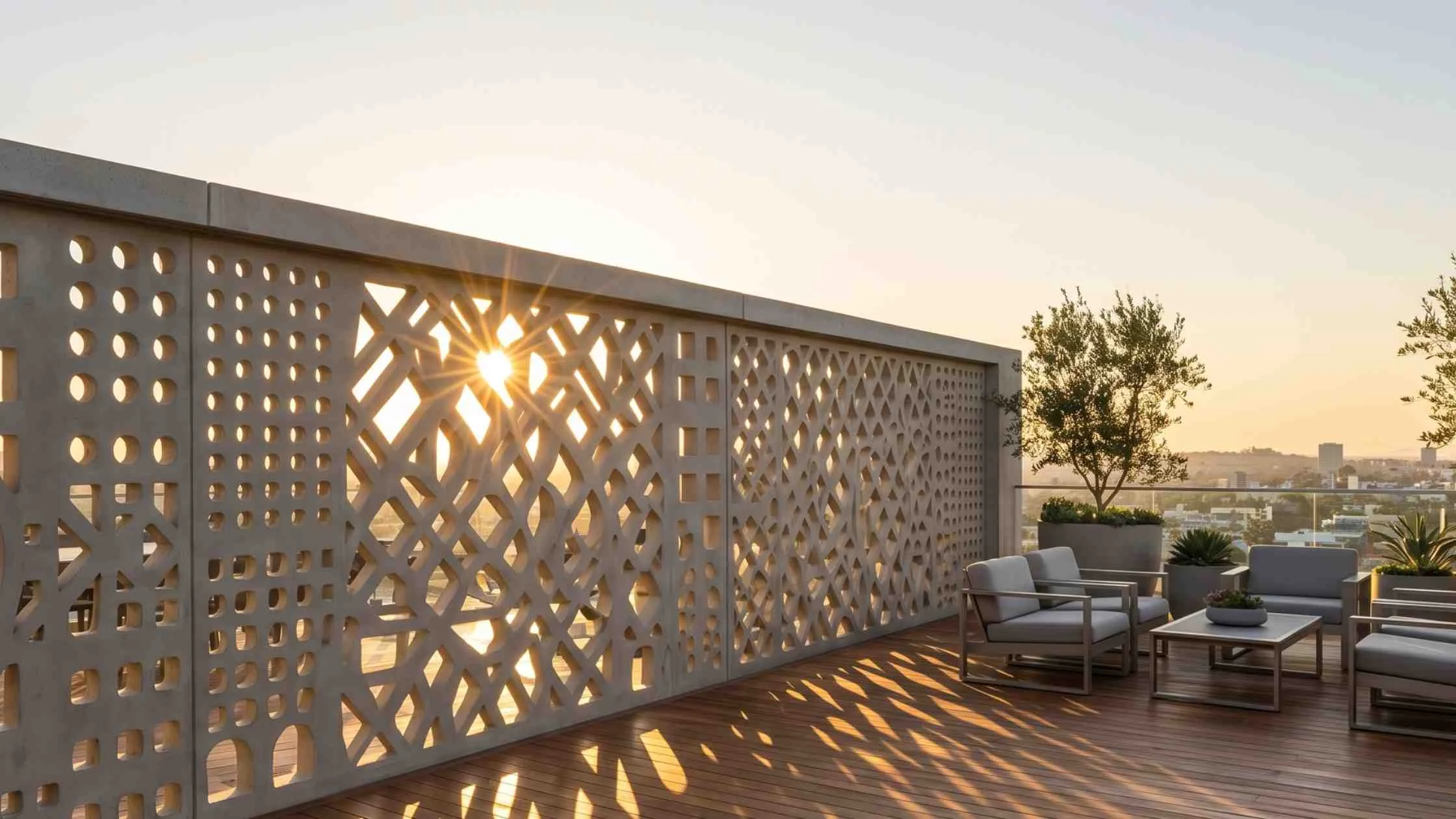
Geometric parapet walls use decorative patterns and cutouts to create stylish rooftop borders. If minimalism doesn’t suit your home's architectural style, geometric cutout parapets provide a bold alternative that turns the roofline into a purposeful design feature.
These walls feature decorative openings, square holes, round perforations, abstract lattice designs, or laser-cut metal panels that function as both ornamentation and ventilation.
Popular patterns include:
- Square cutouts
- Circular openings
- Abstract designs
- Laser cut metal panels
Advantages:
- Better airflow
- Decorative elevation
- Improved sunlight movement
- Unique exterior styling
This design works especially well in modern independent homes with bold architecture.
4. Stone Cladding Parapet Wall
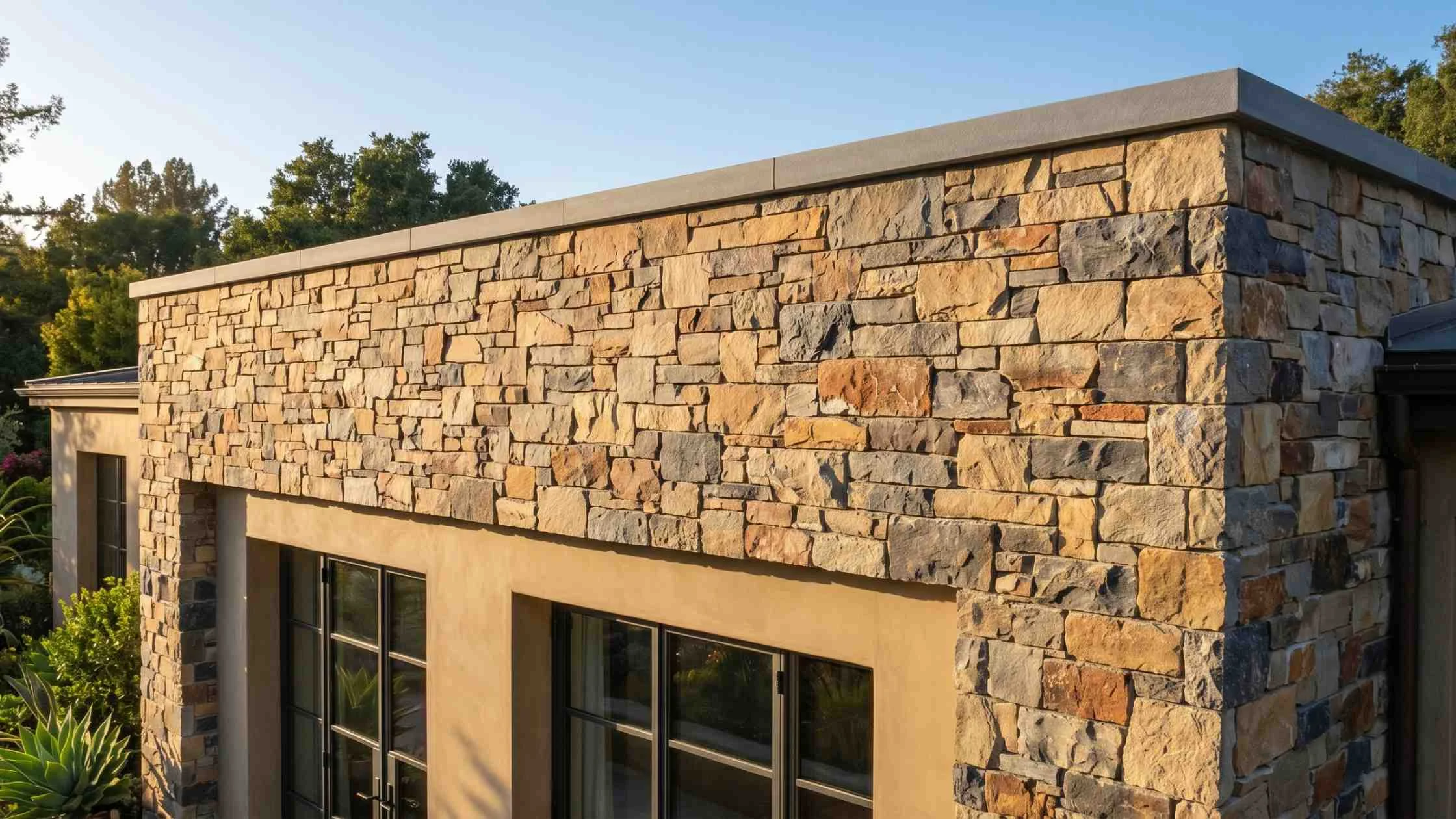
Stone finish parapet walls offer a rich and timeless appearance. Many homeowners now use stone look exterior tiles instead of natural stone for easier maintenance.
Parapet walls with a stone appearance provide a sense of durability and organic richness to standalone house facades that few materials can rival. The visual outcome is a parapet that appears premium, substantial, and crafted not merely constructed, whether employing real stone, stone-look exterior tiles, or engineered stone panels.
Popular stone styles:
- Sandstone texture
- Slate finish
- Granite look
- Rustic stone patterns
Benefits:
- Weather resistance
- Strong exterior finish
- Premium appearance
- Long durability
Stone cladding is commonly used in luxury independent houses and farmhouse elevations.
5. Planter Parapet Wall Design
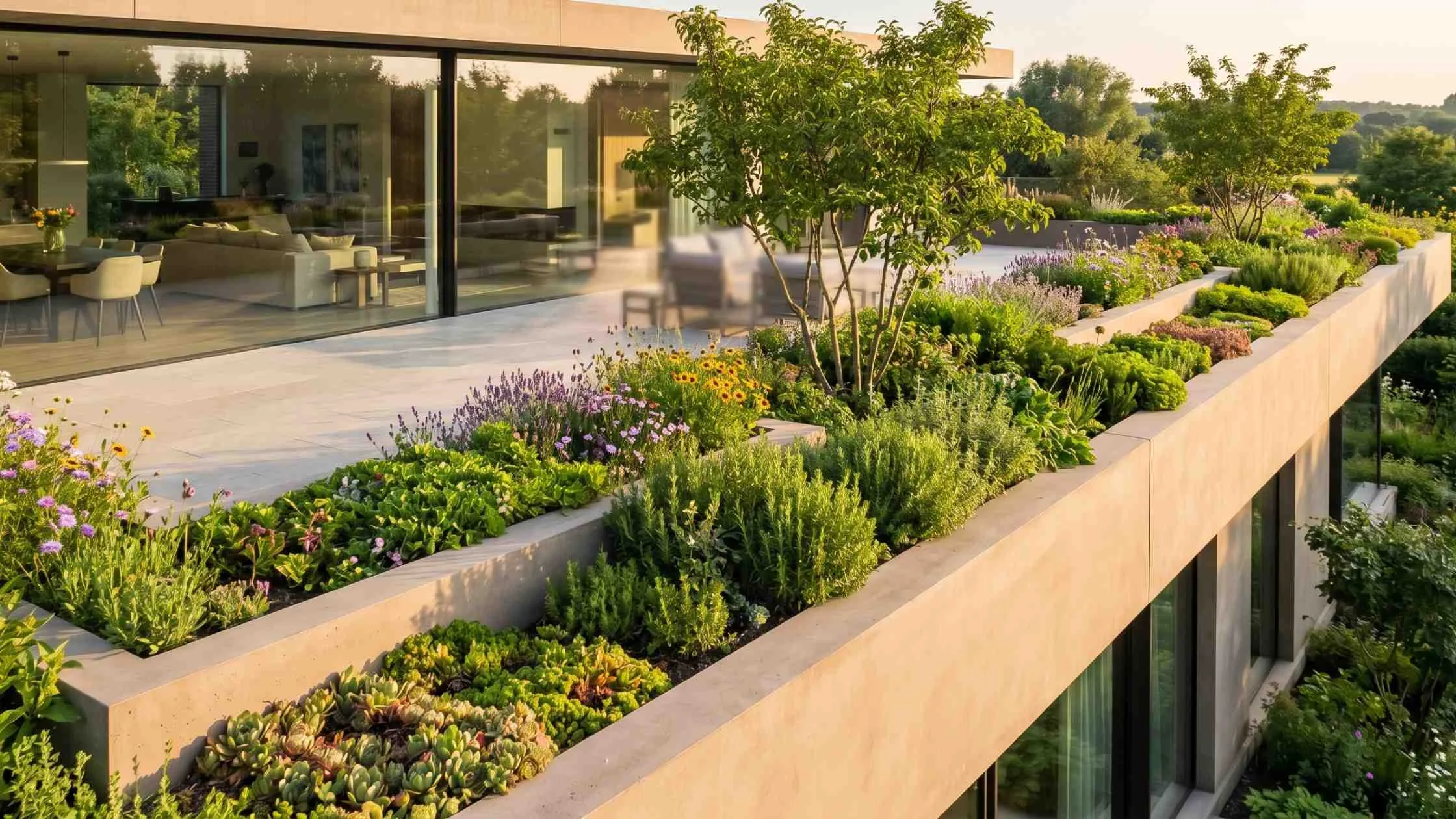
Planter parapet walls combine greenery with rooftop architecture. These designs integrate small plant sections directly into the parapet structure. This design choice truly transforms the sensation of the home from both interior and exterior perspectives as it incorporates dynamic, living features into what would typically be unchanging architecture.
The design of planter parapet walls includes built-in planting spaces which create a green roof boundary that changes throughout different seasons while providing a unique connection to nature that no permanent material can render.
Best plants for parapet planters:
- Snake plant
- Areca palm
- Money plant
- Bamboo varieties
Advantages:
- Better cooling
- Natural appearance
- Improved air quality
- Eco friendly design
Green parapet walls are becoming popular in urban homes where terrace gardening is increasing.
6. Slatted Wooden Finish Parapet Design
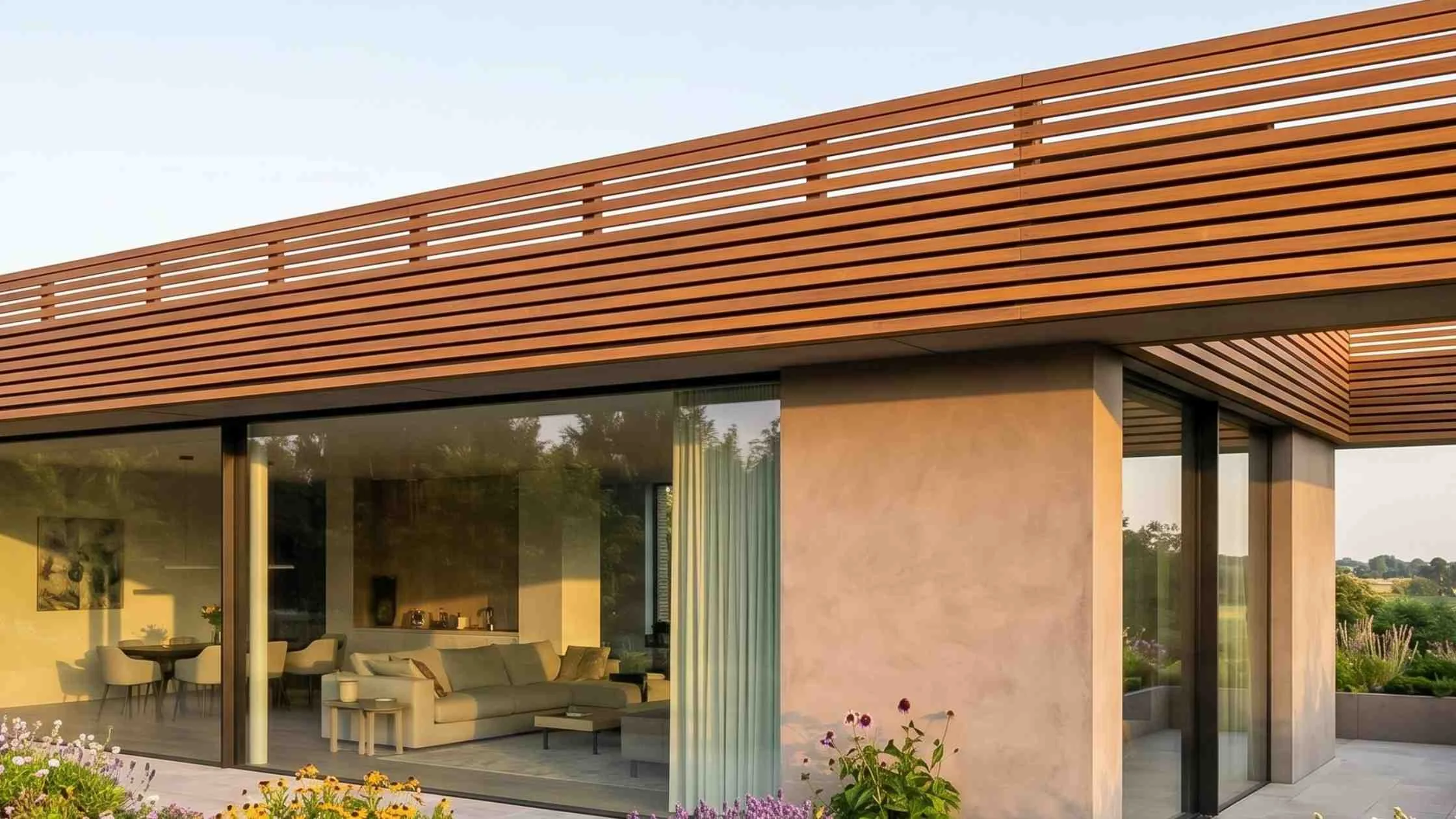
Slatted parapet walls use horizontal or vertical panels that create privacy without fully blocking ventilation.
Slatted parapet styles incorporate horizontal or vertical panels with intentional gaps between them forming a barrier that offers privacy while still allowing for ventilation and light. The visual impact is modern and inviting, as the slats’ linear design forms a robust yet light architectural feature along the roofline.
Common materials:
- Wood finish tiles
- Aluminium slats
- WPC panels
- Exterior wooden textures
Why homeowners prefer them:
- Modern architectural look
- Better airflow
- Increased terrace privacy
- Contemporary facade design
These parapets are commonly used in rooftop lounges and terrace cafes.
7. Textured Tile Finish Parapet Wall
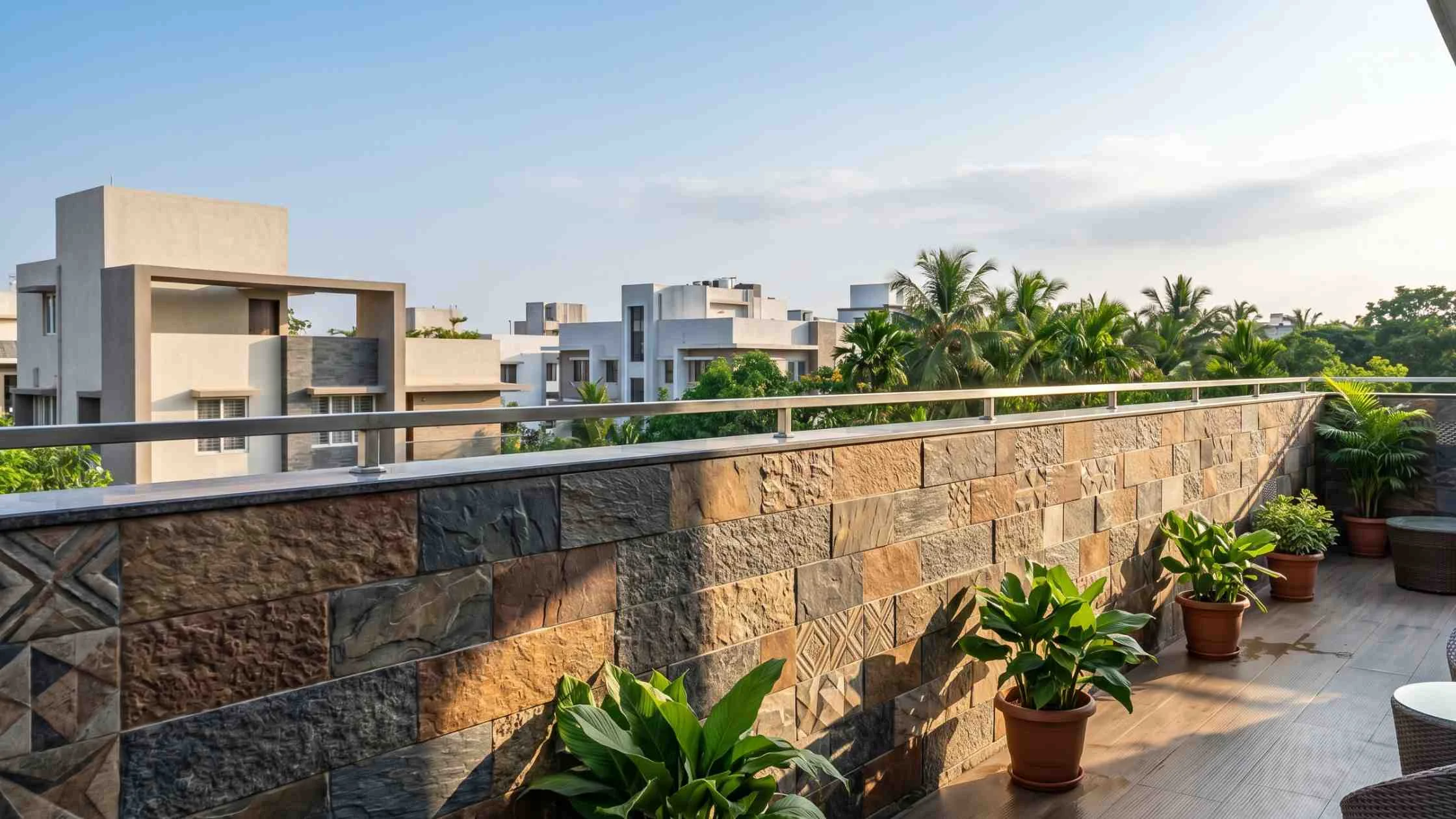
Textured exterior tiles add depth and character to parapet walls. Many homeowners now prefer weather resistant outdoor tiles because they require less maintenance than paint.
Textured exterior tiles are emerging as the preferred choice for parapet walls among Indian homeowners seeking a high-end look without the continuous upkeep that painted finishes demand. Exterior-grade tiles of high quality require no repainting, resist ultra violet fading, endure monsoon conditions without damage, and are easy to clean.
Popular finishes:
- Concrete texture
- Matte stone finish
- Wood texture
- Industrial look surfaces
Benefits include:
- Easy cleaning
- Better weather protection
- Long lasting finish
- Stylish exterior appearance
Exterior grade vitrified tiles are widely used for modern parapet designs.
8. Perforated Screen Parapet Design
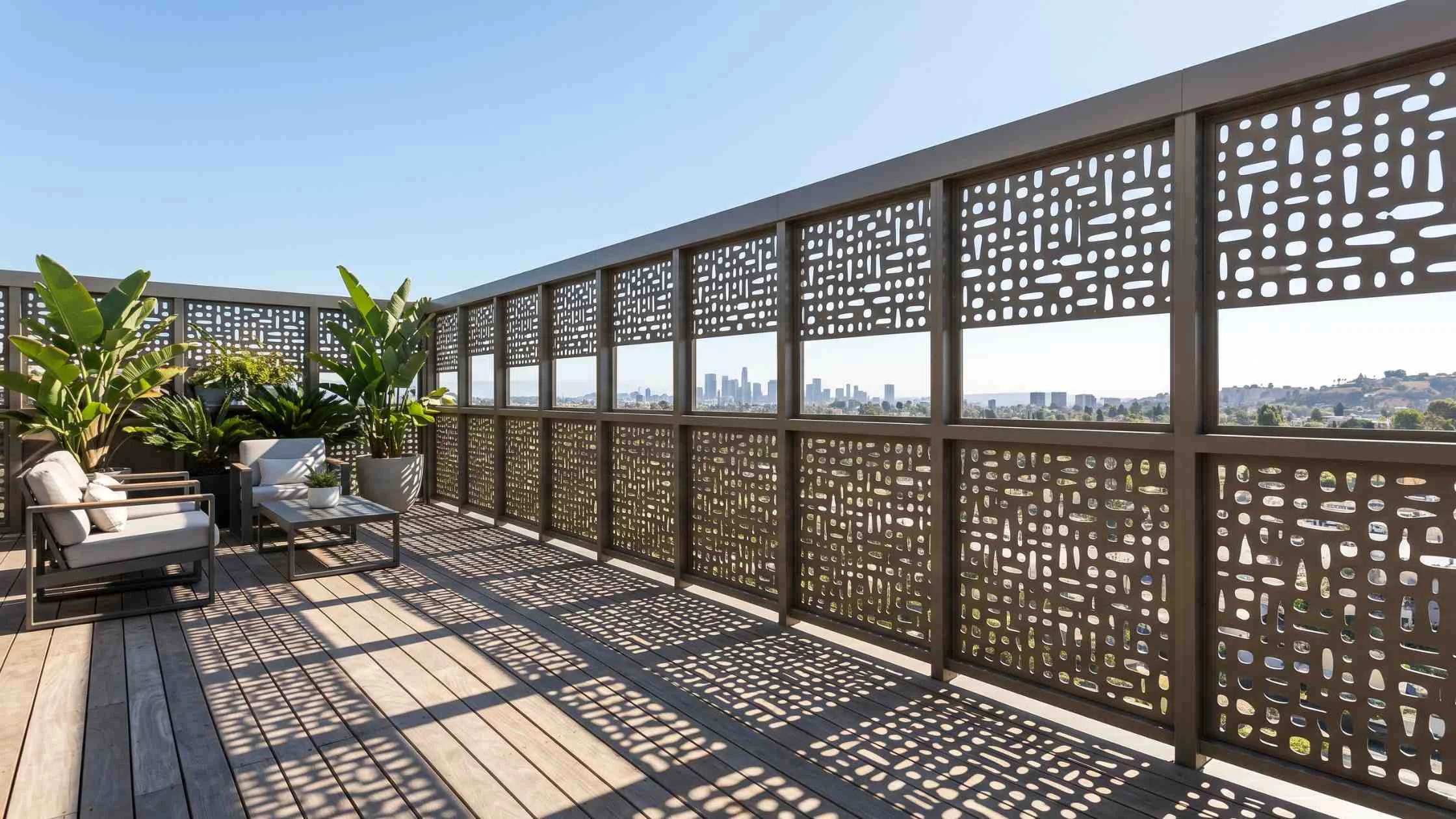
Perforated parapet walls create a balance between openness and privacy through their design. The walls use patterned openings to create shadow effects which enhance ventilation in the building. Perforated parapet screens achieve what solid walls and fully transparent glass fail to accomplish because they provide visual privacy together with complete terrace area air movement.
The arrangement of holes can vary from basic geometric designs to intricate artistic shapes, and the interplay of light through the gaps casts shadow patterns on the terrace floor that evolve throughout the day.
Advantages:
- Better airflow
- Attractive light patterns
- Improved privacy
- Modern visual appeal
Many architects now use perforated parapet walls in contemporary independent homes.
9. Integrated Lighting Parapet Design
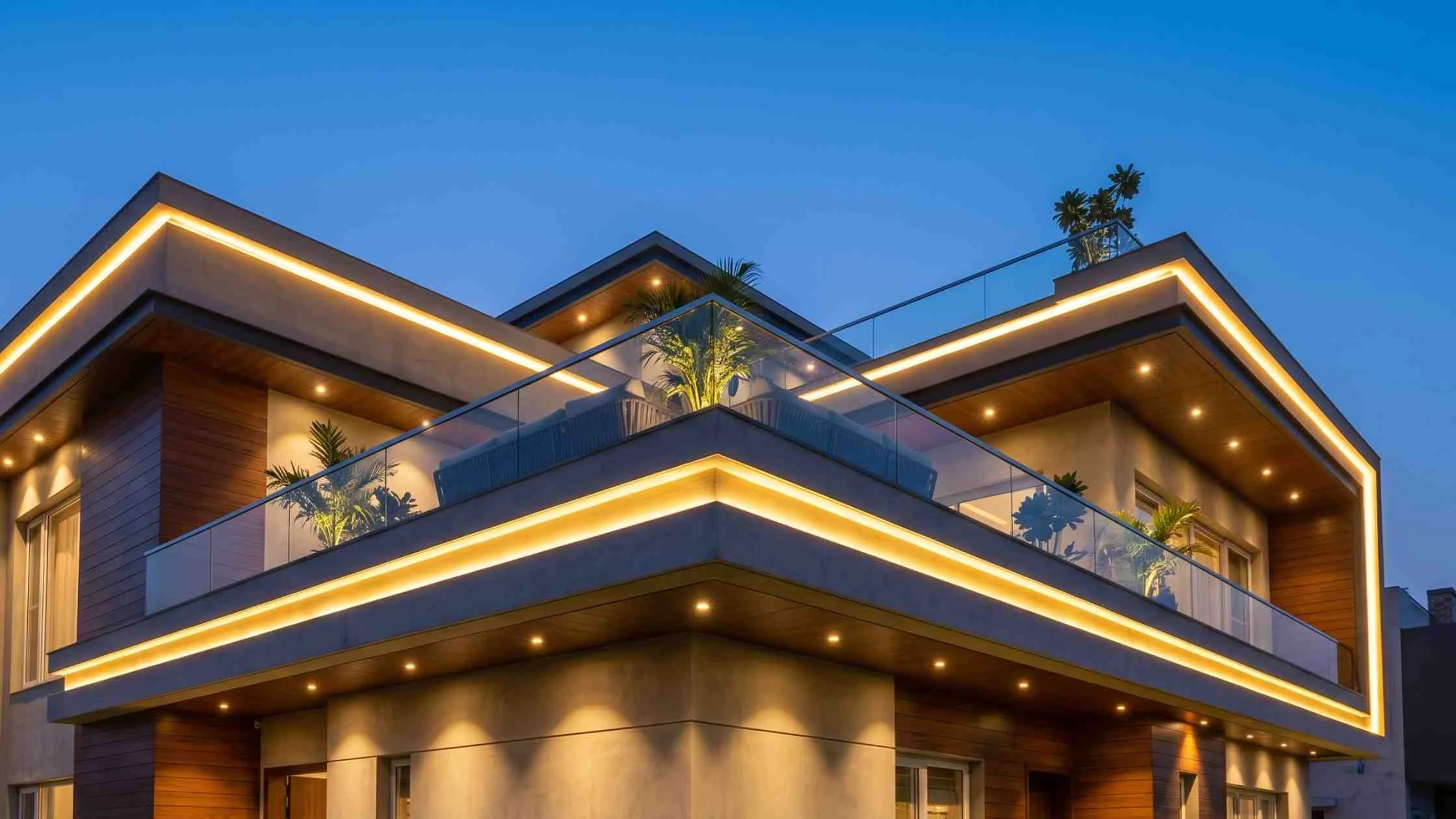
Lighting incorporated into the parapet design alters the perception of an independent house at night and in a scenario where Instagrammable home facades have become desirable for numerous homeowners, the evening view is no longer overlooked.
Carefully designed parapet lighting adds depth, warmth, and an aura of thoughtful design that sets apart a high-end home exterior from a simply satisfactory one.
Popular lighting ideas:
- LED strip lights
- Warm wall washers
- Spotlights
- Hidden cove lighting
Benefits:
- Better nighttime aesthetics
- Improved terrace ambience
- Enhanced security
- Premium exterior feel
Modern homes increasingly combine parapet lighting with facade lighting for a luxury exterior appearance.
10. Border Style Parapet Wall Design
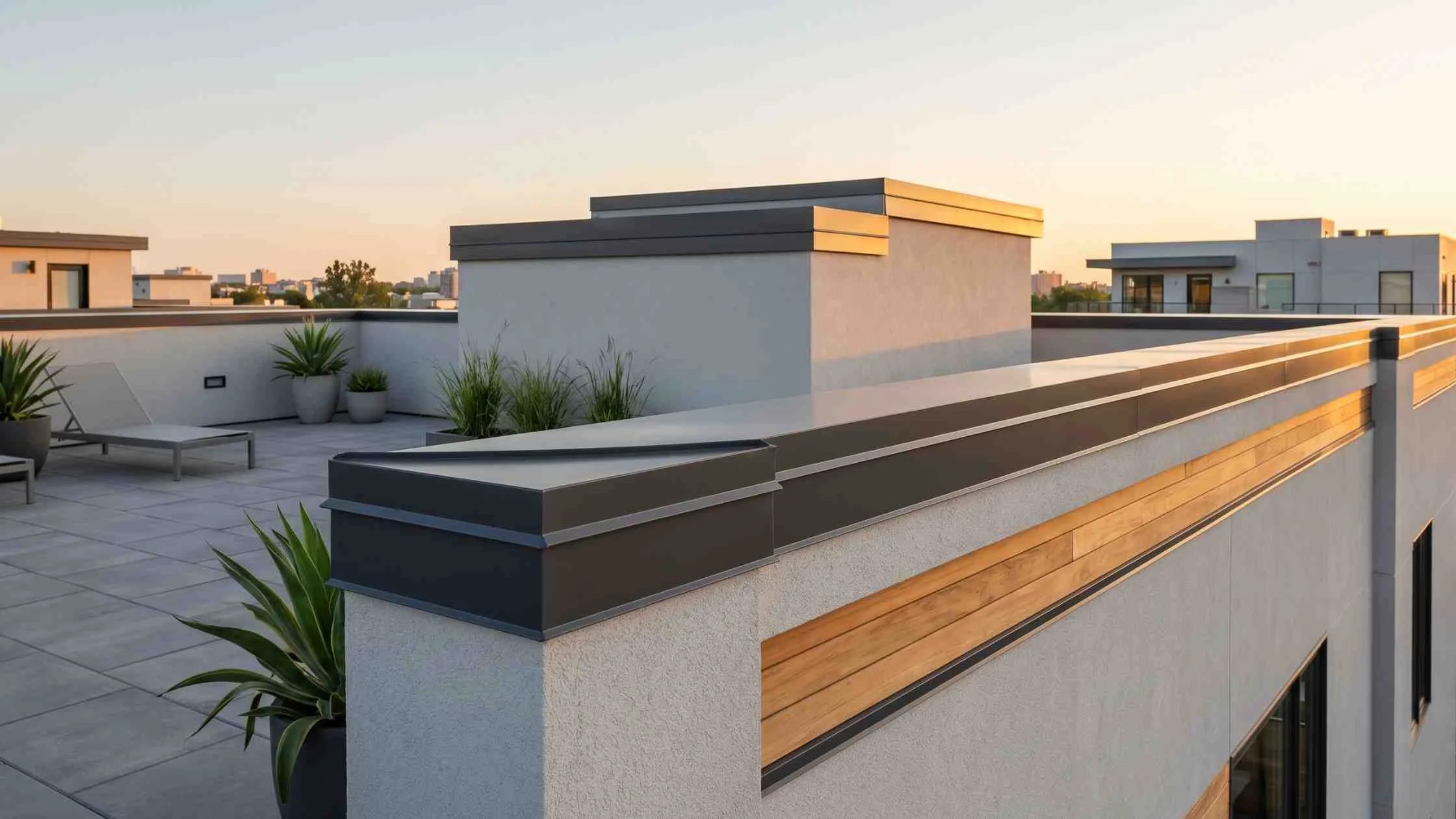
Border parapet walls use raised edges, layered patterns, or contrasting materials to define rooftop boundaries.
The border parapet employs layering, differing materials, or elevated edge designs to establish a distinct visual boundary at the roofline. Instead of a uniform material evenly distributed around the perimeter, the border design forms a thoughtful composition, a main parapet surface paired with a contrasting edge treatment, an elevated profile that produces shadow and depth, or a mix of materials that appears thoughtfully arranged.
Common styles:
- Raised concrete borders
- Double-layer parapets
- Tile-framed borders
- Contrasting colour bands
This design works well for:
- Traditional modern homes
- Duplex elevations
- Medium-sized independent houses
Border parapets create a strong visual structure without making the home look bulky.
Also Read: Best Modern Kitchen Design Ideas for Indian Homes in 2026
Important Things to Consider Before Choosing a Parapet Wall
Before finalizing a parapet design, homeowners should evaluate both aesthetics and structural requirements.
Height and Safety
Most residential parapet walls are built between 3 to 4 feet for safety and balance.
Weather Resistance
Outdoor parapet walls face:
- Rain exposure
- Direct sunlight
- Dust accumulation
- Temperature fluctuations
Choose weather-resistant materials for durability.
Maintenance Requirements
Some materials like glass and natural stone require more maintenance compared to textured tiles or matte finishes.
Ventilation and Privacy
Open designs improve airflow while solid parapets offer better privacy. The design should match the terrace usage.
Why Modern Parapet Walls Are Becoming Popular
Modern homeowners now treat parapet walls as part of a complete facade design. Social media trends, modern architecture, and terrace lifestyle improvements have increased interest in stylish parapet designs.
According to several home design discussions online, homeowners now prefer:
- Minimal designs
- Better ventilation
- Terrace usability
- Sustainable materials
- Low maintenance finishes
Final Thoughts
Modern parapet wall designs can completely transform the appearance of independent houses while improving safety and terrace functionality. The combination of glass parapets, textured tile finishes, geometric patterns and green planter walls creates a design which brings enduring worth to your property.
Construction of parapet walls requires designers to select materials that provide essential protection from weather, while ensuring maximum durability and creating attractive visual designs. Parapet walls have emerged as essential components for designing exterior building facades because residential properties now implement contemporary architectural styles.


Ans 1. A parapet wall is a protective wall built along the edge of rooftops, terraces, balconies, or staircases for safety and exterior styling.
Ans 2. Modern parapet walls improve home elevation, rooftop safety, privacy, ventilation, and overall exterior appearance of independent houses.
Ans 3. Minimalist parapet walls, glass parapets, geometric cutout designs, and textured tile finishes are among the most popular choices for modern homes.
Ans 4. Yes, toughened glass parapet walls are safe, weather resistant, and widely used in luxury villas and rooftop seating areas.
Ans 5. Most residential parapet walls are built between 3 to 4 feet high for proper safety and visual balance.
Ans 6. Textured vitrified tiles, matte finishes, aluminium panels, and WPC materials usually require less maintenance than natural stone or painted surfaces.
Ans 7. Yes, slatted parapets, perforated screens, and solid parapet walls help improve rooftop privacy while maintaining airflow.
Ans 8. Planter parapet walls include built in plant sections that combine greenery with terrace architecture for a natural and eco friendly look.
Ans 9. Integrated parapet lighting improves nighttime aesthetics, terrace ambience, and exterior security for independent houses.
Ans 10. Geometric parapet walls use decorative cutouts, laser cut patterns, and artistic openings to create stylish rooftop borders.
Ans 11. Perforated screen parapets and slatted designs provide better airflow while maintaining privacy and modern aesthetics.