
✦ AI Summary
Table of Content
▲- What Is a Soak Pit and Why Does Vastu Care About It?
- Best Vastu Direction for a Soak Pit at Home
- Directions to Strictly Avoid for a Soak Pit
- Quick Reference Table: Soak Pit Vastu Directions
- Vastu Remedies If Your Soak Pit Is Wrongly Placed
- Practical Construction Tips That Align With Vastu
- Conclusion
A soak pit may be one of the least glamorous parts of a home, but in Vastu Shastra, it carries real weight. Because a soak pit deals with wastewater absorption, traditional Vastu principles treat it as a "heavy, negative-energy" element one that must be positioned carefully so it does not disturb the energy balance of the plot.
Having reviewed hundreds of residential layouts over the years, I can tell you that soak pits, septic tanks, and drainage lines are among the most commonly misplaced elements in Indian homes usually because they are decided by the plumber, not the plan. This guide explains exactly where a soak pit should go as per Vastu, which zones to strictly avoid, and what remedies exist if your soak pit is already in the wrong place.
What Is a Soak Pit and Why Does Vastu Care About It?
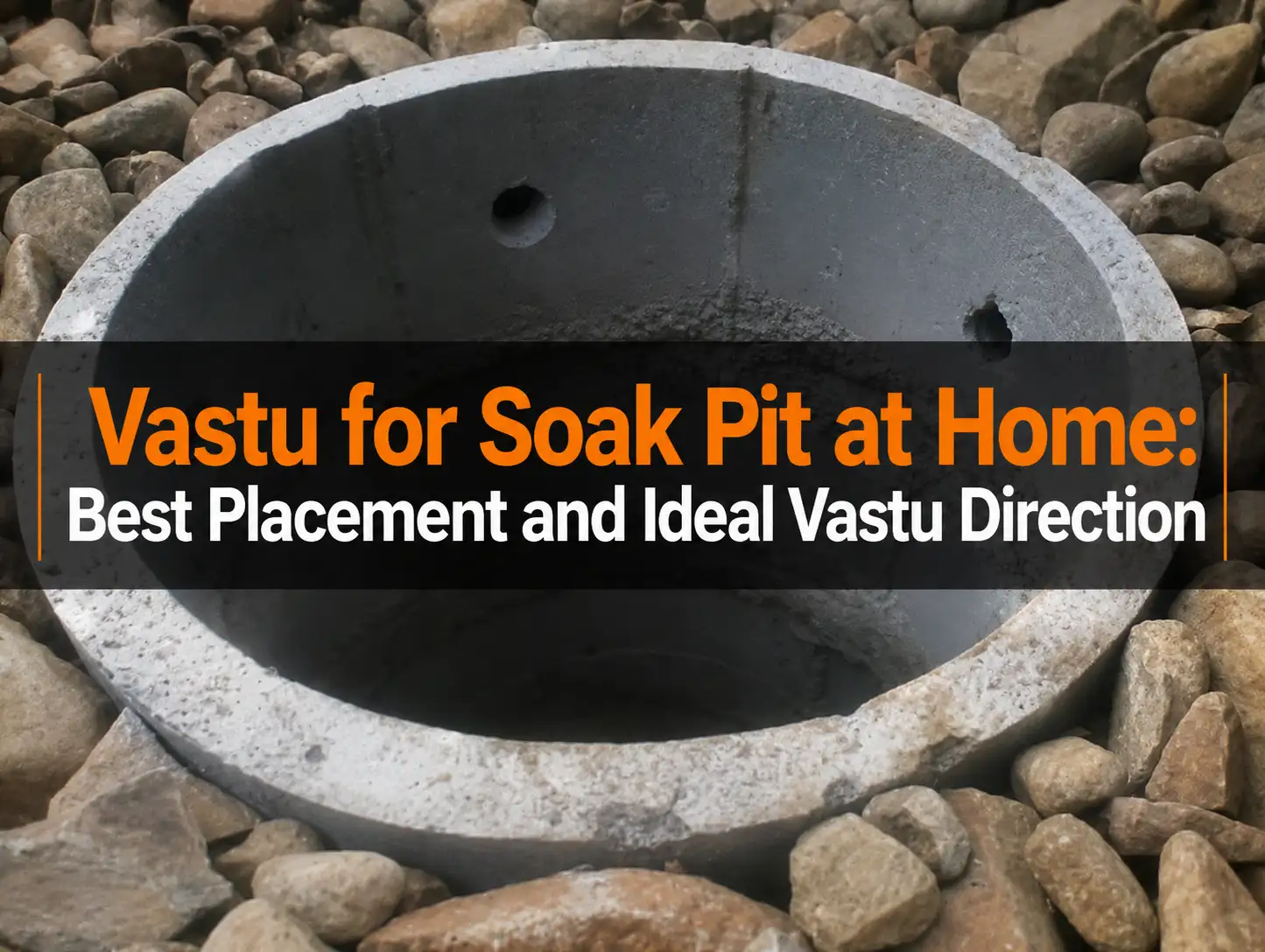
A soak pit (also called a soakaway or leach pit) is a covered, porous underground chamber that allows wastewater typically from bathrooms, kitchens, or a septic tank overflow to percolate slowly into the surrounding soil. It is a simple, low-cost wastewater management solution used widely in independent homes, farmhouses, and areas without underground sewage systems.
From a Vastu standpoint, three characteristics of a soak pit matter:
- It holds wastewater, which Vastu classifies as impure or "used" energy that should exit the plot without contaminating auspicious zones.
- It is a depression (pit) in the earth, and Vastu assigns specific rules for where the ground may be lowered or dug.
- It involves the water element (Jal Tattva), which has designated zones on any plot but wastewater is treated very differently from fresh water.
Because of this, the direction of a soak pit can either quietly support the household or, according to Vastu belief, create persistent issues related to health, finances, and mental peace.
Also read: Should You Buy a Corner House? Pros and Cons Every Buyer Should Weigh
Best Vastu Direction for a Soak Pit at Home
North-West (NW): The Most Recommended Zone
The north-west direction is widely considered the best placement for a soak pit as per Vastu Shastra. The north-west is governed by Vayu (the air element), which represents movement and outflow. Since a soak pit's job is to move wastewater out of the home's system, the "exit and dispersal" nature of the north-west aligns naturally with its function.
Within the north-west, the segment leaning toward the west of north-west (WNW) is often cited as ideal for waste disposal structures, including soak pits and septic tanks.
Acceptable Secondary Options
If the north-west is genuinely unavailable due to plot constraints, many Vastu practitioners accept these alternatives, in order of preference:
- West zone: A workable second choice for drainage and waste-related structures, provided the pit does not sit exactly on the west cardinal axis.
- South of south-west vs. north a note of caution: Some regional schools permit waste structures toward the southern side of the plot's periphery, but most classical interpretations discourage this. Always keep the pit along the boundary, never near the center.
Key Placement Rules (Beyond Direction)
Direction alone is not enough. Follow these supporting rules:
- Keep the soak pit at least 1–2 feet away from the compound wall, not touching it.
- Ensure the pit is outside the main built structure of the house never beneath a bedroom, kitchen, or pooja room.
- Maintain distance from the borewell or fresh water source (a minimum of 10–15 meters is also a hygiene and groundwater-safety requirement, not just a Vastu one).
- The pit should be covered and sealed, with no foul smell escaping stagnant odor is considered a strong negative indicator in Vastu and is also a genuine health hazard.
Directions to Strictly Avoid for a Soak Pit
1. North-East (Ishan Kona) The Worst Placement
The north-east is the most sacred zone in Vastu, associated with water in its pure form, spirituality, and prosperity. Digging a wastewater pit here is considered the most serious soak pit defect. Traditional texts link a contaminated north-east with health problems, financial instability, and obstacles in the growth of children in the family.
2. South-West (Nairutya) The Stability Zone
The south-west governs stability, relationships, and ancestral strength, and Vastu requires this zone to be the highest and heaviest part of the plot. A pit here does the opposite it lowers and hollows the zone. Practitioners associate a south-west soak pit with instability in finances and strained family relationships.
3. Brahmasthan (Center of the Plot)
The central zone of any plot must remain open, light, and undisturbed. No pit, tank, or heavy structure should ever occupy the Brahmasthan.
4. East and North Cardinal Axes
The exact east and exact north lines are associated with the sun, growth, and wealth flow. Wastewater structures directly on these axes are best avoided, even if the general eastern or northern strip is otherwise used for drainage slopes.
5. Directly in Front of the Main Entrance
Regardless of direction, a soak pit facing or adjoining the main door is considered inauspicious, as the entrance is where energy enters the home.
Quick Reference Table: Soak Pit Vastu Directions
|
Direction |
Vastu Verdict |
Reason |
|
North-West (especially WNW) |
Best |
Air element supports outflow and dispersal of waste |
|
West |
Acceptable |
Suitable for drainage-related structures |
|
North-East |
Strictly avoid |
Sacred water/prosperity zone; contamination is a major defect |
|
South-West |
Strictly avoid |
Must stay high and heavy; pits destabilize the zone |
|
Brahmasthan (center) |
Strictly avoid |
Must remain open and undisturbed |
|
Exact East / Exact North axis |
Avoid |
Growth and wealth axes should stay uncontaminated |
|
South-East (Agneya) |
Generally avoid |
Fire zone; water pits create fire–water conflict |
Also read: Vastu Checklist Every Homebuyer Must Complete Before Paying a Token
Vastu Remedies If Your Soak Pit Is Wrongly Placed
Relocating a soak pit is the most effective correction, but it is not always practical. If relocation is impossible, practitioners commonly suggest these mitigations:
- Seal and cover the pit completely so no odor or open exposure remains an open or leaking pit is considered far more harmful than a sealed one.
- Correct the defect functionally first: fix leaks, redirect greywater lines where feasible, and ensure the pit drains efficiently. A malfunctioning pit compounds the problem in both Vastu and practical terms.
- Strengthen the affected zone: for a north-east defect, keep that corner scrupulously clean, well-lit, and clutter-free; for a south-west pit, add visual and physical weight to the zone (raised planters, heavy stone elements) at ground level.
- Use plants as buffers: placing hardy green plants near (not on top of) the pit area is a commonly recommended softening measure.
- Consult a qualified Vastu practitioner on-site before undertaking structural changes remedies depend heavily on the plot's overall layout, slope, and entrance position, and generic fixes can misfire
Practical Construction Tips That Align With Vastu
Good Vastu and good engineering overlap more than people expect:
- Slope the plot's drainage toward the north or east, letting water flow through those zones while the pit itself sits in the north-west or west.
- Keep the pit downhill from and far away from any well or borewell to prevent groundwater contamination a non-negotiable public-health rule.
- Size the pit correctly for your household's greywater output so it never overflows; an overflowing pit is both a sanitation failure and a Vastu red flag.
- Do not build habitable rooms above or beside the pit wall.
- Schedule digging thoughtfully: many families prefer to begin excavation on an auspicious day after a simple Bhoomi Pujan, especially for new constructions.
Conclusion
The ideal Vastu direction for a soak pit at home is the north-west, with the west as an acceptable alternative while the north-east, south-west, and center of the plot must be avoided without exception. Because a soak pit is a permanent underground structure, getting its placement right at the planning stage is far easier than remedying it later. If your layout is already fixed, focus on sealing, maintenance, and zone-strengthening remedies, and take on-site professional advice before any structural correction.
Whether or not you follow Vastu strictly, the core guidance here keeping wastewater structures away from fresh water sources, entrances, and the heart of the home is simply sound home planning.









Ans 1. The north-west direction is considered the best placement for a soak pit, as it is governed by the air element, which supports the outflow and dispersal of waste. The segment toward the west of north-west is often cited as the most suitable spot.
Ans 2. No. The north-east is the most sacred zone in Vastu, associated with pure water, prosperity, and spiritual energy. A wastewater pit here is considered the most serious soak pit defect and should be avoided at all costs.
Ans 3. No. The south-west zone must remain the highest and heaviest part of the plot, as it governs stability and relationships. Digging a pit here hollows the zone and is believed to cause financial and family instability.
Ans 4. A septic tank stores and partially treats sewage, while a soak pit allows treated or greywater to percolate into the soil. Vastu treats both as wastewater structures with similar rules: north-west or west placement is preferred, and the north-east, south-west, and center are prohibited for both.
Ans 5. The soak pit should always be outside the main built structure, ideally along the plot's periphery in the north-west, and at least 1–2 feet away from the compound wall. For hygiene, it should also be at least 10–15 meters from any borewell or well.
Ans 6. According to Vastu belief, a wrongly placed soak pit especially in the north-east or south-west is associated with health issues, financial strain, and disturbed family harmony. Practically, poor placement can also risk groundwater contamination and dampness in the structure.
Ans 7. If relocation is not possible, seal and cover the pit fully, eliminate odor and leaks, keep the affected zone clean and well-maintained, strengthen the zone with appropriate weight or lighting, and consult a qualified Vastu practitioner for site-specific corrections.
Ans 8. No. A soak pit should never be built beneath any habitable room particularly a bedroom, kitchen, or pooja room. It must remain an external, covered structure in the open portion of the plot.
Ans 9. Generally, no. The south-east is the fire zone (Agneya), and placing a water-based waste structure there creates a fire–water conflict as per Vastu, which practitioners associate with disputes and health issues. Use the north-west or west instead.
Ans 10. Always covered. An open or foul-smelling soak pit is considered strongly negative in Vastu and is also a genuine sanitation hazard. A properly sealed, well-draining pit is both Vastu-compliant and hygienic.