
✦ AI Summary
Table of Content
▲
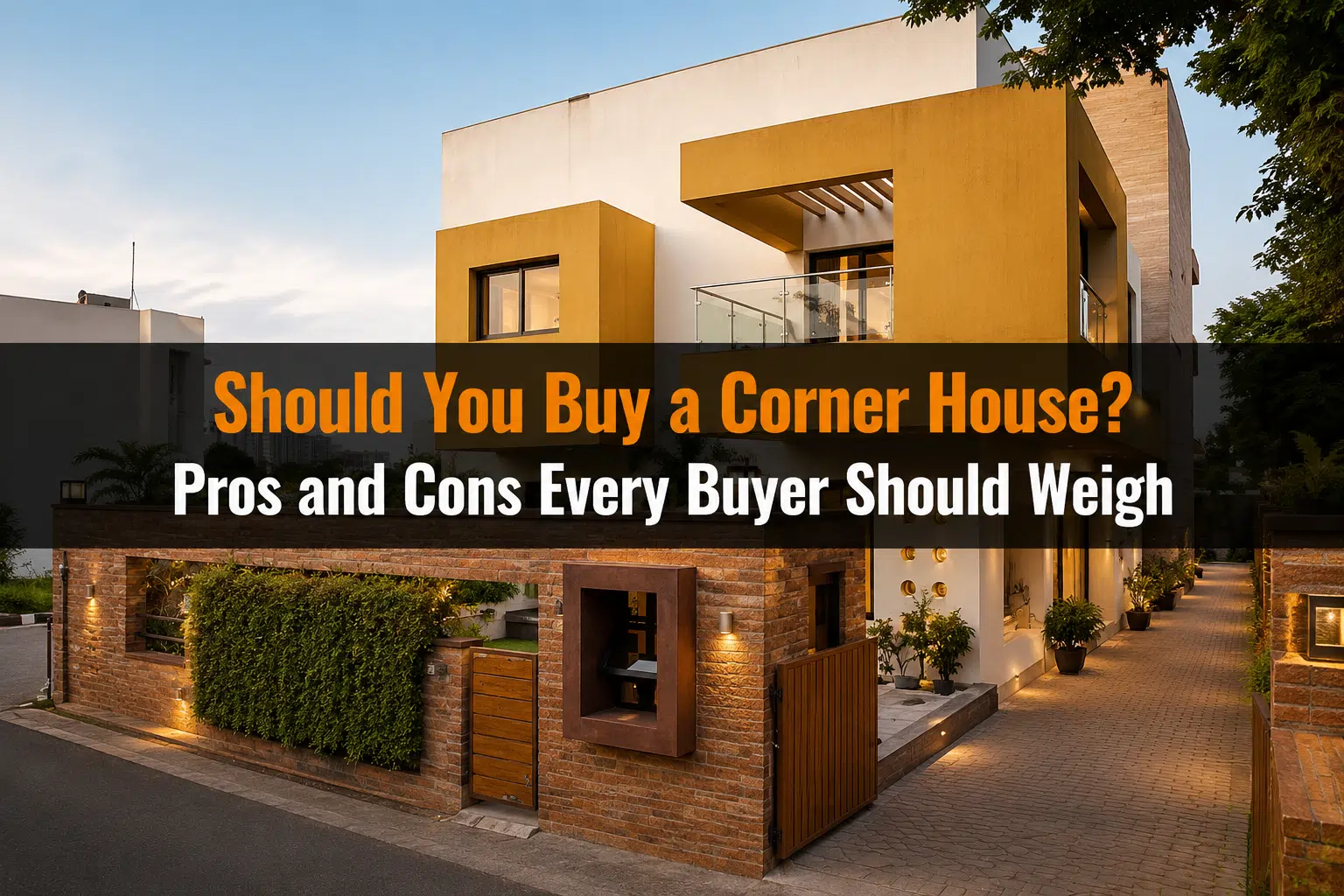
Corner houses have a certain pull. People walk past them and think, "Now that's a nice plot." Over the last six years of helping buyers pick between properties, I've noticed the corner house almost always gets a longer look and a longer negotiation. It's more open, it feels bigger, and it usually carries a price tag to match.
But is a corner house actually worth the extra money and the extra attention it draws? The honest answer is it depends on you. A corner plot is a genuine advantage for some buyers and a quiet headache for others. Let me walk you through both sides so you can decide with clear eyes instead of falling for the good looks alone.
What Makes a Corner House Different?
A corner house sits at the meeting point of two roads, which means it has two open sides instead of one. That single fact drives almost every pro and con on this list more openness, more visibility, more frontage, and also more exposure. Everything else flows from there.
Pros of Buying a Corner House
More Light, Air, and Space
Because two sides are open to the road rather than shared with a neighbour, corner houses tend to breathe better. You get:
- More natural light streaming in from two directions
- Better cross-ventilation, which keeps rooms fresher and cuts down on cooling costs
- A more spacious feel, even when the built-up area is the same as a mid-row house
- Extra frontage that makes the property look grander from the street
Design Freedom and Future Expansion
Two open sides give an architect a lot more to work with. Over the years I've seen corner-plot owners do far more with their layouts:
- Flexibility to place the main entrance on either road
- Room for a garden, a bigger driveway, or additional parking
- Easier future extensions without disturbing neighbours
- Potential for a separate side entrance for a home office or rental portion
Stronger Resale Value
Corner plots are limited by nature there are only so many corners in any layout. That scarcity tends to hold value well and often appreciates faster than a standard plot in the same area. When you eventually sell, the same features that attracted you will attract the next buyer too.
Commercial Potential
If your local zoning allows it, a corner house is prime real estate for a small shop, clinic, or home business. The double road access and high visibility are exactly what commercial tenants pay a premium for. This flexibility can turn your home into an income source down the line.
Cons of Buying a Corner House
Corner Premium
Let's start with the obvious one. Corner plots almost always cost more sometimes noticeably more than a similar mid-row plot. Builders and sellers know these are in demand, so you're paying for that advantage upfront.
Less Privacy and More Noise
Two open sides cut both ways. What gives you light and air also gives you:
- More street noise, dust, and traffic on two sides
- Passers-by with a clearer view into your home and garden
- More footfall right next to your boundary
For a family that values a quiet, tucked-away home, this can be a real drawback.
Security Considerations
More open sides mean more points that need watching. Corner homes typically require:
- A longer boundary wall to secure
- Extra attention to gates and side access
- Better lighting and possibly cameras on two frontages
None of this is a dealbreaker, but it does add to your setup cost and ongoing vigilance.
Higher Construction and Maintenance Cost
That extra frontage you loved? It also has to be built and maintained. Expect:
- A longer compound wall to construct
- More exterior surface to paint and repair
- In some municipalities, a slightly higher property tax for corner plots
Corner House vs Mid-Row House at a Glance
Here's how the two typically stack up so you can compare quickly:
|
Factor |
Corner House |
Mid-Row House |
|
Price |
Higher (corner premium) |
More affordable |
|
Natural light & ventilation |
Excellent (two open sides) |
Moderate (one open side) |
|
Privacy |
Lower |
Higher |
|
Noise & dust exposure |
Higher (two roads) |
Lower |
|
Design flexibility |
High |
Limited |
|
Expansion potential |
Good |
Restricted |
|
Security effort needed |
More |
Less |
|
Resale & appreciation |
Usually stronger |
Steady |
|
Commercial use potential |
High |
Low |
Also Read: Common Vastu Doshas in the Living Room and How to Fix Them
What About Vastu?
For many buyers in India, Vastu is part of the decision, so it's worth a mention. In Vastu terms, the direction of the corner matters more than the corner itself. Northeast and north-facing corner plots are generally considered favourable, while certain other directions call for more careful planning of the layout and open spaces.
My honest advice: treat Vastu as one input among many. If it matters to your family, consult someone you trust, but don't let it override the practical factors budget, location, road width, and legal clearances that will affect you every single day.
Who Should Buy a Corner House?
A corner house is a strong fit if you:
- Want maximum light, air, and a spacious feel
- Plan to extend or customise your home over time
- See long-term resale value or commercial use as a plus
- Have the budget to absorb the premium and higher upkeep
You may want to think twice if you:
- Are working with a tight budget
- Prize privacy and a quiet setting above all
- Prefer low-maintenance living
- Aren't comfortable with the extra security setup
Questions to Ask Before You Buy
Before you sign anything, run through this quick checklist:
- How much is the corner premium compared to nearby mid-row plots?
- What are the setback rules, and how much usable area do they leave you?
- How busy and wide are the two roads the plot faces?
- Does local zoning allow commercial or mixed use if you ever want it?
- Is the plot a clean rectangle, or does the corner create an awkward shape?
The Bottom Line
A corner house rewards buyers who value openness, flexibility, and long-term value and who don't mind paying a premium and putting in a little extra on privacy and security. If those trade-offs sit well with you, it can be one of the smartest buys in a layout. If they don't, a well-chosen mid-row home may give you more peace and more house for your money.






Ans 1. A corner house is a property located at the intersection of two roads, giving it two open sides instead of one. This often provides better light, ventilation, and street access.
Ans 2. Yes. Corner houses usually come with a premium because they are limited in number, offer greater frontage, and generally have stronger resale demand.
Ans 3. The biggest benefits include better natural light, improved cross-ventilation, more design flexibility, additional parking space, higher resale potential, and possible commercial use where permitted.
Ans 4. Corner houses may have higher purchase prices, increased traffic noise, reduced privacy, greater security requirements, and higher maintenance costs due to larger exterior areas.
Ans 5. In many locations, yes. Because corner plots are scarce and highly desirable, they often appreciate well and attract strong buyer interest during resale.
Ans 6. Generally, yes. A longer boundary wall, more exterior surface area, additional landscaping, and higher security measures can increase maintenance expenses.
Ans 7. In areas where local zoning regulations allow, a corner house can be ideal for a home office, clinic, retail shop, or other small business because of its visibility and dual-road access.
Ans 8. It depends on your priorities. A corner house offers better openness and future flexibility, while a mid-row house usually provides more privacy, lower costs, and reduced maintenance.
Ans 9. For buyers who follow Vastu principles, the direction of the plot is more important than the fact that it is on a corner. Northeast-facing corner plots are generally considered more favourable.
Ans 10. Compare the price premium, road width and traffic, setback regulations, plot shape, security needs, future expansion possibilities, and local zoning rules before making a decision.