
✦ AI Summary
Table of Content
▲
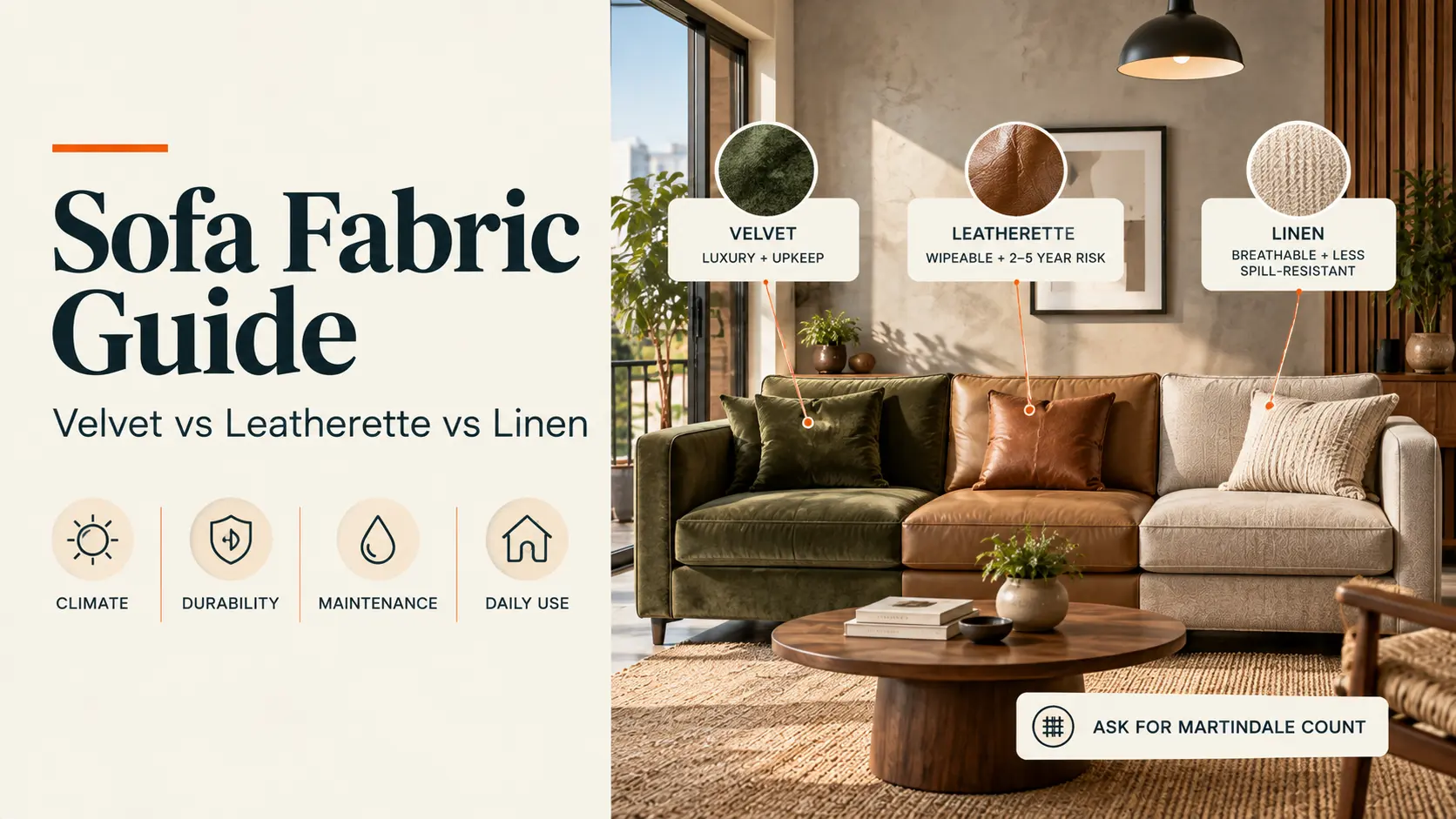
A sofa is typically a 5–10 year purchase, but the fabric covering it often doesn't last nearly that long if it's mismatched to your climate and household. Velvet, leatherette, and linen each perform genuinely differently in Indian heat and humidity and the honest differences matter more than which one looks best in a showroom photo.
Fabric is only one part of the decision. For a broader look at sofa designs and how to choose the right one, see our sofa buying guide.
Velvet - Luxurious, But Only in the Right Room
Velvet gives real colour depth and a soft, rich texture that few other fabrics match, typically costing ₹1,500–3,000 per metre in India. The honest trade-off: velvet is a pile fabric that traps dust, pet hair, and humidity, and in a humid city like Mumbai, that genuinely means weekly vacuuming to keep it looking good, not an occasional clean.
This makes velvet a strong choice for a formal sitting room that sees guests occasionally and has air conditioning running most of the time, and a poor choice for a daily-use family living room, especially without dedicated household help to manage the upkeep it needs.
If you like velvet but want to understand where it works best, our guide to budget-friendly upholstery fabrics with a luxurious appearance also compares velvet with linen, faux leather and other upholstery materials.
Leatherette - The Honest Timeline Before It Peels
This is where a lot of sofa-buying content gets vague, and it's worth being specific. Multiple independent sources converge on the same pattern: PU leatherette typically begins to peel, crack, or flake within 2–5 years in Indian humidity conditions, with coastal cities like Mumbai and Chennai on the faster end of that range. One retailer that deliberately doesn't stock leatherette at all states it plainly: once the peeling starts, it cannot be repaired the sofa needs full reupholstering.
Leatherette remains genuinely useful for one specific reason: it's fully wipeable, making it a practical choice for households with young children or pets where spill resistance matters more than long-term surface life. The honest way to use this fabric is to buy it knowing its realistic lifespan, and budget for reupholstering or replacement within that window, rather than expecting leather-like longevity from a leather-look price point.
If you want the genuine leather look and feel with real longevity, full-grain leather lasts 15–20 years and actually improves with age, at a meaningfully higher price than leatherette, a price difference several sources describe as justified once you account for how much sooner leatherette needs replacing.
Linen - Coolest to Sit On, Least Forgiving With Spills
Linen is the most climate-tolerant of the three fabrics discussed here, genuinely breathable, doesn't trap heat against the body, and a sensible choice for a home without air conditioning running constantly. Its honest trade-off runs the other way: linen has the lowest spill resistance of the three, absorbing liquids almost instantly rather than letting you wipe them away, and pure linen fibres thin and loosen faster under constant friction than a tightly woven synthetic blend.
A linen or linen-cotton blend suits a household that's genuinely careful about spills, or a lower-traffic room, better than a daily-use family sofa fielding regular tea, food, or small children.
For more ideas on using breathable natural materials in interiors, see our guide to organic materials for home decor.
One Question to Ask Every Dealer
Regardless of which fabric you're leaning toward, ask the dealer for the fabric's Martindale rub count, a standard durability test measuring how many rubbing cycles the weave withstands before showing wear. 25,000+ rubs is the benchmark worth asking for on a heavy, daily-use sofa. This is a concrete, checkable number, not a vague "durable fabric" claim, and most dealers can provide it if asked directly.
It's also worth resisting the instinct to save money on fabric grade at the point of sale. A sofa is a 5–10 year investment; saving a few thousand rupees on a cheaper fabric that needs replacing within three years isn't actually a saving once you account for the earlier reupholstery or replacement cost.
Which Fabric Fits Your Household?
Kids under 10 at home: prioritise stain resistance microfiber or a performance-treated fabric handles this better than velvet, silk blends, or open-weave linen.
Pets at home: leather or leatherette is generally the most practical choice, given how easily fur and scratches show on fabric weaves, though leatherette's peeling timeline still applies.
Humid coastal city (Mumbai, Chennai, Kochi): favour synthetic-blend or performance fabric over natural fibres or leatherette, since humidity accelerates both fabric mould risk and leatherette's peeling timeline.
Drier city (Delhi, Jaipur, Ahmedabad): genuine leather performs reliably year-round here, and linen's breathability advantage matters less than in a genuinely humid climate.
Formal room with AC, low daily traffic: velvet or chenille can genuinely work well here, since the upkeep burden is manageable without daily family use adding to it.
Daily-use family living room: a tightly woven performance fabric or quality leatherette, chosen with its realistic lifespan in mind, generally serves better than velvet or loose-weave linen.
Once the upholstery is decided, you can also explore our guide to trending living room themes for 2026 to coordinate the sofa with the rest of the room.







Ans 1. Multiple sources point to 2–5 years in India's humidity, with coastal cities like Mumbai and Chennai on the faster end. Once peeling starts, it typically can't be repaired and needs full reupholstering.
Ans 2. Not generally velvet traps dust, pet hair, and humidity, requiring weekly vacuuming to stay looking good. It suits a formal, low-traffic, air-conditioned room better than a family living room used daily.
Ans 3. Synthetic-blend or performance fabrics generally perform better than natural fibres or leatherette in high-humidity coastal cities, since humidity accelerates both mould risk in natural fabrics and leatherette's peeling timeline.
Ans 4. Linen is the most breathable and coolest to sit on, but has the lowest spill resistance of common sofa fabrics, absorbing liquids almost instantly, and wears faster under friction than a tight synthetic weave.
Ans 5. Ask for the fabric's Martindale rub count 25,000+ rubs is the benchmark for a heavy, daily-use sofa. This is a specific, checkable durability figure rather than a vague marketing claim.
Ans 6. For long-term use, generally yes full-grain leather lasts 15–20 years and improves with age, against leatherette's realistic 2–5 year window in Indian humidity before it needs replacing.
Ans 7. Leatherette or genuine leather for pets, given how easily fabric weaves show scratches and fur; microfiber or performance fabric for households with young children, prioritising stain resistance.