
✦ AI Summary
Table of Content
▲
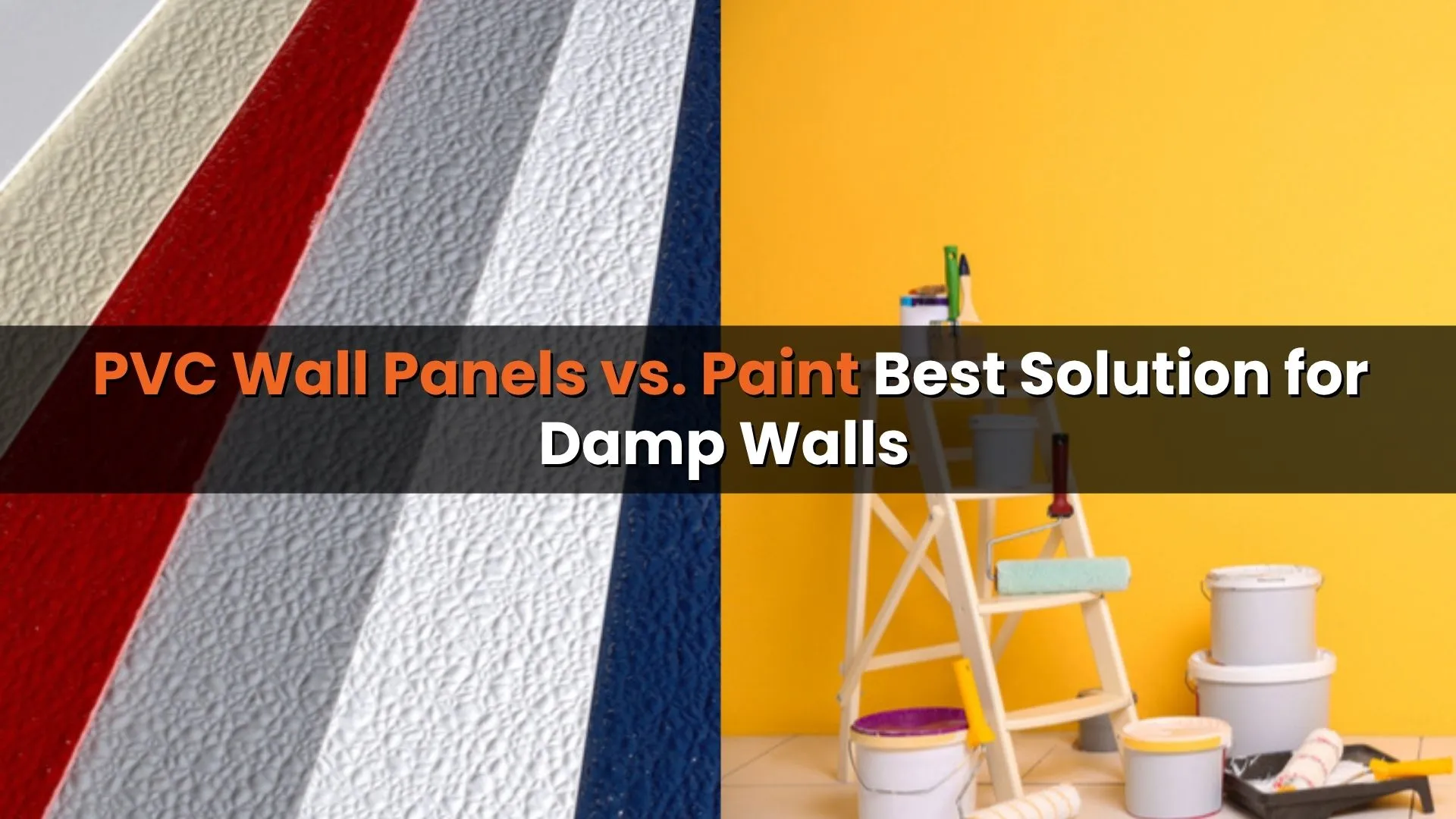
Every Indian homeowner reaches this decision point which occurs at some time because waterproofing methods fail to solve their damp wall problems. People experience increasing difficulty in deciding between PVC Wall Panels and Paint because monsoon season repeats its annual cycle. The same result occurs after fresh paint application in high-rises of Mumbai and older houses of Varanasi and central areas of Raipur because paint starts to stain and peel within three months.
Builders and designers along with homeowners throughout India from large metropolitan areas to small towns are changing their approach to damp wall treatment by choosing between PVC Wall Panels and Paint. The standard solution has been waterproof paint but PVC panels have gained popularity because they offer superior durability and simpler maintenance and more affordable costs. The guide presents both methods in an easy-to-follow format, which enables you to select the most suitable option for your residence.
What Is Waterproof Paint?
The waterproof paint functions as a protective coating that creates a chemical barrier to moisture on wall surfaces. The three most popular Indian paint brands include Asian Paints Damp Proof, Berger WeatherCoat, and Nerolac Hindrance.
The comparison between PVC Wall Panels and Paint shows that waterproof paint is the most common solution across India because it has low initial costs and customers can find it everywhere. The product serves as a surface treatment but it cannot function as a complete waterproofing solution because it fails to protect against extreme dampness and continuous dampness.
Key facts:
- Cost: ₹20–₹40 per sq. ft., including application
- Requires repainting every 3–4 years, especially post-monsoon
- Susceptible to peeling, mold, and discolouration in sustained moisture
- Releases VOCs that affect indoor air quality
Also Read: Solar Panel for Home: Tax Benefits and State Subsidy Guide
What Are PVC Wall Panels?
PVC wall panels serve as twofold systems that permit installation through their double functionality of serving as lightweight wall material. The panels connect through their established tongue-and-groove and clip systems which enable them to attach to walls without leaving any openings that water can penetrate.
The PVC Wall Panels Vs. Paint argument shows PVC panels provide better moisture protection because they block moisture entry instead of creating barriers that decrease moisture flow. The product which started its success in metropolitan areas has become accessible to residents of Tier 2 and Tier 3 cities including Lucknow Indore Jaipur Nagpur and Raipur.
Key facts:
- 100% waterproof by material; available in 8mm–10mm thickness
- Lifespan of 10–15+ years with zero repainting or major maintenance
- Mold-proof, termite-proof, fungus-resistant, and recyclable
- Cost: ₹70–₹150 per sq. ft. upfront; significantly lower total cost over 15 years
Key Differences at a Glance
|
Feature |
PVC Wall Panels |
Waterproof Paint |
|---|---|---|
|
Upfront Cost |
₹70–₹150 / sq. ft. |
₹20–₹40 / sq. ft. |
|
Lifespan |
10–15+ years |
3–4 years |
|
Waterproofing |
100%, physically blocks moisture |
Partial, surface barrier only |
|
Mold Resistance |
High, mold & fungus proof |
Low, susceptible in humidity |
|
Maintenance |
Wipe clean; zero repainting |
Repaint every 3–4 years |
|
Installation |
Hours (interlocking system) |
2–3 days incl. drying time |
|
Design Options |
Wood, marble, stone, matte, gloss |
Colours and finishes only |
|
Long-Term Cost |
Low, single investment |
High, repeat cycles |
|
VOC Emissions |
Minimal |
Yes, harmful indoor VOCs |
|
Best For |
Severe / recurring damp walls |
Mild or surface-level dampness |
Performance Breakdown Which One Actually Works?
The waterproof paint creates a surface barrier that decreases water absorption but fails to protect against continuous monsoon water infiltration and underground water pressure and active pipe leaks. The PVC wall panels establish a complete waterproof barrier, which prevents any moisture absorption, making them suitable for use in kitchens, bathrooms, and basements.
The lifespan of durable paint extends to three to four years until it begins to peel and develops mold growth. The design of PVC panels enables them to endure Indian climate conditions for more than ten years without requiring seasonal maintenance.
The cities of Mumbai, Chennai, and Kolkata experience high humidity, which allows mold to develop on painted surfaces within two years. The non-porous PVC surface prevents mold and fungus from developing because it creates an environment that does not support their growth, which maintains full protection in both coastal and basement environments.
The total cost of the project will increase because five repainting projects need to be completed during the 15-year period, which will cost ₹30 per square foot for the 60 square foot area. The PVC panels require a one-time payment of ₹7,000 to ₹8,100 to cover the same space, which will last for 10 to 15 years.
The application of waterproof paint results in VOC emissions, which continue to occur throughout subsequent repainting processes. The PVC panels provide recycling options which result in their construction waste being reduced to minimal levels while their operation generates no VOC emissions.
Also Read: Beam vs Column: Meaning, Types, Benefits & How They Differ
Practical Guide for Tier 2 & Tier 3 City Homeowners
Not too long ago, PVC wall panels were hard to find outside big cities. That has changed completely now. Whether you are in Nashik, Bhopal, or Coimbatore, local dealers and regional suppliers have made them easy to get, and e-commerce has done the rest. Finding PVC panels today is honestly just as simple as picking up a can of paint.
- Lucknow: 480+ products available; dealers in Thakurganj and Mahanagar
- Indore & Bhopal: Active dealers in Vijay Nagar and New Palasia
- Jaipur: Suppliers concentrated in Malviya Industrial Area
- Nagpur, Raipur, Varanasi, Kanpur: Regional distributors or direct sourcing via IndiaMart
- Smaller towns: Amazon and Flipkart ship PVC panels to most Indian pin codes
How to Get Started in 5 Simple Steps
- Assess your wall: Identify whether dampness is mild or active seepage; fix the source first
- Measure your wall area: Calculate length × height to determine sq. ft. needed
- Find a local supplier: Search Google or IndiaMart for "PVC wall panel dealer in your city.
- Choose the right panel: Opt for waterproof PVC, 8mm–10mm thickness; avoid MDF in wet areas
- Hire a local carpenter: Any experienced carpenter can install using the interlocking system
Conclusion
The intensity of damp issues you experience will determine your selection of permanent solutions for your damp problem. The combination of wall moisture and its frequency of appearance determines which waterproof paint with damp-proof primer will provide suitable performance for multiple years. PVC wall panels become a valuable investment when your bathroom and kitchen walls experience constant moisture problems and their bathroom and kitchen walls remain wet throughout the year. Over more than ten years of continuous exposure to moisture, panels will maintain their structural integrity better than paint which will fail to perform at that level.


_1792151285.webp)

Ans 1. PVC wall panels are better for recurring or severe damp walls. They physically block moisture, last 10–15 years, and require zero repainting. Waterproof paint works for mild dampness but needs reapplication every 3–4 years.
Ans 2. PVC wall panels cost ₹70–₹150 per sq. ft. upfront. Waterproof paint costs ₹20–₹40 per sq. ft. but repeated repainting over 15 years adds up to ₹9,000+ for 60 sq. ft., making PVC panels more cost-effective long term.
Ans 3. PVC wall panels last 10–15 years or more with minimal maintenance. Waterproof paint typically lasts 3–4 years before peeling, bubbling, or mold growth requires repainting.
Ans 4. Yes. PVC wall panels are fully mold-proof, fungus-resistant, and termite-proof due to their non-porous surface. Waterproof paint can develop mold within 1–2 years in high-humidity areas like Mumbai, Chennai, and Kolkata.
Ans 5. Yes. PVC wall panels install directly over existing walls using a tongue-and-groove or clip-on interlocking system. Any local carpenter can complete a standard room installation in a few hours without specialist tools.
Ans 6. Yes. PVC wall panels are now widely available in cities like Lucknow, Jaipur, Indore, Nagpur, Raipur, and Varanasi through local dealers, regional distributors, IndiaMart, Amazon, and Flipkart.
Ans 7. Yes. Most waterproof paints release VOCs (Volatile Organic Compounds) during application and drying, which affect indoor air quality. PVC wall panels emit no VOCs during use, making them a healthier choice for enclosed spaces.
Ans 8. PVC wall panels are ideal for bathrooms, kitchens, basements, and any room with recurring moisture or seepage. Their 100% waterproof surface makes them the most reliable option for India's high-humidity environments.
Ans 9. No. Waterproof paint is a surface treatment, not a structural waterproofing solution. It slows moisture absorption but cannot withstand sustained seepage, rising damp, or active pipe leaks over the long term.
Ans 10. Choose waterproof paint if dampness is mild and occasional with a tight budget. Choose PVC wall panels if your walls face recurring monsoon seepage, bathroom moisture, or basement dampness and you want a long-lasting, low-maintenance solution.