
✦ AI Summary
Table of Content
▲- What is PF Withdrawal for a Home Loan?
- Why Consider PF Withdrawal for a Home Loan?
- EPFO Eligibility Criteria for Home Loan Withdrawal
- EPFO Rules for Home Loan Withdrawal
- How Much PF Can Be Withdrawn?
- PF Withdrawal vs Personal Loan for Housing Expenses
- Step-by-Step PF Withdrawal Application Process
- Documents Required for PF Withdrawal
- Important Things to Consider Before Withdrawing PF
- Common Mistakes to Avoid
- Conclusion
Buying a home is one of the biggest financial commitments most people make in their lifetime. While home loans help reduce the immediate financial burden, arranging funds for the down payment and managing loan repayments can still be challenging. Fortunately, members of the Employees' Provident Fund Organisation (EPFO) can use a portion of their Provident Fund savings to support homeownership goals.
EPFO has provisions that permit eligible members of the scheme to withdraw funds from their PF accounts if they wish to purchase or build a house, pay off an existing mortgage, or contribute towards buying a new home. By learning about the eligibility requirements, withdrawal limits and application process, borrowers will be able to make better financial decisions. This guide provides information about PF withdrawal for home loan including EPFO rules, eligibility requirements and procedures.
What is PF Withdrawal for a Home Loan?
The Employees' Provident Fund is fundamentally a retirement savings scheme, both you and your employer contribute a fixed percentage of your salary every month, and this accumulated corpus grows with compound interest until retirement. But EPFO recognises that certain major life events and housing is explicitly one of them, justify allowing members partial access to these funds before retirement.
PF Funds Can Be Used For
- Home loan repayment
- Down payment for property purchase
- Purchase of residential plots
- House construction
- Purchase of ready-to-move-in property
- Housing schemes approved by EPFO
This facility helps members reduce their dependence on external borrowing and manage housing expenses more effectively.
Also Read: Missed Your Home Loan EMI: How to Avoid ECS Penalties and Save Your CIBIL
Why Consider PF Withdrawal for a Home Loan?
Using your accumulated PF savings for a home purchase or loan repayment can provide genuine financial relief during what is, for most people, the most expensive transaction of their lives.
Key Benefits
- Reduces home loan burden
- Helps arrange down payment funds
- Lowers overall borrowing costs
- Provides access to accumulated savings
- No additional interest burden
- Easy online application process
However, borrowers should also consider the long-term impact on retirement savings before making a withdrawal.
EPFO Eligibility Criteria for Home Loan Withdrawal
EPFO has established specific eligibility requirements for housing-related withdrawals. A member must generally satisfy the following conditions:
- Active EPF membership
- Minimum years of EPF contribution as prescribed
- Property must be in the member's name, spouse's name, or jointly owned
- Sufficient balance available in EPF account
- Valid Universal Account Number (UAN)
Eligibility Based on Purpose
|
Purpose |
Minimum Service Requirement |
|
Purchase of plot |
5 years |
|
House purchase |
5 years |
|
House construction |
5 years |
|
Home loan repayment |
10 years |
|
Housing scheme participation |
As per EPFO guidelines |
The exact eligibility may vary based on the type of withdrawal request and applicable EPFO provisions.
EPFO Rules for Home Loan Withdrawal
EPFO permits partial withdrawals under specific rules to ensure funds are used for genuine housing purposes.
Withdrawal for Home Purchase
Members can withdraw funds to buy:
- Residential plots
- Flats
- Independent houses
The property must be intended for personal residential use.
Key Conditions
- Property ownership must be legally documented
- Withdrawal is allowed only after the required service period
- Supporting documents may be required
Withdrawal for Home Loan Repayment
This is one of the most commonly used categories among EPFO members who already have an existing home loan and want to reduce their outstanding obligation using their accumulated PF savings.
Conditions for Home Loan Repayment Withdrawal
- Minimum 10 years of EPF membership
- Property owned by member, spouse, or jointly
- Outstanding loan documents available
- Sufficient EPF balance
This option helps borrowers lower interest expenses and reduce loan tenure.
How Much PF Can Be Withdrawn?
The maximum withdrawal amount available depends specifically on the purpose of your application and the EPFO regulations applicable at the time you submit your request, there isn't a single universal limit that applies identically across every housing withdrawal category.
Common Withdrawal Limits
For housing purposes, members may generally withdraw:
- A portion of employee contribution
- Employer contribution and accumulated interest (where applicable)
- Specific percentage limits prescribed by EPFO
The final amount approved depends on account balance, eligibility, and withdrawal category.
PF Withdrawal vs Personal Loan for Housing Expenses
|
Feature |
PF Withdrawal |
Personal Loan |
|
Interest Cost |
None |
High |
|
Repayment Requirement |
Not required |
Monthly EMI |
|
Approval Process |
Through EPFO |
Through lender |
|
Impact on Retirement Savings |
Yes |
No |
|
Processing Cost |
Minimal |
Higher |
|
Borrowing Obligation |
No debt created |
Creates debt |
This comparison highlights why many borrowers prefer using eligible PF funds before taking additional loans.
Also Read: How to Transfer Your Home Loan to Another Bank for a Lower EMI in 2026
Step-by-Step PF Withdrawal Application Process
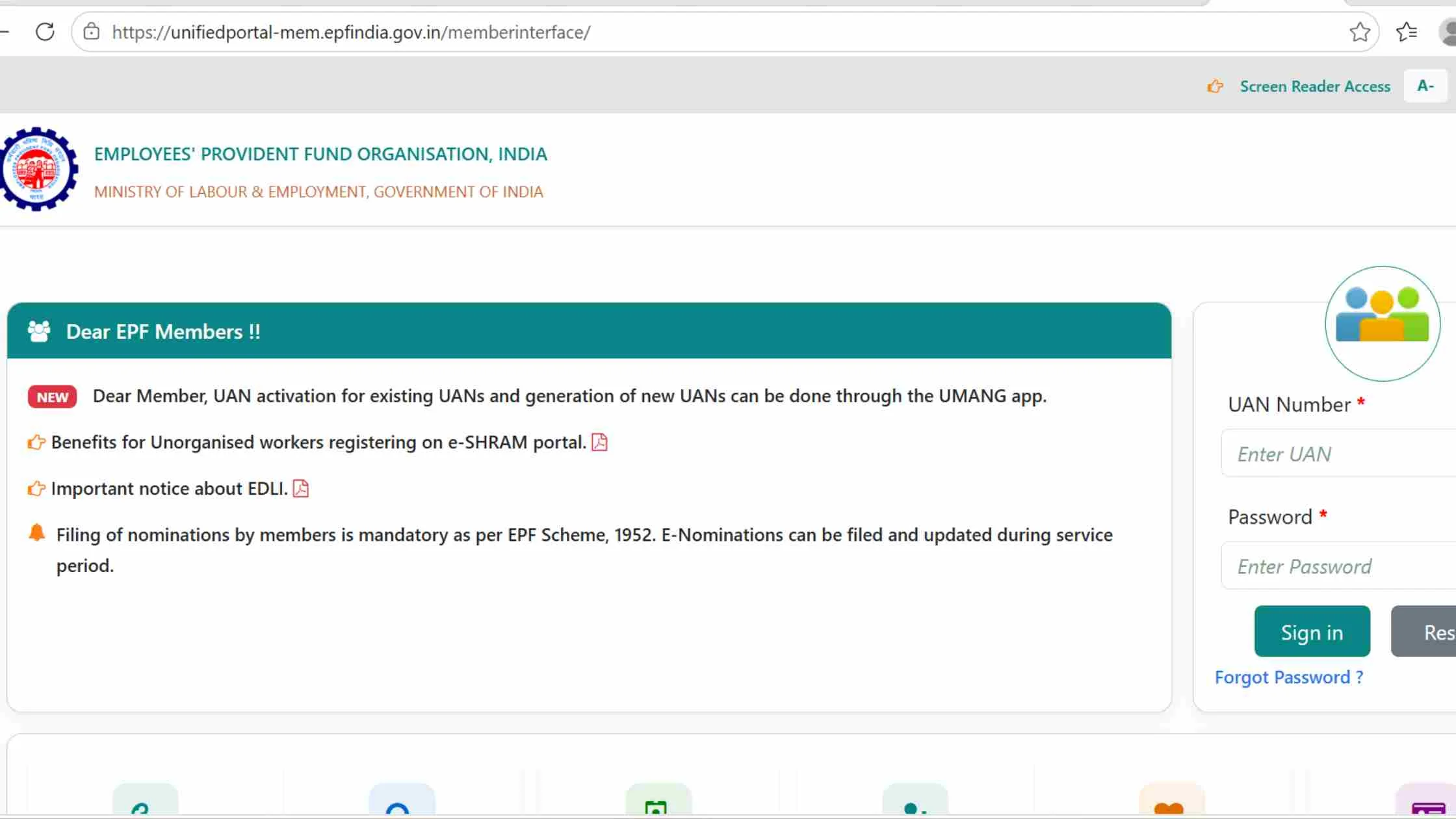
EPFO has simplified withdrawals through its online portal (EPFO Portal)
Step 1: Activate UAN
Ensure your:
- Universal Account Number (UAN) is active
- Aadhaar is linked
- PAN is updated
- Bank account is verified
Step 2: Log in to the EPFO Member Portal
Access the EPFO member portal using:
- UAN
- Password
Verify all personal information before proceeding.
Step 3: Navigate to Online Services
Select:
Online Services – Claim (Form 31, 19 & 10C)
This section handles withdrawal requests.
Step 4: Verify Bank Details
Confirm your registered bank account details and proceed with authentication.
Step 5: Select Withdrawal Purpose
Choose the appropriate housing-related category such as:
- House purchase
- House construction
- Home loan repayment
Step 6: Upload Required Documents
Depending on the request, members may need:
Common Documents
- Home loan statement
- Property documents
- Ownership proof
- Aadhaar card
- PAN card
- Bank details
Step 7: Submit Application
Authenticate using OTP verification and submit the claim.
Once approved, funds are usually credited directly to the registered bank account.
Documents Required for PF Withdrawal
Having every required document organised and ready before you start your application significantly reduces the chances of delays or rejection.
- Aadhaar card
- PAN card
- UAN details
- Property ownership documents
- Home loan sanction letter
- Loan account statement
- Bank account information
Requirements may vary depending on the withdrawal category you selected.
Important Things to Consider Before Withdrawing PF
While PF withdrawal genuinely offers immediate financial benefit for housing needs, the decision deserves careful, considered evaluation rather than an automatic assumption that withdrawing is always the right move simply because you're eligible.
Impact on Retirement Corpus
The most significant consideration is the impact on your retirement corpus. Every rupee you withdraw now is a rupee that stops compounding from this point forward and the power of compound interest over a 15, 20, or 30-year remaining career means that even a moderate withdrawal today can represent a meaningfully larger gap in your eventual retirement corpus than the nominal amount might suggest.
Consider These Factors
- Remaining retirement horizon, withdrawing at 30 with 30 years until retirement has very different long-term implications than withdrawing at 55 with limited time remaining.
- Current EPF balance and what proportion of it the withdrawal represents
- The interest rate on your existing home loan, since the financial logic of using PF to prepay a loan is stronger when your loan's interest rate is high relative to what your PF balance would otherwise earn.
- Check whether alternative funding sources are genuinely available and what they would cost in comparison.
- Your broader future financial goals beyond just this specific housing need.
Using PF strategically can help balance present housing needs and future financial security.
Common Mistakes to Avoid
Several avoidable errors consistently cause PF withdrawal applications to face delays or outright rejection, understanding and avoiding these specific mistakes improves your chances of a smooth, successful application.
Incomplete KYC details an unverified or improperly linked Aadhaar, PAN, or bank account will block your application regardless of how complete your other documentation is. Verify all KYC elements are properly updated before you even begin the formal application.
Incorrect bank account information in the system can cause approved funds to be misdirected or the disbursement to fail entirely. Confirm your registered bank details are current and accurate before submission.
Applying before actually meeting the eligibility criteria, particularly the minimum service period requirement specific to your chosen withdrawal category, results in automatic rejection. Verify your eligibility independently before investing time in preparing a full application.
Uploading incorrect or mismatched documents that don't align with your stated withdrawal purpose or that are illegible creates processing delays as EPFO requests corrected submissions.
Withdrawing excessively without genuine retirement planning is less a procedural error and more a financial planning mistake, withdrawing the maximum permitted amount simply because you're eligible, without weighing the genuine long-term retirement impact, can create financial strain you don't fully appreciate until years later.
Conclusion
PF withdrawal for home loans offers a valuable opportunity for EPFO members to utilize accumulated savings for one of life's most important investments. Whether you need funds for a down payment, house purchase, construction, or home loan repayment, EPFO provides structured withdrawal options that can ease financial pressure.
However, since PF is primarily designed for retirement security, withdrawals should be made carefully after evaluating long-term financial goals. By understanding EPFO eligibility rules, withdrawal limits, and the application process, homebuyers can make smarter decisions while maintaining a healthy balance between present housing needs and future financial stability.






Ans 1. Yes, EPFO permits eligible members to withdraw a portion of their Provident Fund savings specifically for buying a house, purchasing a residential plot, constructing a house, or repaying an existing home loan. The eligibility requires active EPF membership, a minimum service period of generally 5 years for purchase or construction purposes (10 years specifically for home loan repayment), the property being in the member's own name, their spouse's name, or jointly owned, and sufficient balance available in the EPF account. The withdrawal can be applied toward the down payment or directly toward the property purchase cost, reducing dependence on additional borrowing.
Ans 2. The minimum EPF service period required specifically for home loan repayment withdrawal is 10 years of EPF membership, notably longer than the 5-year requirement that applies to direct house purchase, plot purchase, or construction withdrawal categories. This distinction is important because many members assume all housing-related withdrawal categories follow the same eligibility threshold, when in fact the loan repayment category specifically requires a longer contribution history before EPFO will approve the withdrawal request.
Ans 3. The exact amount you can withdraw for home loan repayment depends on your current EPF account balance, your specific eligibility under EPFO's home loan repayment category rules, and the percentage limits EPFO has prescribed for this withdrawal type at the time of your application. Generally, members may withdraw a portion of their own employee contribution along with the employer's contribution and accumulated interest where applicable, subject to specific limits that EPFO periodically updates. Checking the current applicable limit directly through the EPFO member portal before finalising your financial planning provides the most accurate, current figure for your specific account.
Ans 4. Documents required for PF withdrawal for home loan purposes include your Aadhaar card, PAN card, UAN details, complete property ownership documents, home loan sanction letter, your current loan account statement showing the outstanding balance, and your registered bank account information for fund disbursement. The exact document list can vary slightly depending on whether you're applying under the house purchase, construction, or loan repayment category, reviewing the specific category's document requirements on the EPFO portal before beginning your application helps ensure you have everything ready.
Ans 5. To apply for PF withdrawal online, first ensure your UAN is active with Aadhaar linked, PAN updated, and bank account verified. Log in to the EPFO member portal using your UAN and password. Navigate to Online Services and select Claim (Form 31, 19 & 10C). Verify your registered bank details and complete the required authentication. Select the appropriate housing-related withdrawal purpose, house purchase, construction, or loan repayment. Upload all required supporting documents based on your selected category. Complete OTP verification and submit your claim. Once approved, funds are typically credited directly to your registered bank account.
Ans 6. PF withdrawal rules around taxation generally depend on the length of continuous service and the specific circumstances of the withdrawal. Withdrawals made after 5 years of continuous service are generally not subject to TDS deduction under standard EPF withdrawal tax provisions. Since home loan repayment withdrawal specifically requires a minimum of 10 years of EPF membership well beyond the 5-year threshold such withdrawals are typically not subject to TDS under the standard rules. However, tax treatment can have specific nuances depending on individual circumstances, so consulting a tax advisor or chartered accountant for guidance specific to your situation is advisable before finalising your withdrawal decision.
Ans 7. Yes, EPFO permits withdrawal for purchasing a residential plot, subject to a minimum EPF service requirement of 5 years and the standard eligibility conditions including the plot being intended for the member's own personal residential use and proper legal documentation of the purchase. This is distinct from the home loan repayment category, which requires a longer 10-year minimum service period. Members planning to purchase land for future construction should verify their eligibility under the specific plot purchase category and ensure they have the required property documentation ready before applying.
Ans 8. If your PF withdrawal application is rejected, EPFO typically provides a reason for rejection through the member portal, which commonly relates to incomplete KYC details, not meeting the minimum service eligibility requirement for your selected category, incorrect or mismatched bank account information, or incomplete or incorrect supporting documents. Review the specific rejection reason provided, correct the identified issue whether that's completing KYC verification, gathering the correct documentation, or waiting until you meet the eligibility threshold and resubmit your application. Many initial rejections are due to easily correctable administrative issues rather than fundamental ineligibility.
Ans 9. If a property is jointly owned by both spouses and both spouses are EPFO members meeting the respective eligibility criteria, both individuals can potentially make separate withdrawal applications from their own respective EPF accounts toward the same jointly-owned property purchase, subject to EPFO's specific rules and verification process. This can effectively allow a household to access a larger combined amount toward their housing need than either spouse's individual PF balance would provide alone. Both applicants would need to independently satisfy the eligibility requirements and provide appropriate documentation establishing the joint ownership of the property being purchased or constructed.
Ans 10. EPFO's housing withdrawal provisions generally have specific limits on the frequency and total amount of withdrawals permitted for housing purposes over a member's EPF membership tenure, designed to ensure the facility is used for genuine, substantial housing needs rather than repeated smaller withdrawals. The exact frequency limitations and any waiting periods between withdrawal requests can vary by category and are subject to EPFO's current guidelines. Checking the specific current provisions through the EPFO member portal or with your employer's HR department provides the most accurate information for your particular situation and withdrawal history.