
✦ AI Summary
Table of Content
▲- Why New Noida Is Being Developed
- Land Acquisition Process to Begin in August
- 40 Percent Land Reserved for Industrial Development
- Key Sectors Expected to Benefit
- New Noida vs Existing NCR Development Corridors
- Benefits for Investors and Businesses
- Infrastructure Will Drive Future Growth
- Challenges That Need Attention
- Future Outlook
- Final Thoughts
The New Noida project, officially referred to as the Dadri Noida Ghaziabad Investment Region (DNGIR) is progressing. The land acquisition process is expected to commence in August. This project is intended to be one of the biggest planned urban and industrial projects of Uttar Pradesh. The goal is to ease the pressures in the existing urban areas and create a new economic centre in the National Capital Region.
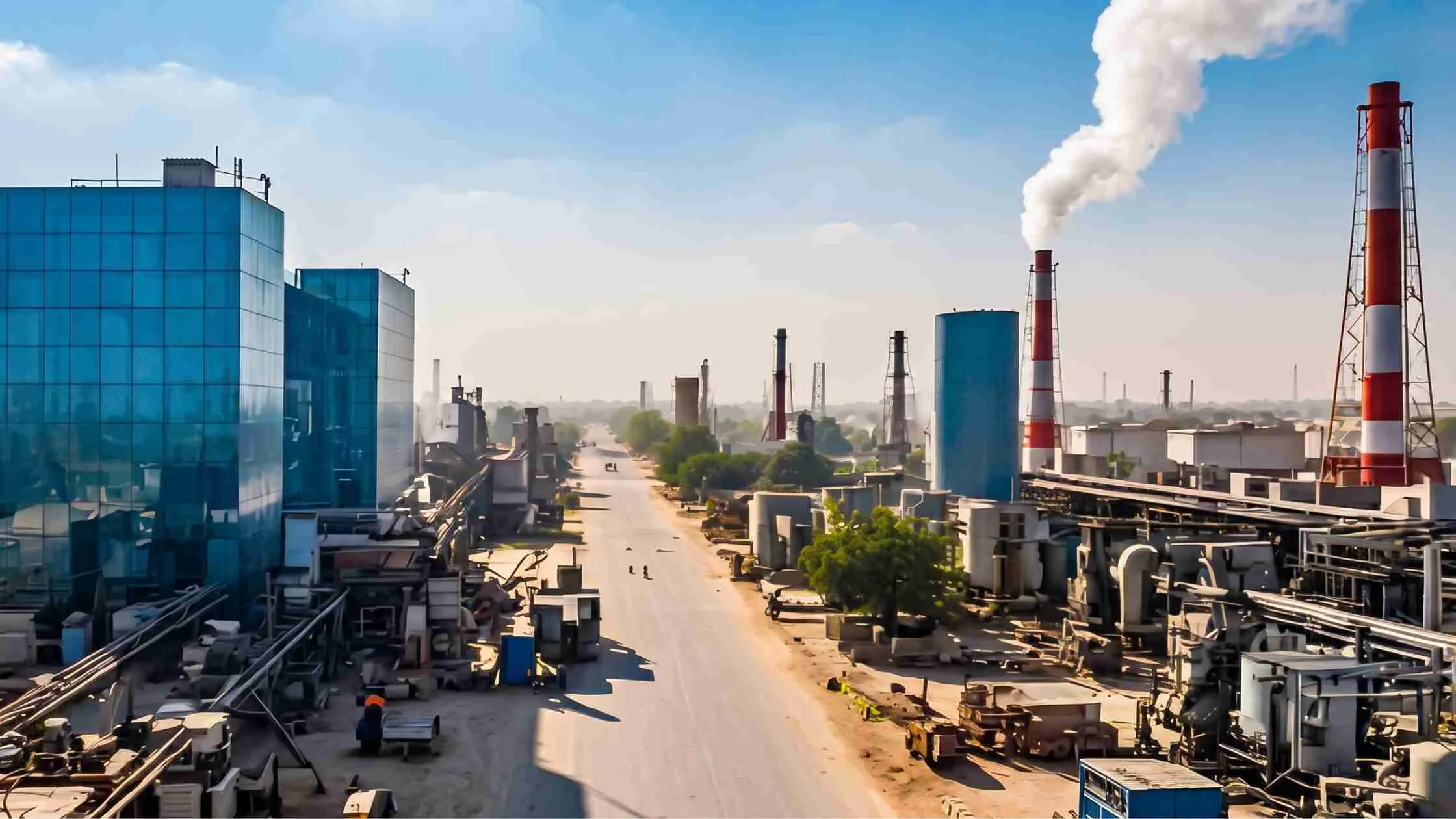
The key highlight of the project is its industrial focus. Nearly 40% of the land has been earmarked for the industrial development according to the master plan. This indicates the government's focus on making Noida a destination for manufacturing, logistics and investments. The groundwork for the acquisition has already been laid in several villages of Gautam Buddh Nagar and Bulandshahr.
Why New Noida Is Being Developed
The rapid development of Noida, Greater Noida, and the Yamuna Expressway area has increased the need for plots, infrastructure, industrial space, and accommodation. New Noida is being created for the future boosts of the economy as well as for large industrial investments.
Key Objectives of the Project
- Creating a genuinely world-class industrial and manufacturing hub
- Attracting both domestic and international investment
- Generating large-scale employment across multiple sectors
- Easing congestion in Noida and Greater Noida's already dense urban core
- Supporting logistics, warehousing, and export-oriented industry
- Promoting a more balanced mix of urban and industrial development rather than one crowding out the other
Apart from that, the project has also been identified as a part of the National Industrial Corridor Development Programme. It is expected that the project will be executed along with the Noida International Airport, the Yamuna Expressway Industrial Development Region, and the logistics corridors being built in the west UP.
The site of New Noida is not coincidental. The location is approximately 32km away from the Jewar airport and has been designed to have direct connectivity to the Delhi-Mumbai Industrial Corridor (DMIC) and the Western Dedicated Freight Corridor.
Also Read: Best Areas for PG and Rental Income in Noida
Land Acquisition Process to Begin in August
Authorities have completed initial planning and administrative preparations for land acquisition. The first phase involves land from 37 villages spread across Gautam Buddh Nagar and Bulandshahr districts. The acquisition process will be carried out through a consent-based model aimed at ensuring smoother implementation and reduced disputes.
First Phase Highlights
- Land acquisition expected to begin in August
- 37 villages included in the initial phase
- 24 villages located in Bulandshahr
- 13 villages located in Gautam Buddh Nagar
- Dedicated administrative staff deployed
- Temporary offices planned to support acquisition activities
Officials have also sought additional revenue officers and support infrastructure to accelerate the process and maintain transparency.
40 Percent Land Reserved for Industrial Development
Perhaps the single most important detail in New Noida's master plan is how the land is actually going to be used once acquired. Roughly 40% of the total project area has been earmarked specifically for industrial development, with the remaining land split primarily between 13% for residential use and 18% for green and recreational space, alongside land set aside for schools, hospitals, and a sewage treatment plant.
Why Industrial Allocation Matters
The large industrial component is expected to:
- Attract manufacturing companies
- Support warehousing and logistics businesses
- Encourage export-oriented industries
- Create employment opportunities
- Strengthen Uttar Pradesh's industrial ecosystem
- Boost regional economic growth
With increasing investment activity around the Noida International Airport and Yamuna Expressway, demand for industrial land continues to rise across the region.
Key Sectors Expected to Benefit
The scale and structure of the industrial land allocation suggest a genuinely broad range of industries could find a home in New Noida over the coming years.
Potential Growth Sectors
Manufacturing
Large industrial parcels can attract automobile, electronics, engineering, and consumer goods manufacturers.
Logistics and Warehousing
The region's strategic location near major highways and the upcoming airport creates strong potential for logistics parks and warehousing facilities.
Aerospace and Aviation
Proximity to Noida International Airport could encourage aviation-related industries and support services.
Technology and Innovation
Business parks, technology hubs, and research centers may become important components of future development.
MSMEs and Industrial Clusters
Small and medium enterprises could benefit from dedicated industrial zones and improved infrastructure.
New Noida vs Existing NCR Development Corridors
|
Factor |
New Noida |
Existing Noida Areas |
|
Industrial Land Availability |
Very High |
Limited |
|
Future Expansion Potential |
Excellent |
Moderate |
|
Planned Infrastructure |
Extensive |
Mature |
|
Airport Connectivity |
Strong |
Moderate |
|
Investment Opportunities |
High Growth |
Established |
|
Employment Generation |
Significant Potential |
Stable |
|
Land Availability |
Large Scale |
Limited |
The comparison shows why investors and developers are closely monitoring New Noida's progress.
Also Read: Prestige Estates ₹6,800 Cr NCR Blitz: Noida & Gurugram Set for Twin Launch
Benefits for Investors and Businesses
The project is expected to create substantial opportunities for various stakeholders.
Benefits for Businesses
- Access to large industrial plots
- Improved logistics infrastructure
- Better connectivity to Delhi NCR
- Proximity to Noida International Airport
- Availability of future-ready industrial ecosystems
Benefits for Investors
- Long-term appreciation potential
- Industrial and commercial demand growth
- Infrastructure-led value creation
- Emerging business districts
Benefits for Local Communities
- Employment generation
- Improved infrastructure
- Better public services
- Economic development opportunities
Infrastructure Will Drive Future Growth
Infrastructure sits at the core of New Noida's entire development strategy, and several major projects are expected to reinforce the region's competitiveness as it takes shape.
Major Supporting Infrastructure
- Noida International Airport
- Yamuna Expressway
- Eastern Peripheral Expressway
- Freight and logistics corridors
- Metro connectivity proposals
- Industrial and transport hubs
The integration of these infrastructure assets is expected to strengthen New Noida's competitiveness as an industrial and investment destination.
Challenges That Need Attention
Despite the project's considerable potential, successful execution will depend on how well authorities manage a handful of genuinely difficult challenges.
Key Focus Areas
- Smooth land acquisition process
- Fair compensation for landowners
- Timely infrastructure execution
- Environmental sustainability
- Traffic and mobility planning
- Industrial demand alignment
- Long-term urban management
Addressing these factors will be essential to maintaining investor confidence and ensuring sustainable growth.
Future Outlook
New Noida is being envisioned as a genuinely next-generation industrial city, capable of supporting manufacturing, logistics, technology, and commercial activity at a scale few other planned developments in India can match. With land acquisition now beginning and industrial development forming the backbone of the master plan, the project is steadily shifting from planning documents into actual, on-the-ground execution.
As infrastructure investment continues building up around the Noida International Airport region more broadly, New Noida is positioned to emerge as one of North India's most important industrial and economic growth corridors over the coming decades, assuming the execution challenges ahead are managed with the same seriousness that's gone into the planning so far.
Final Thoughts
The decision to begin land acquisition for New Noida in the month of August is a major step forward in the journey of development of the Dadri Noida Ghaziabad Investment Region. The initiative has reserved 40 per cent of the total designated area for industries and represents the long-term aspiration of Uttar Pradesh to emerge as a strong competitor in the domain of industry and investment.
Successful undertakings of the New Noida may radically change the economic picture of western Uttar Pradesh and invite investments worth billions of dollars and create thousands of jobs in the region as proof of it becoming one of the most important advanced urban and industrial centers in India in the future.



Ans 1. Land acquisition for New Noida (DNGIR) is set to begin in August, with officials indicating the process would commence within roughly seven to ten days of the announcement.
Ans 2. The first phase covers 37 villages, including 24 in Bulandshahr district and 13 in Gautam Buddh Nagar district.
Ans 3. New Noida will eventually span 209.11 square kilometres across 84 villages, comprising 63 villages in Bulandshahr and 21 in Gautam Buddh Nagar.
Ans 4. Compensation has been fixed at ₹4,300 per square metre, aligned with the rates used for land acquired under the Jewar Noida International Airport project.
Ans 5. Approximately 40% of the total project area has been earmarked for industrial development, with 13% for residential use and 18% for green and recreational space.
Ans 6. DNGIR, popularly known as New Noida, is a large-scale planned urban and industrial development in western Uttar Pradesh, designed to ease pressure on the existing Noida and Greater Noida corridor.
Ans 7. The acquisition is being carried out through a consent-based model, with revenue officers and lekhpals conducting field surveys to verify ownership records before formal notifications are issued.
Ans 8. New Noida was formally notified on October 18, 2024, as part of the broader Master Plan 2041.
Ans 9. Development is planned across four phases, with the first phase covering 3,165 hectares targeted for completion by 2027, expanding to 8,230 hectares by 2041.
Ans 10. New Noida is planned with direct connectivity to the Delhi-Mumbai Industrial Corridor, the Western Dedicated Freight Corridor, and is located approximately 32 kilometres from Noida International Airport.