
✦ AI Summary
Table of Content
▲- What Is Open Wiring?
- What Is Concealed Wiring?
- Open Wiring vs. Concealed Wiring
- Which Wiring Is Better for Your Home?
- Price Comparison in India
- Retrofitting Concealed Wiring Full Cost Breakdown
- Pros and Cons of Open Wiring
- Pros and Cons of Concealed Wiring
- Safety: Why Upgrading Your Wiring Cannot Wait
- Final Takeaway
Indian homes use two electrical systems, which include Open Wiring and Concealed Wiring. The choice between these two systems and their upgrade possibility directly impacts your home's safety and aesthetic value and its potential resale price. Homeowners who possess a house built more than 20 years ago or plan to renovate their home should understand actual upgrade costs and the differences between systems because this knowledge will help them avoid costly errors.
This guide breaks it all down practically so you can make the right decision for your home and budget.
What Is Open Wiring?

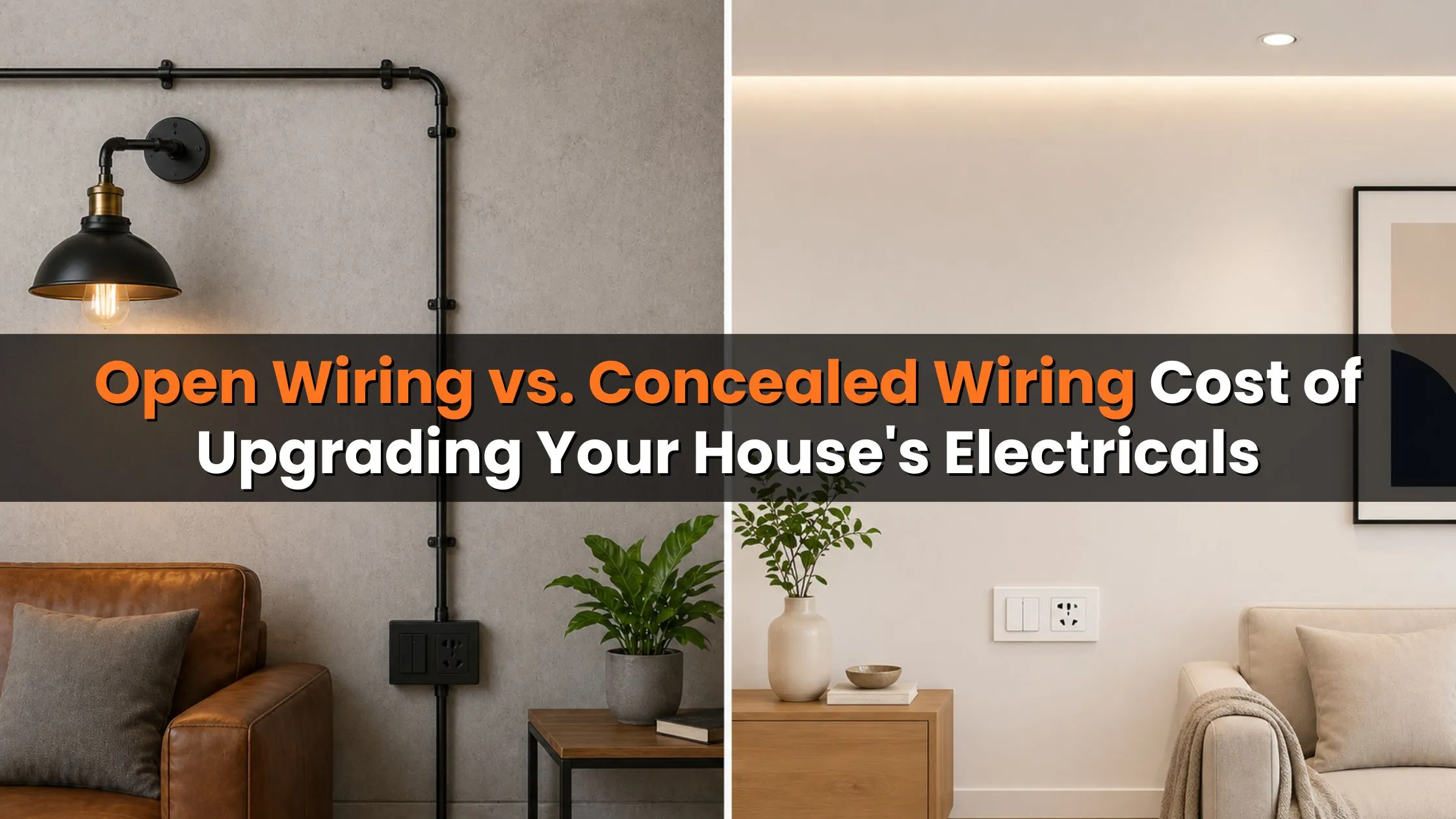
Open wiring, also called surface wiring or casing and capping wiring, is a system where electrical cables are routed along the outer surface of walls and ceilings through visible conduits.
How It Works
- Wires run through surface-mounted PVC casing ducts
- Switches, junction boxes, and sockets sit on the wall surface
- No wall cutting or chasing is required during installation
Key Features
- Fully visible cables and conduit pipes on walls
- Easy to inspect, repair, and extend at any time
- Common in older homes, factories, and utility spaces
What Is Concealed Wiring?
Concealed wiring is a system where all electrical cables are hidden inside walls, floors, or ceilings, routed through PVC conduits embedded in channels (chases) cut into the structure before plastering.
How It Works
- Channels are chiseled into walls before plastering begins
- PVC conduits are fixed inside and wires are pulled through
- Walls are plastered and painted over, hiding everything completely
Key Features
- No visible wires or conduits anywhere on walls
- Flush-mounted switches and sockets for a clean finish
- Standard in new homes and modern constructions
Also Read: Box Bed vs. Hydraulic Bed: Which is Better for Small Rooms?
Open Wiring vs. Concealed Wiring
The choice of the best option will depend on budget, the age of the home, and the least disruptive option to provide for upgrade purposes.
Quick Comparison Table
|
Feature |
Open Wiring |
Concealed Wiring |
|---|---|---|
|
Appearance |
Cables visible on walls |
Fully hidden inside walls |
|
Installation Cost |
Lower |
Higher |
|
Installation Time |
Fast |
Longer (wall chasing needed) |
|
Maintenance |
Very easy |
Difficult (wall breaking required) |
|
Safety |
Exposed to damage |
Well protected |
|
Flexibility |
Easy to modify |
Hard to change later |
|
Fire Risk |
Slightly higher |
Lower |
|
Resale Value Impact |
Minimal |
Positive |
|
Best For |
Old buildings, factories |
New homes, renovations |
Which Wiring Is Better for Your Home?
The choice depends on whether you are building a fresh group of rooms or upgrading an existing area, in most Indian homes.
Choose Open Wiring If
- Your home is a rental property or budget is limited
- You want quick installation with minimal disruption to daily life
- The building has fragile or heritage walls not suited for chasing
- You need a cost-effective short-term wiring solution
Choose Concealed Wiring If
- You are constructing a new home or completing a complete home renovation.
- The design requires a contemporary aesthetic that eliminates all visible electrical wiring from the walls.
- The primary focus of your project needs to achieve two goals which include maintaining building security and increasing the future resale value of your property.
- The installation project includes multiple heavy-duty appliances which consist of air conditioning systems geysers and electric vehicle charging stations.
Also Read: The Ultimate Guide to Terrace or Roof Waterproofing for Independent Houses
Price Comparison in India
The price factor is particularly important to homeowners when choosing between the two systems.
Average Cost Range
|
Wiring Type |
Estimated Cost (2BHK) |
|---|---|
|
Open Wiring (New Installation) |
₹25,000 – ₹60,000 |
|
Open Wiring (Upgrade) |
₹30,000 – ₹80,000 |
|
Concealed Wiring (New Construction) |
₹80,000 – ₹2,00,000 |
|
Concealed Wiring (Retrofit in Existing Home) |
₹1,40,000 – ₹3,00,000+ |
What Affects the Price
- The total expense for building the house depends on its size because additional rooms require additional wiring installations, which increase material expenses.
- The cost of installing RCC or concrete walls exceeds the installation expenses for standard brick walls according to the wall type.
- The existing wiring system requires complete replacement because it contains aluminum wires and rubber-insulated wires.
- The total bill increases because all light points and fan points and AC points and socket points need to be installed.
- The labor rates in metro cities charge higher than the labor rates in smaller towns because of their location.
Retrofitting Concealed Wiring Full Cost Breakdown
The most expensive electrical upgrade for a home exists between open wiring systems and total concealed wiring systems. The total cost of the project includes the following items.
|
Work Item |
Estimated Cost |
|---|---|
|
Electrical labor and wiring |
₹50,000 – ₹1,00,000 |
|
PVC conduit and copper wire material |
₹30,000 – ₹60,000 |
|
Wall chasing and civil work |
₹20,000 – ₹40,000 |
|
Plastering (post-chasing) |
₹15,000 – ₹35,000 |
|
Painting (affected walls) |
₹15,000 – ₹40,000 |
|
MCB panel and switchboard upgrade |
₹8,000 – ₹25,000 |
|
Total Estimated |
₹140,000 – ₹300,000+ |
Pros and Cons of Open Wiring
Pros
- Lower installation cost makes it the preferred choice for budget-conscious homeowners and rental properties across India
- No wall chasing required means installation is fast and causes minimal disruption to your daily routine
- Easy maintenance and repairs since cables are fully accessible on the surface without breaking any walls
- Flexible to modify or extend, as adding new points or rerouting wires is far simpler than with concealed systems
Cons
- The visible cables and conduits that run along walls build an unattractive appearance which conflicts with contemporary interior design.
- The exposed wires, which people can touch create a situation where physical damage occurs because people can nail or scrape the wires or rodents can chew through them.
- The fire danger increases because surface wiring systems get damaged by outside forces while they also face exposure to high temperatures.
- Homebuyers link visible surface wiring to houses which show signs of age and poor upkeep, thus these wires reduce the property's resale value.
Pros and Cons of Concealed Wiring
Pros
- A clean and modern appearance with no visible wires significantly improves the overall aesthetic of your home
- Better safety as cables inside walls are fully protected from physical damage, rodents, and accidental contact
- Lower fire risk since enclosed PVC conduits reduce exposure to heat and external hazards considerably
- Strong resale value boost as buyers across India strongly prefer homes with concealed electrical wiring
Cons
- Higher installation cost, especially when retrofitting an existing home where civil, plastering, and painting costs add up
- Difficult and expensive maintenance since any repair requires breaking open walls, adding time and additional expense
- Longer installation process involving wall chasing, conduit laying, plastering, and full repainting of affected walls
- Hard to modify once installed, making future layout changes or additions significantly more complex and costly
Safety: Why Upgrading Your Wiring Cannot Wait
Old or poorly maintained wiring systems stand as the primary fire hazard which affects residential buildings throughout India. The existence of these warning signs demands that they be taken seriously.
- Dimming lights or a recent electrical wiring repair
- Interruption of power followed by such an odd smell
- Discolored or warm switch plates and socket covers
- Your home is more than 20 years old with original wiring
- You still use an old fuse box instead of a modern MCB panel
- You plan to add heavy load appliances like ACs, inverters, or EV chargers
Final Takeaway
Open Wiring and Concealed Wiring both serve the same fundamental purpose but are designed for very different situations. Open wiring delivers affordability and easy access, making it practical for older buildings and tighter budgets. Concealed wiring offers superior safety, a polished finish, and strong long-term value, making it the smarter investment for modern homes and full renovations. If you are building fresh or undertaking a complete renovation, concealed wiring is worth every rupee spent. For quick upgrades on a limited budget, open wiring remains a reliable option, provided you use ISI-marked copper wires and always hire a licensed electrician.
|
Also Read This |
|
|---|---|
|
12 Easy Bedroom Furniture Placement Tips as per Vastu for a Harmonious Home |
|
|
Save 20% on Your Electricity Bill with Smart Lighting and Motion Sensors |
|




_1792151285.webp)

Ans 1. Open wiring runs cables along wall surfaces through visible conduits, while concealed wiring hides all cables inside walls through PVC conduits embedded before plastering.
Ans 2. Concealed wiring is better for modern homes due to superior safety, aesthetics, and resale value. Open wiring suits tight budgets or older buildings where wall chasing is not practical.
Ans 3. Open wiring upgrade for a 2BHK costs ₹30,000 – ₹80,000. Retrofitting concealed wiring in an existing home costs ₹1,40,000 – ₹3,00,000+ including civil and painting work.
Ans 4. Yes, but it requires wall chasing, conduit laying, re-plastering, and repainting, making it significantly more expensive than installing it during new construction.
Ans 5. Open wiring is visually unappealing, exposes cables to physical damage, carries a slightly higher fire risk, and negatively affects home resale value compared to concealed wiring.
Ans 6. ISI-marked copper concealed wiring installed in PVC conduits can last 25 to 30 years or more when installed correctly by a licensed electrician.
Ans 7. ISI-marked PVC-insulated copper wires are used, 1.5 sq. mm for lighting, 2.5 sq. mm for power points, and 4 to 6 sq. mm for AC and heavy-load circuits.
Ans 8. Yes, especially if your home is more than 20 years old or you are planning a full renovation. Concealed wiring improves safety, appearance, and property resale value significantly.
Ans 9. Key signs include frequent circuit trips, flickering lights, burning smell near switches, discolored outlets, old fuse boxes instead of MCBs, or wiring that is more than 20 years old.
Ans 10. Surface wiring is officially called open wiring or casing and capping wiring in electrical terminology. It is also referred to as conduit surface wiring when PVC pipes are mounted on walls.