

✦ AI Summary
Table of Content
▲- What Are Meerut Circle Rates?
- How Meerut Circle Rates Work
- 2025–26 Revision: What Changed in Meerut
- Meerut Circle Rates by Area 2026
- Residential & Commercial Circle Rates: Current vs. Proposed
- Stamp Duty & Registration Charges in Meerut 2026
- Circle Rate vs. Market Rate in Meerut
- How to Check Meerut Circle Rate Online
- Factors Driving Meerut Property Prices in 2026
- Conclusion
Meerut Circle Rate is the government established minimum property value that every buyer and seller has to follow while owning or selling property to legally register their transactions. Whether you’re a first-time buyer, looking at a residential plot close by Shastri Nagar , or you’re an investor tracking land values along the Delhi–Meerut Expressway corridor, or even a seller prepping to step out of an agricultural holding in Sardhana, the Meerut circle rate for 2026 is the one number you need to double-check before you put pen to paper in any agreement.
The Meerut District Administration has revised its official Circle Rate List under the 2025–26 cycle, and it’s doing so with an average 15% district-wide increase, after three years where rates were pretty steady. Honestly the premium pockets got hit the hardest, with the steepest hike landing at 58.7% in select areas like Saket and Defence Colony. This guide gives you complete area-wise rates, stamp duty calculations, and a step-by-step check process to plan your property transaction with complete accuracy.
What Are Meerut Circle Rates?
The Meerut circle rate is the base property value notified by the District Magistrate (DM), the lowest price at which any property sale or transfer can be officially registered under UP law. Also known as the Collector Rate or Guidance Value, it applies across all residential, commercial, and agricultural land categories within Meerut district.
- The rates kind of span from ₹2,215 per sq ft in Jainpur all the way up to ₹11,361 per sq ft, specifically along Meerut Bypass Road.
- No property can be registered below the official circle rate in Uttar Pradesh
- Stamp duty is calculated on whichever is higher, circle rate value or declared sale price
- Commercial properties attract significantly higher rates than residential in the same zone
|
Parameter |
Circle Rate |
Market Rate |
|---|---|---|
|
Set By |
District Magistrate |
Buyer & Seller Negotiation |
|
Legal Minimum for Registration |
Yes |
No |
|
Basis for Stamp Duty |
Yes |
Only if higher |
|
Revision Frequency |
Periodic (DM approval) |
Fluctuates daily |
|
Bank Loan Valuation |
Yes (baseline) |
Primary consideration |
How Meerut Circle Rates Work
- Determine the applicable rate by identifying your locality, SRO jurisdiction, and property type through meerut.nic.in or your nearest Sub-Registrar’s Office.
- Assess the higher value: stamp duty charges apply on the circle rate or your declared sale price, whichever is greater.
- Pay stamp duty online through e-stamp paper via the igrsup.gov.in portal using net banking, debit card, or credit card.
- Book your registration appointment through the UP IGRS portal and visit the SRO with all original documents.
- Complete biometric verification: both buyer and seller must appear in person for the registered sale deed to be issued.
Also Read: Kolkata Circle Rates: Complete Guide For Buying and Selling Property
2025–26 Revision: What Changed in Meerut
So the updated circle rate list came into effect on August 1, 2025, after the public objection period ended on July 22, 2025. This was the first big revision in three years, and overall it meant an average 15% increase across the district, which is a bit more than expected for sure.
|
Zone Type |
Average Increase |
|---|---|
|
Rural / Agricultural Areas |
10–15% |
|
Urban Residential Areas |
20–25% |
|
Delhi–Meerut Expressway Corridor |
25–35% |
|
RRTS Station Zones (within 2 km) |
30–50% |
|
Premium Localities (Saket, Defence Colony) |
Up to 58.7% |
Meerut Circle Rates by Area 2026
Premium Localities (₹6,000+/sq ft)
|
Locality |
Circle Rate (₹/sq ft) |
|---|---|
|
Meerut Bypass Road |
₹11,361 |
|
Delhi Road |
₹11,323 |
|
Shatabdi Nagar |
₹6,666 |
Mid-Range Localities (₹3,000–₹6,000/sq ft)
|
Locality |
Circle Rate (₹/sq ft) |
|---|---|
|
Shastri Nagar |
₹5,500 |
|
Delhi–Meerut Expressway Zone |
₹5,466 |
|
Rohta Road |
₹4,417 |
|
MDA Colony |
₹4,139 |
|
Kanker Khera |
₹4,064 |
|
Fazalpur |
₹3,031 |
Affordable & Peripheral Localities (Below ₹3,000/sq ft)
|
Locality |
Circle Rate (₹/sq ft) |
|---|---|
|
MohkamPur |
₹3,212 |
|
Modipuram |
₹2,695 |
|
Meerut Cantonment |
₹2,657 |
|
Abdullapur |
₹2,651 |
|
Lohia Nagar |
₹2,392 |
|
Jainpur |
₹2,215 |
Residential & Commercial Circle Rates: Current vs. Proposed
Premium Residential Localities
|
Locality |
Current (₹/m²) |
Proposed (₹/m²) |
% Change |
|---|---|---|---|
|
Saket |
₹63,000 |
₹1,00,000 |
+58.7% |
|
Defence Colony |
₹63,000 |
₹1,00,000 |
+58.7% |
|
Rakshapur |
₹22,500 |
₹35,000 |
+55.6% |
|
Prabhat Nagar |
₹20,000 |
₹30,000 |
+50.0% |
|
Thapar Nagar |
₹38,000 |
₹50,000 |
+31.6% |
|
Shastri Nagar |
₹41,500 |
₹50,000 |
+20.5% |
Major Commercial Centres
|
Commercial Centre |
Current (₹/m²) |
Proposed (₹/m²) |
% Change |
|---|---|---|---|
|
Janaki Mahal |
₹1,44,000 |
₹1,80,000 |
+25.0% |
|
Ganga Tower |
₹84,000 |
₹1,00,000 |
+19.0% |
|
Hans Plaza |
₹1,54,000 |
₹1,80,000 |
+16.9% |
|
Vardaman Plaza |
₹1,54,000 |
₹1,80,000 |
+16.9% |
Stamp Duty & Registration Charges in Meerut 2026
|
Buyer Category |
Stamp Duty |
Registration Fee |
Total Payable |
|---|---|---|---|
|
Male Buyer |
7% |
1% |
8% |
|
Female Buyer |
6% |
1% |
7% |
|
Joint (Male + Female) |
6% |
1% |
7% |
|
Gift Deed (Blood Relatives) |
₹5,000 flat |
₹20,000 (max) |
₹25,000 |
Download the Meerut Circle Rate PDF Here
How to Calculate Your Total Transaction Cost
- Taxable Value = MAX (Declared Sale Price, Circle Rate × Property Area)
- Stamp Duty = Taxable Value × 6% or 7% (based on buyer gender)
- Registration Fee = Taxable Value × 1%
Tax Benefit: Under Section 80C of the Income Tax Act, the stamp duty and registration charges that you pay for a self occupied residential property can be claimed as a deduction up to ₹1.5 lakh, per financial year.
Also Read: Ranchi Circle Rates 2026: Check Official Government Land Prices by Area
Circle Rate vs. Market Rate in Meerut
In high growth corridors like the RRTS zone and the Delhi–Meerut Expressway belt , market rates are already running a lot ahead of circle rates, so the 2025–26 revision really becomes a necessary alignment, not some anomaly or odd case.
|
Parameter |
Circle Rate |
Market Rate |
|---|---|---|
|
Set By |
District Magistrate |
Buyer & Seller negotiation |
|
Legal Minimum for Registration |
Yes |
No |
|
Basis for Stamp Duty |
Yes |
Only if higher |
|
Revision Frequency |
Periodic (DM approval) |
Fluctuates daily |
|
Bank Loan Valuation Ref. |
Yes (baseline) |
Primary consideration |
How to Check Meerut Circle Rate Online
Method 1:

- Visit meerut.nic.in
- Under “What’s New,” click “Registry Office Circle Rate List 2025–26”
- Select your SRO, SRO-I, II, III, or IV (Sadar Meerut), SRO Mawana, or SRO Sardhana
- Download the PDF and search for your village or locality to find the applicable rate
Method 2:
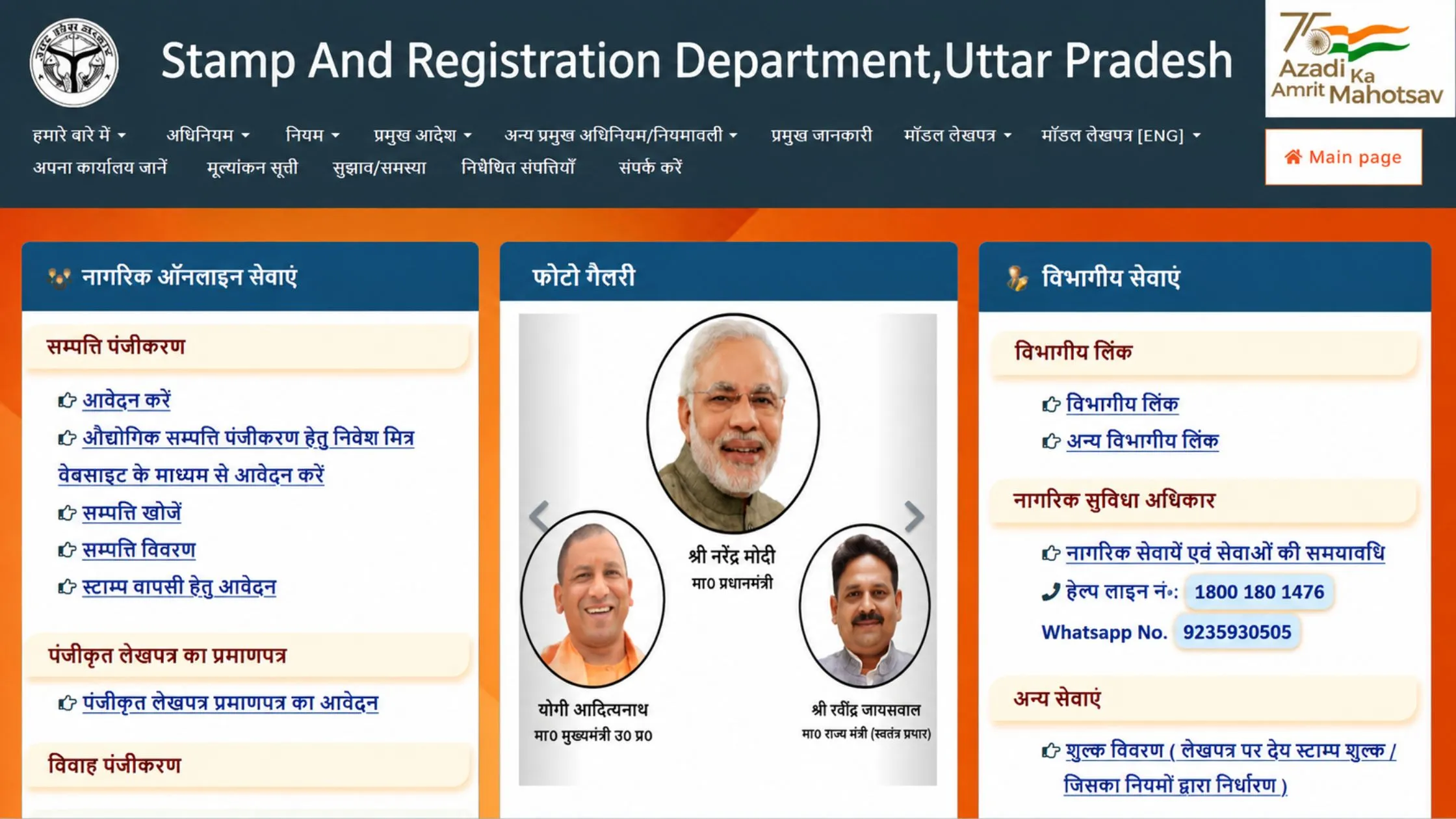
- Visit igrsup.gov.in and click “Enter Here”
- Navigate to “Mulyankan Suchi Vivaran” (Circle Rate Details)
- Select Meerut as your district, then choose the relevant SRO
- Download the rate list or use the built-in stamp duty calculator
Factors Driving Meerut Property Prices in 2026
- The RRTS Corridor cuts the Delhi–Meerut commute to under 60 minutes and, yeah, the real estate near stations like Partapur, Shatabdi Nagar, Modipuram, and Brahmpuri has jumped roughly 30–50 percent.
- Delhi–Meerut Expressway also does the trick, because it brings the driving time down to around 45 minutes, so values are rising along the full stretch, by about 25–35%
- MDA Schemes: Active Meerut Development Authority layouts add official credibility and push circle rate classifications in designated zones
- Road Frontage: Highway-adjacent agricultural plots command significantly higher rate categories than interior-road parcels, even within the same village
Top Localities by Investment Goal 2026
|
Investment Goal |
Best Localities |
|---|---|
|
Capital Appreciation |
Partapur, Shatabdi Nagar, Modipuram (RRTS) |
|
Affordable Entry Point |
Jainpur, Lohia Nagar, Abdullapur |
|
Commercial Returns |
Janaki Mahal, Hans Plaza, Delhi Road |
|
Long-Term Land Banking |
Expressway-adjacent villages, Sardhana belt |
Conclusion
The Meerut circle rate in 2026 is now more than a mere registration formality; it truly represents the city's infrastructure-focused evolution. The revised rates show rises ranging from 15% in rural areas to 58.7% in high-end locations, meaning buyers who neglect rate verification may significantly misjudge their overall acquisition expenses. Always verify the precise SRO-specific rate on meerut.nic.in or igrsup.gov.in before finalizing any property deal in Meerut.

_1792140859.webp)




_1792151285.webp)

Ans 1. The Meerut circle rate in 2026 is governed by the official 2025–26 SRO rate list. Rates range from ₹2,215/sq ft in peripheral localities like Jainpur to ₹11,361/sq ft on Meerut Bypass Road, with premium localities like Saket reaching ₹1,00,000 per sq m.
Ans 2. Meerut circle rates were revised under the 2025–26 cycle, the first major update in three years, with final rates effective from August 1, 2025, following a public objection period.
Ans 3. No. The circle rate is the legally mandated minimum for property registration in UP. Even if the negotiated price is lower, stamp duty and registration charges are calculated on the circle rate.
Ans 4. Stamp duty is 7% for male buyers and 6% for female buyers, with a uniform 1% registration fee for all categories, making the total 8% for males and 7% for females.
Ans 5. Visit meerut.nic.in or igrsup.gov.in, select your relevant SRO office, and download the 2025–26 rate list PDF to find the exact applicable rate for your village or locality.
Ans 6. Meerut district has six Sub-Registrar Offices, SRO-I, II, III, and IV under Sadar Meerut, plus SRO Mawana and SRO Sardhana, each publishing a separate circle rate list.
Ans 7. Properties within 2 km of RRTS stations, Partapur, Shatabdi Nagar, Modipuram, Brahmpuri, have seen 30–50% price increases, directly influencing the upward revision of circle rates in those zones.
Ans 8. Yes. Agricultural land rates are classified by village location, road frontage type, distance from main roads, and development zone, meaning two plots in the same village can carry different circle rates based purely on highway proximity.
Ans 9. Yes. Under Section 80C of the Income Tax Act, stamp duty and registration charges on a self-occupied residential property are deductible up to ₹1.5 lakh per financial year.
Ans 10. The circle rate is the government-set minimum floor used for stamp duty calculation. The market rate is the actual transaction price driven by demand and location. In high-growth corridors like the RRTS and Expressway zones, market rates already run significantly above circle rates, making the 2025–26 revision a necessary realignment.