
Table of Content
▲
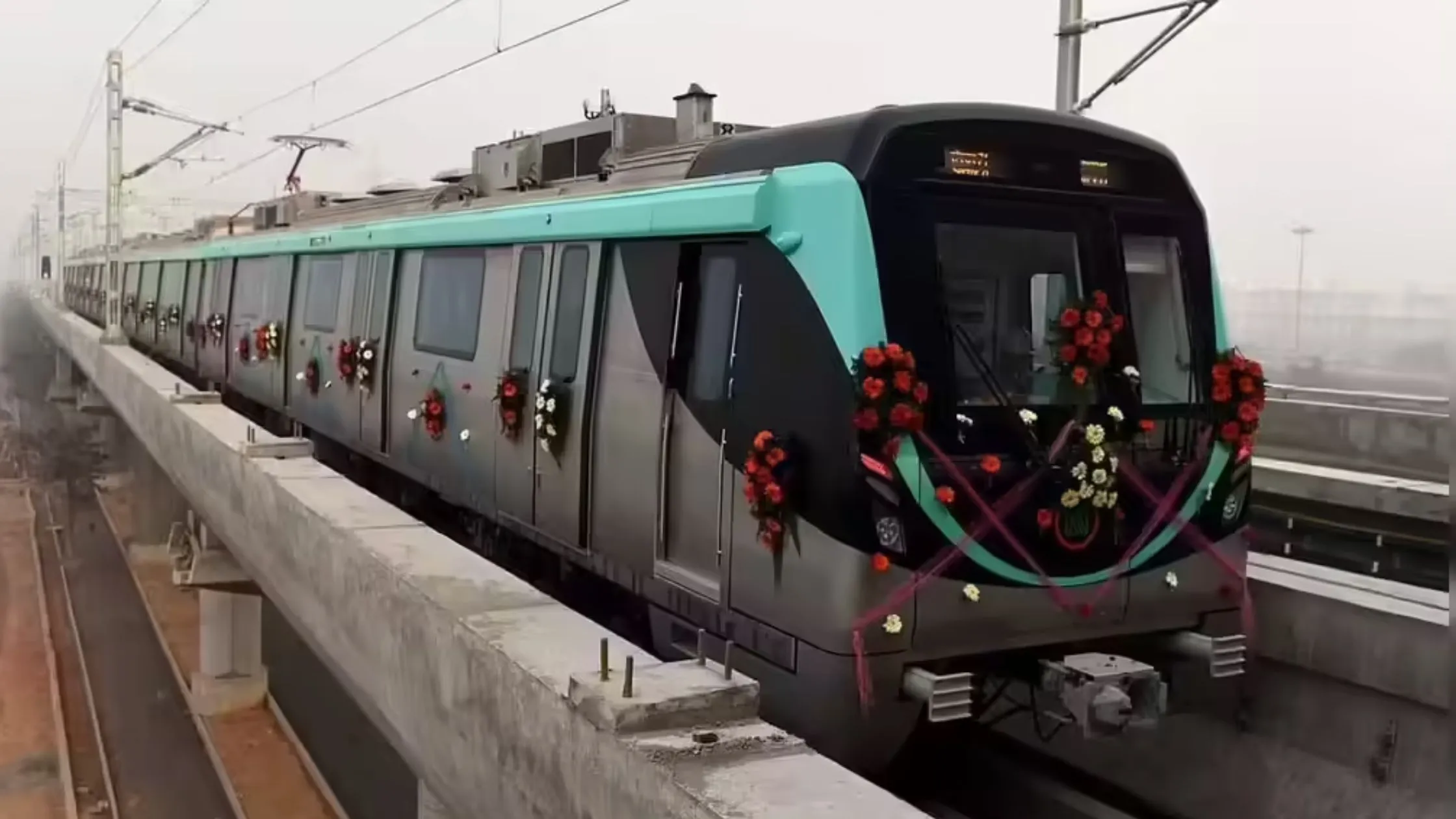
The Union Cabinet has approved the Noida Aqua Line Metro extension, a major infrastructure upgrade that will connect Sector 142 to Botanical Garden through an 11.56-kilometre elevated corridor. With an approved investment of ₹2,254 crore, this project is expected to significantly improve urban mobility while reshaping residential and commercial real estate dynamics along the Noida Expressway.
Once operational, the Noida Aqua Line Metro extension will integrate seamlessly with the Delhi Metro’s Blue and Magenta Lines, closing a long-standing connectivity gap for lakhs of daily commuters.
Project Details: What the Metro Extension Includes
The approved Noida Aqua Line Metro extension will feature eight elevated stations: Botanical Garden, Sectors 96, 44, 105, 93, 97, 108, and 91. The corridor is expected to be completed within four years.
After completion, Noida and Greater Noida will together have an operational metro network spanning over 61 km. The extension creates a direct interchange at Botanical Garden, eliminating the need for commuters to switch lines at Sector 52, which currently adds travel time and inconvenience.
By improving last-mile and cross-network connectivity, the Noida Aqua Line Metro extension strengthens access to Delhi, IGI Airport, and major railway stations.
Also Read: NITI Aayog’s Rajiv Gauba Calls for Land Policy Reforms to Boost Housing Affordability
Why the Noida Aqua Line Metro Extension Is Significant
The Noida Expressway corridor houses several IT parks, corporate campuses, and large residential communities. However, limited direct metro integration has historically reduced its commuting efficiency.
The Noida Aqua Line Metro extension addresses this structural gap by:
- Reducing travel time between Noida and Delhi
- Encouraging public transport adoption
- Lowering congestion on the Noida Expressway
- Enhancing access to employment hubs
This infrastructure move is expected to trigger broader economic and real estate benefits.
Impact on Commercial Real Estate
The commercial property market is likely to be the biggest beneficiary of the Noida Aqua Line Metro extension.
1. Improved Office Accessibility
Corporate hubs in Sectors 125, 132, 136, 142, 145, and 157 will gain direct metro connectivity. Companies prefer office spaces near metro stations because they widen the talent pool and improve employee retention.
2. Rental Appreciation Potential
IT office rentals in this belt have already increased significantly over the past few years. With the Noida Aqua Line Metro extension, commercial rentals could witness additional upward momentum due to improved connectivity.
3. Stronger Talent Mobility
The new link will allow seamless movement of professionals from Delhi to Noida offices. This ease of commute is particularly important for entry-level employees and those relying on public transport.
Over time, the Noida Aqua Line Metro extension could accelerate office space absorption and strengthen investor confidence in commercial assets along the Expressway.
Impact on Residential Real Estate
While commercial real estate may see immediate gains, the residential market is also poised for steady growth.
Secondary Market Boost
The Noida Aqua Line Metro extension is expected to increase liquidity in ready-to-move and resale properties, particularly in sectors like 93, 128, and 137. Improved connectivity typically enhances buyer sentiment and resale value.
Mid-Segment Housing Gains
Apartments priced between ₹2–3 crore could witness stronger demand as commuting becomes easier. For working professionals traveling to Delhi, the time savings offered by the Noida Aqua Line Metro extension make these sectors more attractive.
Luxury Market Impact
In premium sectors such as 98 and 128, the extension may not immediately spike prices but will validate current valuations. Infrastructure certainty often strengthens long-term confidence among high-end buyers.
Rental Market Outlook
Rental housing is expected to see gradual appreciation following the Noida Aqua Line Metro extension.
Currently, 3BHK apartments along the Expressway command monthly rents of approximately ₹25,000–30,000 in several sectors. With enhanced metro access, rental values could rise by 10–15% in the near to medium term.
In commercial hubs, rental growth may be even stronger as occupancy improves and vacancy rates decline after the Noida Aqua Line Metro extension becomes operational.
Sector-Wise Real Estate Impact
Certain micro-markets are likely to experience sharper gains:
- Sector 142: Strong corporate presence and improved interchange access
- Sector 93 & 97: Residential resale demand expected to increase
- Sector 132 & 125: IT/ITES office leasing momentum
- Sector 150: Better Delhi connectivity may support long-term price growth
The Noida Aqua Line Metro extension effectively repositions the Expressway corridor as a fully integrated urban stretch rather than a partially connected business district.
Also Read: Supreme Court on RERA: Says It May Be ‘Better to Abolish’ Authority Serving Defaulting Builders
Long-Term Urban Development Implications
Infrastructure projects of this scale often act as structural catalysts. The Noida Aqua Line Metro extension is not merely a transport upgrade; it signals policy support for sustainable mobility and planned urban expansion.
By reducing car dependency and supporting transit-oriented development, the project aligns with long-term urban growth strategies. Real estate markets typically respond positively to such certainty.
As connectivity improves, both residential and commercial investors may view the corridor as a lower-risk, higher-potential investment zone.
Final Thoughts
The approval of the Noida Aqua Line Metro extension marks a pivotal moment for the Noida Expressway belt. By linking Sector 142 directly to Botanical Garden and integrating with Delhi Metro lines, the corridor addresses a key infrastructure bottleneck.
Commercial properties may witness faster rental appreciation and absorption, while residential markets especially the secondary segment could see stronger demand and improved price stability.
Over the next few years, the Noida Aqua Line Metro extension is expected to reshape commuting patterns, unlock real estate value, and reinforce the Expressway’s position as one of NCR’s most strategic growth corridors.






Ans 1. The Noida Aqua Line Metro extension is an 11.56-km elevated corridor connecting Sector 142 to Botanical Garden, approved with an investment of ₹2,254 crore. It aims to improve connectivity along the Noida Expressway and integrate with Delhi Metro’s Blue and Magenta Lines.
Ans 2. The extension includes eight elevated stations: Botanical Garden, Sector 96, 44, 105, 93, 97, 108, and 91, providing seamless interchanges for daily commuters.
Ans 3. It will reduce travel time between Noida and Delhi, enhance last-mile connectivity, lower traffic congestion, and improve access to employment hubs and IGI Airport.
Ans 4. Improved connectivity is expected to boost office space absorption, rental values, and occupancy in sectors like 125, 132, 136, 142, 145, and 157. Corporate offices near metro stations may see better talent mobility and investor confidence.
Ans 5. Residential markets, especially resale properties in Sectors 93, 128, and 137, are likely to see higher demand. Mid-segment apartments (₹2–3 crore) could benefit from improved commuting, while luxury property values may stabilize with stronger buyer confidence.
Ans 6. Yes. Rentals for 3BHK apartments along the Expressway, currently around ₹25,000–30,000/month, may increase by 10–15% due to enhanced metro access and improved connectivity.
Ans 7. Key sectors include: Sector 142: Corporate presence and interchange access Sectors 93 & 97: Residential resale demand Sectors 132 & 125: Office leasing momentum Sector 150: Improved Delhi connectivity supporting long-term price growth
Ans 8. The project is expected to be completed within four years from approval, significantly expanding Noida and Greater Noida’s metro network to over 61 km.
Ans 9. It promotes transit-oriented development, reduces car dependency, encourages sustainable mobility, and strengthens the Expressway corridor as a fully integrated urban growth zone.
Ans 10. Investors should consider locations near metro stations for long-term appreciation and rental growth. Homebuyers can leverage improved connectivity for convenience, higher resale value, and better lifestyle accessibility along the Expressway.