
Table of Content
▲- A Stronger Deterrent Against Construction-Related Pollution
- Why the BMC Is Rethinking Its Penalty Framework
- How Construction Sites Are Monitored Across the City
- Recent Enforcement Actions Highlight the Issue
- Air Quality Trends Show Signs of Improvement
- Area-Wise AQI Readings Reveal Localised Challenges
- Approval Process and Implementation Timeline
- What This Means for Builders and Developers
- Construction Pollution and Mumbai’s Urban Reality
- Will Higher Penalties Change Behaviour on the Ground?
- Conclusion
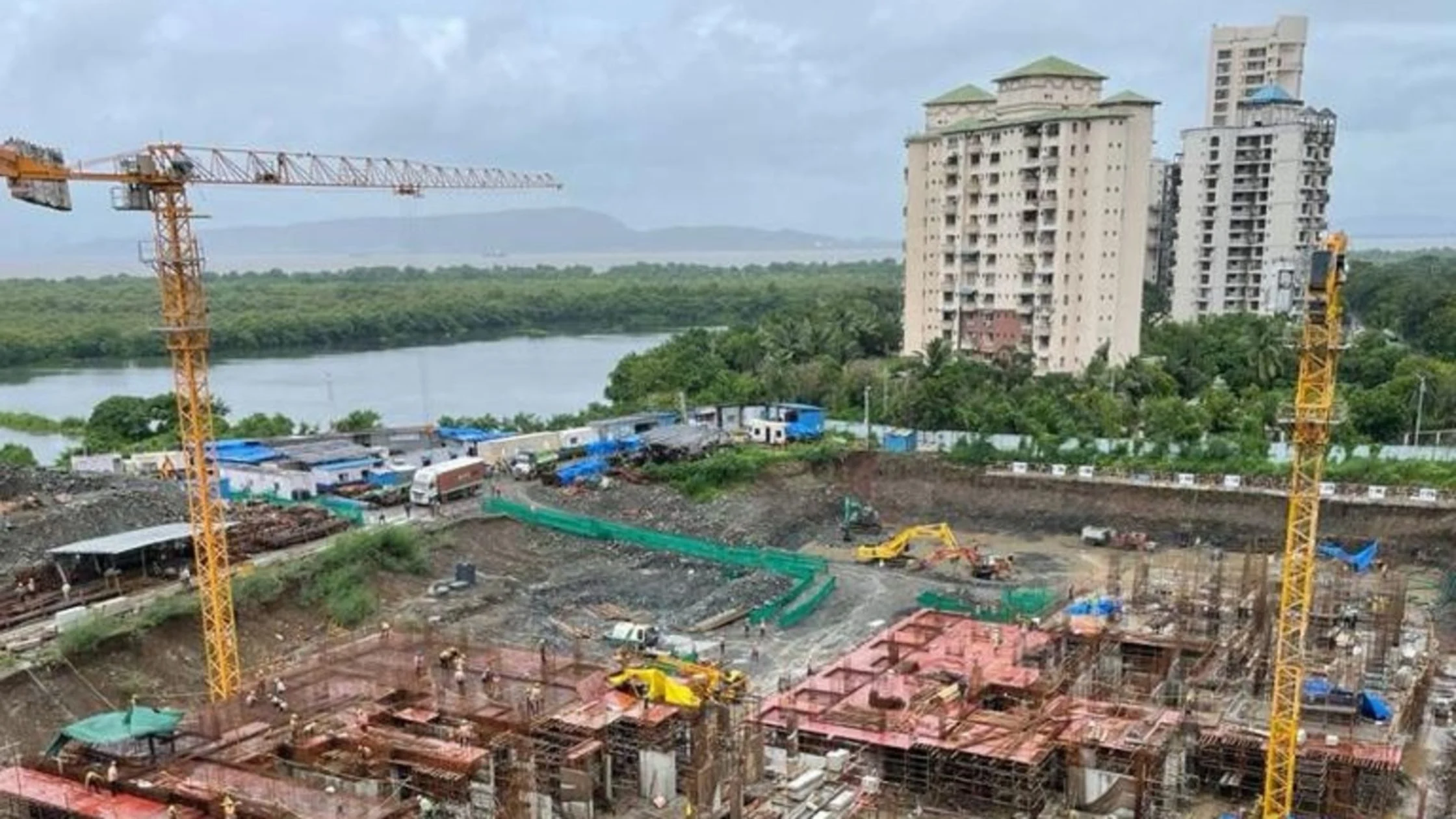
Mumbai’s civic authorities are moving to tighten the screws on polluting construction activity, with the Brihanmumbai Municipal Corporation (BMC) proposing a steep increase in the penalty against pollution at construction sites. The move comes amid growing concerns over dust, debris, and declining air quality, particularly during peak construction and redevelopment seasons across the city.
If approved, the proposal would raise the minimum fine for violating air pollution norms from ₹10,000 to ₹50,000 a fivefold jump aimed at ensuring stricter compliance and acting as a stronger deterrent for errant developers.
A Stronger Deterrent Against Construction-Related Pollution
According to senior civic officials, the existing penalty framework has failed to curb violations effectively, prompting the need for a sharper enforcement mechanism. The revised penalty against pollution at construction sites is intended to send a clear message that non-compliance will no longer be treated lightly.
Officials said the proposal has been submitted to the civic commissioner and administrator for approval. Once cleared, the revised penalty structure will be enforced across all ongoing private construction projects in Mumbai.
The city has witnessed an unprecedented scale of redevelopment, infrastructure upgrades, and private construction activity over the past few years, making dust control and air-quality compliance an increasingly critical challenge for civic authorities.
Also Read: Why Tier 2 Cities Are Emerging as Strong Contenders in India’s Retail Growth
Why the BMC Is Rethinking Its Penalty Framework
Construction dust remains one of the biggest contributors to particulate matter pollution in Mumbai, particularly PM10 and PM2.5 levels. Despite clear guidelines mandating dust screens, water sprinkling, covered material transport, and debris management, violations remain widespread.
Civic officials say the current ₹10,000 minimum fine has little impact on large developers or high-value construction projects. As a result, repeated violations have become common, weakening enforcement credibility.
By increasing the penalty against pollution at construction sites, the BMC aims to make compliance financially unavoidable rather than optional.
How Construction Sites Are Monitored Across the City
To track violations, the BMC has implemented an extensive monitoring mechanism. At present, nearly 1,954 private construction sites across Mumbai are under active surveillance.
The civic body has deployed 94 flying squads, each consisting of assistant engineers, nuisance detectors, and sub-engineers from the Environment and Climate Change department. These squads conduct surprise inspections, verify compliance with pollution-control norms, and initiate enforcement action when violations are detected.
Officials say the scale of monitoring reflects the seriousness with which the administration views construction-linked air pollution.
Recent Enforcement Actions Highlight the Issue
In the days leading up to the proposal, the BMC intensified enforcement efforts. Show-cause notices were issued to multiple construction sites found violating pollution norms, while several others received stop-work notices for serious or repeated breaches.
Beyond punitive measures, the civic body also deployed deep-cleaning misting machines at multiple locations and used water tankers to wash roads in dust-prone areas. These actions are part of a broader strategy to supplement the penalty against pollution at construction sites with on-ground mitigation measures.
Officials claim these combined efforts have begun yielding visible results.
Air Quality Trends Show Signs of Improvement
Data from the Central Pollution Control Board indicates that Mumbai’s air quality has improved compared to the same period last year. During early December last year, the city’s Air Quality Index (AQI) frequently hovered in the upper ‘poor’ range.
This year, following stricter monitoring and enforcement, AQI levels have largely remained within the ‘moderate’ category, suggesting that tighter controls, including the proposed penalty against pollution at construction site,s are beginning to make a difference.
Civic officials caution, however, that sustained enforcement is essential to maintain these gains.
Area-Wise AQI Readings Reveal Localised Challenges
Despite overall improvement, AQI readings continue to vary significantly across Mumbai. Several densely built or high-activity zones have reported elevated pollution levels, underlining the uneven impact of construction activity.
Commercial hubs and redevelopment-heavy corridors tend to record higher AQI values, while areas with fewer active construction sites have reported relatively cleaner air. Officials say this reinforces the need for location-specific enforcement rather than blanket measures.
The proposed hike in the penalty against pollution at construction sites is expected to address such hotspots more effectively by discouraging lax practices in high-risk zones.
Approval Process and Implementation Timeline
The proposal is currently awaiting approval from the civic commissioner and administrator. While officials have not specified an exact timeline, sources indicate that the revised penalty framework could be notified shortly if cleared without major changes.
Once implemented, enforcement teams will be empowered to levy the higher fine immediately upon detecting violations, without requiring repeated warnings. The move is expected to streamline enforcement and reduce procedural delays.
What This Means for Builders and Developers
For builders, the revised penalty against pollution at construction sites significantly raises the cost of non-compliance. Developers will be under greater pressure to ensure dust-control measures, covered scaffolding, proper debris disposal, and regular site maintenance.
Industry observers say the move could prompt developers to invest more proactively in pollution-mitigation systems rather than treating fines as a routine operational expense.
Smaller contractors, in particular, may feel the financial impact more sharply, making adherence to norms a business necessity rather than a regulatory formality.
Construction Pollution and Mumbai’s Urban Reality
Mumbai’s redevelopment-driven growth makes construction activity unavoidable. However, civic authorities stress that development cannot come at the cost of public health.
Dust pollution not only affects air quality but also exacerbates respiratory illnesses, especially among children and the elderly. With winter conditions already worsening pollution dispersion, unchecked construction activity can push air quality into hazardous territory.
The enhanced penalty against pollution at construction sites is part of a broader effort to balance urban growth with environmental responsibility.
Also Read: Hyderabad Real Estate Registers 25% Surge in Home Sales in November 2025
Will Higher Penalties Change Behaviour on the Ground?
Civic officials believe that sharper penalties will lead to better compliance, fewer repeat offences, and quicker corrective action at construction sites. Past experience suggests that financial deterrents, when combined with frequent inspections, are more effective than advisory notices alone.
However, experts caution that penalties must be enforced consistently to avoid selective compliance. Without regular monitoring, even higher fines may lose their deterrent value over time.
Conclusion
The proposed hike in the penalty against pollution at construction sites marks a decisive shift in Mumbai’s approach to managing construction-related air pollution. By raising fines fivefold, the BMC is signalling that environmental compliance will be enforced with greater seriousness in one of India’s most densely built cities.
If implemented effectively, the revised penalty framework could play a crucial role in improving air quality, strengthening enforcement credibility, and ensuring that Mumbai’s development trajectory does not compromise public health.
For builders, residents, and policymakers alike, the message is clear: cleaner construction practices are no longer optional they are mandatory.





Ans 1. The BMC aims to curb widespread violations of air-quality norms, especially dust and debris from construction, by making non-compliance financially significant.
Ans 2. The minimum fine is proposed to rise from ₹10,000 to ₹50,000, a fivefold increase to act as a stronger deterrent.
Ans 3. Currently, nearly 1,954 private construction sites are under surveillance, with 94 flying squads conducting surprise inspections across the city.
Ans 4. Authorities expect stricter enforcement and higher fines to reduce dust pollution, with early data showing moderate AQI improvements in monitored areas.
Ans 5. Developers are expected to invest in dust-control measures, covered scaffolding, proper debris disposal, and regular site maintenance to avoid hefty fines.
Ans 6. The proposal is awaiting approval from the civic commissioner and administrator, after which enforcement could begin immediately.
Ans 7. Yes, smaller contractors may feel the financial impact more sharply, making compliance with pollution norms a business necessity rather than optional.