
✦ AI Summary
Table of Content
▲
Lucknow Circle Rate is government-setup minimum property valuation that basically every buyer and seller have to follow so they can legally register any property deal in the city. Like, whether you’re a first time buyer looking for a flat in Gomti Nagar, or an investor keeping track of land prices along the Purvanchal Expressway corridor, or even a seller moving away from an agricultural holding near Bakshi Ka Talab, the Lucknow circle rate for 2026 is the one figure you need to check before you put pen to paper on any agreement.
So, Lucknow district administration, in two back to back efforts, first around August 2025 and then early 2026, ended up overhauling a rate structure that had mostly been left alone for like ten years or more. Honestly, the impact was kinda obvious even from the headline numbers: residential as well as agricultural land increased by roughly 25 to 50%, multi-storey flats got a 20% jump, plus certain “premium” belts like Gomti Nagar Extension moved from ₹33,000 to ₹77,000 per sq.m.
This guide, well it actually lays out the whole thing with complete area-wise rates, a transparent stamp duty split, and a step by step way to line up your property transaction, with the kind of money math you need to stay fully accurate.
What Are Lucknow Circle Rates?
Lucknow circle rate is the base property value notified by the District Magistrate (DM), the lowest price at which any residential, commercial, or agricultural property can be registered under UP law. Also referred to as the Collector Rate or Guidance Value, it applies across all property categories within the Lucknow district.
- Rates range from ₹7,000/sq.m in peripheral areas like Banthra to ₹72,000/sq.m in Hazratganj
- No property in Uttar Pradesh can be registered below its official circle rate
- Stamp duty is always calculated on whichever is higher, the circle rate or the declared sale price
- Commercial properties carry significantly higher rates than residential in the same locality
|
Parameter |
Circle Rate |
Market Rate |
|---|---|---|
|
Set By |
District Magistrate |
Buyer & Seller Negotiation |
|
Legal Minimum for Registration |
Yes |
No |
|
Basis for Stamp Duty |
Yes |
Only if higher |
|
Revision Frequency |
Periodic (DM approval) |
Fluctuates constantly |
|
Bank Loan Valuation |
Yes (baseline) |
Primary consideration |
Also Read: Top 7 Posh Areas in Lucknow for a Premium Lifestyle
How Lucknow Circle Rates Work
- So first, try to figure out the right rate, like actually check your locality, the type of property (plot, flat, or commercial) and the zone too. You can do it via igrsup.gov.in, or if you want easier, just ask your nearest Sub-Registrar’s Office, they usually help.
- Then take the higher value, because the stamp duty gets calculated using the circle rate or the declared sale price whichever looks higher, not what you feel like.
- After that, pay the stamp duty online, choose the e-stamp paper option on igrsup.gov.in. You can pay through net banking debit card or credit card, whatever works.
- Lastly, book your registration appointment on the UP IGRS portal, then show up at the Sub-Registrar’s Office with all original documents, plus every supporting paper you have. Don’t skip the papers, it gets messy if you do.
2025–26 Revision: What Changed in Lucknow
The revised circle rate list came into effect on August 1, 2025, the first major update in ten years, followed by a further 10–15% revision in 2026 for high-demand localities. So yeah, it's been a significant two years for Lucknow's rate structure.
|
Zone Type |
Average Increase |
|---|---|
|
Rural / Agricultural Areas |
15–25% |
|
Urban Residential Localities |
25–35% |
|
Premium Areas (Hazratganj, Gomti Nagar) |
Up to 50% |
|
Shops, Offices & Warehouses |
20–40% |
|
Multi-Storey Flats |
20% |
Lucknow Circle Rates by Area 2026
Zone 1: Premium Localities
|
Area |
Residential (₹/sq.m) |
Flat (₹/sq.m) |
Commercial (₹/sq.m) |
|---|---|---|---|
|
Hazratganj |
₹72,000 |
₹62,000 |
₹1,10,000 |
|
Gomti Nagar (Main) |
₹58,000 |
₹50,000 |
₹88,000 |
|
Gomti Nagar Extension |
₹48,000 |
₹44,000 |
₹74,000 |
|
Ansal API, Gomti Nagar |
₹46,000 |
₹42,000 |
₹70,000 |
Zone 2: Established Mid-Tier Localities
|
Area |
Residential (₹/sq.m) |
Flat (₹/sq.m) |
Commercial (₹/sq.m) |
|---|---|---|---|
|
Aliganj |
₹42,000 |
₹38,000 |
₹64,000 |
|
Alambagh |
₹38,000 |
₹35,000 |
₹58,000 |
|
Aminabad (Old Lucknow) |
₹38,000 |
₹35,000 |
₹65,000 |
|
Aishbagh |
₹34,000 |
₹32,000 |
₹52,000 |
Zone 3: Developing & Peripheral Localities
|
Area |
Residential (₹/sq.m) |
Flat (₹/sq.m) |
Commercial (₹/sq.m) |
|---|---|---|---|
|
Ashiyana |
₹26,000 |
₹24,000 |
₹40,000 |
|
Amausi (Airport Area) |
₹22,000 |
₹20,000 |
₹38,000 |
|
Bakshi Ka Talab (BKT) |
₹15,000 |
₹14,000 |
₹26,000 |
|
Banthra |
₹8,000 |
₹7,000 |
₹15,000 |
Investment note: Along the Purvanchal Expressway, circle rates range from ₹6,000–₹10,000/sq.m, Lucknow's most affordable entry point for long-term property investment.
Stamp Duty & Registration Charges in Lucknow 2026
|
Buyer Category |
Stamp Duty |
Registration Fee |
Total Payable |
|---|---|---|---|
|
Male Buyer |
7% |
1% |
8% |
|
Female Buyer |
6% |
1% |
7% |
|
Joint (Male + Female) |
6.5% |
1% |
7.5% |
|
Joint (Female only) |
6% |
1% |
7% |
|
Blood Relative Transfer |
₹5,000 flat |
Fixed |
₹5,000 |
How to Calculate Your Total Transaction Cost
- Taxable Value = MAX (Declared Sale Price, Circle Rate × Property Area in sq.m)
- Stamp Duty = Taxable Value × applicable rate (6%, 6.5%, or 7%)
- Registration Fee = Taxable Value × 1%
Worked Example: A female buyer purchases a flat in Aliganj for ₹55 lakh. The circle rate for the same property is ₹60 lakh. Since the circle rate is higher, stamp duty is calculated on ₹60 lakh:
- Stamp Duty (6%) = ₹3,60,000
- Registration Fee (1%) = ₹60,000
- Total Government Charges = ₹4,20,000
Tax Benefit: Under Section 80C of the Income Tax Act, stamp duty and registration charges paid on a self-occupied residential property are deductible up to ₹1.5 lakh per financial year.
Also Read: Lucknow Metro Phase-1B, New Link Set to Boost Old City Real Estate Markets
How to Check Lucknow Circle Rate Online
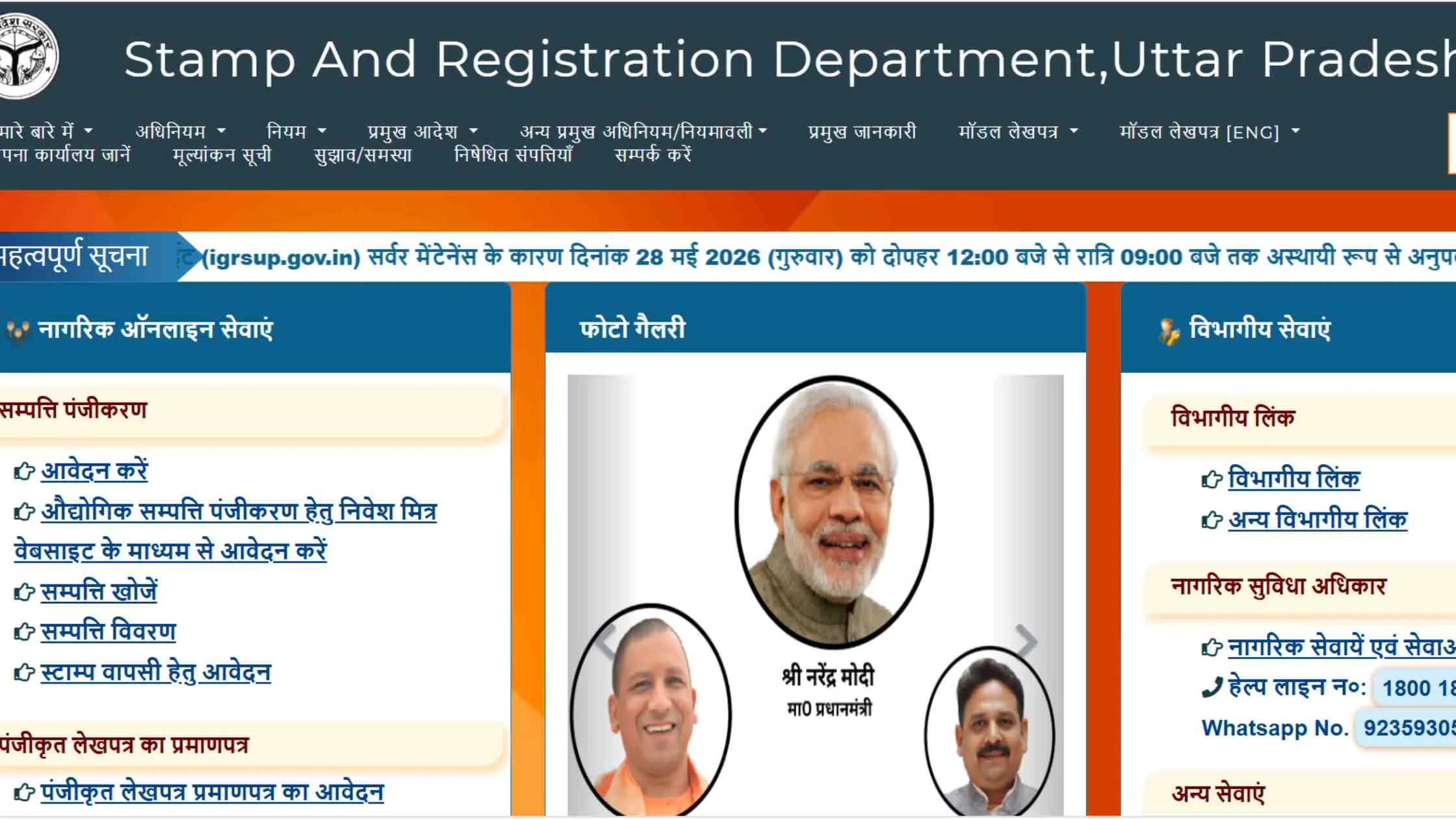
Method 1: Official IGRS Portal (igrsup.gov.in):
- Visit igrsup.gov.in and click "Enter Here"
- Navigate to "Mulyankan Suchi Vivaran" (Circle Rate Details)
- Select Lucknow as your district and choose your relevant Sub-Registrar Office
- Download the current rate list or use the built-in stamp duty calculator
Method 2: Third-Party Tools:
- FindCircleRate.com covers 130+ Lucknow localities with an integrated stamp duty calculator
- LDA website specifically for LDA-developed areas like Gomti Nagar and Sushant Golf City, as these rates may differ from LMC jurisdiction areas
Top Localities to Invest in Lucknow 2026
|
Investment Goal |
Best Localities |
|---|---|
|
Capital Appreciation |
Gomti Nagar Extension, Shaheed Path, Sushant Golf City |
|
Affordable Entry Point |
Banthra, Bakshi Ka Talab, Ashiyana Extension |
|
Commercial Returns |
Hazratganj, Aminabad, Alambagh |
|
Long-Term Land Banking |
Purvanchal Expressway belt, Amausi corridor |
|
Highest Rental Yield |
LDA Colony (5.6% rental yield — highest in city) |
Conclusion
The Lucknow Circle Rate in 2026, is not just a registration formality anymore; it's kind of a real sign of how sharply the city's property market has matured, like for real. The revisions might sit around 20% in mid-tier places, but they can jump to above 50% in the more premium pockets like Hazratganj and Gomti Nagar.
So if buyers skip that circle rate verification step , they can end up wildly underestimating what the actual acquisition cost they’ll need to pay turns out to be. Before you sign off on any property deal in Lucknow , always check your locality’s circle rate on igrsup.gov.in.

_1792140859.webp)




_1792151285.webp)
Ans 1. The Lucknow circle rate in 2026 ranges from ₹7,000/sq.m in peripheral areas like Banthra to ₹72,000/sq.m in Hazratganj for residential plots, and up to ₹1,10,000/sq.m for commercial properties in the city's premium localities.
Ans 2. Circle rates are set by the UP Department of Stamps and Registration, based on the District Magistrate's recommendations, factoring in infrastructure development, market demand, locality type, and property category.
Ans 3. No. The circle rate is the legally mandated minimum for property registration in UP. Even if the negotiated price is lower, stamp duty and registration charges are calculated on the circle rate value, not the agreed sale price.
Ans 4. Gomti Nagar (Main) has a residential circle rate of ₹58,000/sq.m, ₹50,000/sq.m for flats, and ₹88,000/sq.m for commercial properties. Gomti Nagar Extension rates are ₹48,000 (residential), ₹44,000 (flat), and ₹74,000 (commercial) per sq.m.
Ans 5. Yes. Female buyers pay 6% stamp duty compared to 7% for male buyers. The 1% concession applies up to ₹10 lakh of the transaction value — on a ₹60 lakh property, that's a direct saving of ₹60,000.
Ans 6. Visit igrsup.gov.in, navigate to "Mulyankan Suchi Vivaran," select Lucknow district and your Sub-Registrar Office, and download the rate list or use the portal's stamp duty calculator for a precise estimate.
Ans 7. Yes. In Hazratganj, the residential plot rate is ₹72,000/sq.m while the flat rate is ₹62,000/sq.m. This gap directly affects your stamp duty calculation and must be confirmed before finalising any deal.
Ans 8. The Purvanchal Expressway corridor has the lowest circle rates in Lucknow at ₹6,000–₹10,000/sq.m, making it the city's most affordable investment zone with strong long-term appreciation potential.
Ans 9. GST at 5% applies only to under-construction flats, charged in addition to stamp duty and registration fees. Ready-to-move and resale properties do not attract GST.
Ans 10. Revisions are periodic and depend on DM recommendations. The 2025 revision was the first in a decade, followed by a further 10–15% incremental update in 2026. Going forward, high-demand corridors like expressway zones and premium localities are likely to see more regular revisions.