
✦ AI Summary
Table of Content
▲- What is the Kolhapur Commercial Complex Project?
- Understanding the PPP Model
- Why Kolhapur Needs More Commercial Infrastructure
- Expected Benefits of the New Commercial Complexes
- PPP Commercial Complexes vs Traditional Municipal Development
- Impact on Kolhapur Real Estate Market
- Strategic Importance for Urban Development
- Challenges That Need Attention
- Future Outlook for Commercial Development in Kolhapur
- Conclusion
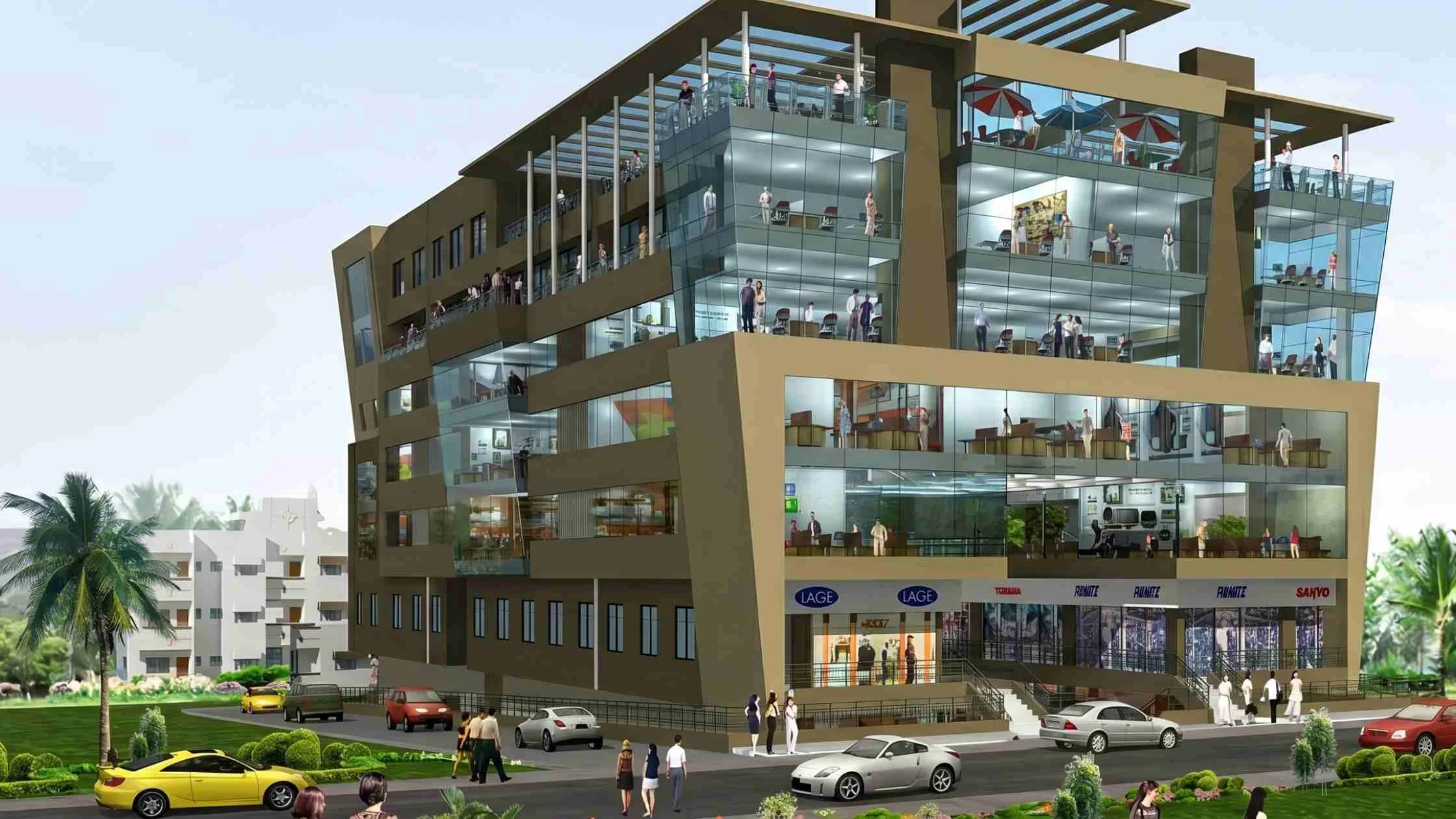
Kolhapur is getting ready for a significant increase in its commercial infrastructure, as the city's municipal corporation is looking to create five new commercial buildings under a public private partnership (PPP) model. This will create revenue for the municipality on a sustainable basis, and provide modern commercial space to facilitate business expansion, create jobs and develop urban areas.
Since many cities in India are looking at PPP projects to improve their infrastructure without adding to the demand of taxpayers, Kolhapur's latest initiative mirrors the growing trend of collaborative urban development. These proposed commercial buildings should support the local business environment and make Kolhapur a more attractive place for potential investors and entrepreneurs. Attention should also be given to businesses seeking high-quality, commercial space; investors looking at the emerging City Markets in Maharashtra; and, local residents who will benefit from the employment opportunities and tax revenue that will be generated from these new developments.
What is the Kolhapur Commercial Complex Project?
The Kolhapur Municipal Corporation will develop five commercial complexes at selected strategic locations across the city under PPP arrangements. The framework involves private developers partnering with KMC where the corporation contributes land and regulatory facilitation while private partners bring construction capital, development expertise, and operational management capability.
The PPP structure means the city gets modern commercial infrastructure without requiring KMC to source the full development funding from municipal budgets. Private partners take on project risk in exchange for defined revenue rights, while the municipal corporation retains a share of income and the ongoing benefit of improved commercial infrastructure across its jurisdictional area.
Key Objectives of the Project
The proposed development aims to:
- Increase municipal revenue generation
- Improve commercial infrastructure
- Create modern retail and office spaces
- Encourage private sector participation
- Support local business growth
- Generate employment opportunities
- Enhance urban development and city planning
The project is expected to benefit both the municipal corporation and the city's growing commercial sector.
Also Read: Maharashtra Waives Stamp Duty on Enemy Properties to Boost Auction Participation
Understanding the PPP Model
Public Private Partnership is a collaborative framework where government bodies and private companies work together to develop infrastructure projects. Instead of relying entirely on public funding, PPP projects leverage private investment, expertise, and operational efficiency. In a standard PPP commercial development arrangement of this type, the roles and benefits are structured as follows. KMC contributes the most valuable input; it controls urban land at strategic city locations that private developers couldn't acquire at commercially viable costs on their own.
How PPP Projects Work
Under a typical PPP arrangement:
- Government provides land or approvals
- Private developers invest capital
- Construction and operations are managed professionally
- Revenue sharing mechanisms are established
- Risks are distributed between both parties
This model has become increasingly popular for urban infrastructure projects across India.
Why Kolhapur Needs More Commercial Infrastructure
Understanding why KMC is investing in this initiative requires understanding what's been happening in Kolhapur's economic landscape. The city has multiple economic pillars that are each growing in ways that create commercial real estate demand. Kolhapur's industrial sector particularly its foundry and manufacturing industries makes it one of Maharashtra's more important industrial centres outside the major metros.
The tourism economy centred on the Mahalaxmi Ambabai temple draws consistent visitor traffic that supports hotels, retail, and hospitality businesses. The city has developed a significant educational cluster that keeps a large, relatively young professional and student population in residence. And the broader expansion of the service sector has created demand for professional office spaces that older commercial buildings in the city's established zones can't adequately provide.
- Growing retail sector
- Increasing entrepreneurship
- Expansion of service industries
- Rising urban population
- Higher demand for office spaces
- Growth in tourism-related businesses
The development of commercial complexes can help address these emerging requirements.
Expected Benefits of the New Commercial Complexes
The project is expected to deliver multiple economic and urban development benefits.
Revenue Generation for KMC
One of the biggest advantages is the creation of recurring revenue sources through:
- Lease income
- Rental revenue
- Revenue sharing agreements
- Property utilization optimization
This additional income can support future civic projects and infrastructure improvements.
Improved Business Environment
Modern commercial complexes provide:
- Better retail spaces
- Organized business zones
- Enhanced customer accessibility
- Improved amenities
- Professional workspaces
These facilities can attract both local and national businesses.
Employment Opportunities
The project may generate employment during both construction and operational phases.
Potential job opportunities include:
- Construction workers
- Facility management staff
- Retail employees
- Security personnel
- Maintenance teams
- Administrative professionals
The indirect economic impact could benefit thousands of residents.
PPP Commercial Complexes vs Traditional Municipal Development
|
Factor |
PPP Model |
Traditional Municipal Development |
|
Funding Source |
Private and Public |
Primarily Public |
|
Project Speed |
Faster |
Often Slower |
|
Financial Burden on Government |
Lower |
Higher |
|
Operational Efficiency |
High |
Moderate |
|
Risk Distribution |
Shared |
Government Led |
|
Revenue Generation |
Structured Sharing |
Direct Municipal Revenue |
|
Maintenance Standards |
Usually Better |
Varies |
The comparison highlights why many urban local bodies are increasingly adopting the PPP approach.
Also Read: Maharashtra Transfers 118 Acres in Malad for Dharavi Rehabilitation Project
Impact on Kolhapur Real Estate Market
The development of organised commercial hubs consistently affects surrounding property markets across Indian cities and Kolhapur is unlikely to be an exception to this documented pattern.
Commercial development creates economic activity that makes surrounding locations more attractive for residential living, retail, and further commercial investment. Land values near commercial clusters rise as the economic activity those clusters generate increases the demand for nearby locations.
Potential Real Estate Benefits
The project may contribute to:
- Higher commercial property demand
- Increased land values
- Improved infrastructure connectivity
- Growth in retail investments
- Rising investor confidence
- Expansion of business districts
As commercial activity increases, surrounding residential and mixed-use developments may also benefit.
Strategic Importance for Urban Development
Beyond the immediate economic metrics, the five commercial complexes represent something more broadly important for Kolhapur's trajectory among Maharashtra's secondary cities.
Maharashtra has a number of cities at Kolhapur's scale that are competing for the business investment, talent, and economic activity that supports long-term urban growth. The quality and availability of commercial infrastructure is increasingly a factor in how businesses evaluate secondary city expansion. A city with modern, organised commercial spaces is a more compelling destination for national retailers, service companies, and business investment than one without.
The initiative also signals governance willingness to deploy innovative financing models PPP rather than waiting for public budget availability that may not come. Cities that find ways to move on commercial and infrastructure development despite public funding constraints attract private investment more effectively than those that wait for government allocation. For Kolhapur, the project aligns with broader urban development goals such as:
- Sustainable economic growth
- Better utilization of public assets
- Smart city planning principles
- Improved public infrastructure
- Enhanced business competitiveness
These developments can strengthen the city's position among Maharashtra's emerging urban centers.
Challenges That Need Attention
Acknowledging the PPP model's advantages honestly requires also acknowledging where execution risks typically concentrate because the difference between a PPP project that delivers its promised benefits and one that disappoints usually comes down to governance quality in specific areas.
- Transparent bidding processes are the foundation of every successful PPP project. The quality of private partners selected through public bidding determines nearly everything that follows project quality, operational standards, and revenue reliability. Opaque or poorly structured bidding processes attract the wrong partners and create the governance problems that have made some Indian PPP projects perform poorly.
- Timely approvals and project management is one of the consistent failure modes of PPP infrastructure is government-side delays in approvals, clearances, and regulatory permissions that extend project timelines beyond what the private partner's investment model assumes. KMC's ability to provide its side of the partnership efficiently will determine how quickly these complexes move from announcement to operation.
- Fair and enforceable revenue-sharing agreements protect both parties' interests over the long term. Revenue-sharing arrangements that seem reasonable at signing sometimes become disputed when operational reality differs from projections. Well-structured agreements with clear performance metrics, dispute resolution mechanisms, and renegotiation provisions reduce this risk.
- Long-term maintenance standards many PPP commercial projects start well and decline over time as maintenance investment drops below what the facilities require. KMC oversight mechanisms that hold private operators to maintain quality standards throughout the contract period are essential for the complexes to retain their economic value over decades rather than just their early years.
Proper governance and accountability will be essential for achieving the project's objectives.
Future Outlook for Commercial Development in Kolhapur
The planned commercial complexes could mark the beginning of a broader transformation in Kolhapur's urban landscape. As businesses seek modern spaces and cities compete for investment, commercial infrastructure is becoming increasingly important.
Growth Drivers Ahead
Several factors may support future growth:
- Expanding local economy
- Rising private investment
- Infrastructure improvements
- Increased urbanization
- Business-friendly policies
- Growing retail demand
If executed successfully, the PPP model could encourage additional infrastructure partnerships in the city.
Conclusion
Kolhapur's plan to develop five commercial complexes through the PPP model represents a significant step toward strengthening the city's commercial infrastructure and economic growth. The initiative combines public resources with private sector expertise to create modern business spaces while generating sustainable revenue for the municipal corporation.
With increasing demand for organized commercial developments, the project has the potential to boost local businesses, create employment opportunities, enhance property values, and support long-term urban development. As Kolhapur continues its growth journey, these upcoming commercial complexes could become important drivers of the city's future economic success.

Ans 1. The Kolhapur Municipal Corporation (KMC) plans to develop five commercial complexes at strategic locations across the city through the Public Private Partnership model. Under this arrangement, private developers will partner with KMC contributing construction capital and operational management while KMC provides land and regulatory facilitation. The initiative aims to create modern retail and office spaces, generate recurring revenue for the municipal corporation, support local business growth, and create employment opportunities. The PPP model allows KMC to develop commercial infrastructure without placing the full financial burden on public budgets.
Ans 2. The Public Private Partnership model is a collaborative framework where government bodies and private companies jointly develop infrastructure projects. For Kolhapur's commercial complexes, KMC will provide land at strategic city locations while private developer partners contribute construction capital, project management expertise, and operational capability. Revenue will be shared through structured arrangements KMC receives lease, rental, or revenue-sharing income while the private partner retains operating margins that justify their investment. Risk is distributed between both parties rather than falling entirely on the government. The model has become widely adopted for urban infrastructure across India because it delivers faster, higher-quality outcomes than purely public projects at lower direct government cost.
Ans 3. Kolhapur's commercial infrastructure development is driven by economic growth that has outpaced the quality and availability of organised commercial spaces in the city. The city's industrial sector, growing tourism economy, expanding educational institutions, and service sector growth have created demand for modern retail and office spaces that existing commercial buildings can't adequately serve. National retail chains and service businesses evaluating Kolhapur as an expansion destination find insufficient quality commercial real estate. Local businesses operating in older or informal spaces face quality and efficiency limitations. And KMC recognises that organised commercial infrastructure improves the city's attractiveness for investment while generating municipal revenue.
Ans 4. The five commercial complexes are expected to deliver multiple economic benefits. KMC will receive recurring revenue through lease, rental, and revenue-sharing arrangements that diversify the municipal revenue base and support ongoing civic investment. Employment will be generated across construction and operational phases covering construction workers, facility management staff, retail employees, security personnel, and administrative professionals. The local business ecosystem will strengthen as modern commercial environments become accessible to Kolhapur's entrepreneurs and service companies. Property values near the complex locations may appreciate as commercial activity increases. And the city's attractiveness for business investment should improve as quality commercial infrastructure becomes available.
Ans 5. PPP commercial development offers several advantages over traditional municipal development. Private capital reduces the direct public funding requirement, making projects feasible without waiting for government budget allocation. Private sector incentives and expertise typically produce faster execution and higher construction quality than government-managed projects. Risk is shared between KMC and the private partner rather than borne entirely by the government. Operational maintenance is sustained by the private operator's commercial interest in maintaining tenant and customer satisfaction. The trade-offs include revenue sharing KMC receives only a portion of income rather than all returns and the need for robust contract governance to protect public interests over the long term.
Ans 6. The Kolhapur commercial complexes developed under the PPP initiative are expected to include modern retail spaces suitable for organised retail chains and local businesses, professional office spaces for service companies, financial institutions, and entrepreneurial ventures, and supporting amenities that create organized business environments with customer accessibility. The exact specification of each complex will depend on the specific location, market demand assessment, and the development agreement negotiated with private partners. The overall objective is creating commercial spaces that match the quality standards businesses require different from what older commercial buildings in the city currently offer.
Ans 7. The development of organised commercial hubs is expected to have positive effects on Kolhapur's real estate market. Commercial property demand near the complex locations will increase as businesses seek proximity to the new commercial destinations. Surrounding land values may appreciate as economic activity increases the attractiveness of nearby locations for commercial and residential use. Infrastructure improvements developed to support the complexes, roads, utilities, public connections benefit surrounding property values. And investor confidence in Kolhapur as a commercial real estate destination increases as organised infrastructure validates the city's business environment, potentially attracting additional private real estate investment.
Ans 8. Key execution challenges include ensuring transparent and competitive bidding processes that select capable private partners who deliver quality outcomes. Timely regulatory approvals and project management on KMC's side must prevent the government-side delays that have extended timelines on other Indian PPP projects. Revenue-sharing agreements need to be fair, clearly structured, and enforceable to protect KMC's interests over the full contract period. Long-term maintenance standards need ongoing KMC oversight to prevent quality decline as complexes age. And quality control during construction requires monitoring mechanisms independent of the developer's self-reporting. Getting these governance elements right in the contracting and oversight phases determines whether the project delivers its promised benefits.
Ans 9. Kolhapur has a diversified economic profile that creates genuine demand for organised commercial spaces. The city is an important industrial centre in Maharashtra known particularly for its foundry and engineering industries that create professional and workforce housing demand. The Mahalaxmi Ambabai temple drives consistent religious tourism that supports hotels, retail, and hospitality businesses. Established educational institutions maintain a large student and academic population. And growing service sector activity in healthcare, financial services, and professional services creates office space demand. This diversified base means commercial real estate demand isn't dependent on any single industry's performance making commercial investment in the city relatively well-diversified by Indian secondary city standards.
Ans 10. Revenue-sharing in municipal PPP commercial projects is typically structured through one of several models. In a lease model, KMC receives a fixed annual lease payment from the private developer in exchange for land use rights for a defined period providing KMC with predictable income regardless of commercial performance. In a revenue-sharing model, KMC receives a defined percentage of the complex's gross or net revenue providing upside if the project performs well but with variable income. In a hybrid model combining both, KMC receives a minimum guaranteed payment plus a percentage above a threshold. The specific model affects risk distribution and revenue predictability for KMC; well-structured agreements include provisions for minimum guarantees, regular auditing, and performance review mechanisms.