
Table of Content
▲- A Post-Pandemic High: Why 2025 Is a Breakout Year
- Grade A Mall Supply Makes a Strong Comeback
- Pent-Up Retail Demand Finally Finds Space
- Fashion, F&B and Entertainment Lead the Leasing Wave
- High Streets vs Malls: A Shifting Balance
- City-Wise Momentum: Where Leasing Is Concentrated
- Rental Trends: Stability with Strength in Prime Assets
- Looking Ahead to 2026: Even Bigger Leasing Numbers
- Premiumisation and the Rise of Experience-Led Retail
- What This Means for Retailers, Developers and Investors
- Why 2025 Marks a Structural Reset for Retail Real Estate
- Conclusion
India’s retail real estate market is heading into its strongest year since the pandemic, with leasing activity expected to cross 9 million square feet by the end of 2025, according to Cushman & Wakefield’s India Outlook 2026 report. After two years of constrained supply and cautious expansion, the sector is witnessing a clear turnaround—driven by the completion of new Grade A malls, revival of deferred retailer plans, and sustained consumer demand across major cities.
This projected jump from 7.8 million sq ft in 2024 to over 9 million sq ft in 2025 marks a decisive recovery phase for India’s retail real estate, positioning it firmly back on the growth path.
A Post-Pandemic High: Why 2025 Is a Breakout Year
The year 2025 is shaping up to be a milestone for India’s retail real estate ecosystem. Leasing volumes are expected to reach their highest levels since 2019, reflecting renewed confidence among both retailers and developers. The pandemic-era disruption forced brands to recalibrate store expansion strategies, while the limited availability of quality mall space further delayed leasing decisions.
Now, with several long-awaited projects nearing completion in the second half of the year, the market is seeing pent-up demand translate into actual absorption.
Also Read: Air Pollution Norms Ignored at Most Construction Sites, HC Panel Says
Grade A Mall Supply Makes a Strong Comeback
One of the biggest constraints for India’s retail real estate over the last two years has been the lack of high-quality mall supply. In 2024, Grade A mall completions were limited to just 0.9 million sq ft, restricting retailers’ ability to scale.
That bottleneck is easing in 2025. Cushman & Wakefield estimates around 4.3 million sq ft of new Grade A mall supply will be delivered during the year, with a significant portion becoming operational in the final quarter. These fresh completions are enabling organised retail to regain momentum, especially in markets where demand had outpaced available space.
Pent-Up Retail Demand Finally Finds Space
For many retailers, expansion plans were not abandoned only postponed. The shortage of quality mall assets meant brands were forced to either delay entry into key markets or rely more heavily on high-street formats.
With new malls opening up, those deferred plans are now being executed. Leasing activity that was earlier stalled is accelerating, particularly in the second half of 2025. This release of pent-up demand is a critical factor behind the projected rise in absorption, reinforcing the recovery narrative for India’s retail real estate.
Fashion, F&B and Entertainment Lead the Leasing Wave
The demand drivers remain consistent but stronger. According to the report, fashion, food & beverage, and entertainment continue to be the primary occupiers shaping leasing trends.
- Fashion brands are expanding footprints across both premium and mass-market segments, using malls as anchor destinations.
- Food & beverage operators are emerging as one of the fastest-growing space consumers, reflecting changing lifestyle preferences and higher discretionary spending.
- Entertainment formats, including multiplexes and experience-led concepts, are enhancing dwell time and footfall quality.
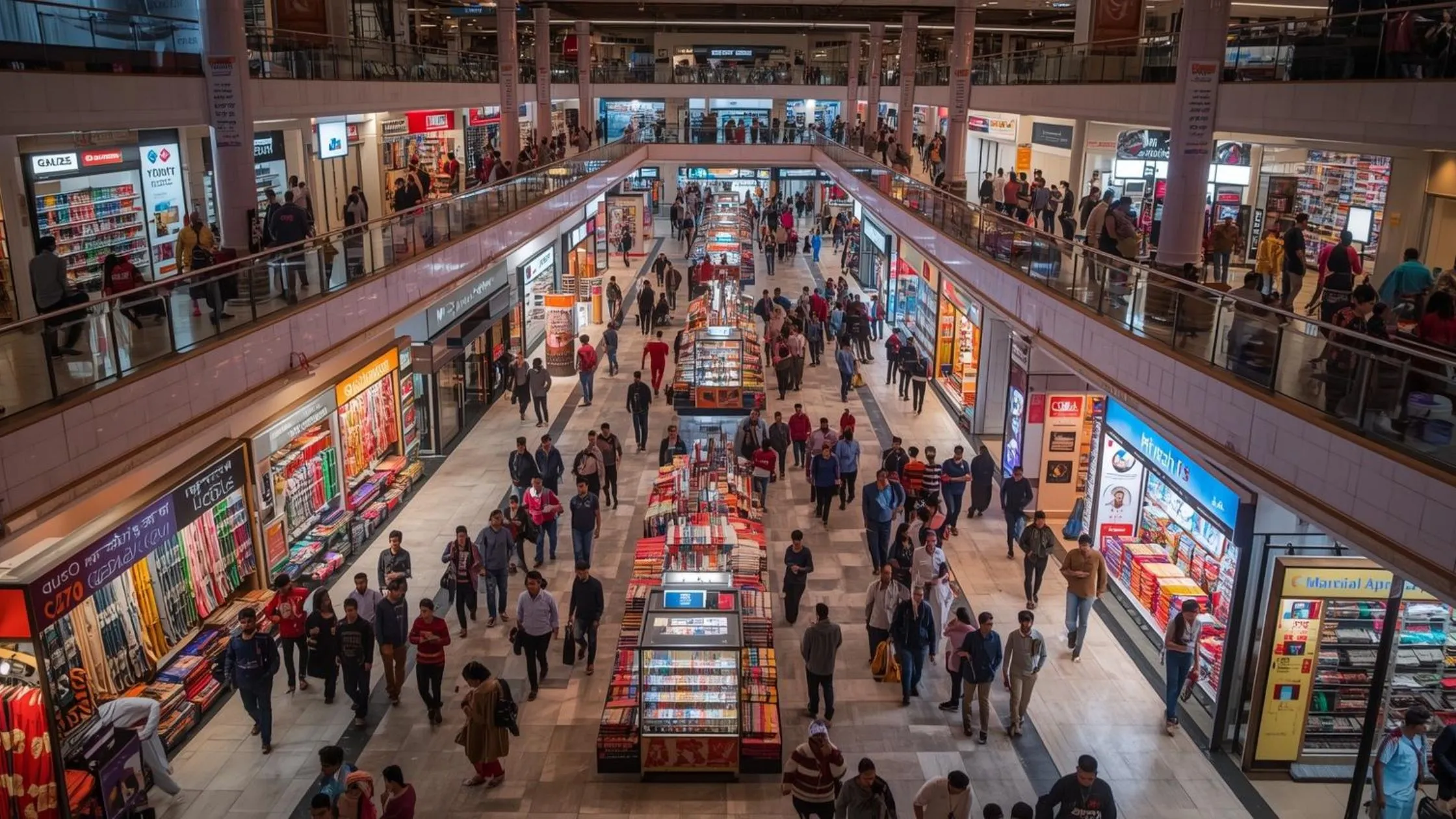
Together, these categories are redefining malls as lifestyle hubs rather than pure shopping destinations, an evolution that is central to the long-term strength of India’s retail real estate.
High Streets vs Malls: A Shifting Balance
High-street retail has remained resilient throughout the supply crunch, benefiting from immediate availability and visibility. However, 2025 is expected to mark a shift back in favour of malls.
With the arrival of new Grade A assets, organised retail is regaining share in overall leasing. Malls offer controlled environments, better tenant mix planning, and the ability to deliver immersive brand experiences advantages that are becoming increasingly important for retailers.
Rather than replacing high streets, malls are reclaiming their strategic role within India’s retail real estate landscape.
City-Wise Momentum: Where Leasing Is Concentrated
Retail leasing activity in 2025 is expected to be concentrated in key Tier-1 cities, where consumption growth and infrastructure support remain strong. Bengaluru, Mumbai, Hyderabad and Chennai are likely to account for a significant share of new mall supply and absorption.
These cities combine high purchasing power with growing urban populations, making them natural beneficiaries of organised retail expansion. At the same time, improved mall supply in these markets is expected to ease pressure on prime high-street locations.
Rental Trends: Stability with Strength in Prime Assets
Despite higher supply, average mall rentals are expected to remain largely stable in most markets. Cushman & Wakefield notes that while rental growth may moderate in cities witnessing heavy completions, top-grade malls and dominant high-street locations will continue to command firm rents.
This divergence underscores a broader trend in India’s retail real estate: quality assets are increasingly insulated from volatility, while secondary locations may see more competitive pricing as supply increases.
Looking Ahead to 2026: Even Bigger Leasing Numbers
The growth momentum is not expected to peak in 2025. Leasing activity is projected to rise further to 10–11 million sq ft in 2026, supported by a robust supply pipeline of around 5.9 million sq ft of new mall space.
Importantly, nearly three-fourths of this upcoming supply is expected to be Grade A+, signalling a clear shift towards higher-quality, experience-driven retail formats. This focus on premiumisation will play a defining role in shaping the next phase of India’s retail real estate growth.
Premiumisation and the Rise of Experience-Led Retail
Malls are no longer just transactional spaces they are evolving into curated lifestyle ecosystems. Developers are focusing on design, tenant curation, and experiential offerings to attract both global brands and discerning consumers.
International brand entries, platform-led retail partnerships, and destination-driven formats are becoming more common. This transformation reflects rising consumer expectations and growing confidence in India’s consumption story, further strengthening the fundamentals of India’s retail real estate sector.
What This Means for Retailers, Developers and Investors
For retailers, 2025 offers long-awaited expansion headroom after years of space constraints. Developers benefit from improved absorption visibility and healthier leasing pipelines, while investors are seeing retail assets regain institutional appeal.
With consumption-led growth, improving supply quality, and sustained demand, India’s retail real estate is increasingly being viewed as a long-term structural play rather than a cyclical one.
Also Read: New Cabinet Norms Ease Building Plan Approvals on Private Land in Noida
Why 2025 Marks a Structural Reset for Retail Real Estate
Industry experts believe the current surge is not merely a rebound effect. The alignment of supply, demand, and consumer behaviour points to a more mature growth cycle. Retailers are expanding with sharper strategies, developers are delivering better assets, and consumers are spending with greater confidence.
This convergence positions India’s retail real estate on a stronger, more sustainable footing going forward.
Conclusion
As leasing activity crosses the 9 million sq ft mark in 2025, India’s retail real estate sector is entering a renewed growth phase defined by quality supply, experience-led demand, and long-term confidence. With even higher leasing projected for 2026, the sector is no longer just recovering it is resetting itself for the next decade of organised retail expansion.
For stakeholders tracking consumption, urban development, and commercial property trends, 2025 stands out as a defining chapter in the evolution of India’s retail real estate.






Ans 1. Leasing is projected to rise because new Grade A malls are finally getting completed, releasing pent-up demand from retailers who had postponed expansion plans due to limited quality supply over the last two years.
Ans 2. Leasing is expected to increase from about 7.8 million sq ft in 2024 to over 9 million sq ft in 2025, making it the strongest year for India’s retail real estate market since the pandemic.
Ans 3. The return of Grade A mall supply is the key driver. Around 4.3 million sq ft of new, high-quality mall space is expected to become operational in 2025, enabling organised retailers to expand.
Ans 4. Fashion, food and beverage, and entertainment are leading demand. These segments are expanding aggressively as malls increasingly function as lifestyle and experience destinations rather than just shopping centres.
Ans 5. Yes, while high streets remained resilient during the supply crunch, malls are regaining importance in 2025 due to better availability, controlled environments, and stronger brand experience opportunities.
Ans 6. Bengaluru, Mumbai, Hyderabad, and Chennai are expected to account for a large share of leasing, supported by strong consumption, infrastructure growth, and new mall completions.
Ans 7. Overall rentals are expected to remain stable. However, prime Grade A malls and dominant high-street locations are likely to maintain firm rents, while secondary assets may see more competitive pricing.
Ans 8. Leasing activity is projected to rise further to 10–11 million sq ft in 2026, supported by a strong pipeline of premium Grade A+ mall developments.
Ans 9. Consumers are spending more time in malls that offer dining, entertainment, and curated experiences. This shift is driving demand for larger formats and helping malls evolve into lifestyle hubs.
Ans 10. The recovery in leasing and improving asset quality are restoring investor confidence. Retail real estate is increasingly viewed as a long-term, consumption-led growth segment rather than a cyclical play.