
✦ AI Summary
Table of Content
▲- What Is an EWS Certificate in Rajasthan?
- EWS Certificate Eligibility in Rajasthan
- Documents Required
- How to Apply Online (SSO / e-Mitra)
- How to Apply Offline
- How to Download the EWS Certificate
- Certificate Validity
- How to Claim Your PMAY Housing Subsidy
- Common Mistakes to Avoid
- Key Facts at a Glance
- Conclusion
The EWS certificate in Rajasthan essentially proves that your family's yearly income is less than ₹8 lakh and is a member of the general category. If you qualify for this certification, you will be eligible for two significant benefits. First, you will have access to the 10% job and college admission reservations provided by the state, and second, the ability to apply to the PMAY, or Pradhan Mantri Awas Yojana, for first-time homebuyer assistance. Under PMAY, you can receive a maximum fund assistance of ₹2.5 lakhs for purchasing the home.
What Is an EWS Certificate in Rajasthan?
An EWS (Economically Weaker Section) certificate is a government document that certifies a person’s family income is less than ₹8 lakhs and belongs to the general category. This is in relation to the 2019 Constitutional Amendment, which includes a provision for a 10% reservation for the economically weaker section, which came into effect with the 103rd Amendment.
This certificate is provided by the Social Justice and Empowerment Department of Rajasthan. The certificate can be requested by residents through the e-Mitra portal from home or in person at an e-Mitra Kendra in their district.
The document has a dual purpose, as it also qualifies the holder for housing subsidies under the PMAY scheme that provides up to ₹2.5 lakh to beneficiaries for the purchase or construction of their first home.
Also Read: YEIDA Plot Scheme 2026 Explained: Prices, Plot Sizes, Eligibility and How to Apply
EWS Certificate Eligibility in Rajasthan
All conditions below must be met simultaneously. Partial eligibility does not qualify.
|
Eligibility Parameter |
Requirement |
|
Category |
General category only (not SC/ST/OBC) |
|
Annual family income |
Below ₹8 lakh from all sources |
|
Agricultural land |
Not more than 5 acres |
|
Residential flat |
Less than 1,000 sq. ft. |
|
Residential plot (notified municipality) |
Less than 100 sq. yards |
|
Residential plot (non-notified area) |
Less than 240 sq. yards |
|
Residency |
Permanent resident of Rajasthan |
Documents Required
- Aadhaar card: non-negotiable for identity verification
- Jan Aadhaar card: this is Rajasthan-specific; your name must be listed on it
- PAN card for income verification
- Ration card showing you as a family member
- Income certificate from your Tehsildar or a competent revenue authority
- Domicile or residence certificate confirming you're a Rajasthan resident
- Property documents: Jamabandi or title deed for every piece of land or property your family holds
- A recent passport-size photograph
- A self-declaration affidavit on stamp paper confirming all eligibility conditions
- Caste-status proof confirming you're not in SC/ST/OBC categories
How to Apply Online (SSO / e-Mitra)
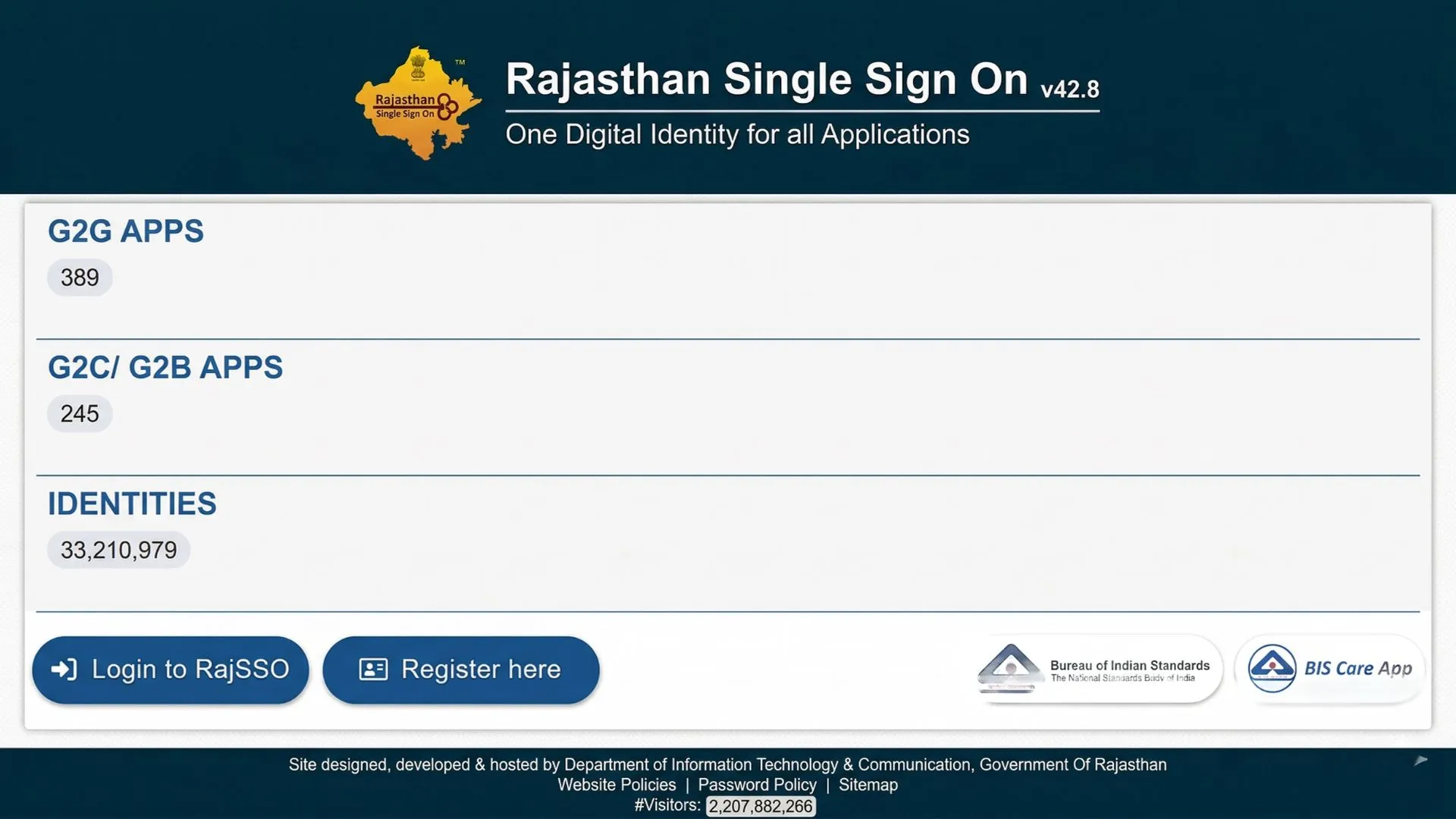
The online process is not as complicated as it looks, once you have your documents ready, the whole thing moves quickly.
- Go to sso.rajasthan.gov.in and sign in. If you don't have an SSO ID yet, create one using your Aadhaar or Jan Aadhaar. Once you're logged in, open the e-Mitra application from the dashboard.
- Inside e-Mitra, click on Application Services, then navigate to the Revenue Department section. Look for the service titled "Application of Income and Asset Certificate for Economically Weaker Sections (EWS) for State", that's the one you need.
- Fill out the form carefully. Every detail like income figures and property particulars must match exactly what's in your documents. Any mismatch is grounds for rejection.
- Upload clear scans of all the documents listed above, pay the fee (it ranges from ₹10 to ₹50 depending on the channel you use), and submit. Save the token number you get after submission, you'll need it to track your application and download the certificate once it's approved.
Expect a processing time of 10 to 15 working days.
How to Apply Offline
- Head to your nearest e-Mitra Kendra or Tehsildar office and ask for the EWS application form at the counter.
- Fill in all the details: personal information, income, and property particulars.
- Get the form attested by your Village Development Officer, patwari, or nagar palika officer, depending on where you live.
- Attach self-attested photocopies of all required documents and submit everything at the counter.
- You'll receive an acknowledgement slip with your application reference number. keep it safe, as you'll need it to track your application and collect the certificate once it's ready.
How to Download the EWS Certificate
Once your application is approved, here is how you get your certificate:
- Log back into e-Mitra through sso.rajasthan.gov.in or open the SJE Rajasthan portal directly.
- Go to the Download Certificate section and select Utility Type Service.
- Type "EWS Certificate" in the search bar and enter your token number.
- Choose A4 as the print type and review all your details on screen before proceeding.
- Download the PDF once everything looks correct.
- Save a digital copy on your phone or drive and print a physical copy as well, you will need both when applying for PMAY, appearing for job recruitments, or submitting college admission forms.
Also Read: Auctioned Property in India 2026 The Smartest Buy or a Legal Minefield
Certificate Validity
Since May 2022, EWS certificates in Rajasthan are valid for 3 years, up from the earlier 1-year validity. When it's time to renew, you don't need to go through the full application again, just submit a self-attested income affidavit along with your old certificate, as long as your income and assets haven't changed.
One important heads-up: if you're using your certificate for a central government exam like UPSC, NEET, or CUET, check whether the issuing authority needs to use the central government format specifically. The Rajasthan state format isn't always accepted for national-level exams, so verify before you apply.
How to Claim Your PMAY Housing Subsidy
A valid EWS certificate makes you eligible for financial assistance under PMAY Urban 2.0, structured across four verticals:
|
PMAY-U 2.0 Vertical |
Who It’s For |
Subsidy / Benefit |
|
Beneficiary Led Construction (BLC) |
EWS families (income ₹3 lakh) who own land |
Up to ₹2.5 lakh to build a new pucca house (max 45 sqm) |
|
Affordable Housing in Partnership (AHP) |
EWS beneficiaries without land |
Flat allotment (30–45 sqm) with combined subsidy up to ₹2.5 lakh |
|
Interest Subsidy Scheme (ISS) |
EWS/LIG/MIG home loan borrowers |
Interest subsidy up to ₹1.80 lakh (NPV ₹1.50 lakh) on loans after Sep 1, 2024 |
|
Affordable Rental Housing (ARH) |
Urban migrants, working women, homeless EWS/LIG |
Subsidised rental housing near workplaces |
Steps to claim your PMAY subsidy:
- Obtain a valid EWS certificate from e-Mitra or the Tehsildar’s office.
- Confirm your income category: EWS (₹3 lakh), LIG (₹3–6 lakh), or MIG (₹6–9 lakh).
- Apply at pmaymis.gov.in or through your bank or registered housing finance company.
- Submit your EWS certificate along with income, identity, and property documents.
- Ensure no family member owns a pucca house anywhere in India, this is a hard disqualification.
- For EWS and LIG categories, register the property jointly with or in the name of a woman family member.
- Once approved, the subsidy is credited directly to your home loan account, reducing your outstanding principal and EMI.
Common Mistakes to Avoid
Counting only your own property. All assets held by every family member, spouse, parents, and children, need to be added together. People routinely forget property held by a spouse in their hometown.
Inconsistencies between your form and your documents. If your income certificate says one figure and you've declared a different one in the application, it's returned without approval.
Applying with an expired certificate. This seems obvious, but always check the date before you submit it anywhere. A certificate that expired two months ago is useless.
Using the state format for central exams. Check the specific format requirement for UPSC, NEET, or CUET before applying. Don't assume the Rajasthan state certificate will be accepted.
Renewing without the income affidavit. At renewal, you need a fresh self-attested income affidavit. The old certificate alone isn't enough.
Key Facts at a Glance
|
Parameter |
Detail |
|
Issuing authority |
Tehsildar / Sub-Divisional Officer |
|
Application portal |
sso.rajasthan.gov.in (via e-Mitra) |
|
Application fee |
₹10 – ₹50 |
|
Processing time |
10–15 working days |
|
Certificate validity |
3 years (renewable) |
|
Reservation benefit |
10% in government jobs and education |
|
PMAY max subsidy (BLC/AHP) |
₹2.5 lakh (EWS, income ₹3 lakh) |
|
PMAY interest subsidy (ISS) |
Up to ₹1.80 lakh on home loan |
Conclusion
The EWS certificate isn't just a paperwork formality. Used correctly, it's a direct path to ₹2.5 lakh in housing support that most eligible families never actually claim, either because they didn't know they qualified or didn't follow through on the PMAY step.
The application itself is simpler than it looks. Get your income certificate from the Tehsildar, log into sso.rajasthan.gov.in, apply for the EWS certificate, and once it's in hand, head straight to pmaymis.gov.in to start your housing subsidy application. The money is there. The process is laid out. The only thing left is doing it.




Ans 1. The annual family income must be less than ₹8 lakh from all sources combined, salary, business, agriculture, and rental income included. For PMAY housing subsidies specifically, the EWS income cap is ₹3 lakh per annum. Income between ₹3 lakh and ₹8 lakh qualifies you for the certificate but places you in the LIG or MIG category for housing scheme purposes.
Ans 2. The Rajasthan government extended the EWS certificate validity to 3 years in May 2022. Renewal requires a self-attested income affidavit and a copy of the old certificate, a full fresh application is not needed if your income and assets remain within the prescribed limits.
Ans 3. Yes. The application is available online through the e-Mitra portal accessible via sso.rajasthan.gov.in. Log in with your SSO ID, go to Application Services under e-Mitra, search for “EWS Certificate,” fill in the form, upload documents, and pay the ₹10–₹50 fee. The certificate is processed within 10–15 working days.
Ans 4. Your family should not own more than 5 acres of agricultural land, a residential flat larger than 1,000 sq. ft., a plot larger than 100 sq. yards in a notified municipality, or a plot larger than 240 sq. yards in a non-notified area. All property held by all family members across all locations is counted together.
Ans 5. Under PMAY-U 2.0, EWS beneficiaries with an annual income up to ₹3 lakh can receive up to ₹2.5 lakh as financial assistance for construction or flat purchase under the BLC and AHP verticals. Under the Interest Subsidy Scheme (ISS), eligible beneficiaries can receive an interest subsidy of up to ₹1.80 lakh (maximum NPV ₹1.50 lakh) on home loans disbursed after September 1, 2024.
Ans 6. You need an Aadhaar card, Jan Aadhaar card, PAN card, ration card, income certificate from the Tehsildar, domicile certificate, property documents, passport-size photograph, self-declaration affidavit, and caste-status proof.
Ans 7. Not always. For UPSC, NEET, and CUET, the central government format may be required separately. Always verify the format requirement before submitting your application.
Ans 8. Log into e-Mitra via sso.rajasthan.gov.in, go to Download Certificate, select Utility Type Service, search for EWS Certificate, enter your token number, and download the PDF in A4 format.
Ans 9. Yes. A valid EWS certificate is the primary document required to apply for PMAY housing subsidies. It must be submitted along with income proof, identity documents, and property papers at pmaymis.gov.in or through your bank.
Ans 10. The most common mistakes are not combining all family property when checking limits, mismatches between the application form and income certificate, submitting an expired certificate, and skipping the income affidavit at the time of renewal.