
✦ AI Summary
Table of Content
▲- Why Does Bathroom Leakage Happen?
- Can You Really Fix Bathroom Leakage Without Breaking Tiles?
- 6 Proven Methods to Fix Bathroom Leakage Without Breaking Tiles
- Repair Method Comparison at a Glance
- When Tile Removal Is Unavoidable
- How to Calculate Your Bathroom Leakage Repair Cost
- Prevention Tips to Avoid Future Bathroom Leakage
- Conclusion
The bathroom leakage problem emerges as one of the most severe challenges which homeowners must combat because the prospect of needing to remove costly tiles for repair work creates additional stress. The room beneath shows evidence of a damp patch which has begun to spread across its ceiling. The wall next to the shower shows soft texture which results from a persistent drip that you have allowed to continue for two weeks. Your first instinct is to dread what comes next, tiles ripped off, dust everywhere, a contractor camping in your home for two weeks, and a bill that makes your stomach drop.
Here is the thing: in most cases, that scenario is entirely avoidable. Modern waterproofing and plumbing repair technology has changed the game completely. Bathroom leakage can be fixed, thoroughly and permanently, without disturbing a single tile in the majority of cases. This guide walks you through every method that works, what it costs in India, and when you genuinely do need to break tiles.
Why Does Bathroom Leakage Happen?
The process of choosing a repair method requires the identification of the actual problem before any other work can begin. The most common triggers of bathroom leakage are:
- Water can gradually penetrate through cracked or deteriorated grout that exists between tiles.
- Silicone caulk has become dried and peeled away while some sections remain completely missing in the areas around bathtubs and shower trays and basins.
- Pipe joints behind tiled walls and beneath the floor have become corroded and loosened.
- A waterproofing membrane has failed because of age and inadequate installation during the initial process, which lies beneath the tile.
- The hairline tile cracks, which were not visible to the naked eye created a path for continuous water flow into the building.
- The construction process had an installation defect because the original work did not create proper bonding and it used an incorrect floor slope and failed to implement sufficient waterproofing measures.
The specific problem identification requires precise source identification because it determines which repair method should be used and how much it will cost and which expert should be contacted.
Also Read: How Water Seepage Ruins the Structural Stability of Your Home
Can You Really Fix Bathroom Leakage Without Breaking Tiles?
The majority of situations require the application of professional techniques which include chemical grout injection and pipe epoxy lining and silicone re-caulking and brush-applied liquid membranes to enable experts and trained DIY enthusiasts to perform leak sealing from accessible areas and through small drilled openings.
The critical first step to successful repair work requires repair teams to find the leak source. The licensed waterproofing expert uses moisture meters and dye tests and thermal imaging to identify the source of the problem. The most common reason for amateur repair attempts to succeed is their failure to complete this essential procedure.
6 Proven Methods to Fix Bathroom Leakage Without Breaking Tiles
1. Re-Grouting
When deteriorated grout is the culprit, re-grouting is the most accessible fix available. Use a grout rake or oscillating multi-tool to scrape out 2–3mm of damaged grout without disturbing the tiles. Fill joints with fresh waterproof epoxy grout using a rubber float, wipe clean with a damp sponge, and apply a penetrating grout sealer once fully cured (24–48 hours).
This is a practical weekend DIY project for most homeowners. Done correctly, it delivers years of protection at very low cost.
Cost: ₹500–₹2,000
Best For: Cracked or hollow grout lines
DIY-Friendly: Yes
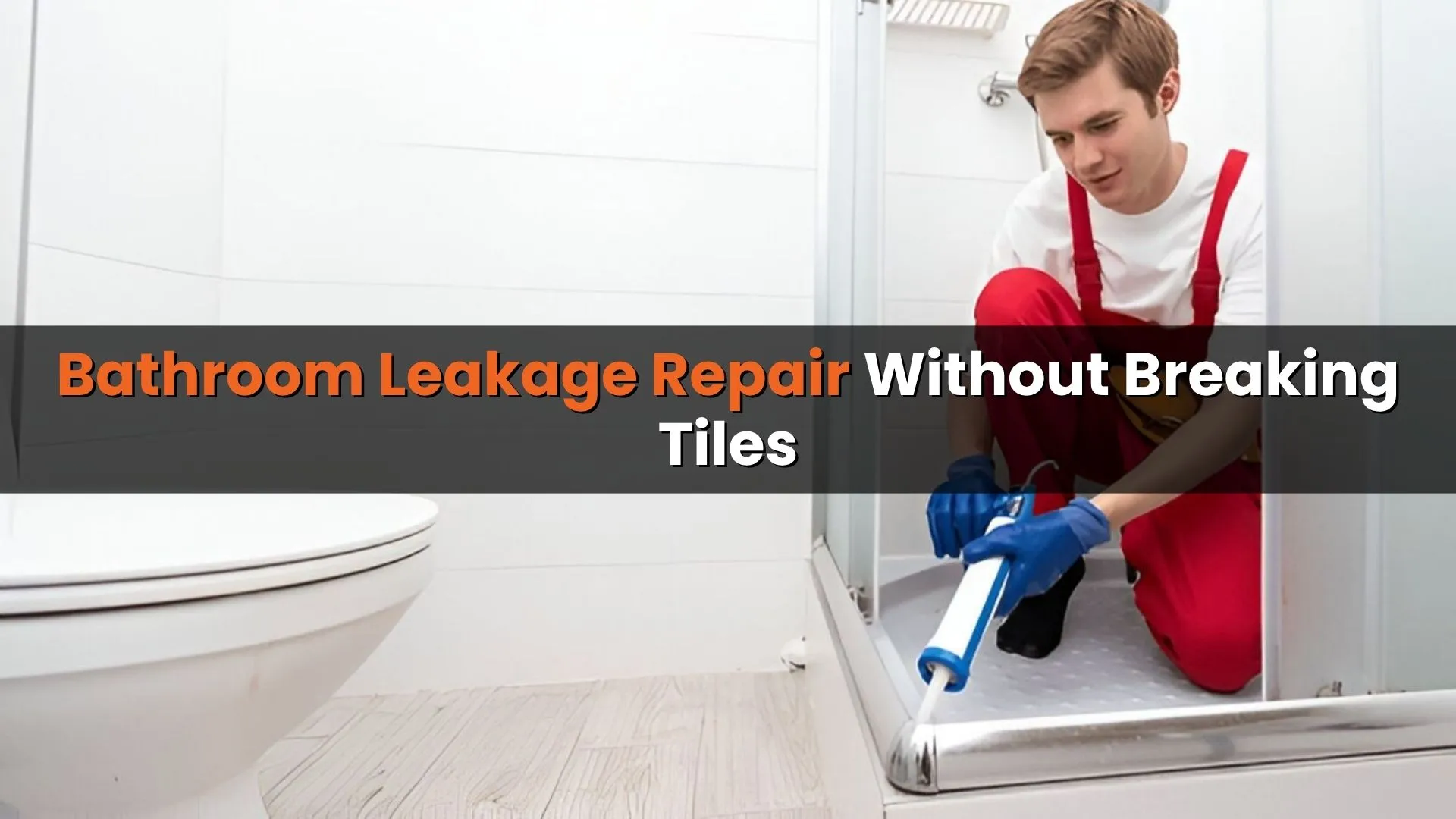
2. Silicone Re-Caulking
The silicone bead which extends along bathtubs, shower trays, basin edges, and wall-floor junctions will develop gaps because it deteriorates with time. The process requires complete removal of old caulk which should be done with a caulk remover tool. The surfaces need cleaning through thorough procedures that require isopropyl alcohol. The application requires sanitary-grade anti-mould silicone to be applied after the first step. The process requires using a damp finger to smooth the surface which must remain untouched for 24 hours until water contact begins.
Cost: ₹200–₹800
Best For: Tub and shower perimeter gaps
DIY-Friendly: Yes
3. Chemical Grouting / Waterproof Injection
For stubborn bathroom leakage seeping through walls or spreading under floors, polyurethane or acrylic chemical grout is injected under pressure through small 5–8mm drill holes placed at strategic points. The chemical reacts with moisture, expands, and forms a permanent flexible foam seal behind the tile layer, no demolition required.
The technique requires specialized expertise because it functions optimally in large tiled shower enclosures which need to be installed in upper floor bathrooms and basement bathrooms that face continuous water pressure problems.
Cost: ₹5,000–₹20,000
Best For: Persistent wall and floor seepage
DIY-Friendly: No (Professional Only)
4. Pipe Epoxy Lining (CIPP: Cured-in-Place Pipe)
The concealed supply or drainage pipe which causes bathroom leaks needs pipe relining because it protects the tile flooring. The existing pipe receives a flexible epoxy-coated liner which gets installed through its system and then undergoes UV light or steam curing. The process creates a seamless watertight pipe which engineers install inside the existing pipe without requiring any wall or floor demolition. The lining lasts 30–50 years and actually improves flow.
Cost: ₹8,000–₹40,000
Best For: Concealed pipe leaks behind walls
DIY-Friendly: No
5. Push-Fit Pipe Connectors
The push-fit connectors provide an immediate solution to pipe joint leaks which can be reached through either an existing inspection panel or a small drilled access hole since no soldering or adhesive work is required for the repair process. The damaged section is cut out, and a push-fit coupling is pressed onto both pipe ends, it locks and creates a watertight seal in seconds. The system works with copper pipes and CPVC pipes and PEX pipes.
Cost: ₹300–₹1,500
Best For: Accessible supply pipe joint leaks
DIY-Friendly: Yes (with access)
6. Liquid Waterproofing Membrane
The application of brush-applied membranes requires installers to apply Mapei Mapelastic and Ardex S8 products directly on existing tile surfaces and grout lines. The products create a seamless rubber-like barrier which establishes a waterproof seal through their ability to enter micro-cracks without requiring tile extraction. The solution works best in situations where the original tile waterproofing system has experienced complete degradation throughout an extensive area.
Cost: ₹1,500–₹6,000
Best For: Large tiled surfaces with uniform waterproofing failure
DIY-Friendly: Semi-DIY
Repair Method Comparison at a Glance
|
Method |
DIY |
Cost (India) |
Tiles Disturbed? |
Best For |
|---|---|---|---|---|
|
Regrouting |
Yes |
₹500–₹2,000 |
No |
Cracked grout lines |
|
Silicone re-caulking |
Yes |
₹200–₹800 |
No |
Tub/shower perimeter |
|
Chemical grouting |
Professional |
₹5,000–₹20,000 |
No |
Wall/floor seepage |
|
Pipe epoxy lining |
Professional |
₹8,000–₹40,000 |
No |
Pipes behind walls |
|
Push-fit connectors |
Yes (with access) |
₹300–₹1,500 |
Minimal |
Supply pipe joints |
|
Liquid membrane |
Semi-DIY |
₹1,500–₹6,000 |
No |
Large tiled surfaces |
When Tile Removal Is Unavoidable
The methods above resolve the vast majority of bathroom leakage cases. However, a small number of situations genuinely require targeted tile removal:
- A burst or structurally collapsed pipe with no accessible entry point.
- Extensive subfloor rot or structural water damage beneath the tile bed.
- Tiles that are already loose, hollow-sounding, or cracked beyond serviceable condition.
- A complete waterproofing membrane failure spanning a very large surface area.
In these situations, targeted removal, limited strictly to the affected zone, is the right and responsible call. Replacing a small section of tiles costs far less than allowing structural water damage to worsen unchecked.
Also Read: Repair Cracks and Holes in Internal Walls Complete DIY & Professional Guide
How to Calculate Your Bathroom Leakage Repair Cost
The total cost of any bathroom leakage repair depends on three variables: the method selected, the area to be treated, and your city’s prevailing labour rates.
A practical benchmark:
- The cost for re-grouting or re-caulking a standard bathroom through DIY methods ranges from ₹700 to ₹2,800..
- The cost for chemical injection services ranges from ₹5,000 to ₹20,000 depending on the service area.
- The cost for pipe epoxy relining services ranges from ₹8,000 to ₹40,000 based on the length of the pipe and the ease of access..
- The cost for liquid membrane application services to cover a complete bathroom space ranges from ₹1,500 to ₹6,000.
The process of selecting a contractor requires the collection of three written estimates. Request detailed price estimates which show the materials needed for the project and the specific locations to be treated and the length of the warranty period.
Prevention Tips to Avoid Future Bathroom Leakage
Good maintenance habits are significantly cheaper than repeated repairs:
- Reseal grout joints annually using a penetrating waterproof sealer, a 30-minute task that delivers years of protection.
- Inspect and re-caulk silicone joints every 6 months for any gaps, shrinkage, or mould growth.
- Install a bathroom exhaust fan to lower humidity and slow grout and caulk deterioration.
- Address dripping taps or showerheads immediately, constant moisture accelerates seal breakdown.
- Avoid bleach-based bathroom cleaners on grouted surfaces, as they degrade grout binders over time.
- Use a squeegee after every shower to remove standing water from tiled walls and floor joints.
Conclusion
Bathroom leakage no longer demands the disruption, cost, and mess of breaking tiles and rebuilding from scratch. The combination of precise leak identification and modern repair methods which include re-grouting and silicone re-caulking and chemical injection and pipe epoxy relining and liquid waterproofing membrane installation enables quick and clean leak repairs that cost much less than standard renovation expenses.
A small leak should be treated immediately because it will cost less than the expensive structural damage which will occur if we wait. A small seep treated today for ₹1,000 prevents a structural repair bill of ₹50,000 tomorrow. You must choose the appropriate method to handle your specific leak problem while safeguarding your tiles and your home.

_1792140859.webp)




_1792151285.webp)

Ans 1. Yes, in most cases. Methods like re-grouting, silicone re-caulking, chemical injection, pipe epoxy lining, and liquid membranes fix the majority of bathroom leaks without disturbing any tiles. Tile removal is only necessary for burst pipes, severe subfloor damage, or large-scale waterproofing membrane failures.
Ans 2. Re-caulking the silicone bead around your bathtub or shower tray costs ₹200–₹800 and is the lowest-cost fix. Re-grouting cracked joints runs ₹500–₹2,000. Both are DIY-friendly for homeowners with basic tools.
Ans 3. A licensed professional uses a moisture meter, dye test, or thermal imaging camera to pinpoint the origin. Do not begin any repair without identifying the source, treating the wrong area wastes time and money.
Ans 4. Chemical grouting involves injecting polyurethane or acrylic foam through small drill holes under pressure. It expands behind the tile layer to form a permanent waterproof seal. It is best used for persistent bathroom leakage through walls or floors that surface-level methods cannot resolve.
Ans 5. Silicone re-caulking lasts 2–5 years before needing refresh. Epoxy re-grouting lasts 5–10 years. Chemical grouting and pipe epoxy lining provide permanent results lasting 20–50 years. Liquid membranes last 5–10 years depending on foot traffic and exposure.
Ans 6. Pipe epoxy relining (CIPP) costs ₹8,000–₹40,000 depending on the length of pipe to be lined, the pipe diameter, and the access complexity. It is the most cost-effective solution for concealed pipe leaks where wall demolition would otherwise be required.
Ans 7. Most standard home insurance policies in India classify bathroom leakage as a maintenance issue and do not cover it. Some comprehensive policies provide limited coverage for sudden pipe bursts. Always review the exclusions clause in your policy document and confirm with your insurer before assuming coverage.
Ans 8. If leakage appears only during water use, a pipe joint is likely the cause. If dampness persists even when the bathroom is dry, it points to a failed waterproofing membrane or cracked grout. A moisture meter or dye test confirms the source accurately.
Ans 9. Yes. Prolonged bathroom leakage seeps into the concrete slab, corrodes reinforcement steel, and causes spalling. Over time, it weakens load-bearing slabs and walls. Early repair prevents structural deterioration that can cost ₹50,000 or more to restore.
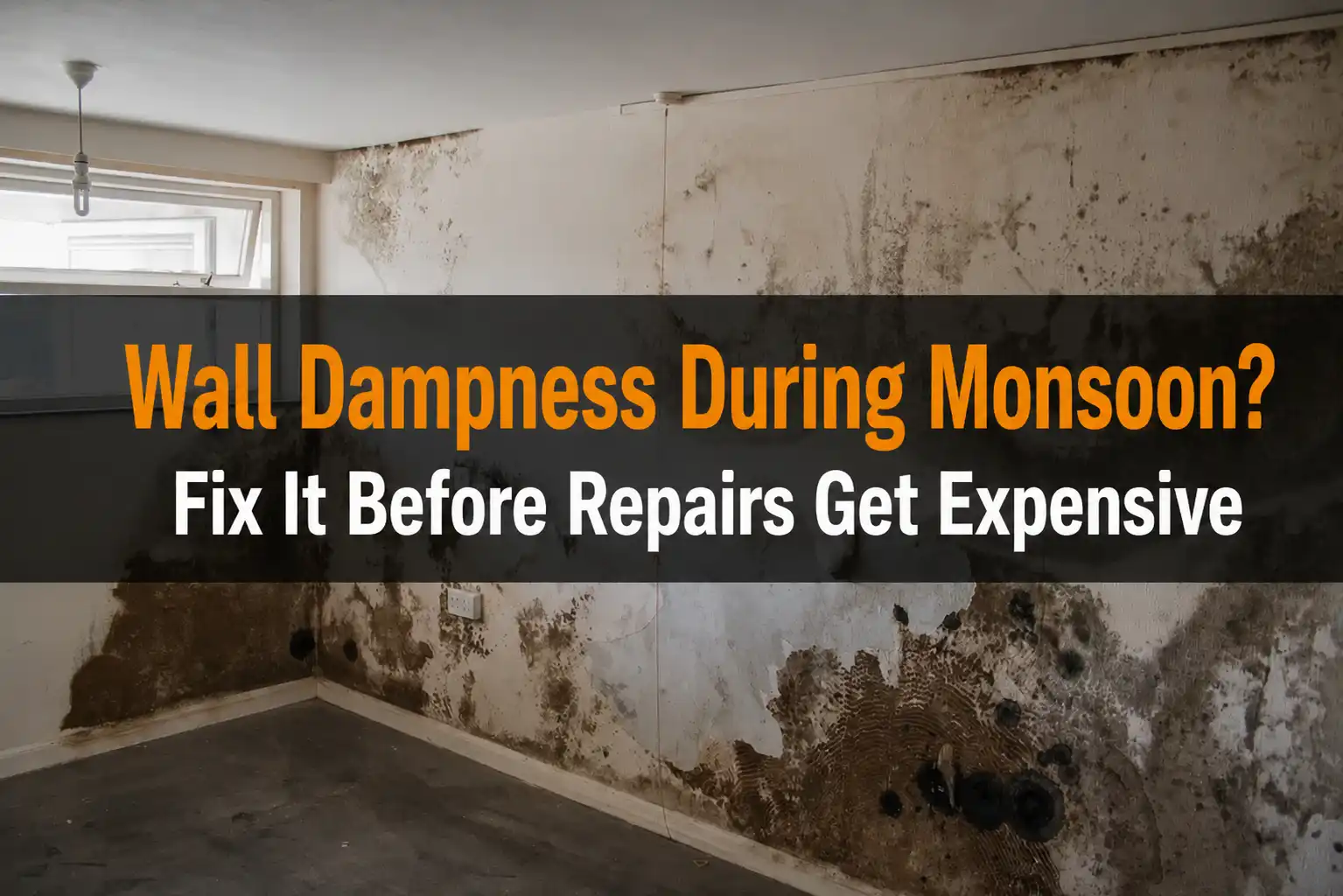
Ans 10. Yes. During monsoon months, rising external moisture levels increase hydrostatic pressure against bathroom walls and floors. This accelerates grout deterioration, weakens silicone seals, and forces water through existing micro-cracks. Waterproofing inspections are best scheduled before June each year.