
✦ AI Summary
Table of Content
▲
Every monsoon, I get the same worried message from homeowners: "There's a damp patch on my wall and the paint is peeling is it serious?" My honest answer, after six years of watching these problems play out, is almost always the same. Yes, it's serious, and no, it won't fix itself. The good news is that if you catch it early, the fix is cheap and simple. Ignore it for a season or two, and that little patch can turn into a repair bill that hurts.
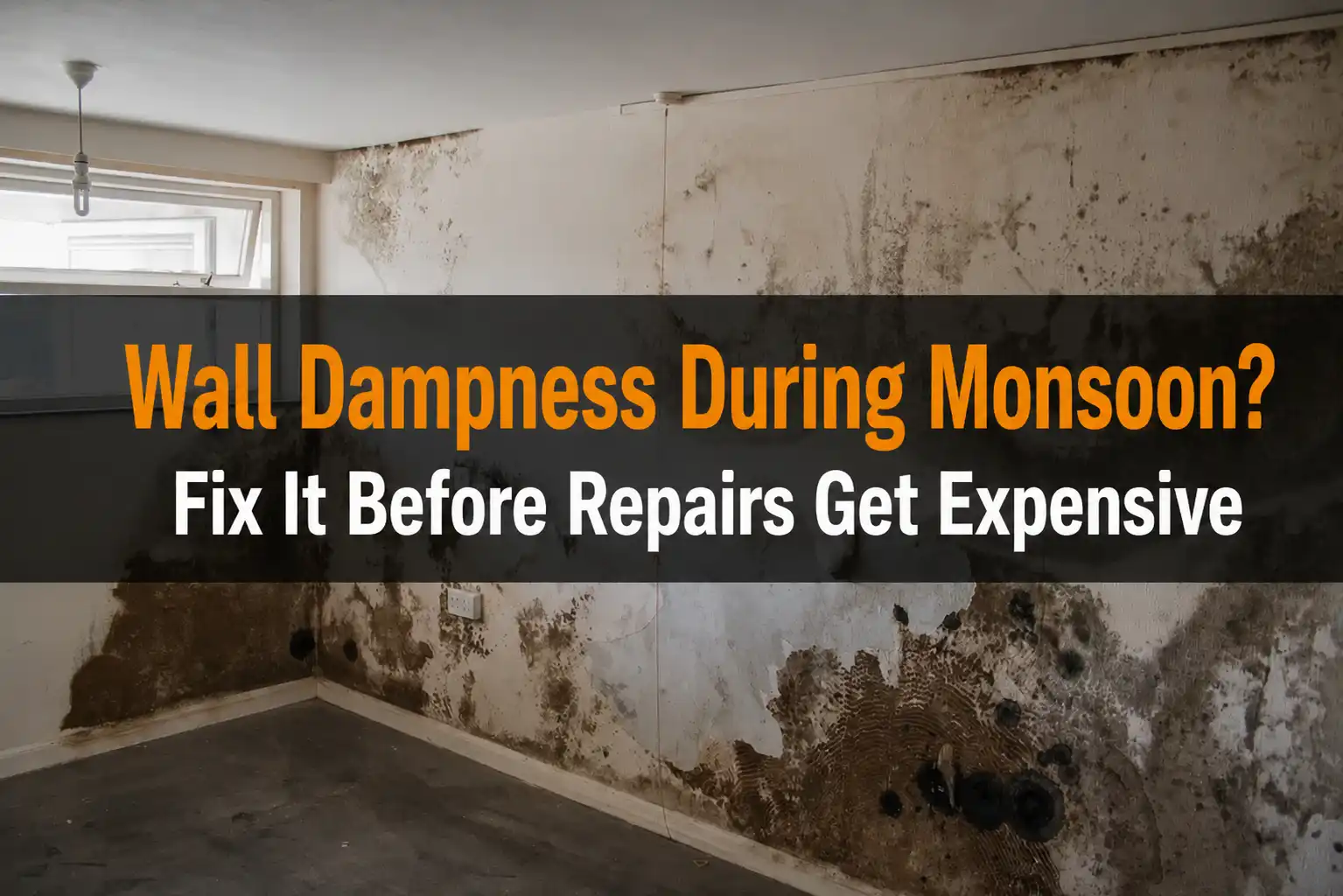
Damp walls are sneaky. They start small a faint stain, a musty smell and quietly spread behind your paint and plaster. By the time it looks bad, the damage underneath is usually worse than what you can see. Let me help you spot it early, understand what's causing it, and fix it before it drains your wallet.
How to Spot Wall Dampness Early
The earlier you catch dampness, the cheaper it is to fix. During monsoon, keep an eye out for these warning signs:
- Damp patches or dark stains, especially on external-facing walls
- Peeling, bubbling, or flaking paint
- A white, powdery deposit on the surface (this is salt left behind by evaporating moisture, called efflorescence)
- Black or greenish spots of mould and mildew
- A persistent musty, earthy smell in a room
- Plaster that feels cold, soft, or bulges when you press it
If you spot even one of these, don't paint over it and hope for the best. That only hides the problem while it grows underneath.
Also Read: Mirror Vastu Tips: Why You Should Avoid Mirrors in Front of Your Bed
What Causes Damp Walls During Monsoon?
Fixing dampness properly means finding the actual source. Slapping waterproof paint on the surface without knowing why it's wet is the most common mistake I see. Here are the usual culprits.
Rising Damp
This is groundwater creeping up from the foundation into your walls, usually because the damp-proof layer at the base is missing or has failed. You'll typically see it on ground-floor walls, close to the floor, forming a tide-line a foot or two high.
Penetrating Damp (Rainwater Seepage)
This is rainwater soaking in from outside through cracks, worn plaster, or gaps around windows. It shows up on external walls and gets noticeably worse during heavy rain. Cracks in the outer wall, faulty joints, and aged waterproofing are the main entry points.
Leaks and Condensation
Sometimes the water isn't coming from the rain at all. Watch for:
- Plumbing leaks from pipes hidden inside walls
- Terrace or roof leakage dripping down internal walls
- Blocked or overflowing drains and gutters dumping water against the wall
- Condensation in poorly ventilated rooms like bathrooms and kitchens, where humid air settles on cool walls
Why You Shouldn't Wait
I understand the temptation to deal with it "after the monsoon." But dampness rarely stays where it started. Here's what delay actually costs you:
- Structural damage: moisture eats through plaster, then attacks the brickwork, and over time can rust the steel reinforcement inside concrete
- Health risks: mould and mildew trigger allergies, coughing, and breathing problems, especially for children and the elderly
- Ruined interiors: swollen woodwork, damaged furniture near the wall, and electrical safety hazards where damp meets wiring
- A snowballing bill: a small seepage fix today is inexpensive; a full re-plaster plus waterproofing after two seasons of neglect can cost many times more
That last point is the whole reason to act now. The problem doesn't just sit still it gets more expensive every month you wait.
Quick Fixes vs Permanent Solutions
Not every response is equal. A temporary fix buys you time; a permanent one solves the problem. Here's how they compare so you can choose wisely:
|
Basis |
Quick / Temporary Fix |
Permanent Solution |
|
What it involves |
Sealing surface cracks, applying damp-resistant coating or paint |
Treating the source DPC injection, external waterproofing, fixing leaks |
|
Cost |
Low upfront |
Higher upfront |
|
How long it lasts |
A season or less |
Years |
|
Best for |
Emergency, mid-monsoon patch-up |
Recurring or spreading dampness |
|
Fixes the root cause? |
No |
Yes |
|
Long-term cost |
Higher (problem returns) |
Lower (problem stays solved) |
The short version: a quick fix is fine to stop the bleeding during a downpour, but plan a permanent fix once the rain eases.
Also Read: Vastu Colors for Living Room: Attract Wealth and Positivity to Your Home
How to Fix Damp Walls the Right Way
Here's the sensible order of steps I'd recommend:
- Find the source first is it rising damp, rainwater, or a leak? Everything depends on this.
- Stop active leaks repair any broken pipes, roof cracks, or blocked drains before touching the wall.
- Let the wall dry out treating a wet wall traps moisture inside, so give it time.
- Remove damaged plaster and paint back to a sound surface.
- Apply the right treatment waterproofing chemicals, a fresh damp-proof course, or external sealing, depending on the cause.
- Re-plaster and repaint with a damp-resistant primer and paint.
If you're not sure which cause you're dealing with, that's exactly when to bring in a professional rather than guess.
How to Prevent Dampness Next Monsoon
Prevention is far cheaper than repair. Before the rains arrive, run through this checklist:
- Fill and seal cracks in external walls
- Clear all drains, gutters, and downpipes so water flows away from the building
- Check and refresh terrace and roof waterproofing
- Make sure the ground slopes away from your walls, not toward them
- Improve ventilation in bathrooms and kitchens to cut condensation
- Do a quick pre-monsoon inspection of last year's problem spots
When to Call a Professional
Some situations really do need an expert. Reach out if you notice:
- Dampness spreading across large areas or returning every year
- Cracks in the structure, not just the plaster
- Damp near electrical points or fittings
- A leak you can't trace to a source
A professional can pinpoint the cause and treat it properly, which usually costs less than paying twice for a fix that didn't hold.
The Bottom Line
Monsoon dampness is one of those problems where waiting is the most expensive choice you can make. A stain you treat this week might cost very little. The same stain ignored until next year can mean stripped walls, ruined interiors, and a bill several times larger. Spot it early, find the real cause, and fix it at the source your walls, your health, and your budget will all thank you.









Ans 1. The most common causes include rainwater seepage through cracks, rising damp from the foundation, plumbing leaks, roof leakage, blocked drains, and condensation due to poor ventilation.
Ans 2. Look for dark patches, peeling paint, white salt deposits (efflorescence), mould growth, musty odours, and soft or bulging plaster. These are early signs of moisture damage.
Ans 3. Yes. Damp walls encourage mould and mildew growth, which can trigger allergies, asthma, coughing, and other respiratory problems, especially in children and older adults.
Ans 4. No. Repainting without fixing the source of moisture only hides the problem temporarily. The dampness will return and cause further damage.
Ans 5. Rising damp occurs when groundwater travels upward through walls from the foundation, while penetrating damp is caused by rainwater entering through cracks, damaged plaster, or faulty waterproofing.
Ans 6. Permanent repair involves identifying the moisture source, fixing leaks or waterproofing issues, allowing the wall to dry, removing damaged plaster, applying suitable waterproofing treatments, and repainting with damp-resistant products.
Ans 7. Seal exterior cracks, maintain roof waterproofing, clean gutters and drains, improve ventilation, ensure proper drainage around the house, and inspect walls before every monsoon.
Ans 8. Contact an expert if dampness keeps returning, spreads across large areas, appears near electrical fittings, or is accompanied by structural cracks or unexplained leaks.
Ans 9. Temporary coatings can reduce moisture for a short period but don't solve the root cause. A permanent repair is needed for long-lasting protection.
Ans 10. Yes. Small damp patches can develop into damaged plaster, weakened walls, mould growth, and expensive structural repairs if left untreated for multiple seasons.