
✦ AI Summary
Table of Content
▲- What is Internal Wall Seepage?
- Why Treating Internal Seepage Matters
- What is Asian Paints SmartCare Hydroloc Xtreme?
- What is Dr. Fixit Dampguard?
- Asian Paints Damp Proof and Dr. Fixit: Comparison Table
- Which Performs Better for Indian Homes?
- Cost and Application Comparison
- When Neither Product is the Right Fix
- Which One Should You Choose?
- Conclusion
Asian Paints Damp Proof, and Dr. Fixit , are the two names almost every homeowner hears as soon as a damp patch shows up on an interior wall, but very few buyers actually understand which particular product line from each brand is meant for the job. Internal wall seepage is kinda one of the most common renovation headaches across Indian homes, especially in bathroom nearby walls, kitchen wet zones, and also older apartments where the plumbing has started ageing a bit .
In addition to this, choosing the wrong product from either brand wastes both money and time, since terrace-grade coatings and interior-grade coatings are built using entirely different chemistry for entirely different exposure conditions. This article breaks down what each brand actually recommends for internal walls, how the two compare on technical parameters, and which one suits your specific seepage situation.
What is Internal Wall Seepage?
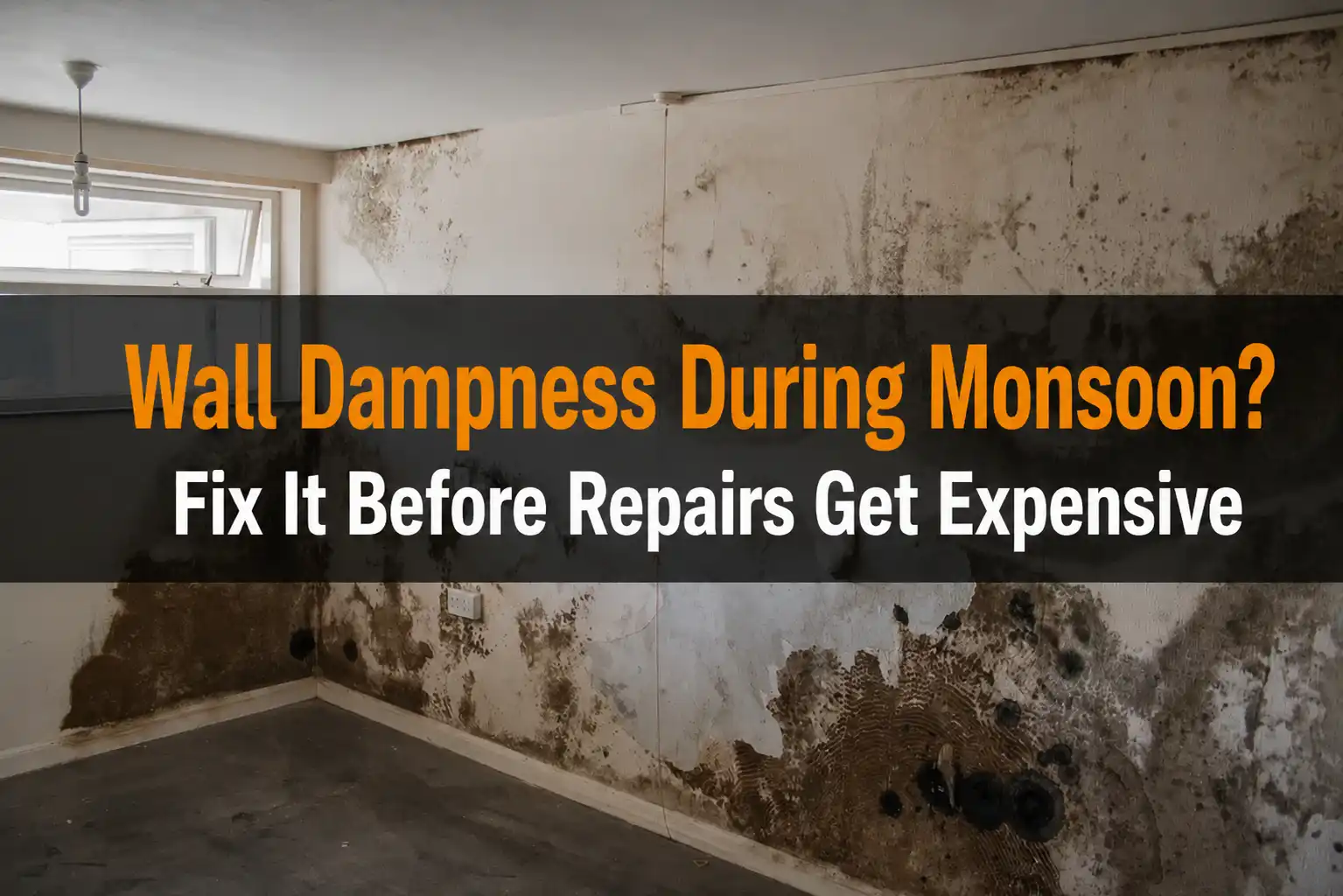
Internal wall seepage happens when moisture kind of travels through plaster, brickwork, or concrete, then it shows up on the inside as a damp patch, odd discolouration, peeling paint, or even a musty smell. Basically, unlike the exterior kind of seepage which is usually pushed by direct rain exposure, internal seepage is almost always traced back to some hidden origin, like a leaking bathroom pipe, a faulty sanitary joint, or moisture slowly migrating out from a neighbouring wet wall.
Why Treating Internal Seepage Matters
- Prevents structural weakening of plaster and masonry
- Stops mold and fungal growth in living spaces
- Protects paint finish and interior aesthetics
- Avoids recurring repair costs
- Improves indoor air quality
Also Read: Epoxy vs. Cement Grouting: Best Choice for Indian Bathrooms
What is Asian Paints SmartCare Hydroloc Xtreme?
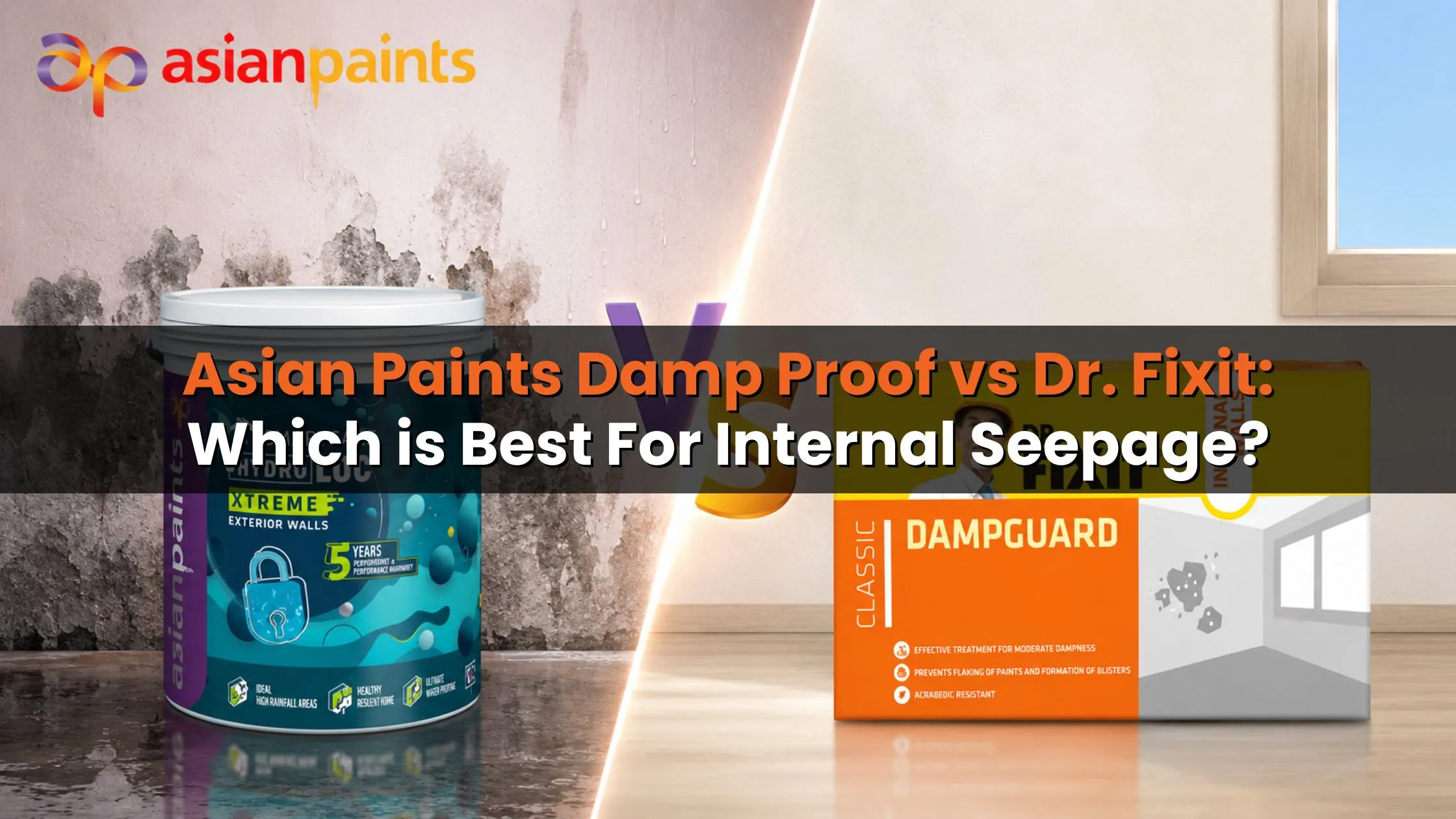
Asian Paints SmartCare Hydroloc Xtreme is the brand's purpose-built solution for internal wall dampness, distinct from SmartCare Damp Proof, which is engineered primarily for terraces and exterior walls. Hydroloc Xtreme is marketed as “Bina Tod-Phod” waterproofing, meaning it is applied directly at the plaster level without any wall breaking.
Features of SmartCare Hydroloc Xtreme
- Acrylic-based plaster-level coating
- Applicable on surfaces with moisture content up to 90%
- Two-coat application system
- Requires putty and primer before final paint
- No demolition required
Advantages of SmartCare Hydroloc Xtreme
- 5-year warranty covering both dampness and efflorescence
- Effective even on currently damp walls
- Strong fit for plumbing-driven seepage
- Backed by a nationwide, established brand network
Limitations of SmartCare Hydroloc Xtreme
- Cannot be top-coated directly without putty
- Less effective against severe ground-level rising dampness
- Requires correct dilution ratios for best results
What is Dr. Fixit Dampguard?
Dr. Fixit Dampguard is Pidilite's dedicated epoxy-based coating for internal dampness, separate from the brand's exterior-facing Raincoat range. It is finished with a cement putty layer to create a smooth, paint-ready surface over treated walls.
Features of Dr. Fixit Dampguard
- Epoxy-based damp-proof coating
- Finished with cement putty system
- Applied over existing plaster, no breaking required
- Forms a hard, chemical-resistant film
Advantages of Dr. Fixit Dampguard
- Strong performance on moderate, general internal dampness
- Suited to bathroom-adjacent and kitchen wet-zone walls
- Hard epoxy film resists everyday chemical exposure
- Backed by Pidilite's decades-long waterproofing expertise
Limitations of Dr. Fixit Dampguard
- Manufacturer explicitly advises against use for aggressive rising dampness
- Not recommended for heavy efflorescence cases
- Warranty terms vary by site and applicator rather than being uniformly published
Asian Paints Damp Proof and Dr. Fixit: Comparison Table
|
Feature |
SmartCare Hydroloc Xtreme |
Dr. Fixit Dampguard |
|
Base technology |
Acrylic-based |
Epoxy-based |
|
Warranty |
5 years (dampness + efflorescence) |
Varies by site/dealer |
|
Wall breaking required |
No |
No |
|
Maximum moisture tolerance |
Up to 90% |
Moderate dampness only |
|
Severe efflorescence handling |
Covered under warranty |
Not recommended |
|
Pre-paint requirement |
Putty + primer mandatory |
Cement putty finish coat |
|
Best suited for |
Plumbing leaks, bathroom-adjacent walls |
General internal dampness, wet zones |
This comparison clearly shows why the right choice depends on the source and severity of your seepage rather than brand preference alone.
Which Performs Better for Indian Homes?
In most Indian homes, especially apartments that have shared plumbing lines and the older independent houses, there is often internal seepage that comes on because of one of two things, really. Either it starts from a direct plumbing fault, or it s that broader humidity driven dampness which usually gets worse when the monsoon season hits. The bathroom walls that border bedrooms tend to get hit the most, because concealed pipework tends to pass straight through these same surfaces, kind of going unnoticed until stains appear.
Common Causes of Internal Seepage in Indian Homes
- Leaking bathroom or kitchen plumbing lines
- Faulty sanitary joints and pipe fittings
- Cracks in adjoining exterior walls
- Capillary moisture rising from the ground
- Poor ventilation trapping humidity indoors
Key Insight: SmartCare Hydroloc Xtreme's documented tolerance for surfaces with moisture content up to 90%, paired with a warranty that explicitly covers efflorescence, makes it the stronger technical fit when the seepage source is a confirmed leak rather than general ambient humidity.
Dr. Fixit Dampguard's epoxy film performs reliably for everyday internal dampness in wet-area walls, though its own technical guidance steers homeowners away from using it where rising dampness from the ground is suspected.
Cost and Application Comparison
Cost differences between the two products are modest compared to labour and surface-preparation costs, which typically form the larger share of the total waterproofing bill.
SmartCare Hydroloc Xtreme Application
- First coat diluted 10% with water
- Second coat applied undiluted
- Followed by putty and primer before painting
- Best applied by a trained waterproofing contractor
Dr. Fixit Dampguard Application
- Applied as a coating system over prepared plaster
- Finished with a cement putty layer
- Requires adequate curing time before painting
- Not advised during high humidity or rainy conditions
When Neither Product is the Right Fix
The important thing is to diagnose the actual moisture source before committing to any single product, rather than assuming a coating alone will resolve a structural moisture problem.
Also Read: Acrylic vs. PVC Laminate: Modular Kitchen Materials and Cost Breakdown
Which One Should You Choose?
Select SmartCare Hydroloc Xtreme when you can determine that your seepage has been caused by a plumbing leak in a bathroom or from a wet adjoining wall and want warranty coverage for efflorescence.
Select Dr. Fixit Dampguard when you are experiencing mild to moderate internal dampness in a wet-area wall that is not due to an existing plumbing problem or sub-surface rising damp.
The choice should be based on a real diagnosis of the source of the moisture, and not based on a brand you are familiar with.
Conclusion
When you’re comparing Asian Paints Damp Proof with Dr. Fixit for internal seepage, it’s kind of more about the interior focused lines , not the stuff people usually see on the outside, like terrace facing. So the real call is between SmartCare Hydroloc Xtreme and Dr. Fixit Dampguard, otherwise you end up looking at the wrong product angle , even if the names sound similar.
SmartCare Hydroloc Xtreme offers stronger documented protection for plumbing-driven seepage with high moisture tolerance and explicit efflorescence coverage, while Dr. Fixit Dampguard suits general, moderate internal dampness in wet-area walls. For homeowners seeking a durable, long-term internal waterproofing fix, getting a proper moisture-source diagnosis before purchase matters far more than which brand's bucket ends up on your trolley.





Ans 1. Not primarily. SmartCare Damp Proof is engineered for terraces and exterior walls exposed to direct rain and hydrostatic pressure. For internal walls, Asian Paints' actual recommended product is SmartCare Hydroloc Xtreme, which is applied at the plaster level without breaking the wall and is specifically formulated for interior moisture conditions.
Ans 2. No. Pidilite's own technical documentation states that Dampguard is not recommended for aggressive rising dampness or heavy efflorescence cases. Such situations typically require specialised injection-grout treatments instead, since a surface coating cannot address moisture rising through capillary action from the ground.
Ans 3. No. Both SmartCare Hydroloc Xtreme and Dr. Fixit Dampguard are designed as “Bina Tod-Phod” or no-demolition solutions, applied directly over existing plaster, which makes them significantly less disruptive than older waterproofing methods that required removing and replastering walls.
Ans 4. SmartCare Hydroloc Xtreme carries a 5-year warranty that covers both dampness and efflorescence on internal walls, applied at plaster level. This makes it one of the more clearly documented warranty terms among interior-specific waterproofing coatings in the Indian market.
Ans 5. No. The product requires a putty layer, such as TruCare Wall Putty or SmartCare Waterproofing Putty, followed by a primer coat, before final paint can be applied. Skipping this system reduces both adhesion and the long-term performance of the waterproofing layer.
Ans 6. Common causes include leaking bathroom or kitchen plumbing lines, faulty sanitary joints, cracks in adjoining exterior walls that let moisture travel inward, and capillary moisture rising from the ground in older structures. Poor bathroom ventilation in apartments also contributes by trapping ambient humidity against interior walls.
Ans 7. Asian Paints SmartCare Hydroloc Xtreme is generally the stronger fit for bathroom-adjacent walls, given its documented tolerance for surfaces with up to 90% moisture content and a warranty that explicitly extends to efflorescence, which commonly appears near plumbing-driven leaks.
Ans 8. Dr. Fixit Dampguard is epoxy-based, which differs from Asian Paints SmartCare Hydroloc Xtreme's acrylic-based chemistry. Epoxy coatings generally form a harder, more chemical-resistant film, while acrylic coatings tend to offer greater flexibility and crack-bridging ability.
Ans 9. Get a moisture meter reading from a local waterproofing contractor and identify whether the dampness is linked to a confirmed plumbing leak or appears as general humidity-driven moisture. Plumbing-driven seepage favours Hydroloc Xtreme, while general moderate dampness without an obvious source is better suited to Dampguard.
Ans 10. Asian Paints SmartCare Hydroloc Xtreme covers efflorescence under its 5-year warranty terms, making it the better-documented option for this specific issue. Dr. Fixit Dampguard, by contrast, is not recommended by the manufacturer for heavy efflorescence cases and performs better on standard, moderate internal dampness instead.