
✦ AI Summary
Table of Content
▲
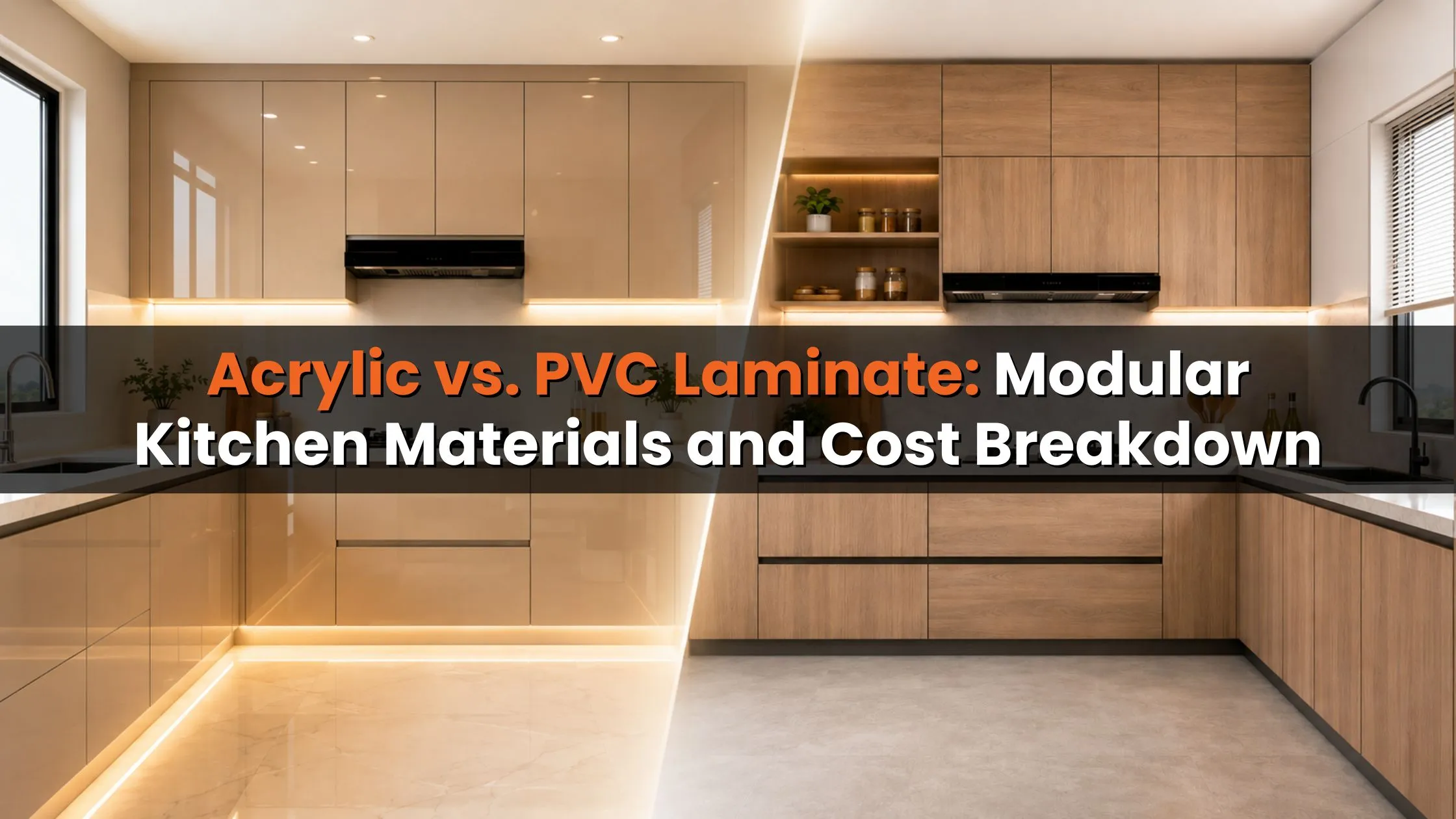
Selecting acrylic laminate versus PVC laminate has one of the most major influences on your entire modular kitchen project. It is not only about aesthetic preference; it will directly affect how your kitchen performs for the next decade, how much you will pay for your kitchen initially, and how much you will spend maintaining your kitchen annually.
It is important to make the right choice as you create your first kitchen or remodel an existing one regarding your choice of materials. In this article, we will look closely at the two types of finishes: their makeup, how they perform in India, how much they cost, and what most seasoned interior designers recommend: a hybrid approach to each type of finish.
What Is Acrylic Finish?
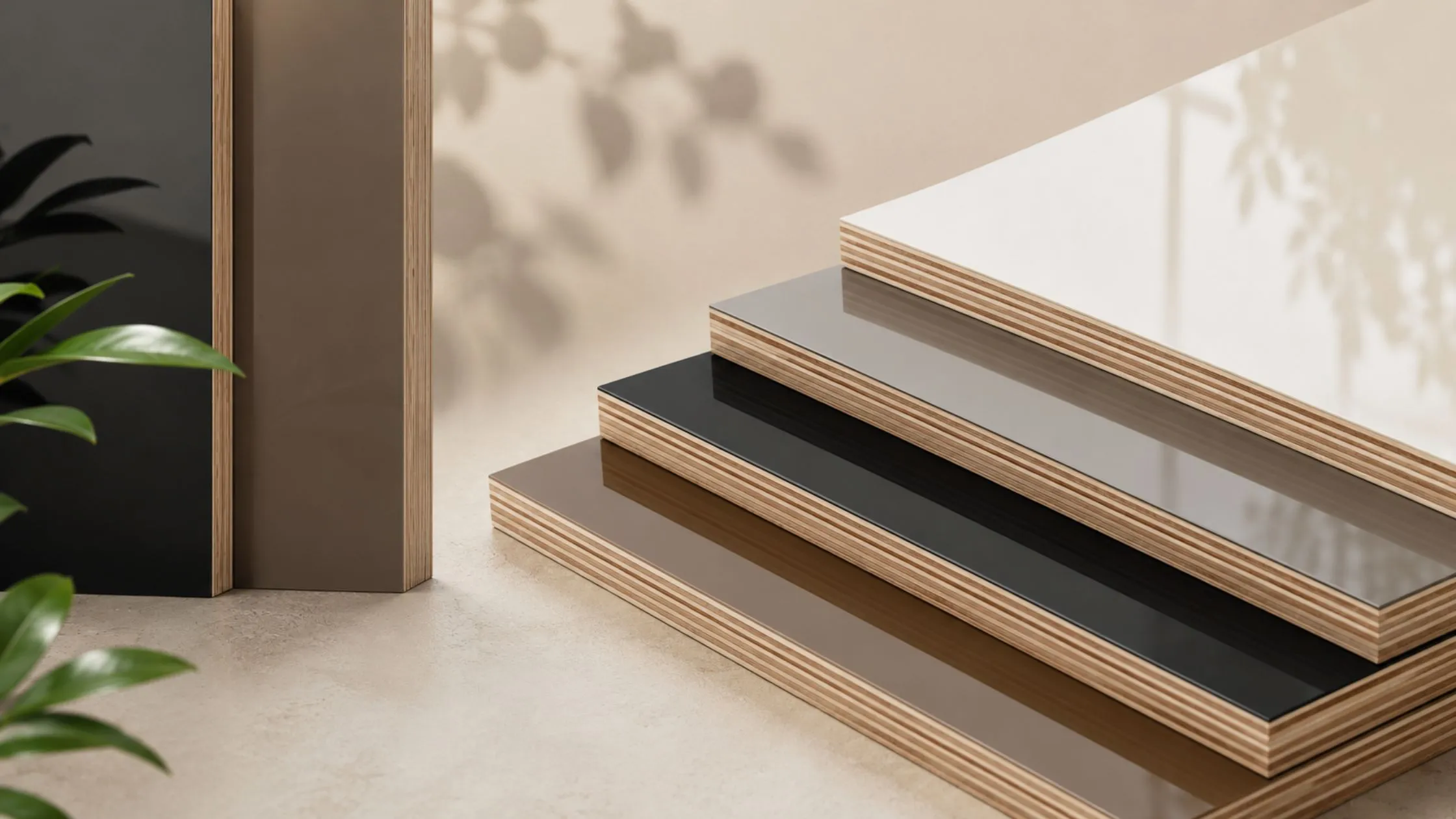
Acrylic finish is a PMMA (polymethyl methacrylate) polymer-fibre based surface applied over plywood or MDF cabinet substrates. It is comparable to lacquer in character, non-toxic, highly reflective, and engineered specifically for high-gloss output. It is the standard finish choice for premium modular kitchens in India's metro markets.
Key Properties of Acrylic
- Mirror-like gloss that amplifies both natural and artificial light
- UV resistance colours do not fade over years of regular exposure
- High scratch resistance, particularly in anti-scratch grade variants
- Easy maintenance, a damp cloth is sufficient for routine cleaning
- Wide colour range in vibrant shades; limited matte options also available
- Visually enlarges compact kitchens by reflecting light across surfaces
Also Read: Makrana vs Italian Marble: Choosing the Right Stone for Your Home Mandir
What Is PVC Laminate?
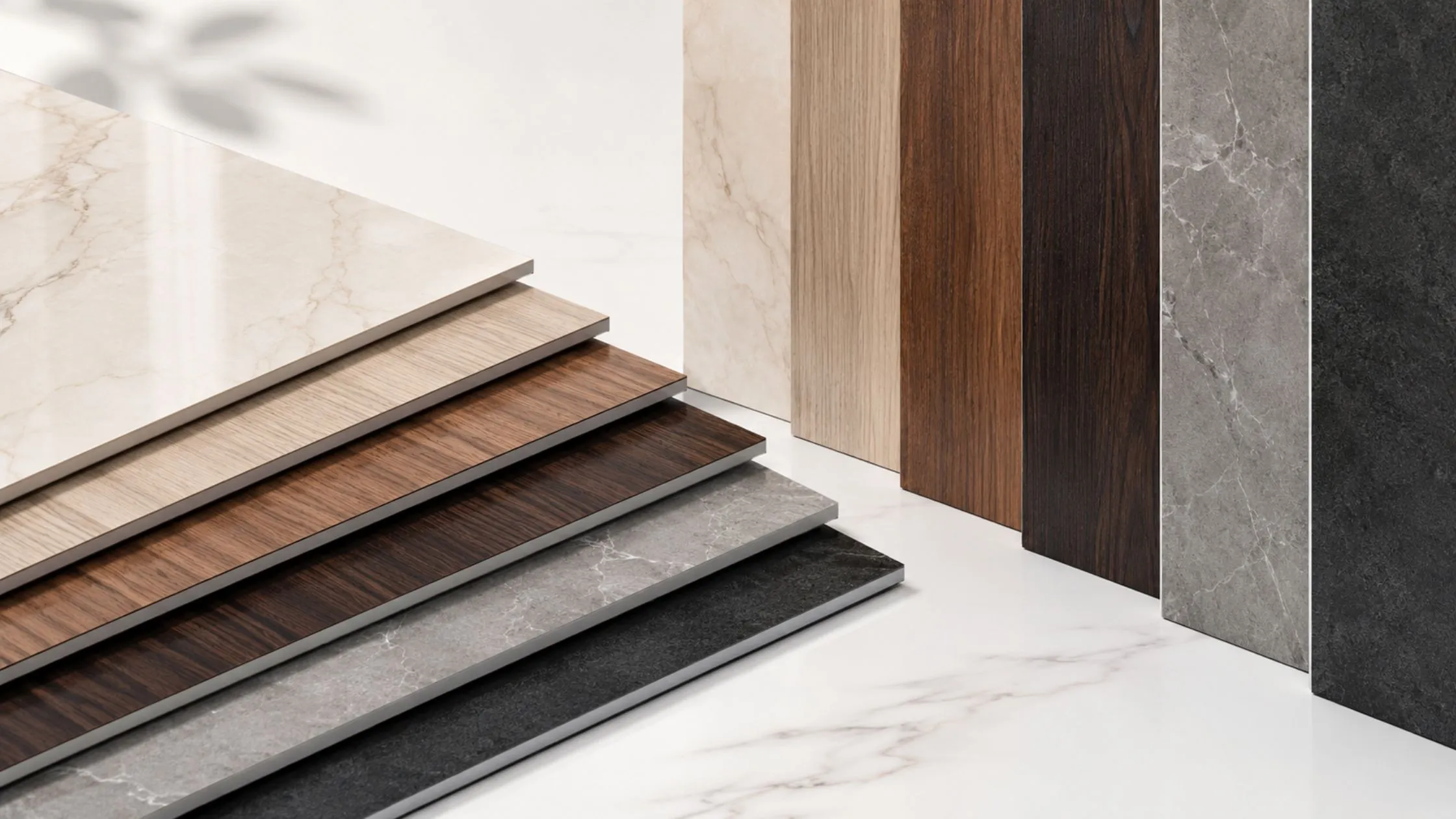
PVC laminate is a multi-layered decorative sheet that consists of PVC (polyvinyl chloride), which is created by pressing together papers and plastic resins under heat and pressure. The top layer of PVC laminate has a uniform colour, wood grain or stone printed on the surface. It is the first choice for most budget and mid-range modular kitchens in all parts of India, with good reasons for its popularity.
Key Properties of PVC Laminate
- Available in matte, gloss, wood grain, and stone texture finishes
- Thin and flexible, suitable for CNC edge wrapping without cracking
- Excellent moisture and humidity resistance, and ideal for coastal cities during monsoon
- More forgiving of installation skill variations compared to acrylic
- Versatile application across kitchen cabinets, wardrobes, and office furniture
Key Insight: Both acrylic and PVC laminate are surface finish materials only, neither is structural. Both must be applied over a carcass substrate such as plywood or MDF. The quality of your carcass determines long-term kitchen integrity; the finish material determines look, feel, and surface durability.
Acrylic vs. PVC Laminate: Full Comparison
|
Parameter |
Acrylic |
PVC Laminate |
|---|---|---|
|
Material Base |
PMMA polymer fibre |
Polyvinyl chloride (PVC) |
|
Finish Options |
High-gloss, matte (limited) |
Matte, gloss, wood grain, stone |
|
Design Variety |
Moderate, vibrant colours |
High, textures + patterns |
|
Gloss Depth |
Mirror-like, superior gloss |
Good gloss, less reflective |
|
Scratch Resistance |
High |
Moderate |
|
Moisture Resistance |
Good |
Excellent |
|
UV Resistance |
Yes, colour stable |
Moderate |
|
Ease of Cleaning |
Very easy |
Easy |
|
Fingerprint Visibility |
High on gloss surfaces |
Low to moderate |
|
Installation Complexity |
High, precision required |
Moderate, carpenter-friendly |
|
Best Application |
Upper cabinets, display zones |
Lower cabinets, high-contact zones |
|
Cost (Material, per sq ft) |
₹400–₹900 |
₹200–₹450 |
|
Cost (Shutter, per running ft) |
₹2,500–₹4,500 |
₹1,100–₹1,800 |
Cost Breakdown: Acrylic vs. PVC Laminate in India (2026)
Pricing varies based on finish grade, brand, substrate choice, and city. The tables below reflect current market rates for the Indian market.
Material Cost (Finish Only)
|
Finish |
Cost per Sq Ft |
|---|---|
|
PVC Laminate |
₹200 – ₹450 |
|
Acrylic (Standard) |
₹400 – ₹900 |
|
Acrylic (Premium / Anti-Scratch) |
Up to ₹5,500 (shutter price) |
Full Cabinet Cost (Per Running Foot)
|
Material |
Cost per Running Foot |
|---|---|
|
PVC Laminate Kitchen |
₹1,100 – ₹1,800 |
|
Laminate (Matt / Gloss) |
₹1,500 – ₹2,500 |
|
Acrylic Finish Kitchen |
₹2,500 – ₹4,500 |
Complete Modular Kitchen Cost Estimate
|
Budget Tier |
Finish Used |
Estimated Total |
|---|---|---|
|
Entry Level |
PVC / Standard Laminate |
₹1.2 – ₹2.5 lakh |
|
Mid-Range |
Premium Laminate / Acrylic |
₹2.8 – ₹4.5 lakh |
|
Premium |
Full Acrylic / Lacquered Glass |
₹5 – ₹10 lakh |
Important: For a 100 sq ft kitchen, switching from PVC to acrylic finish alone adds ₹20,000–₹45,000 to the total project budget. Individual acrylic cabinet units typically range from ₹35,000–₹65,000 depending on dimensions and finish grade.
Also Read: POP vs. Gypsum False Ceiling: 2026 Cost Per Sq Ft and Design Guide
The Smart Hybrid Strategy
The most cost-intelligent approach used consistently by interior designers across India combines both materials within a single kitchen project:
- Upper cabinets → Acrylic
These zones experience minimal direct contact and benefit most from light reflection and visual depth. Acrylic's mirror-like gloss makes upper sections the focal point of the kitchen, adding perceived height and premium appeal where it is most visible.
- Lower cabinets → PVC Laminate
The bottom cabinets hold up to the most extreme daily activity from hands, cleaning, moisture splashes, and heat exposure. PVC laminate will serve these needs very well since they will not only be able to hold up in the same conditions, but they will do so at a considerable price point per linear foot.
This hybrid approach delivers a premium-looking kitchen at a substantially lower cost than going full acrylic, without compromising durability in the zones that matter most. For most Indian households managing a ₹2.5–₹4.5 lakh kitchen budget, this is the recommended strategy.
Who Should Choose What?
Choose Acrylic If You:
- Have a kitchen budget exceeding ₹3–4 lakh
- Want a bright, mirror-finish aesthetic that visually enlarges the space
- Prioritise minimal maintenance with a premium visual result
- Have a compact urban kitchen where light reflection has maximum impact
Choose PVC Laminate If You:
- Need maximum design variety, wood, stone, matte, and gloss textures
- Want superior moisture resistance for coastal or high-humidity zones
- Are managing a budget-first kitchen without sacrificing surface durability
- Have a large family kitchen with heavy daily use on lower cabinets
Conclusion
The decision as to whether or not to use acrylic or PVC laminate in the kitchen comes down to matching both the type of material with the various types of uses in the various zones of your kitchen as well as your desired budget. Acrylics will provide the best gloss, light refraction, and for the most colours, long-term durability presents the aesthetics of your choice. PVC Laminates will provide versatility in terms of design, resistance to moisture, and affordability in the areas of your kitchen that get the most use on a daily basis.
If you are an Indian homeowner with plans for a modular kitchen in 2026, the most sensible option will not be to select one material over the other, but rather to use both materials strategically. Upper cabinets should have acrylic as the defining visual element for your kitchen. Lower cabinets should be made from PVC laminate because they support heavy loads on a daily basis. This combination provides you with premium results at attainable prices, which is the approach recommended by reputable designers.

_1792140859.webp)




_1792151285.webp)

Ans 1. Acrylic is a PMMA polymer-based finish offering superior mirror-like gloss, UV resistance, and scratch resistance. PVC laminate is a polyvinyl chloride sheet with greater design variety, better moisture resistance, and a lower price point. Acrylic excels in aesthetics; PVC laminate excels in practicality and budget control.
Ans 2. PVC laminate is significantly cheaper. Material cost ranges from ₹200–₹450 per sq ft for PVC versus ₹400–₹900 per sq ft for acrylic. At cabinet level, acrylic typically costs 80–120% more than PVC laminate for the same surface area.
Ans 3. Yes, if your total kitchen budget exceeds ₹3–4 lakh and aesthetics are a priority. Acrylic's light-amplifying gloss, colour stability, and low maintenance justify the premium, especially for upper cabinets and compact kitchens where visual spaciousness matters.
Ans 4. PVC laminate is the stronger choice for lower cabinets. These zones handle maximum daily contact, heat exposure, moisture splash, and impact. PVC laminate's durability and moisture resistance consistently outperform acrylic in high-contact kitchen zones.
Ans 5. Yes, this hybrid strategy is widely recommended. Use acrylic on upper cabinets for premium gloss and light reflection, and PVC laminate on lower cabinets for durability and cost savings. It delivers a premium look at a lower overall project budget.
Ans 6. Standard acrylic has moderate-to-high scratch resistance. Anti-scratch acrylic variants offer enhanced protection and are worth the additional cost for busy kitchens. PVC laminate has moderate scratch resistance and is generally more forgiving under daily household use.
Ans 7. PVC laminate offers superior moisture resistance, making it the more reliable choice in humid and coastal cities during the monsoon season. Acrylic performs adequately in dry conditions but PVC is the safer long-term choice for lower cabinets in high-humidity regions.
Ans 8. A well-installed acrylic finish typically lasts 8–12 years with proper care. Its UV-resistant properties prevent colour fading, and it retains gloss significantly longer than standard PVC laminate under comparable kitchen conditions.
Ans 9. Both finishes require a carcass substrate, either MDF or plywood. BWP (Boiling Water Proof) plywood is recommended for Indian kitchens as it offers superior moisture resistance and structural stability, particularly near sinks and cooking zones.
Ans 10. High-gloss acrylic shows fingerprints more visibly than PVC laminate. In households with children or heavy kitchen traffic, matte or textured PVC laminate on lower shutters is a practical choice. Anti-fingerprint acrylic variants are available for upper cabinets if gloss is non-negotiable.