
✦ AI Summary
Table of Content
▲- What Causes Wall Seepage in Homes?
- Signs You Should Not Ignore
- Types of Wall Seepage and Their Solutions
- Best Permanent Solutions for Wall Seepage
- Comparison Table: Wall Seepage Solutions
- Step-by-Step Process to Fix Wall Seepage
- Cost of Fixing Wall Seepage in India (2026)
- Mistakes That Make Wall Seepage Significantly Worse
- Maintenance Tips to Prevent Future Seepage
- Conclusion
Wall seepage is a minor issue that can cause long-term damage to your home. If you allow moisture to build up, water damage could result in expensive repairs. It is possible to permanently remedy wall seepage, but the right methods must be employed. This guide will explain the causes of wall seepage, repair options for wall seepage, and the most effective methods for permanently solving wall seepage.
What Causes Wall Seepage in Homes?
Before addressing the issue, people need to know the reasons which cause seepage. Homeowners typically address visible problems instead of finding and solving their actual underlying issues.
Common Reasons for Wall Seepage
- Rainwater entering through cracks or gaps in external walls, especially at corners, window frames and construction joints
- Waterproofing applied during the original construction phase is not done properly
- Slow leaks from plumbing pipes running inside or adjacent to the wall
- Rising dampness, ground moisture through boundary or ground-floor walls without a functional damp-proof course
- Blocked or poorly designed drainage systems causing water to accumulate against the wall base
- Hairline cracks in plaster joints that appear minor but allow sustained water entry
Also Read: How Water Seepage Ruins the Structural Stability of Your Home
Signs You Should Not Ignore
Wall seepage rarely begins with water visibly running down a surface. It occurs far more subtly and most homeowners miss the early signals until the damage is already significant.
Key Warning Signs
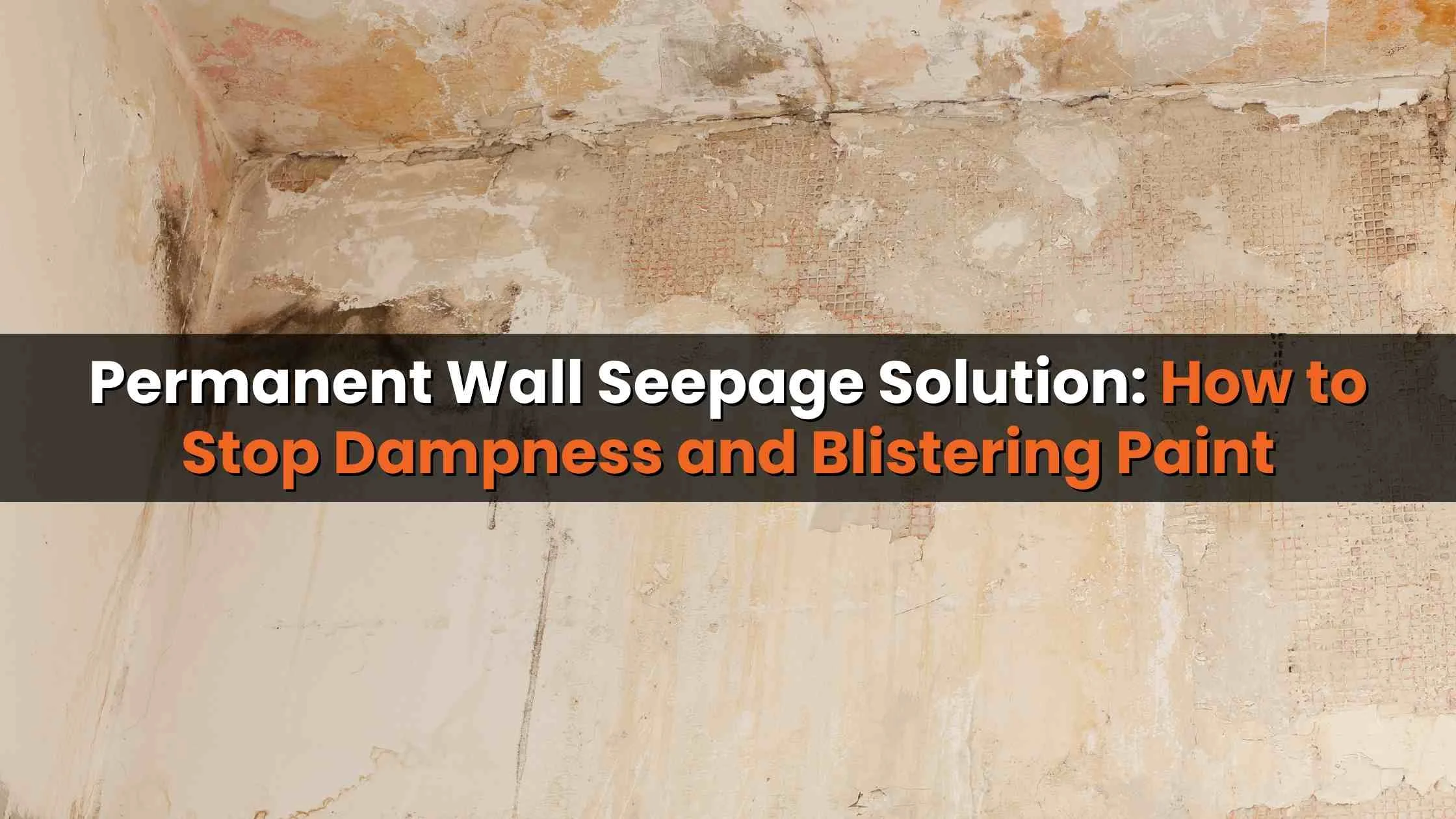
- Paint blistering, bubbling, or lifting away from the surface in patches
- Persistent damp discolouration that returns even after repainting
- White powdery deposits forming on the wall surface, this is efflorescence, caused by salts carried out of the masonry by moisture
- A musty or earthy smell in rooms that otherwise appear dry
- Plaster becomes soft, crumbly which causes it to detach from the underlying wall surface.
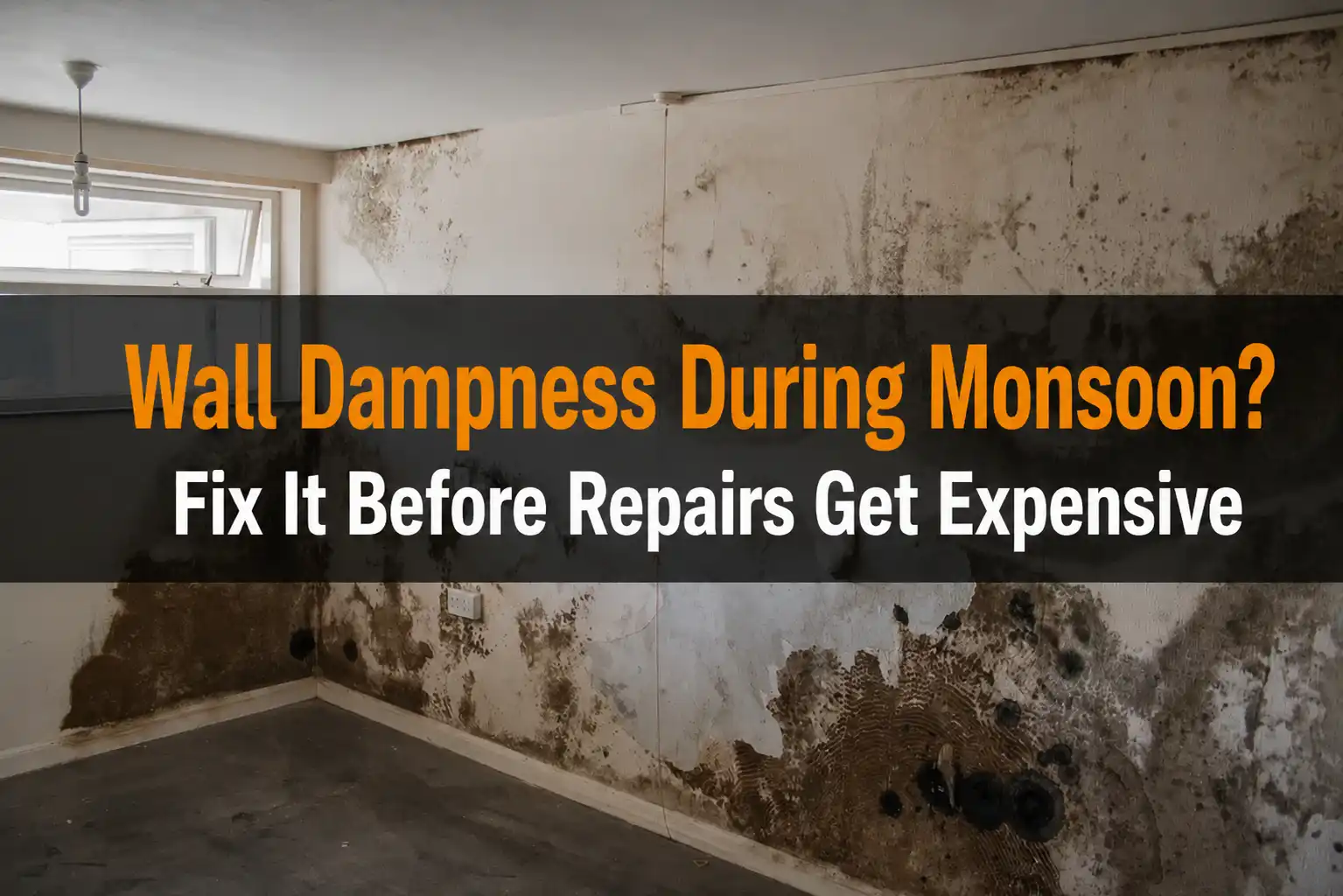
- People can see mold and fungal growth which extends to the corners and floor areas of the building.
- Mold or fungus growth
Ignoring these signs can lead to deeper structural issues.
Types of Wall Seepage and Their Solutions
Different seepage problems require different treatments. A one-size-fits-all approach doesn’t work.
1. External Wall Seepage
Cause: Direct rainwater penetration through cracks, failed joints, or porous masonry on the outer wall surface.
Solution:
- Exterior waterproof coating applied to the outer wall surface
- Crack filling using appropriate sealant or polymer-modified mortar before coating
- High-quality weatherproof paint as the final protective layer
2. Internal Wall Seepage
Cause: Plumbing leaks inside wall cavities, or condensation from temperature differences between surfaces.
Solution:
- Locate and repair the pipe leak before any surface treatment, this step cannot be skipped
- Apply internal waterproofing chemicals to the affected wall area
- Use an anti-damp primer across the full surface before any finishing coat
3. Rising Damp (Ground Moisture)
Cause: Ground moisture rises through wall masonry because of capillary action which mostly affects ground-floor areas and boundary walls that lack proper damp-proof protection.
Solution:
- Chemical DPC injection, a liquid water-repellent is injected into the wall at a series of drilled points
- Replastering with waterproof additives after treatment, since the existing plaster will have absorbed salts and will need replacement
- Proper floor insulation and perimeter drainage to reduce ground moisture accumulation
4. Terrace or Roof Seepage Impact
Cause: Water entering through a poorly waterproofed or cracked terrace slab and tracking down into the walls often appearing as seepage on the top-floor ceiling or the wall just below roof level.
Solution:
- Terrace waterproofing first, everything else is temporary without this
- Correct drainage gradient so water doesn't pond on the slab
- Seal all construction joints, parapet junctions, and pipe penetrations at roof level properly
Best Permanent Solutions for Wall Seepage
Once the source is identified, the treatment method needs to match both the cause and the severity of damage. These are the systems that deliver lasting results rather than surface-level fixes:
Effective Methods
- Crack Injection Treatment - epoxy or polyurethane resin through pressurized injection into deep structural cracks which fills all crack dimensions from top to bottom.
- Waterproof Coating Systems - Apply elastomeric or polymer-based coatings to exterior walls which create a flexible barrier that moves with minor structural settlement.
- Chemical Damp-Proofing (DPC Injection) - Damp-Proofing DPC Injection serves as a special treatment which establishes a horizontal barrier within wall thickness to combat rising damp.
- Replastering with Waterproof Additives - for walls where the existing plaster has absorbed salts and moisture to the point where surface treatment won't bond effectively
- Exterior Cladding or Protective Treatment - premium long-term solution for walls with chronic external exposure issues
Comparison Table: Wall Seepage Solutions
|
Method |
Cost Level |
Durability |
Best Use Case |
Maintenance |
|
Crack Injection |
Medium |
High |
Deep cracks |
Low |
|
Waterproof Coating |
Low–Medium |
Moderate |
External wall protection |
Medium |
|
Chemical DPC |
Medium–High |
High |
Rising damp issues |
Low |
|
Replastering |
Medium |
High |
Severely damaged walls |
Medium |
|
Exterior Cladding |
High |
Very High |
Long-term exterior protection |
Very Low |
Step-by-Step Process to Fix Wall Seepage
A proper process ensures long-term results. Skipping steps often leads to recurring problems.
Step 1 Source Identification
Trace exactly where the water is entering, don't assume based on where the damp patch appears, since water travels before it shows
Step 2 Remove Damaged Material
Strip all affected plaster, flaking paint, and soft or hollow sections back to the solid masonry beneath
Step 3 Repair Cracks and Fix Leaks
Fill all cracks with appropriate sealant, repair any plumbing issues, and address external gaps or joint failures completely
Step 4 Apply Waterproofing Treatment
Use the method appropriate to the seepage type coating, injection, DPC, or replastering as identified in the diagnosis
Step 5 Allow Full Curing
Waterproofing systems need time to cure properly before the next layer goes on cutting curing time short compromises adhesion and durability
Step 6 Repaint with Anti-Damp Paint
Finish with a breathable, anti-damp paint specifically formulated for treated walls standard emulsions are not appropriate over waterproofed surfaces
Also Read: How to resolve water leakage from roof?
Cost of Fixing Wall Seepage in India (2026)
The cost depends on severity, area, and treatment type.
Average Cost Range
- Basic waterproof coating: ₹20–₹50 per sq ft
- Crack repair: ₹50–₹150 per running foot
- Chemical damp-proofing: ₹150–₹300 per sq ft
- Replastering: ₹80–₹200 per sq ft
Estimated Total Cost
For a standard room, repairs can range from ₹10,000 to ₹50,000, depending on damage level.
Mistakes That Make Wall Seepage Significantly Worse
Many homeowners unknowingly make decisions that worsen the problem.
Common Mistakes to Avoid
- Applying paint or coating over walls that are still damp or where the source hasn't been fixed
- Treating hairline cracks as cosmetic and leaving them unsealed through another wet season
- Using generic or low-grade waterproofing products that aren't formulated for the specific seepage type
- Skipping a professional inspection and guessing at the source based on where the damp patch appears
- Ignoring blocked drains or standing water around the building perimeter that keeps the wall base saturated
Maintenance Tips to Prevent Future Seepage
In most cases water seepage occurs again after some time, this is due to underlying issues that are not fully resolved before. In general, you will find that if you have treated a wall properly and put into place a few simple preventative measures, that wall will remain dry and not cause you any problems for many years to come.
- Inspect walls before monsoon season
- Keep external walls sealed and painted
- Fix plumbing leaks immediately
- Ensure proper drainage around the house
- Reapply waterproof coatings every 5–7 years
Conclusion
Seepage through walls should not be referred as an indicator of cosmetics, but rather, as an indication for repair due to structural issues. Finding a permanent repair for the leaking wall can only be accomplished through identifying the origin of the problem and using the proper waterproofing system, instead of temporary fix.
Using the proper waterproofing system to fix any of the above mentioned problems will reduce cost, protect your home for long term durability. Make the right investment and you will no longer have to deal with a damp wall.







Ans 1. Wall seepage is usually caused by rainwater penetration, plumbing leaks, rising damp, or poor waterproofing during construction.
Ans 2. Permanent solutions include crack injection, waterproof coatings, chemical DPC treatment, and fixing the root cause like leaks or drainage issues.
Ans 3. Rising damp occurs when groundwater travels up walls. It is treated using chemical DPC injection and replastering with waterproof additives.
Ans 4. Elastomeric waterproof coatings or exterior weatherproof paints are best for protecting external walls from rainwater seepage.
Ans 5. Costs range from ₹20 to ₹300 per sq ft depending on the method such as coating crack repair or chemical damp proofing.
Ans 6. No repainting only hides the issue temporarily. The root cause must be fixed before applying anti damp paint.
Ans 7. Look for paint bubbling damp patches musty smell white salt deposits and mold growth on walls.
Ans 8. Yes modern waterproofing methods like crack injection and DPC work effectively even in older structures.
Ans 9. Yes hidden pipe leaks are a common cause of internal wall dampness and must be fixed before treatment.
Ans 10. Regular inspection proper drainage crack sealing and periodic waterproof coating help prevent future seepage.