
✦ AI Summary
Table of Content
▲- Coastal Karnataka Commercial Real Estate Investment
- Coastal Karnataka Commercial Real Estate at a Glance
- Strategic Location Gives Coastal Karnataka an Advantage
- Port Infrastructure Is Driving Economic Growth
- Logistics and Warehousing Are Expanding Rapidly
- Tourism Supports Commercial Property Demand
- IT and Service Sector Expansion
- Healthcare and Education Strengthen the Local Economy
- Commercial Property Opportunities
- Why Investors Are Looking Beyond Metro Cities
- Challenges Investors Should Consider
- Tips Before Investing
- Future Outlook
- Conclusion
India's commercial real estate market has traditionally been dominated by metro cities such as Bengaluru, Mumbai, Delhi NCR, Hyderabad, and Chennai. However, a noticeable shift is underway as investors and businesses begin exploring emerging regional markets. Among these, Coastal Karnataka is steadily gaining attentitaon for its improving infrastructure, expanding industrial base, growing tourism sector, and strategic connectivity.
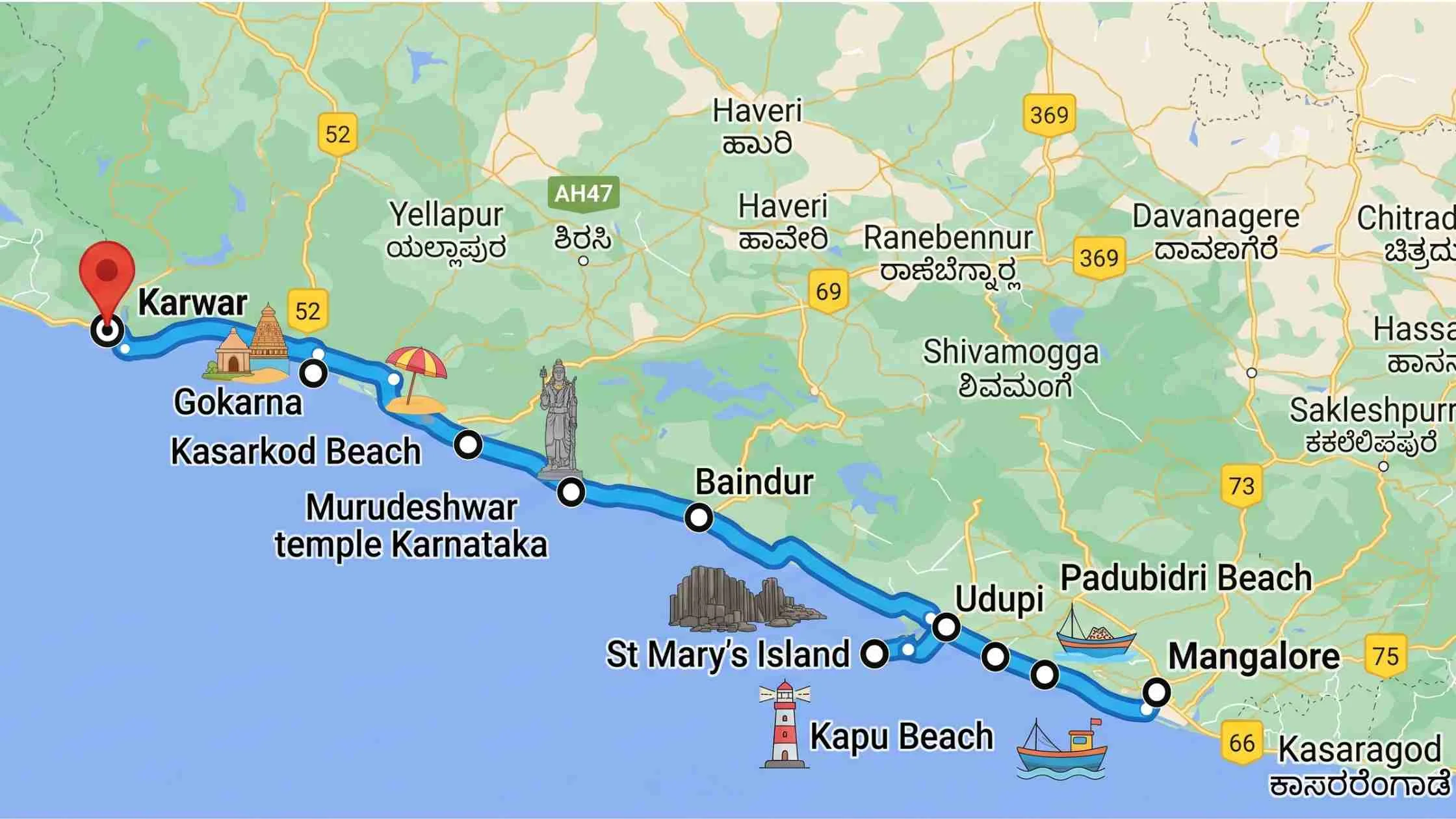
The region includes cities such as Mangalore, Udupi, Karwar, and some other regions that are experiencing a rise in commercial activity facilitated by logistics, ports, IT, healthcare, education, and production. Furthermore, while real estate prices in other cities continue to rise, Coastal Karnataka offers relatively inexpensive investments, plus an opportunity to see some serious growth in the longer term. This guide explains why Coastal Karnataka is becoming one of India's most promising commercial real estate destinations.
Coastal Karnataka Commercial Real Estate Investment
Several economic and infrastructure developments are driving investor confidence across the region.
Key Growth Drivers
- Expanding port infrastructure
- Rising industrial investments
- Growth in logistics and warehousing
- Increasing tourism
- Better road and rail connectivity
- Growth of healthcare and education sectors
- Rising demand for office and retail spaces
- Competitive commercial property prices
These factors are transforming Coastal Karnataka into a preferred destination for businesses looking beyond India's largest metros.
Also Read: Karnataka Government Introduces Bhoo Guarantee for 23 Lakh Properties in Bengaluru
Coastal Karnataka Commercial Real Estate at a Glance
|
Particular |
Details |
|
Region |
Coastal Karnataka |
|
Major Cities |
Mangaluru, Udupi, Karwar |
|
Key Growth Sectors |
Logistics, IT, Tourism, Healthcare, Education |
|
Commercial Opportunities |
Office, Retail, Warehousing, Mixed Use Developments |
|
Investment Outlook |
High Long Term Growth Potential |
The region is gradually emerging as a diversified commercial investment corridor.
Strategic Location Gives Coastal Karnataka an Advantage
One of the biggest strengths of Coastal Karnataka is its geographical location. The region connects southern India with western ports while serving as an important trade corridor.
Connectivity Advantages
- Access to Arabian Sea ports
- National Highway connectivity
- Konkan Railway network
- Mangaluru International Airport
- Strong links to Bengaluru, Goa, Kerala and Maharashtra
Efficient transport infrastructure supports industries, exports, logistics companies, and commercial developments.
Port Infrastructure Is Driving Economic Growth
Mangaluru Port is the anchor of the region's commercial economy and the primary driver of its industrial and logistics activity. Understanding what the port does explains a lot about why commercial real estate demand is building in this region.
Growing cargo handling capacity supports:
- Petroleum products
- Fertilizer imports
- Food processing
- Steel
- Chemicals
- Container movement
As port activity increases, nearby industrial and commercial properties benefit from rising business demand.
Logistics and Warehousing Are Expanding Rapidly
The logistics and warehousing sector in Coastal Karnataka has been growing faster than most other commercial segments, driven by the intersection of port activity with the broader e-commerce logistics build-out that has been transforming India's warehousing market nationally.
Coastal Karnataka is becoming attractive because it offers:
- Lower land acquisition costs
- Better highway access
- Port connectivity
- Availability of industrial land
- Growing freight movement
Developers are increasingly exploring logistics parks and warehousing projects throughout the region.
Tourism Supports Commercial Property Demand
Tourism is one of Coastal Karnataka's strongest and most enduring economic sectors, and it creates commercial real estate demand that's often underweighted in investment analysis relative to its actual economic contribution.
Major attractions include:
- Beaches
- Religious tourism
- Heritage sites
- Eco-tourism
- Adventure tourism
Increasing visitor numbers create demand for:
- Hotels
- Resorts
- Restaurants
- Retail outlets
- Entertainment centres
Hospitality-focused commercial developments continue to attract private investment.
IT and Service Sector Expansion
Although Bengaluru remains Karnataka's primary IT hub, several technology companies are exploring expansion into smaller cities. The city has a strong institutional education base, several engineering colleges, management institutions, and medical colleges that produce technically qualified graduates who largely leave for Bengaluru or Mumbai for lack of local employment opportunities. For IT and BPO companies seeking educated entry-level and mid-level talent at costs below Bengaluru, this creates an attractive employer value proposition.
Mangaluru, in particular, has witnessed steady growth in:
- IT services
- Startups
- Business process outsourcing
- Financial services
- Digital businesses
This creates demand for modern office spaces and mixed-use commercial developments.
Healthcare and Education Strengthen the Local Economy
Coastal Karnataka has developed into a regional healthcare and education hub. Leading hospitals, universities, and educational institutions attract professionals, students, and visitors from across India.
The healthcare sector has grown beyond serving local needs to attract medical tourists from across Karnataka, from Kerala and Goa, and increasingly from international markets, Gulf-based Indian seeking treatment and Eastern African patients who have historically used Indian healthcare. Major private hospital groups have established significant facilities in Mangaluru, and the cluster effect of multiple quality healthcare providers has made the city a genuine regional medical destination.
This supports commercial demand for:
- Office buildings
- Retail centres
- Student housing
- Medical facilities
- Hospitality projects
A strong knowledge economy often creates stable long-term commercial property demand.
Commercial Property Opportunities
Translating the economic story into specific property investment categories helps investors identify where commercial real estate opportunity actually sits in this market.
Office Spaces
Demand continues to rise as businesses expand beyond traditional metro locations.
Retail Developments
Growing urban populations support shopping centres, supermarkets, and high-street retail.
Warehousing
Strong logistics demand makes warehouses one of the fastest-growing commercial segments.
Hospitality
Hotels and serviced apartments continue benefiting from tourism growth.
Mixed-Use Developments
Developers increasingly prefer integrated projects combining office, retail, residential, and hospitality components.
Why Investors Are Looking Beyond Metro Cities
The investor logic for looking at Coastal Karnataka is straightforward once you understand the numbers. Grade A office space in Bengaluru is now priced at levels that make yield compression inevitable over medium-term holding periods. Warehousing land near Bengaluru's industrial zones has appreciated to the point where returns are being squeezed by land cost rather than income performance. And hospitality assets in Bengaluru are trading at valuations that reflect a mature market with limited upside surprise.
Regional cities now offer:
- Better affordability
- Higher growth potential
- Lower development costs
- Government infrastructure spending
- Faster urban expansion
Investors seeking long-term capital appreciation often identify emerging markets before prices rise significantly.
Also Read: Karnataka Government Extends 5% Property Tax Rebate What Every Property Owner Must Know
Challenges Investors Should Consider
Commercial real estate investment decisions in emerging markets are best made with clear eyes about the risks alongside the opportunity.
Absorption pace is slower than metros. Office space, retail, and even warehousing take longer to lease up in Coastal Karnataka than they would in Bengaluru which means hold periods before reaching stable occupancy are longer and the financing requirements reflect this extended absorption timeline.
Grade A inventory shortage is both an opportunity and a current constraint. While the gap between demand and quality supply creates developer opportunity, it also means that investors seeking existing stabilised assets will find the inventory limited and competition for quality assets significant.
Market depth in secondary transactions is thinner than metro markets. Selling a commercial asset in Mangaluru involves a smaller pool of buyers than selling a comparable Bengaluru asset which affects exit liquidity and the premium achievable on exit.
Infrastructure improvement timelines for some of the drivers being discussed, particularly the assumption that road and rail improvements will continue on schedule involve execution risk that is real in the Indian context.
Local market knowledge requirements are higher in regional markets than in metros where information is more widely available. Understanding Coastal Karnataka commercial real estate requires specific local market intelligence that is less accessible from national market reports than Bengaluru or Mumbai data would be.
Tips Before Investing
Before purchasing commercial property in Coastal Karnataka, buyers should:
- Verify legal ownership.
- Check land use permissions.
- Review zoning regulations.
- Study infrastructure plans.
- Evaluate rental demand.
- Research local business growth.
- Invest with reputed developers.
- Focus on long-term appreciation.
A careful investment strategy can reduce risks while improving future returns.
Future Outlook
Industry experts believe Coastal Karnataka is entering an important phase of economic expansion.
Upcoming investments in:
- Transport infrastructure
- Ports
- Logistics
- Tourism
- Manufacturing
- Commercial development
While growth may not be as rapid as India's largest metro cities, steady infrastructure improvements and diversified economic activity position Coastal Karnataka as an emerging commercial investment destination.
Conclusion
The coastal region of Karnataka is quickly becoming one of the most advantageous commercial property financing opportunities in India. Due to effective transport connections, increased port operations, growth of logistics, flourishing tourism, developing health infrastructure and means of education, Coastal Karnataka is opening new business possibilities to investors.
The commercial property market is still at the initial stage of development; however, its cost-effective price of commercial properties, and long-term stability make it a good alternative to high-cost metro markets in India. In addition, investors who have a long-term orientation will benefit from a number of development factors in this industry in Coastal Karnataka.




Ans 1. Coastal Karnataka is emerging as a commercial real estate destination because of the convergence of several genuine economic drivers, expanding port infrastructure at Mangaluru Port, growing logistics and warehousing demand driven by e-commerce and freight growth, strong and diversifying tourism across beach, religious, and eco-tourism segments, a well-established healthcare and education cluster attracting patients and students from across India, growing IT and professional services activity in Mangaluru, and improving road, rail, and air connectivity that makes the region more accessible for business and investment. Relatively affordable land and commercial property prices compared to saturated metro markets make the risk-return profile attractive for investors with medium to long-term horizons.
Ans 2. Mangaluru is the primary commercial real estate market in Coastal Karnataka, driven by its port, airport, healthcare cluster, and emerging IT sector. It has the greatest depth of commercial opportunity across office, retail, logistics, and hospitality segments. Udupi has tourism and education-driven commercial demand, particularly around its pilgrimage economy and institutional base. Karwar has strategic port and naval infrastructure that creates long-term commercial development potential. Smaller coastal towns along the Karnataka coast have tourism-specific hospitality opportunities. For investors seeking the broadest commercial market depth, Mangaluru is the most appropriate starting point.
Ans 3. The strongest immediate opportunity is in logistics and warehousing, where demand from e-commerce distribution, port-adjacent freight handling, cold storage, and food processing is creating pre-lease demand that developers with the right land and specifications can capture. Office space for IT, BPO, and professional services represents a clear supply gap relative to growing demand, with Grade A inventory significantly undersupplied. Hospitality, particularly business hotels and serviced accommodation has strong demand from medical tourism, business travel, and leisure tourism that exceeds current quality supply. Retail in Mangaluru's urban commercial areas benefits from rising incomes and organised retail expansion.
Ans 4. Mangaluru Port is the anchor of the coastal Karnataka commercial economy and creates commercial property demand through several channels. Direct industrial and logistics demand near the port for storage, processing, and freight handling facilities. Office demand from shipping companies, customs agents, freight forwarders, and trade finance institutions that service port operations. Employment generation that creates residential and retail commercial demand in the surrounding urban area. And the broader economic multiplier of port activity that supports manufacturing, food processing, and petrochemical industries that create their own commercial property requirements.
Ans 5. Yes, Coastal Karnataka particularly the Mangaluru area offers a strong case for logistics and warehousing investment. The combination of port connectivity for import-export freight, national highway access for inland distribution, lower land costs than metro industrial zones, and growing e-commerce penetration in the south Karnataka and north Kerala catchment creates genuine demand for modern warehousing. Pre-lease interest from national logistics operators seeking regional presence gives developers confidence in absorption. The segment's growth trajectory is supported by structural e-commerce expansion rather than cyclical demand.
Ans 6. Tourism in Coastal Karnataka is growing across multiple segments simultaneously beach and leisure tourism to the largely uncrowded Karnataka coast, religious tourism to major pilgrimage destinations including Dharmasthala, Kukke Subramanya, and Udupi, eco-tourism to Western Ghats forest reserves, and heritage tourism. This multi-segment character creates year-round demand rather than pure seasonality. Commercial real estate benefiting from tourism includes hotels and resorts, serviced apartments for longer-stay visitors, food and beverage developments, retail near tourism destinations, and mixed-use hospitality projects. Improving airport connectivity in Mangaluru is progressively broadening the tourist demographic toward higher-spending domestic and international visitors.
Ans 7. Mangaluru's IT and services sector has been growing steadily, driven by cost and quality-of-life advantages relative to Bengaluru, a locally produced technically educated workforce from the region's engineering colleges, and the national trend of IT companies diversifying delivery locations beyond primary metros. This creates demand for Grade A and near-Grade A office space, a product that Coastal Karnataka currently undersupplies relative to growing demand. For office space developers, this supply gap represents an opportunity to capture demand from IT and BPO companies willing to pay appropriate rents for properly specified space.
Ans 8. Key risks include slower absorption compared to metro markets commercial space takes longer to lease up in emerging regional markets, requiring longer hold periods and more patient financing. Grade An inventory shortage means limited comparable transactions for valuation benchmarking. Secondary market liquidity is thinner than in metros, affecting exit flexibility and achievable pricing on sale. Infrastructure improvement timelines involve execution uncertainty. Local market knowledge is harder to access than in well-researched metro markets. And the overall market depth is smaller, meaning that individual large transactions can move the market in ways that don't occur in deeper metro markets.
Ans 9. Coastal Karnataka occupies a distinct position among South Indian emerging markets because of its port-driven logistics base which cities like Coimbatore or Mysore don't have combined with tourism diversity that creates more resilient commercial demand than purely industrial or services-driven markets. Compared to port cities like Visakhapatnam or Kochi, Mangaluru offers comparable port advantages with a less competitive investment environment and consequently more accessible pricing. The region's healthcare and education cluster adds stability that more purely industrial emerging markets lack. The combination of port, tourism, healthcare, and emerging IT across a connected coastal belt creates more diversified commercial demand than most comparable-tier Indian cities.
Ans 10. Infrastructure improvements supporting Coastal Karnataka's commercial market include Mangaluru International Airport capacity and connectivity improvements broadening air access, National Highway upgrades improving freight and passenger road connectivity to Bengaluru, Kerala, and Goa, Mangaluru Port capacity expansions accommodating growing cargo volumes, Konkan Railway improvements supporting freight and passenger movement along the western coast, and urban infrastructure within Mangaluru improving internal connectivity and utility services. Government investments in these categories are ongoing and provide the infrastructure catalyst that drives commercial property appreciation in the surrounding areas.