
✦ AI Summary
Table of Content
▲- What Are PVC Modular Kitchen Cabinets?
- Are PVC Kitchen Cabinets Really Termite-Proof?
- Are PVC Kitchen Cabinets Truly Water-Resistant?
- Key Differences at a Glance
- Performance Breakdown: What Actually Works and What Doesn't
- Practical Guide: Where PVC Modular Kitchen Cabinets Actually Make Sense
- How to Buy Right: 5 Things to Check Before You Finalise
- Conclusion
PVC modular kitchen cabinets have become one of the most searched kitchen renovation choices across Indian homes, and if you have been planning a kitchen upgrade, you have almost certainly come across two claims that get repeated in every showroom and every brochure: termite-proof and waterproof. The kitchen in your home faces actual danger from wood-boring insects that enter during monsoon season which affects your high-rise apartment in Pune and your newly built flat in Lucknow and your older home in Chennai.
From modular kitchen showrooms in Lajpat Nagar, Delhi to interior studios in Whitefield, Bengaluru, homeowners and designers are asking the same question, do PVC kitchen cabinets actually back up those claims, or is it clever marketing? This guide provides a complete factual breakdown which is relevant to Indian homes so you can choose the best solutions that fit your needs and financial resources.
What Are PVC Modular Kitchen Cabinets?
The PVC exists as a completely synthetic plastic polymer which contains no wood fiber materials in its composition. The material exhibits essential distinctiveness from plywood and MDF and solid wood products because of this particular property. Termites find no food sources because the material contains no organic components.
Basically, the difference in consumer preference for people to choose between two types of plywood used for making mostly modular kitchen cabinets also normally is so slim that the importance of the owners must always be ensured.
PVC Foam Boards
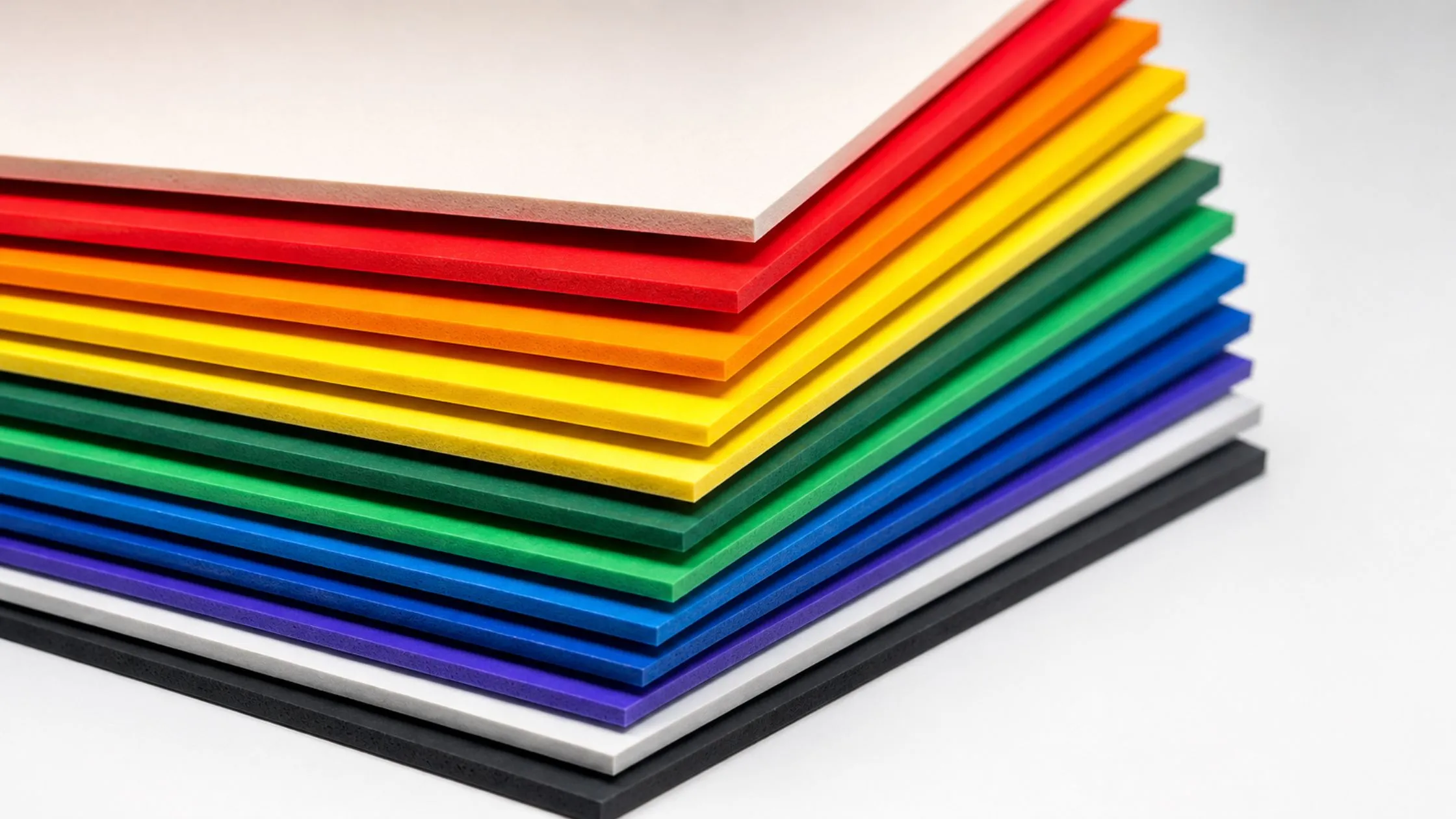
- The material displays strong density and high durability which provides limited protection against heat.
- The product offers three protective features which include termite resistance and waterproof capabilities and mold protection.
- The material serves as the most suitable choice for permanent kitchen installations.
- The cost of installation is from ₹800 to ₹2400 per square foot of space
PVC Hollow Boards
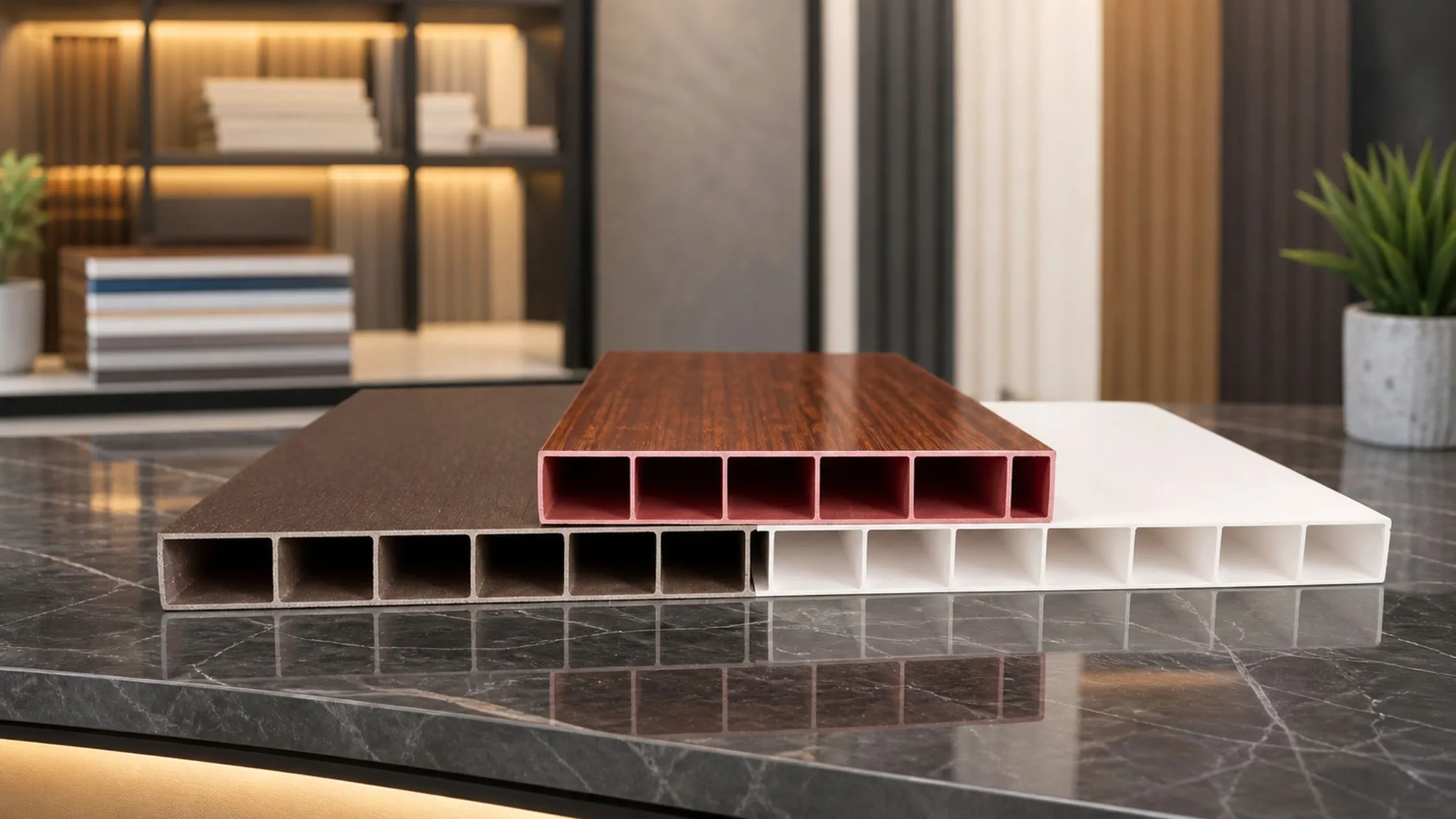
- The product offers lightweight properties at a lower price point.
- The material lacks fire resistance and its structural integrity is diminished.
- The product cannot support weight for storage purposes on shelves.
- The product functions most effectively in situations that require temporary or short-term use.
Also Read: PVC Wall Panels vs. Paint: Which is the Best Solution for Damp Walls in India?
Are PVC Kitchen Cabinets Really Termite-Proof?
The short answer is yes, for foam boards specifically. Because the material is entirely synthetic, termites have no organic fibre to consume. The termite resistance is not a surface chemical treatment that wears off over time. It is embedded in the material from the core outward.
This matters enormously in India. The cities of Kolkata, Chennai, and Mumbai and Ahmedabad experience continuous termite infestations because of their tropical climate which exists throughout the year. The wooden kitchen cabinets of these cities need professional termite protection treatment every several years together with ongoing assessments. The use of PVC materials completely removes the need for ongoing expenditures and maintenance tasks.
Key facts:
- PVC foam boards contain zero organic material, termites literally cannot digest the board
- No anti-termite chemical treatment is ever needed after installation
- Works especially well in ground-floor homes and basement-level kitchens where termite risk is highest
- PVC hollow boards have empty internal cavities that can become nesting spaces for insects, significantly reducing real-world pest protection
Are PVC Kitchen Cabinets Truly Water-Resistant?
Absolutely. PVC does not absorb water because its core structure prevents water from entering its material. The material will never experience swelling or warping or cracking or fungal development because it maintains direct contact with wet conditions.
This particular benefit which wood-based materials provide in Indian kitchens exists as a real advantage because cooking produces heavy steam and monsoon humidity enters through walls for several months while water continuously spreads underneath the sink.
Key facts:
- The PVC foam boards have complete waterproofing because they do not permit water absorption through any level of their material.
- The system operates dependably in locations that include sinks and spaces behind dishwashers and areas where walls experience water leaks.
- The solution works best for coastal urban areas such as Mumbai and Kochi and Visakhapatnam, which experience constant humidity throughout the year.
- The complete water resistance of cabinets depends on installation quality because improper sealing at joint and screw points introduces moisture problems, which premium foam boards cannot prevent.
Also Read: Beam vs Column: Meaning, Types, Benefits & How They Differ
Key Differences at a Glance
|
Feature |
PVC Foam Board |
BWP Plywood |
Aluminium |
Solid Wood |
|---|---|---|---|---|
|
Termite Resistance |
Excellent |
Needs Treatment |
Excellent |
Poor |
|
Water Resistance |
Full |
Good |
Full |
Poor |
|
Heat Resistance |
Low (60–80°C) |
Good |
Excellent |
Good |
|
Lifespan |
5–8 Years |
10–15 Years |
15–20+ Years |
15–25 Years |
|
Cost in India |
₹800–1,500/sq.ft |
₹1,200–2,000/sq.ft |
₹2,000–3,500/sq.ft |
₹2,500–5,000/sq.ft |
|
Repairability |
No |
Yes |
Limited |
Yes |
|
Maintenance |
Very Low |
Moderate |
Low |
High |
|
Best For |
Moisture & termite zones |
Long-term family kitchens |
Premium modern kitchens |
Luxury traditional kitchens |
Performance Breakdown: What Actually Works and What Doesn't
Termite & Pest Resistance: PVC foam boards deliver complete, maintenance-free termite protection because there is simply no organic content to attract pests. The material functions as its core since it does not require a spray-on application. The hollow boards which contain empty internal chambers should not be used as pest-proof solutions because they can serve as insect hiding spaces.
Moisture Handling: PVC foam boards do not swell, rot, or develop fungal growth under any moisture level. They perform reliably near sinks, behind dishwashers, and along seepage-prone walls, areas where plywood and MDF frequently fail within three to four years in Indian homes.
Heat Exposure: This is where PVC clearly falls short. It softens at around 60–80°C. Cabinets installed directly above or beside gas burners, chimneys, or tandoors risk warping and deformation over time. Indian cooking styles, high-flame tempering, open-burner methods, pressure cooking, generate significantly more heat stress than typical Western kitchen use. This limitation is real and cannot be ignored.
Longevity: Quality PVC foam board cabinets last 5–8 years under standard Indian household use. Comparable BWP plywood cabinets last 10–15 years. This makes PVC a smarter fit for budget-conscious projects, rental properties, and specific utility zones, not a premium long-term family kitchen investment.
Practical Guide: Where PVC Modular Kitchen Cabinets Actually Make Sense
PVC modular kitchen cabinets are now available across India, not just in big-city showrooms. Whether you are in Noida or Nashik, Indore or Coimbatore, regional dealers and platforms like IndiaMart, Amazon, and Flipkart have made them easy to source at competitive prices.
PVC cabinets are the right choice for:
- Renters who require an operational and affordable kitchen space for their short-term needs.
- Homeowners in Mumbai and Kochi and Visakhapatnam who experience persistent humidity problems need help with their Coastal city home damages.
- Homeowners who want to renovate their kitchen space at low cost should focus first on protecting their kitchen from termite and moisture damage.
- The building contains high-moisture zones which include under-sink areas and utility kitchens and balcony-facing setups.
The expert advises that users should implement a hybrid installation method. The installation requires PVC foam boards to be installed throughout the lower storage cabinets and all areas that experience high moisture levels. Use BWP plywood or aluminium for overhead cabinets and zones near the cooking hob where heat exposure is highest. This gives you the best of both materials without compromise.
How to Buy Right: 5 Things to Check Before You Finalise
- Confirm foam board construction always reject hollow boards for structural kitchen cabinets
- The test requires shelves to have a minimum board thickness of 12 millimeters and cabinet sides to have a minimum thickness of 18 millimeters.
- The test requires all boards in the batch to have matching colour and finish through their entire surface.
- Use PVC-compatible hardware standard screws loosen faster in PVC; insist on appropriate fittings from your carpenter
- Plan heat zones separately identify cabinets near the hob and specify plywood or aluminium for those areas before installation begins
Conclusion
The actual performance of PVC modular kitchen cabinets exceeds showroom demonstrations while delivering better outcomes for kitchen design than skeptics assessment of their capabilities. The high-quality foam boards possess genuine termite-proof and waterproof properties which provide Indian humid conditions and termite-prone regions with permanent maintenance advantages. The material does not provide sufficient protection against heat exposure. PVC modular kitchen cabinets will provide durable pest-resistant performance for extended periods when used in base cabinets and areas with high moisture levels and projects that have financial limitations. The right kitchen space needs to use them because the products offer more than just budget-friendly options. The choice represents a wise choice.




_1792151285.webp)
Ans 1. Yes. PVC foam board cabinets are fully termite-proof because they contain no organic material that termites can digest. This resistance is built into the material itself, not a surface coating that fades or wears off over time.
Ans 2. PVC foam boards are 100% waterproof by material. They are non-porous and do not absorb water or steam, making them ideal for under-sink storage, humid coastal cities, and moisture-heavy kitchen areas throughout India.
Ans 3. Quality PVC foam board cabinets last 5–8 years under normal Indian kitchen use. PVC hollow boards have a shorter lifespan of 3–5 years, particularly when used for load-bearing shelves or high-use cabinet zones.
Ans 4. Foam boards are dense, durable, and heat-insulated, the right choice for full kitchen installations. Hollow boards are lighter and cheaper but structurally weak, not fire-resistant, and suitable only for temporary or low-traffic cabinetry.
Ans 5. Partially. PVC softens at 60–80°C. Cabinets placed near gas burners, chimneys, or tandoors risk warping over time. Always specify aluminium or plywood for cabinet sections directly adjacent to the cooking hob.
Ans 6. Key disadvantages include low heat resistance near cooking zones, hardware loosening over time causing sagging, inability to repair scratches or dents, a shorter lifespan than plywood, and gradual yellowing of light-coloured boards with prolonged use.
Ans 7. PVC excels in moisture and termite protection at a lower upfront cost. BWP plywood offers superior heat resistance, structural strength, repairability, and a longer lifespan, making it better for high-use, long-term family kitchens.
Ans 8. Full PVC modular kitchen installations in India range from ₹800–2,400 per square foot depending on board quality, finish type, hardware selected, and city location. Tier-1 metro cities typically price 10–20% higher than smaller towns.
Ans 9. Yes. Screws and hinges in PVC boards loosen with regular daily use, causing doors and shelves to sag, especially in hollow boards or cabinets installed without PVC-compatible hardware by an unskilled carpenter.
Ans 10. Partially. PVC performs excellently for storage and moisture zones but is not recommended near high-heat Indian cooking methods. A hybrid approach, PVC for lower and utility cabinets, plywood or aluminium near the hob, is the most practical solution for Indian kitchens.