
✦ AI Summary
Table of Content
▲- What Is a False Ceiling?
- Understanding POP: What It Is and How It Works
- Understanding Gypsum Board: What It Is and How It Works
- POP vs Gypsum False Ceiling Cost in India 2026
- Which False Ceiling Is Better for Modern Homes?
- Design Flexibility Comparison
- Installation Process and Time
- Durability and Maintenance Comparison
- Best False Ceiling for Different Rooms
- Important Factors Before Choosing a False Ceiling
- Which False Ceiling Is More Popular in India in 2026?
- Final Thoughts
Most homeowners spend months deciding on flooring, kitchen cabinets, wall colours and then make the false ceiling decision based on whatever the contractor recommends. It's an understandable pattern, but it's also the reason so many completed interiors feel slightly off without anyone being able to explain why. The ceiling is like one of the biggest continuous surfaces in any room, and honestly how it looks, how it handles light, and how it ages over years matter more than most people realise, especially when they’re still in that excited phase of renovation planning, you know, before everything settles.
In India's residential market, the choice consistently comes down to two materials POP (Plaster of Paris) and gypsum board. Both create false ceilings that look clean, house lighting beautifully, and transform the feel of a room. But they work completely differently, cost differently, suit different design styles, and behave differently over time. Understanding those differences before you make the decision is the purpose of this guide.
What Is a False Ceiling?
A false ceiling is a secondary ceiling installed below the main structural roof. It creates a clean and decorative surface while hiding electrical wiring, AC ducts, pipes, and lighting fixtures. Modern false ceilings are widely used for:
- Better interior aesthetics
- LED and cove lighting installation
- Thermal insulation
- Sound reduction
- Concealing wiring and ducts
- Creating modern ceiling patterns
In India, POP and gypsum ceilings dominate the residential market because both provide smooth finishing and modern design flexibility.
Also Read: Simple POP Design for Hall: Low-Budget False Ceiling Ideas for 2026
Understanding POP: What It Is and How It Works
POP(Plaster of Paris) is a calcium sulphate-based powder material derived from gypsum through a heating process. On site, it's mixed with water to create a workable paste that craftsmen apply manually over a metal framework to build up the ceiling surface.
The defining characteristic of POP as a ceiling material is its complete malleability in the hands of a skilled craftsman. Because it starts as a paste, it can be shaped into almost anything; curves, floral borders, medallions, multi-level sculptural designs, and the kind of intricate decorative detailing that has been part of Indian interior tradition for generations. No other mainstream ceiling material offers this freedom.
Main Features of POP Ceiling
- Applied manually on site
- Highly customizable designs
- Smooth seamless appearance
- Suitable for curves and artistic patterns
- Longer installation time
- Requires skilled labour
POP is often preferred in luxury interiors where customized ceiling detailing is important.
Understanding Gypsum Board: What It Is and How It Works
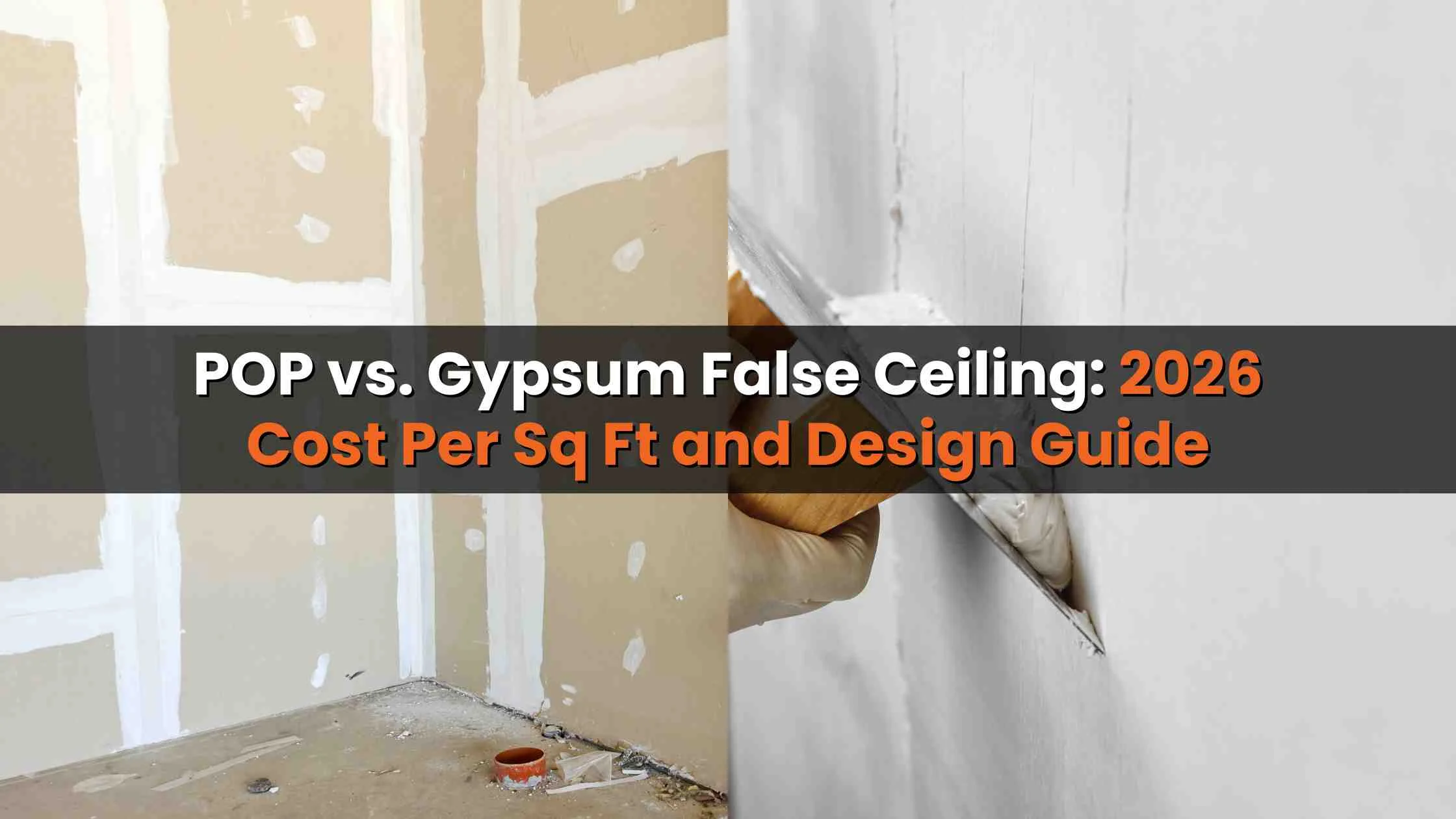
Gypsum board false ceilings use factory-manufactured panels typically 12mm thick gypsum sheets with paper or fibre facings fixed onto a metal grid framework. The boards arrive at the site ready to install. The craftsman cuts them to size, fixes them to the framework, fills and tapes the joints between boards, and finishes the surface for painting.
Gypsum ceilings have become the dominant choice in India's urban apartment market because they fit the operational requirements of modern construction faster to install, less messy on site, lower labour intensity, and more predictable in finish quality. For a developer completing an apartment building with hundreds of units, gypsum's speed and consistency advantages over POP are decisive.
Main Features of Gypsum Ceiling
- Factory-made boards
- Faster installation process
- Cleaner site work
- Lightweight structure
- Uniform finish
- Ideal for simple modern designs
Gypsum ceilings are commonly used in apartments, offices, and modular interiors.
POP vs Gypsum False Ceiling Cost in India 2026
Cost remains one of the biggest deciding factors for homeowners. Pricing depends on design complexity, labour charges, city, lighting work, and material quality.
|
Feature |
POP Ceiling |
Gypsum Ceiling |
|
Average Cost Per Sq Ft |
₹75 to ₹140 |
₹90 to ₹160 |
|
Installation Time |
Slower |
Faster |
|
Labour Requirement |
High |
Moderate |
|
Design Flexibility |
Excellent |
Moderate |
|
Maintenance |
Higher |
Lower |
|
Crack Resistance |
Moderate |
Better |
|
Moisture Resistance |
Lower |
Better with moisture resistant boards |
|
Best For |
Custom luxury designs |
Modern modular interiors |
Simple flat gypsum ceilings may cost less in some cities, while premium layered gypsum designs can become more expensive than POP.
Which False Ceiling Is Better for Modern Homes?
The answer depends on your interior priorities, room type, and long term maintenance expectations.
Choose POP Ceiling If You Want
- Decorative ceiling patterns
- Curved ceiling designs
- Traditional luxury interiors
- Customized artistic detailing
- Seamless hand-finished appearance
Choose Gypsum Ceiling If You Want
- Faster project completion
- Cleaner installation
- Minimal maintenance
- Modern minimalist interiors
- Better crack resistance
Many urban homeowners now prefer gypsum ceilings because of quicker installation and lower maintenance needs.
Design Flexibility Comparison
Design flexibility is one area where POP still holds a strong advantage. Design capability is the single area where the difference between POP and gypsum is most significant and where the right choice genuinely depends on the interior style you're trying to create.
POP Ceiling Design Advantages
POP can be moulded into almost any shape. Designers use it for:
- Floral patterns
- Circular ceiling designs
- Curved edges
- Traditional decorative borders
- Multi-layer artistic ceilings
Gypsum Ceiling Design Advantages
Gypsum works best for:
- Straight line ceiling layouts
- Minimalist designs
- Geometric patterns
- Cove lighting
- Modern contemporary interiors
Gypsum ceilings suit modern apartments where simplicity and clean finishing are preferred.
Installation Process and Time
POP Ceiling Installation
POP ceilings require on-site mixing and manual application. The process includes:
- Metal framework installation
- POP paste preparation
- Manual plaster application
- Drying and finishing
- Sanding and painting
The entire process may take several days depending on ceiling size.
Gypsum Ceiling Installation
Gypsum ceilings are quicker because boards are pre-manufactured.
- Metal framework installation
- Board fixing
- Joint finishing
- Painting
Installation is cleaner and significantly faster than POP.
Also Read: How Much Does a False Ceiling Cost Per Square Foot in India?
Durability and Maintenance Comparison
Durability is becoming more important for homeowners in 2026 because maintenance costs continue increasing. This is where gypsum has developed a significant and growing advantage over POP in the modern Indian housing context.
POP Ceiling Durability
POP ceiling durability is affected by several factors that are common in Indian residential buildings. Hairline cracking is POP's most common long-term issue, it develops from building settlement (which all structures undergo to varying degrees), from moisture cycles that cause slight expansion and contraction, and from imperfections in workmanship at the time of installation.
These cracks are typically cosmetic rather than structural, but they require periodic filling and repainting to maintain appearance. In humid climates or rooms with moisture exposure, POP deteriorates more noticeably than in dry conditions.
Gypsum Ceiling Durability
Gypsum ceiling durability benefits from the material's inherent flexibility, gypsum boards accommodate minor building movement more gracefully than site-applied POP, which is more rigid and consequently more crack-prone.
The surface quality of gypsum boards is consistent from factory, there are fewer workmanship variables that can compromise long-term appearance. And the availability of moisture-resistant and impact-resistant gypsum variants extends the material's suitability into challenging conditions that standard POP handles poorly.
Best False Ceiling for Different Rooms
Living Room
- POP for luxury decorative interiors
- Gypsum for modern premium apartments
Bedroom
- Gypsum works best for soft lighting and modern aesthetics
Kitchen
- Moisture resistant gypsum boards preferred
Office Spaces
- Gypsum ceilings dominate commercial interiors
Luxury Villas
- POP often used for customized designer ceilings
Important Factors Before Choosing a False Ceiling
Before selecting any ceiling material, homeowners should evaluate:
- Budget availability
- Room size
- Interior design theme
- Moisture exposure
- Maintenance expectations
- Labour availability
- Lighting requirements
- Long term durability
A low quality installation can create future cracking and repair issues even with premium materials.
Which False Ceiling Is More Popular in India in 2026?
The Indian false ceiling market in 2026 is showing a clear directional shift toward gypsum in the urban residential segment and the reasons are structural rather than cyclical.
Faster apartment handovers, the growing trend towards modular interior design, uptake of current minimal look, feel among younger city dwellers, and the overall push for low maintenance finishes, all helped gypsum grab a bigger slice of the market. You can see it across Delhi NCR, Bengaluru, Hyderabad, Mumbai, and Pune too.
Reasons behind rising gypsum demand include:
- Faster apartment handovers
- Modern interior trends
- Lower maintenance
- Cleaner installation process
- Better compatibility with modular interiors
However, POP still remains popular in premium villas and luxury customized homes.
Final Thoughts
Both POP and gypsum false ceilings can give you solid benefits, but it depends on what you need inside the room. POP ceilings are still a go to choice for many homeowners, especially if you want detailed custom designs and a more luxurious, decorative interior vibe. Gypsum ceilings, on the other hand, are getting picked more often for modern Indian homes, because they go up quicker, give a smoother finishing, and they usually need less maintenance overall.
In 2026, gypsum ceilings are expected to take over most urban residential interiors, while POP will keep showing up in those higher end luxury projects where design flexibility really matters in the day to day. Before you lock in your ceiling plan, do a proper comparison on the long term maintenance side, the labour quality actually, moisture exposure and even the overall interior vibe, so you make the right investment for your home.






Ans 1. POP ceilings are made using plaster applied manually on site while gypsum ceilings use ready made gypsum boards fixed on metal frameworks.
Ans 2. POP ceilings usually start from lower prices but gypsum ceilings can become more cost effective because of faster installation and lower maintenance.
Ans 3. Gypsum false ceiling prices in India generally range between ₹90 and ₹160 per sq ft depending on design and city.
Ans 4. POP false ceiling costs usually range from ₹75 to ₹140 per sq ft based on labour quality and design complexity.
Ans 5. Gypsum ceilings are mostly preferred for modern apartments because of clean finishing minimalist design and quick installation.
Ans 6. Gypsum ceilings generally offer better crack resistance and lower maintenance compared to traditional POP ceilings.
Ans 7. POP works well for decorative luxury living rooms while gypsum suits modern and contemporary living spaces.
Ans 8. Gypsum ceilings are popular for bedrooms because they support soft lighting and simple modern designs.
Ans 9. Standard POP ceilings are not fully waterproof and may develop cracks or damage in high moisture conditions.
Ans 10. Gypsum ceilings usually require less maintenance because they resist cracks and provide uniform finishing.