
Table of Content
▲
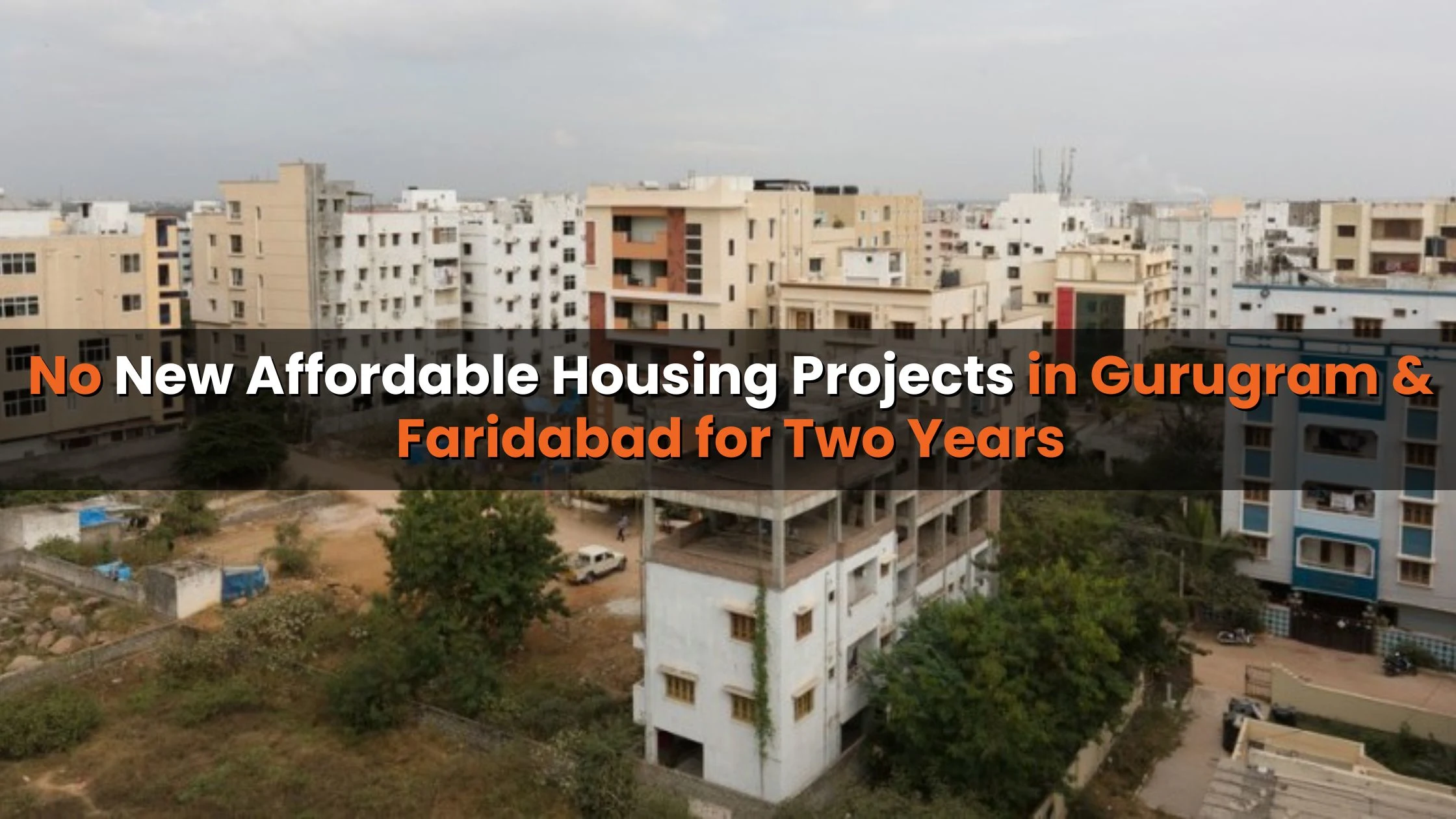
For middle-class families in Gurugram and Faridabad, the dream of owning a home is becoming increasingly elusive. Despite government promises, affordable housing projects have remained stagnant for nearly two years, leaving many aspiring homeowners frustrated and locked out of the market.
Rising land prices, escalating construction costs, and strict government pricing caps have combined to stall new project approvals. As a result, the affordable housing policy, intended to support first-time buyers and young families, is failing to deliver tangible benefits on the ground.
Why affordable housing projects have stalled
Under the current policy framework, the maximum sale price for affordable homes is capped at Rs 5,000 per sq ft. While the intention is to keep homes within reach of middle-class buyers, developers argue that escalating land and construction costs make it impossible to build at these rates.
Industry sources confirm that no new licenses for affordable housing projects have been issued in Gurugram or the Gurugram-Manesar master plan area in the last 18–24 months. Rising costs, combined with regulatory hurdles, have led to a near-freeze in new project launches.
Also Read: Noida Authority directs developers to ensure public safety around construction sites
Homebuyer frustration grows
Prospective homeowners are feeling the pinch. “We have been waiting for affordable housing projects for years, but there is hardly anything new. The few options available are priced at Rs 2–3 crore, which is completely beyond our budget,” said Rajesh Kumar Srivastava, a resident of Sector 70.
Another buyer, Abhishek Singh, a real estate consultant, added, “The policy was designed with good intentions, but if the government fixes prices that developers cannot work with, then no one will build affordable homes. Ultimately, buyers like us suffer.”
Policy background and its intended beneficiaries
The state’s affordable housing policy was launched to provide budget homes to salaried professionals, young families, and first-time buyers. The capped pricing mechanism aimed to make homes accessible while encouraging developers to invest in the segment.
However, with no fresh launches in nearly two years, the policy is increasingly seen as a “paper promise” rather than an actionable scheme. Middle-class families, who are the intended beneficiaries, are facing the harsh reality of being priced out.
Developer constraints and market realities
Developers highlight several challenges in constructing affordable housing projects under the current pricing regime. Land costs in key sectors of Gurugram have more than doubled over the last five years, while construction expenses have risen by 25–30%.
At capped rates, a 600–700 sq ft flat costs around Rs 32–37 lakh, leaving little margin for land acquisition, construction, and timely delivery. As a result, developers are prioritising premium and luxury projects along growth corridors like Dwarka Expressway and Sohna, where margins are higher.
Industry expert insights
Industry leaders stress that affordable housing demand remains strong. “If the government revises the pricing in line with rising costs, developers can re-enter the segment and revive new project launches,” said a city-based developer.
MS Mittal, Chairman of ROF Group, said, “The policy helped thousands of families, but it must evolve with market realities. Timely amendments are essential to sustain developer interest and encourage fresh investments.”
Vikas Garg, Joint MD of Ganga Realty, added, “Rising land, construction, and compliance costs have made affordable housing projects less viable in Gurugram. Supportive policy revisions are needed to ensure housing remains accessible near employment hubs.”
Suggested policy reforms
Experts and homebuyers alike are urging the government to:
- Increase the maximum sale price by at least 25%
- Allow continuous approvals for affordable housing projects
- Provide incentives to developers to re-enter the segment
- Promote balanced urban growth by ensuring affordable options near major employment zones
Such steps could rejuvenate the segment and prevent middle-class families from being permanently priced out.
Also Read: Retail Leasing Touches 12.5 Million Sq Ft in 2025; Delhi NCR, Bengaluru Drive Demand
Impact on urban growth and buyers
The lack of new affordable housing projects threatens to distort housing accessibility in Gurugram and Faridabad. Without timely intervention, the gap between market prices and policy-capped rates may continue to widen, leaving a growing number of families unable to buy their first home.
Balanced urban planning requires that affordable housing remains viable alongside premium developments. Without policy adjustments, the promise of homeownership for middle-class residents risks becoming increasingly unattainable.
Conclusion
The absence of new affordable housing projects over the past two years highlights the urgent need for policy recalibration. Rising costs, stagnant approvals, and misaligned price caps are preventing middle-class families from entering the property market.
To revive affordable housing in Gurugram and Faridabad, the government must align policy with ground realities, incentivise developers, and ensure a steady pipeline of budget-friendly homes. Only then can the dream of homeownership become a reality for India’s middle class.


Ans 1. Rising land prices, increased construction costs, and strict government price caps have made it unviable for developers to start new affordable housing projects in these cities.
Ans 2. Under the current policy, the maximum sale price for affordable homes is capped at Rs 5,000 per sq ft, which many developers consider insufficient to cover rising costs.
Ans 3. The policy targets salaried professionals, young families, and first-time homebuyers, aiming to make housing accessible for India’s middle class.
Ans 4. High land acquisition costs, rising construction expenses, and limited profit margins at capped rates have forced developers to focus on premium and luxury projects instead.
Ans 5. New affordable housing projects have been effectively stalled for nearly two years, with no fresh approvals issued in the Gurugram-Manesar master plan area.
Ans 6. Experts recommend increasing the maximum sale price by at least 25%, streamlining approvals, offering incentives to developers, and ensuring affordable options near employment hubs.
Ans 7. Families are being priced out of the market, with limited options available, forcing many to either postpone homeownership or consider expensive alternatives.
Ans 8. Without policy adjustments, housing accessibility is skewed toward premium developments, disrupting balanced urban planning and limiting middle-class participation in city growth.
Ans 9. Yes, revising price caps, providing developer incentives, and simplifying approvals can help make affordable housing projects feasible and encourage new launches.
Ans 10. Immediate adjustments are essential to ensure middle-class families can buy homes, developers remain engaged in the segment, and urban growth remains inclusive.