
Table of Content
▲- What is the LPG Shortage Crisis in India?
- Why Did India Face a Sudden Commercial LPG Supply Disruption?
- How Has the LPG Crisis Impacted Restaurants Across India?
- What Action Has the Government Taken to Address the LPG Shortage?
- Will the LPG Crisis Pressure Retail Rents and Trigger Lease Renegotiations?
- What Are the Broader Economic Consequences?
- What Penalties and Risks Do Non-Compliant Businesses Face?
- Conclusion
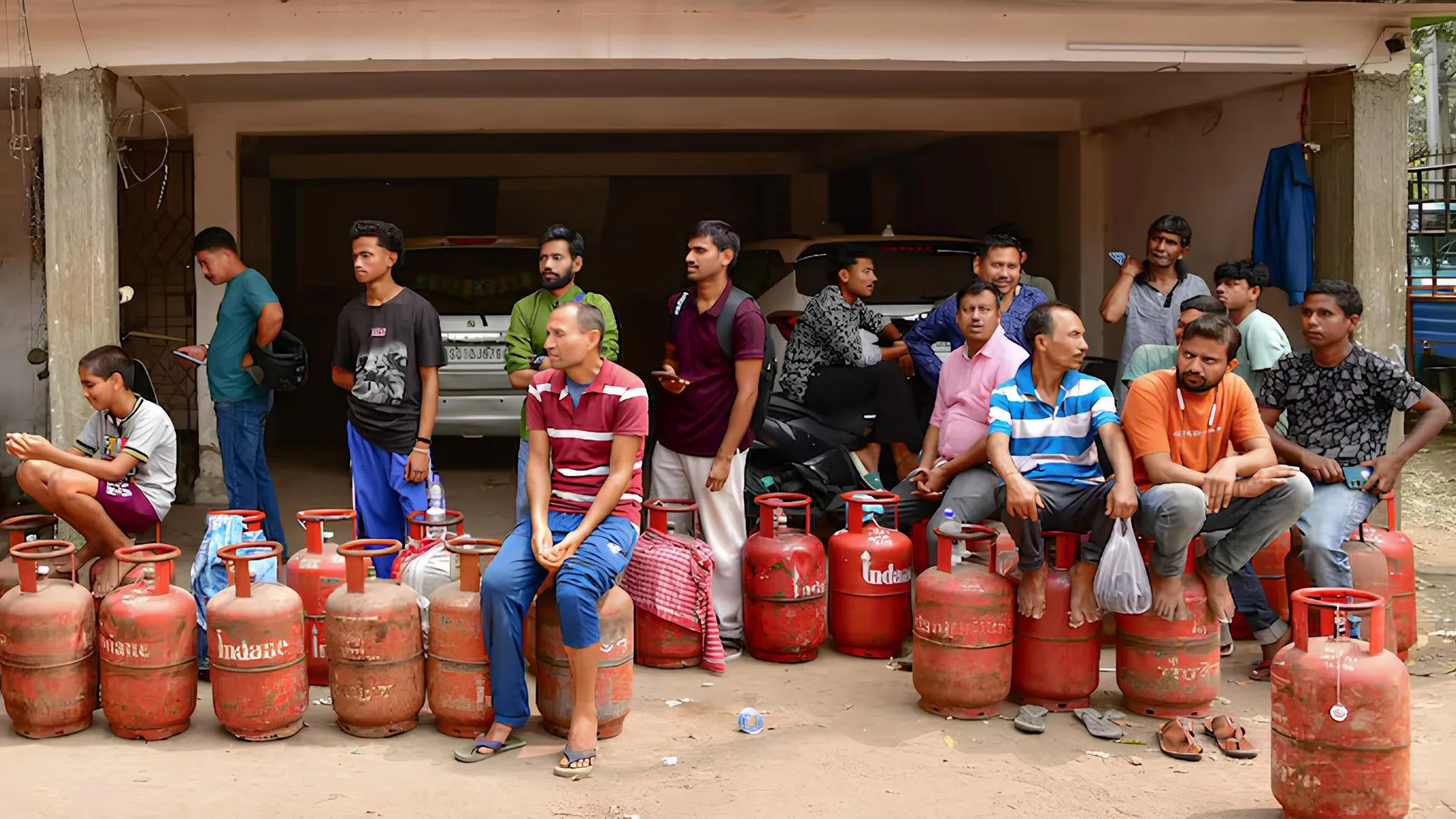
The LPG shortage in India crept up fast, and restaurants never saw it coming. One day the cylinders were arriving, the next day the supplier stopped picking up the phone. Across India, over 5 lakh restaurants run on commercial LPG, there is simply no other way to cook at that scale.
Now, with supply lines hit by the West Asia conflict and a government order reserving gas for households, those restaurants are paying the price. The food and beverage sector is reportedly losing around ₹1,200–1,300 crore each day. The NRAI has raised alarms about this being a crisis, and in urban areas such as Mumbai, Bengaluru, Chennai, and Delhi-NCR, business owners are proactively closing their doors instead of hoping for a turnaround.
What is the LPG Shortage Crisis in India?
The LPG shortage crisis in India in 2026 refers to a critical disruption in the supply of commercial LPG that began in the first week of March, impacting millions of restaurants, hotels, dhabas, cloud kitchens, and QSR chains that rely on cooking gas. The crisis was mainly caused by geopolitical instability at the Strait of Hormuz, along with a Central government order that instructed oil marketing companies (OMCs) to focus on supplying domestic household LPG rather than commercial allocations.
The crisis directly affects:
- Standalone restaurants, dhabas, and hotel F&B operations
- Cloud kitchens, QSR chains, and institutional caterers
- Paying guest accommodations and food courts
Under the current shortage, operators must:
- Source LPG from a severely constrained supply pool or pay black-market premiums up to 63% above standard prices
- Absorb a ₹114.50 per-cylinder price hike effective March 9, 2026
- Explore alternative cooking fuels while managing commercial lease obligations with near-zero revenues
Also Read: Dubai’s New Building Law Mandates Safety Certificates, Impacts Owners and Tenants
Why Did India Face a Sudden Commercial LPG Supply Disruption?
Is India’s LPG Import Dependency a Long-Standing Risk?
India meets only 41% of its LPG demand through domestic output from IOCL, BPCL, and HPCL. The remaining 59% is imported, with nearly 90% transiting through the Strait of Hormuz. This structural import dependency has always been a latent vulnerability. The 2026 West Asia conflict converted that risk into an active crisis overnight.
Key Triggers of the 2026 LPG Crisis
- Strait of Hormuz disruption: US-Iran conflict threatened free movement of LPG tankers through the world’s most critical energy shipping lane
- Essential Commodities Act invoked: On March 6, 2026, the Ministry of Petroleum and Natural Gas directed refineries to prioritise household LPG, deprioritising commercial allocations
- Supply chain collapse: One Vijayawada distributor reported 350 unmet orders with 200 new ones arriving daily
- Price shock: The 19-kg commercial cylinder rose ₹114.50 in a single day on March 9, pushing cumulative 2026 increases to ₹302.50
How Has the LPG Crisis Impacted Restaurants Across India?
Scale of Disruption
- 90% of India’s 5 lakh+ restaurants run entirely on commercial LPG cylinders
- 20–30% of Mumbai hotels and restaurants have already shut operations
- 60–70% may close nationally within days without urgent supply restoration
- ₹1,200–1,300 crore estimated loss per day of disruption
- ₹3,000 black-market cylinder price in Mumbai vs standard ₹1,840
Sagar Daryani, President of NRAI, described it as a "crisis that will trigger mass closures and widespread job losses" without urgent resolution.
City-by-City Impact
|
City |
LPG Supply Status |
Restaurant Impact |
|
Mumbai |
Severely disrupted |
20–30% shut; black-market cylinders at ₹3,000 |
|
Bengaluru |
Halted since March 7 |
Menus restricted to beverages only |
|
Chennai |
Critical shortage |
Hotel associations appealed to the Prime Minister |
|
Delhi-NCR |
Partial supply |
Black-market price ₹1,400–1,500 vs standard ₹1,200 |
|
Vijayawada |
Near-zero supply |
350 unmet orders daily; 200 new orders arriving |
|
Kolkata |
Acute shortage |
Full shutdowns imminent without urgent relief |
|
Hyderabad |
Disrupted |
PG accommodations cutting meal services in IT corridors |
Also Read: MHADA Plans 20,000 Affordable Homes Through Cluster Redevelopment in Mumbai
What Action Has the Government Taken to Address the LPG Shortage?
Central Government Measures
- Three-member OMC committee (IOCL, BPCL, HPCL) formed to review commercial LPG supply requests
- Emergency refinery activation to ramp up LPG output; hospitals and schools prioritised in allocation
- Petroleum Minister Hardeep Singh Puri assured "no shortage for domestic consumers"
- Hotel associations in multiple cities scheduled formal meetings with the Minister
State-Level Response
|
State |
Measure Taken |
|
Karnataka |
Activated state-level LPG distribution monitoring |
|
Tamil Nadu |
State intervention to fast-track commercial allocations |
|
Kerala |
Supply chain coordination with OMCs |
|
Gujarat |
State monitoring of distributor backlogs |
|
Madhya Pradesh |
Emergency LPG tracking and reporting system activated |
Will the LPG Crisis Pressure Retail Rents and Trigger Lease Renegotiations?
How Are Restaurant Tenants Responding?
As the LPG crisis deepens, the disruption is moving into the domain of retail real estate. Restaurant tenants in food courts, high street F&B zones, and malls cannot generate revenue but remain obligated to pay rent. Several operators are already taking formal legal positions:
- Force majeure invocation: Tenants cite the Essential Commodities Act government order as an unforeseen event qualifying under commercial lease force majeure clauses
- Lease restructuring requests: F&B tenants in malls and food courts are formally seeking temporary rent relief or deferral from landlords
- Vacancy risk rising: Anchor tenant shutdowns directly impact mall footfall and co-tenant viability
Before vs After: Landlord-Tenant Dynamic
|
Factor |
Before LPG Crisis |
After LPG Crisis |
|
Rent payment status |
Regular, on-time |
Delayed or disputed |
|
Lease clause invoked |
Rare |
Force majeure increasingly cited |
|
Negotiation posture |
Landlord-led |
Tenant-driven |
|
Vacancy risk |
Low |
Rising in F&B-heavy properties |
|
Retail rent pressure |
Stable |
Downward pressure emerging |
|
Mall footfall impact |
Neutral |
At risk if anchor F&B tenants close |
What Are the Broader Economic Consequences?
- Cloud kitchens and QSR chains: Spiking input costs with no alternative distribution fallback
- SME restaurants in Tier 2 cities: Most vulnerable, no reserves, no alternative fuel infrastructure
- Commercial real estate: F&B-heavy retail assets face India’s first energy-side stress test in 2026
- Consumer spending: Shrinking dining options with knock-on effects on food service employment
What Penalties and Risks Do Non-Compliant Businesses Face?
Businesses attempting to circumvent government supply allocation orders face regulatory risk under the Essential Commodities Act. Operators must document all supply shortfall evidence formally for any force majeure or lease renegotiation proceedings.
|
Violation Type |
Regulatory Risk |
|
Hoarding of commercial LPG cylinders |
Seizure and penalty under Essential Commodities Act |
|
Unauthorised resale of domestic cylinders for commercial use |
Fines and criminal prosecution |
|
Distributor violations of OMC allocation orders |
Licence suspension |
|
Restaurants sourcing from unregistered suppliers |
Compliance and safety liability |
Conclusion
The LPG shortage in India is the most severe operational disruption the country’s restaurant industry has faced since the COVID-19 pandemic. It has exposed the fragility of a ₹6.6 lakh crore F&B sector built almost entirely on a single cooking fuel, with no buffer against geopolitical supply shocks.
For restaurant operators, the priorities are supply continuity, cost management, and formal documentation for lease renegotiation. For landlords, the test is whether F&B-heavy retail portfolios can absorb tenant distress without triggering wider vacancy. For policymakers, the crisis makes it impossible to delay the conversation on commercial energy security and India’s LPG import dependency.
The LPG shortage in India is not an isolated event. It is a stress test and how India’s restaurants, landlords, and government respond will define the sector’s shape for years to come.




Ans 1. The 2026 LPG shortage crisis is the acute disruption in commercial LPG supply caused by geopolitical tensions at the Strait of Hormuz and the Central government’s Essential Commodities Act order, which prioritised household LPG over commercial allocations, leaving restaurants, hotels, and cloud kitchens without cooking gas.
Ans 2. The Ministry of Petroleum and Natural Gas invoked the Essential Commodities Act on March 6, 2026, to direct oil marketing companies to maximise LPG output for domestic household consumers amid supply disruption triggered by the West Asia conflict at the Strait of Hormuz.
Ans 3. Industry estimates suggest 20–30% of hotels and restaurants in Mumbai have already suspended operations. Nationally, 60–70% risk closure within days if commercial LPG supply is not urgently restored, according to NRAI.
Ans 4. Several restaurant operators are invoking force majeure clauses in commercial leases, arguing the government-mandated LPG rationing under the Essential Commodities Act constitutes an unforeseen event. Legal experts note a government supply rationing order may meet the threshold Indian courts apply.
Ans 5. The crisis is accelerating alternative cooking fuel adoption including induction cooktops and piped natural gas. It is also expected to trigger a policy review of India’s commercial LPG allocation framework, a wave of lease renegotiations, and a structural shift toward energy diversification in India’s F&B sector.
Ans 6. Mumbai, Bengaluru, Chennai, Delhi-NCR, Vijayawada, Kolkata, and Hyderabad are the worst-affected cities. Bengaluru and Chennai saw commercial LPG supplies halt entirely from March 7, 2026. In Mumbai, black-market cylinder prices have surged from the standard ₹1,840 to ₹3,000, forcing restaurants to either absorb the cost or shut down.
Ans 7. The LPG shortage in India is expected to trigger a wave of landlord-tenant lease renegotiations across food courts, malls, and high streets. Retail rental yields in F&B-heavy properties could soften through mid-2026. Long term, the crisis will accelerate adoption of alternative cooking fuels like induction cooktops and piped natural gas, and force a policy review of India's commercial LPG allocation framework.
Ans 8. The price of a 19-kg commercial LPG cylinder rose by ₹114.50 in a single day on March 9, 2026, the steepest single-day hike in over a year. Cumulative price increases in 2026 now stand at ₹302.50 per cylinder. In cities like Mumbai, black-market cylinders are being sold at ₹3,000 against the standard price of ₹1,840.
Ans 9. SME restaurants in Tier 2 cities have no financial reserves to absorb prolonged supply disruptions, no access to alternative fuel infrastructure, and limited bargaining power with landlords for lease renegotiations. Unlike large QSR chains that can partially absorb input cost spikes, small restaurant owners face an immediate choice between paying black-market prices or shutting down permanently.
Ans 10. Restaurants sourcing LPG from unregistered suppliers face serious compliance and safety liability under the Essential Commodities Act. Businesses found hoarding commercial cylinders risk seizure and statutory penalties. Distributors violating OMC allocation orders face licence suspension, while unauthorised resale of domestic cylinders for commercial use can attract criminal prosecution. Operators are strongly advised to formally document all supply shortfall evidence to protect their legal position in any subsequent force majeure or lease renegotiation proceedings.