
Table of Content
▲- Identification of safety risk zones across Noida
- Key safety lapses at construction sites
- Government action against non-compliant developers
- Strengthening public infrastructure and road safety
- Drainage and waterlogging as emerging challenges
- Hazardous locations highlight systemic gaps
- Impact on the real estate sector
- Long-term outlook for urban safety in Noida
- Conclusion
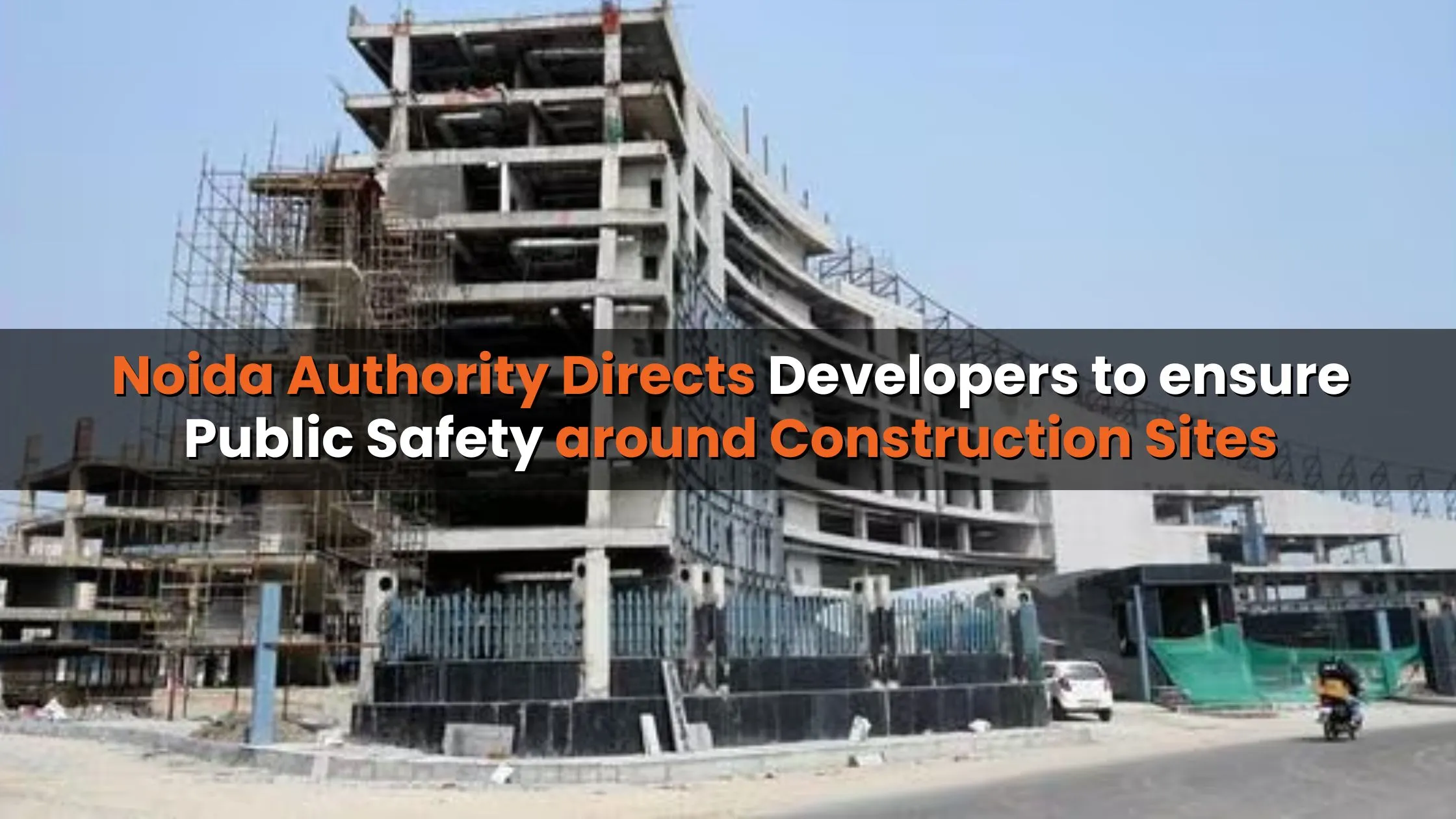
The Noida Authority has stepped up its enforcement drive against unsafe construction practices, directing real estate developers to ensure that project surroundings do not pose risks to the public. The move comes amid growing concerns over hazardous construction sites, waterlogged plots, and poorly secured excavations across the city.
Following a recent fatal incident that raised questions about infrastructure safety, the authority launched a citywide inspection campaign to identify high-risk locations. Officials say the initiative marks a significant push toward strengthening Noida developers safety compliance, signalling that negligence in construction safety will no longer be tolerated.
Identification of safety risk zones across Noida
As part of the inspection drive, the Noida Authority’s civil department, in coordination with traffic officials, surveyed multiple road stretches and construction zones. The exercise led to the identification of dozens of safety black spots where basic protective measures were missing.
Many of these locations were found near busy roads and residential areas, where open excavations and unfinished structures posed serious threats to commuters and pedestrians. Authorities emphasised that improving Noida developers safety compliance is essential to reducing accident risks in rapidly urbanising zones.
Also Read: Budget 2026: Senior living sector seeks infrastructure status and pension-linked policy support
Key safety lapses at construction sites
Officials highlighted several recurring issues at private development sites. These included open basements, unattended deep pits, inadequate barricading, and the absence of warning signs or reflectors.
In many cases, temporary safety arrangements were either damaged or improperly installed, leaving construction zones exposed. Waterlogged plots and poorly designed road edges further aggravated the situation, especially during the monsoon season.
Experts believe that strengthening Noida developers safety compliance is critical as construction activity continues to expand across commercial and residential corridors.
Government action against non-compliant developers
To address the issue, the Noida Authority has decided to issue formal notices to developers responsible for unsafe sites. Developers have been given a limited timeframe to implement corrective measures, failing which strict penalties will be imposed.
Officials stated that the authority would adopt a zero-tolerance approach toward violations, underlining the importance of Noida developers safety compliance in ensuring public safety.
At locations where responsibility lies with government agencies, the authority has committed to undertaking immediate safety upgrades, including installation of guardrails, signage, lighting, and lane markings.
Strengthening public infrastructure and road safety
Beyond enforcing developer accountability, the authority is also focusing on improving road infrastructure. Plans include installing safety barriers, enhancing visibility at critical junctions, and redesigning hazardous road stretches.
These measures are part of a broader strategy to integrate Noida developers safety compliance with urban planning and traffic management frameworks, ensuring that construction activity does not compromise public safety.
Drainage and waterlogging as emerging challenges
Waterlogging has emerged as a major contributor to road accidents and structural hazards in Noida. Authorities have acknowledged that inadequate drainage systems often turn vacant plots and construction sites into dangerous zones.
To address this, the authority has initiated projects to strengthen drainage networks in multiple villages and urban sectors. A comprehensive citywide survey is also planned to identify overflow zones and chronic waterlogging hotspots.
By linking drainage reforms with Noida developers safety compliance, officials aim to proactively mitigate risks rather than responding after incidents occur.
Hazardous locations highlight systemic gaps
Several high-risk locations identified during the survey illustrate the scale of the problem. Deep excavations along major roads, abandoned construction sites, and unsecured pits have remained unattended for years.
In some areas, collapsed barricades and displaced metal sheets have created dangerous gaps along road edges, posing risks to motorists and pedestrians alike. These examples underline the urgent need for consistent Noida developers safety compliance across all stages of project development.
Also Read: Retail Leasing Touches 12.5 Million Sq Ft in 2025; Delhi NCR, Bengaluru Drive Demand
Impact on the real estate sector
The authority’s directive is expected to have significant implications for the real estate industry in Noida. Developers may need to allocate additional resources toward safety infrastructure and compliance mechanisms.
While this could increase project costs in the short term, industry experts argue that stronger Noida developers safety compliance will enhance investor confidence and improve the long-term sustainability of the real estate market.
Moreover, stricter enforcement could encourage developers to adopt global best practices in construction safety and risk management.
Long-term outlook for urban safety in Noida
As Noida continues to expand as a major real estate and commercial hub, the importance of robust safety frameworks will only grow. Authorities believe that coordinated efforts between developers, government agencies, and civic bodies are essential to building a safer urban environment.
The current crackdown on unsafe construction practices could mark a turning point in how infrastructure projects are regulated. By institutionalising Noida developers safety compliance, the city can move toward a more accountable and resilient urban development model.
Conclusion
The Noida Authority’s directive to real estate developers reflects a broader shift toward prioritising public safety in urban development. With rapid construction activity reshaping the city’s skyline, ensuring safe project surroundings has become a critical governance challenge.
By enforcing stricter norms and improving infrastructure, authorities aim to reduce risks and prevent future tragedies. Ultimately, sustained focus on Noida developers safety compliance will be key to creating a safer and more responsible real estate ecosystem in Noida.


Ans 1. The Noida Authority has launched citywide inspections, issued directives to developers, and identified high-risk zones to ensure public safety around construction sites. Non-compliant developers face penalties.
Ans 2. A recent fatal incident and rising concerns over open pits, waterlogged plots, and unsecured excavations prompted the authority to strengthen developer accountability and prevent accidents.
Ans 3. Frequent issues include open basements, unattended deep pits, damaged barricades, missing warning signs, and waterlogged plots that pose hazards to pedestrians and commuters.
Ans 4. Developers failing to implement safety measures are issued formal notices and given a limited timeframe to comply. Persistent violations may result in fines or stricter penalties.
Ans 5. The authority is strengthening drainage systems, surveying overflow-prone areas, and linking drainage reforms with developer safety compliance to prevent hazards caused by stagnant water.
Ans 6. Developers may need to invest in safety infrastructure, which could increase costs initially but boosts investor confidence, enhances market sustainability, and encourages adoption of global safety standards.
Ans 7. Measures include installing guardrails, signage, lighting, lane markings, and redesigning hazardous road stretches to integrate construction safety with urban planning and traffic management.
Ans 8. Rapid urbanisation, increased construction activity, and inadequate monitoring have resulted in hazardous sites near roads and residential areas, increasing the risk of accidents.
Ans 9. Coordinated efforts between developers, government agencies, and civic bodies are expected to institutionalize safety compliance, creating a safer and more responsible real estate ecosystem.
Ans 10. The Noida Authority conducts surveys, publishes safety directives, and may communicate high-risk zones through public notices, encouraging awareness and precautionary measures.