
✦ AI Summary
Table of Content
▲- Why Mandir Design Matters in Indian Homes
-
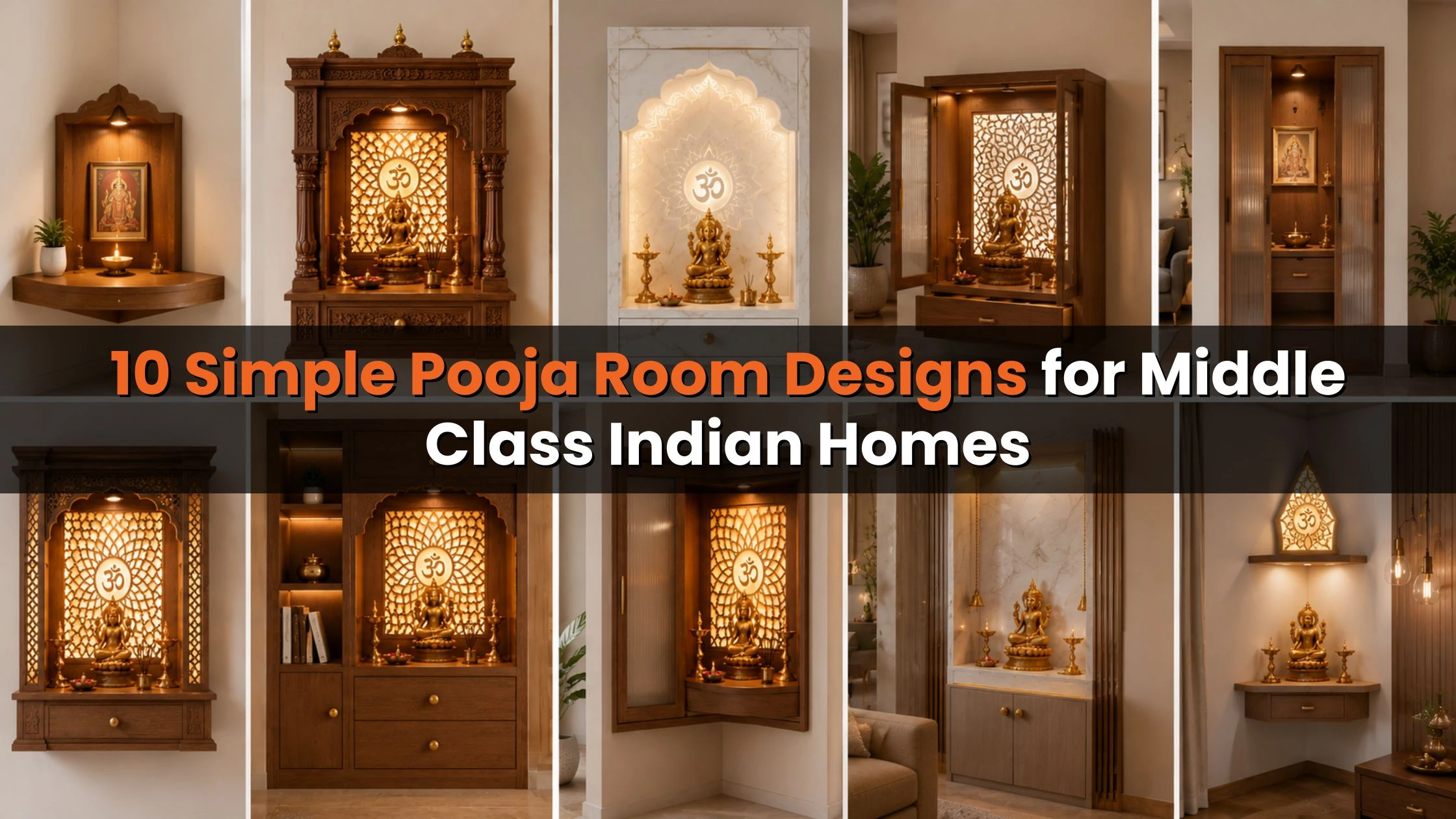
10 Simple Mandir Designs for Middle-Class Homes
- 1. Compact Wall-Mounted Pooja Unit
- 2. Minimalist Wooden Corner Altar
- 3. Traditional Temple-Inspired Carved Mandir
- 4. Backlit Marble Mandir
- 5. Glass Door Pooja Cabinet
- 6. Corner Nook with Sliding Door
- 7. Integrated Pooja Unit with Storage
- 8. Backlit Jaali Panel Mandir
- 9. Wooden Mandir with South Indian Carving Influence
- 10. Multifunctional Pooja Alcove in the Living Room
- Quick Budget & Best-For Reference
- Final Thoughts
A Mandir is more than just a normal room with idols, it sort sets the spiritual mood for whatever happens within the house. It shows the family's faith, mirrors deep-rooted traditions, and also anchors the household's everyday routine in a way no other space truly can. In smaller homes the right Mandir design can make a tight little corner feel far more peaceful, more meaningful, and even more visually crafted, than the actual square footage really suggests.
Indian homeowners are now putting real thought into mandir designs that mix devotion with modern aesthetics, Vastu compliance, natural materials, and long-term durability. From minimalist wall-mounted units to backlit marble mandirs and jaali panel designs, today's options give you a lot to choose from for just about every budget, even compact 1BHK apartments. Below are 10 simple Mandir designs for middle-class Indian homes that are getting a lot of attention in 2026.
Why Mandir Design Matters in Indian Homes
The Mandir in an Indian home kind of feels more important than any other interior space. A well planned mandir design makes a spiritually uplifting atmosphere, adds to the overall aesthetic of the home, and it also gives every family member a dedicated corner, for prayer and reflection, and for peace of mind too . It’s almost like that space has its own calm rhythm.
A good Mandir design helps to:
- Improve the spiritual energy and positive vibe of the entire home
- Make a smaller home feel more intentional, organized, and culturally rooted
- Create a clutter-free dedicated nook for everyday rituals and meditation
- Reflect the families faith , traditions and the look they love in a more grounded way
- Add design value to the home, because a beautiful mandir always catches the eye
Also Read: 10 Modern Front Elevation Designs for Small House
10 Simple Mandir Designs for Middle-Class Homes
1. Compact Wall-Mounted Pooja Unit
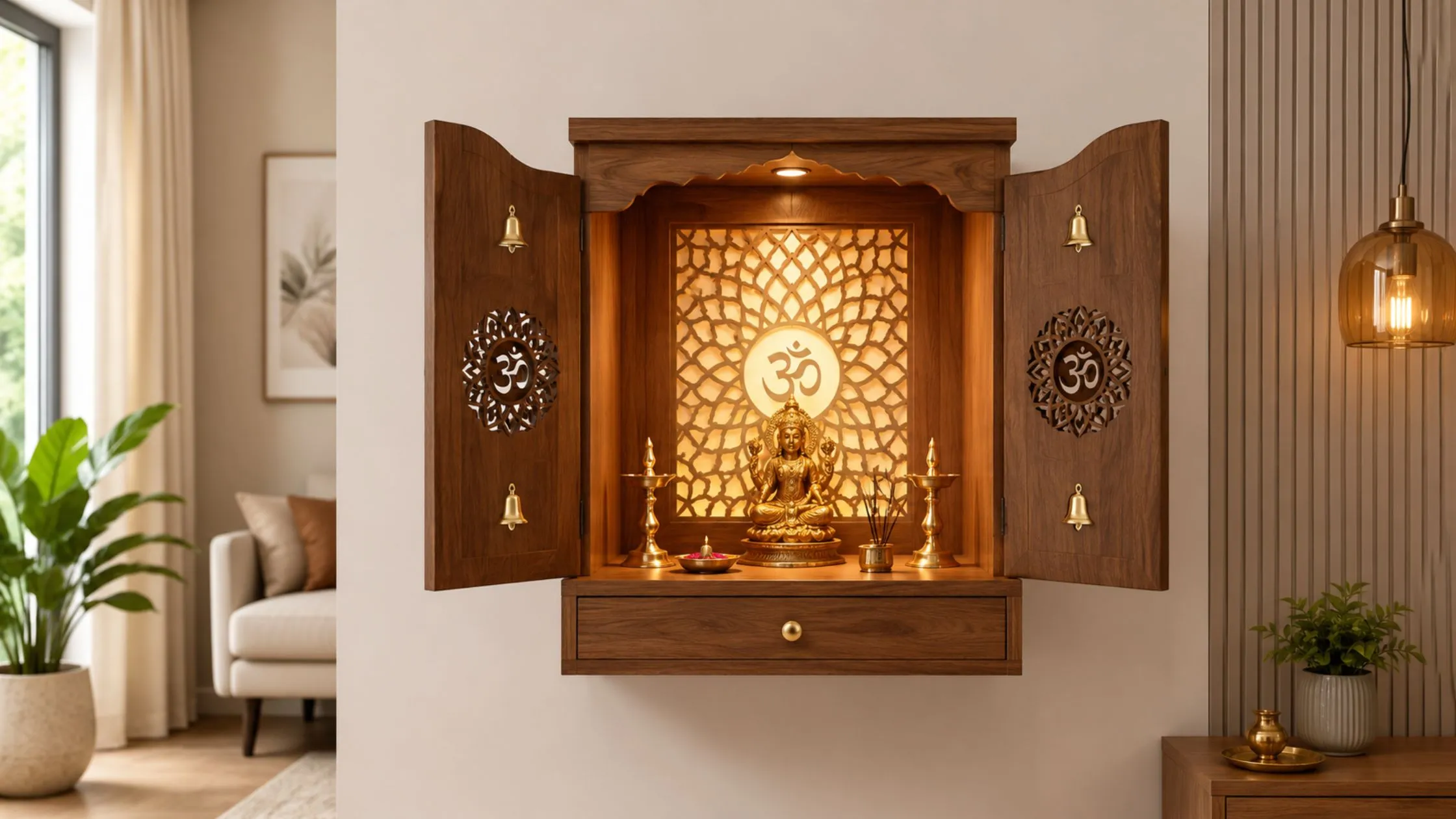
The compact wall-mounted pooja unit is one of the most preferred simple Mandir designs for middle-class Indian homes in urban India right now. It’s charm comes from its practicality , it saves floor space , keeps idols at eye level and it still looks clean but also devotional at the same time .
Common features include:
- Wall-mounted MDF or engineered wood frame with foldable shutters
- Warm LED strip lighting (2700K) installed behind the idol shelf
- Neutral tones like white, beige, or light wood finish
- Multi-tiered shelves for idols, diyas, and pooja samagri
This design works best for:
- 1BHK and 2BHK apartments
- Nuclear families in urban cities
- Any wall in the living room or hallway facing northeast
Estimated Cost: ₹20,000 – ₹50,000
Materials: Engineered wood, MDF with laminate finish
2. Minimalist Wooden Corner Altar
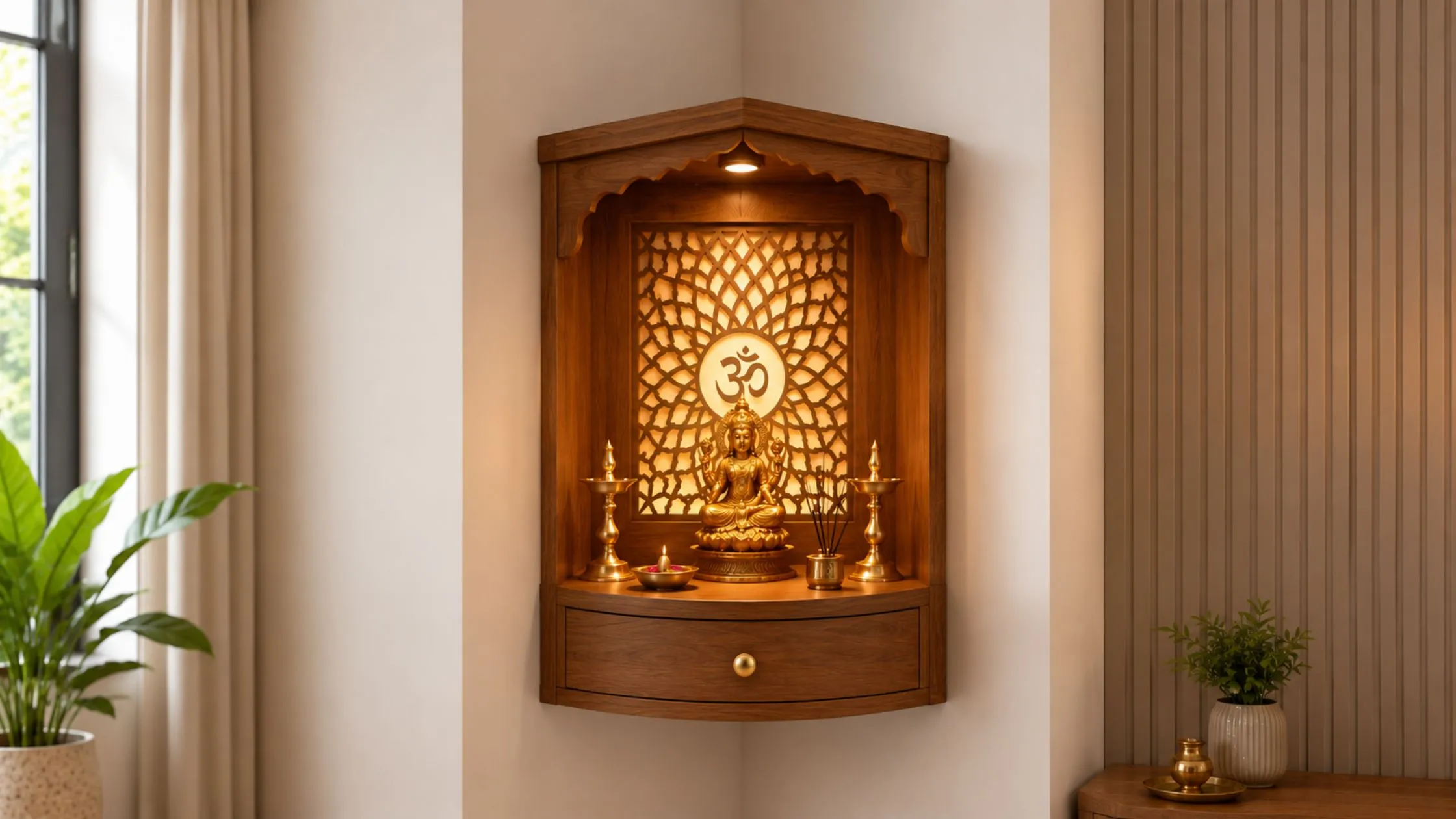
The minimalist wooden corner altar is really ideal for little homes and nuclear families who want a clean, clutter free mandir that still feels totally traditional. A simple teak or sheesham wood altar set in the northeast corner brings a tranquil kind of atmosphere that you actually feel drawn to each morning.
Common features include:
- Teak or sheesham wood structure with minimal carving
- Open shelf above for idols and a lower drawer for samagri storage
- Saffron or crimson cloth beneath the deities
- Small brass diya and a single flower as the only decor
Benefits include:
- Budget-friendly and easy to set up
- No heavy construction or carpentry required
- Works equally well in traditional and modern home interiors
- Feels calm, uncluttered, and genuinely devotional
Estimated Cost: ₹15,000 – ₹20,000
Materials: Teak or sheesham wood
3. Traditional Temple-Inspired Carved Mandir
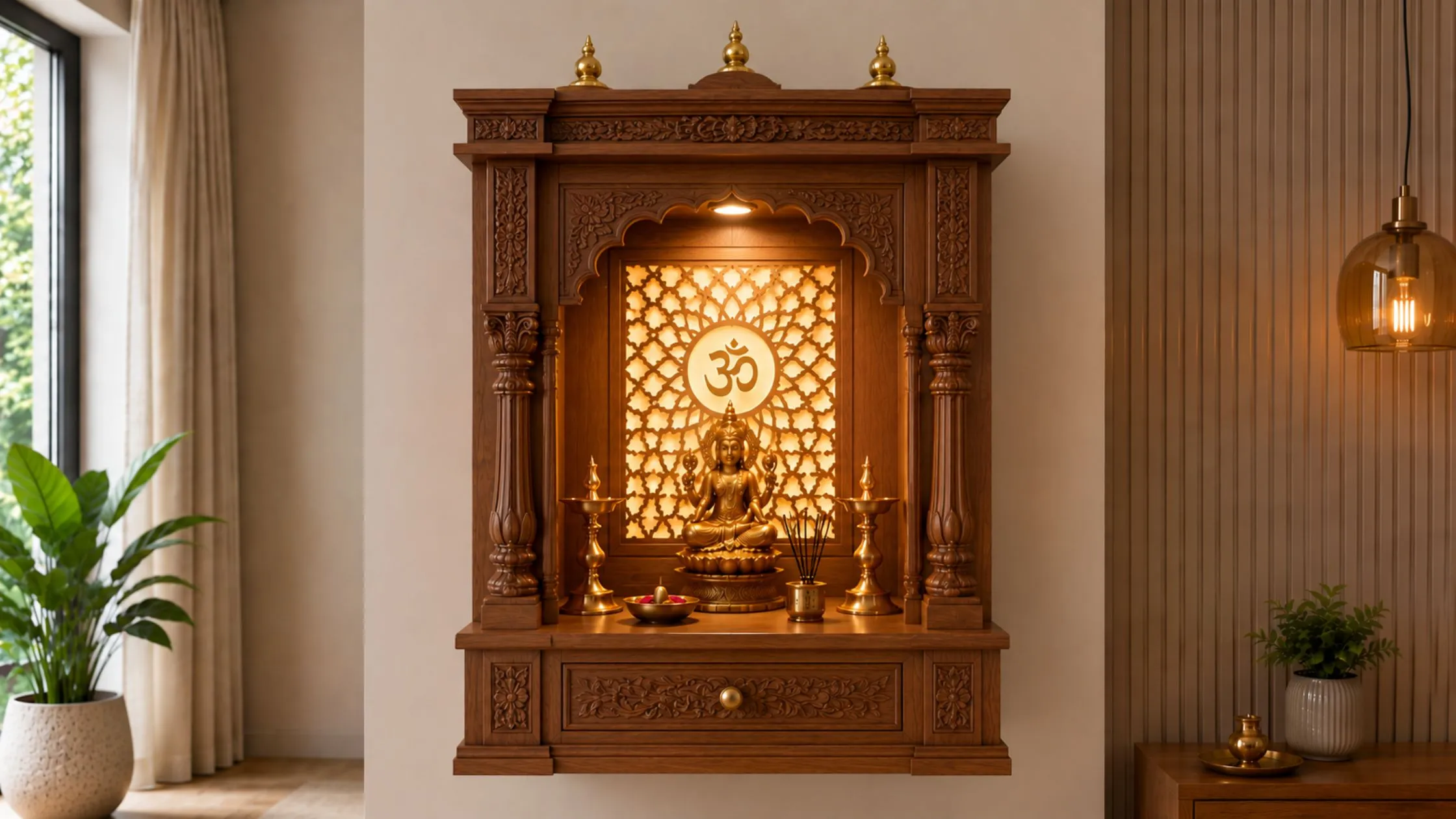
Traditional temple-inspired design is sort of a timeless classic, but with a home-friendly scale, like it still feels grand without overwhelming the room. It brings intricate craft work and a real temple vibe to middle-class Indian homes, without those impossible building conditions. Overall it works quite well when you want something spiritually meaningful, and also visually eye-catching, like a kind of bright aura.
Common features include:
- Sheesham or teak wood structure with hand-carved pillars and canopy
- Elevated altar platform with decorative columns on either side
- Double-shutter door entry, considered auspicious as per Vastu
- Brass bell, copper kalash, and traditional motif carvings throughout
This design works best for:
- Joint families and independent homes with a dedicated room
- Homeowners who prioritise traditional aesthetics
- Plots with a separate Mandir of at least 5 × 7 feet
Estimated Cost: ₹60,000 – ₹1,20,000
Materials: Sheesham wood, teak, brass accents
4. Backlit Marble Mandir
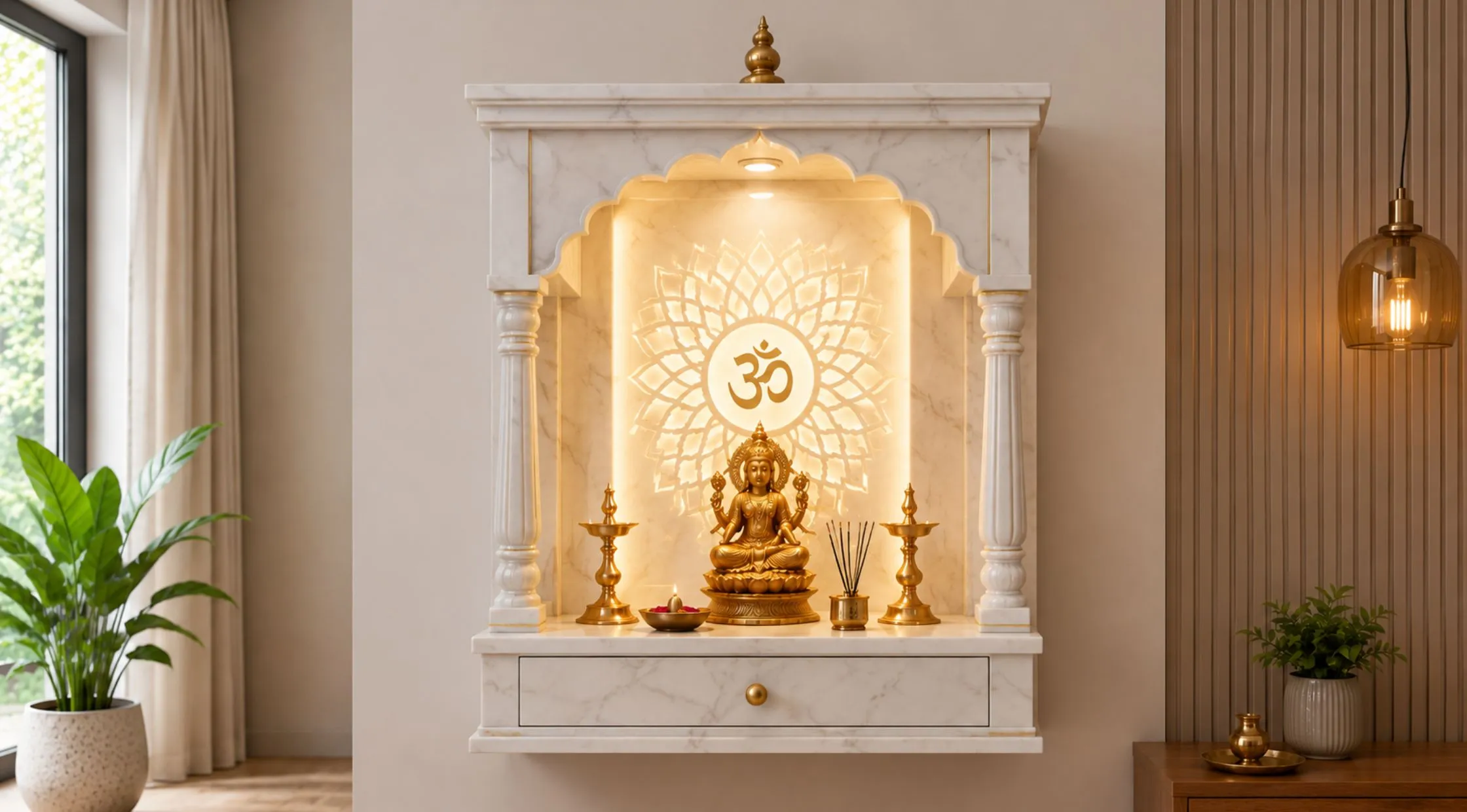
Backlit marble mandir gives you one of the more eye-catching Mandir design options you can find in the middle class budget bracket during 2026. Marble has always been tied to temples and holy places, and when the marble panels are backlit, they form this sort of divine halo around the deities that really lifts the whole morning and evening prayer experience, even if you’re not going for a luxury renovation.
Common features include:
- Makrana or Carrara marble tiles used as the main backdrop
- Warm LED strip lighting installed behind the marble panel
- Wooden accents on the shelf frame for warmth and contrast
- Soft, ethereal glow that makes the space appear larger and serene
Benefits include:
- A premium, temple-like look for a mid-range price ,
- Marble is long lasting, not fussy to clean, and resists weather quite well
- Warm LED backlighting means no separate lamp is really needed
- It works beautifully for both smaller places and more roomy homes
Estimated Cost: ₹40,000 – ₹90,000
Materials: Marble tiles, warm LED strips, teak wood frame
5. Glass Door Pooja Cabinet
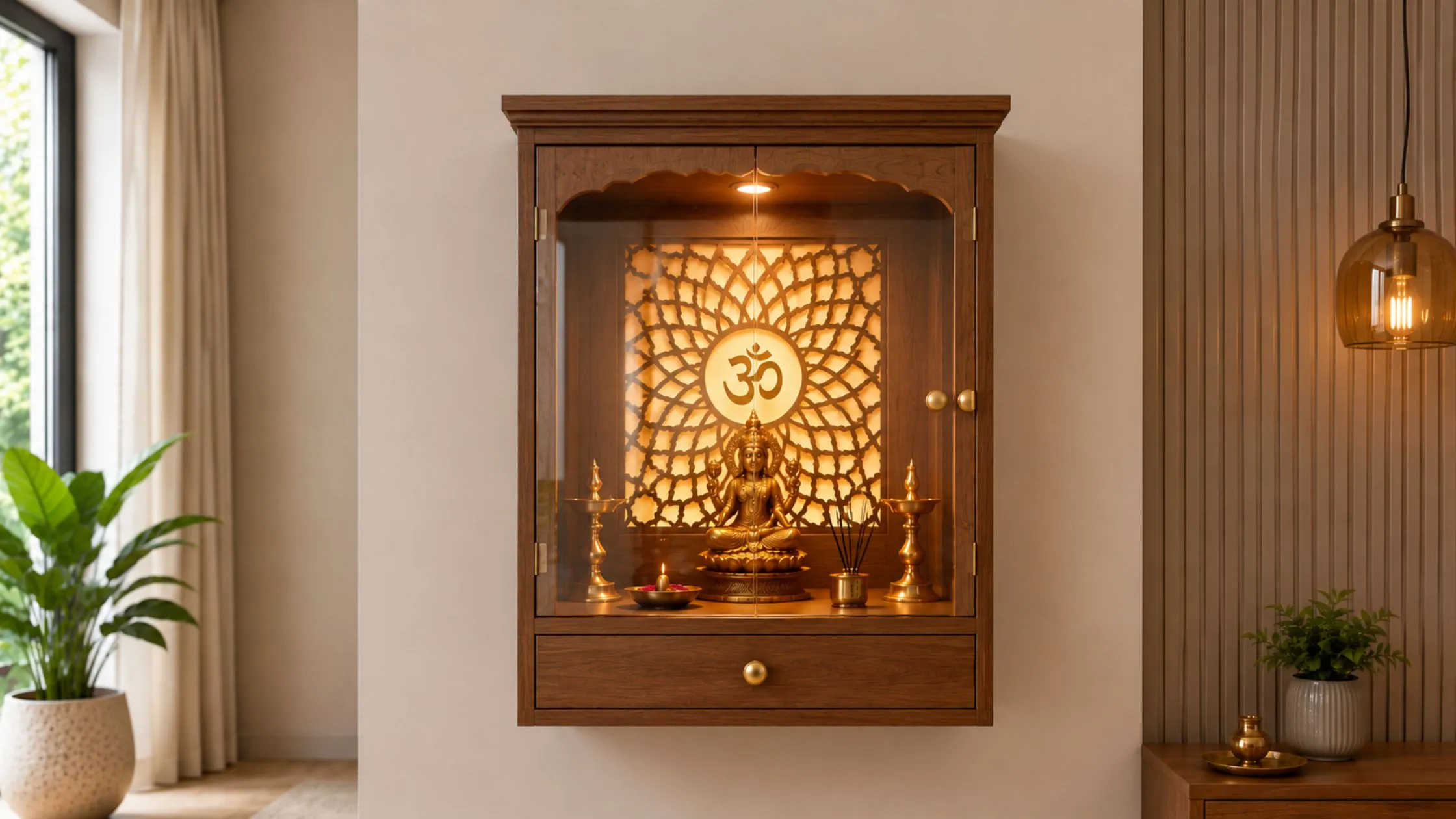
Glass door pooja cabinets are getting quite popular in modern Indian homes, and honestly you can see why. They let you view the idols at every moment, and that sort of unbroken visual link with the deity feels spiritually satisfying, like it’s there with you. Also, this design is one of the more budget friendly choices for middle class families, because they still get that tidy, polished contemporary mandir look, without spending too much.
Common features include:
- Frosted or etched glass panels with religious motifs
- Engineered wood frame in teak-finish or white laminate
- Optional coloured glass to complement the home's overall palette
- Inner LED strip for soft illumination of the idol shelf
This design works best for:
- Modern apartments and builder flats
- Families who prefer a closed, cabinet-style mandir
- Hallways and living rooms where a wall-mounted unit fits naturally
Estimated Cost: ₹15,000 – ₹35,000
Materials: Frosted glass, engineered wood frame
6. Corner Nook with Sliding Door
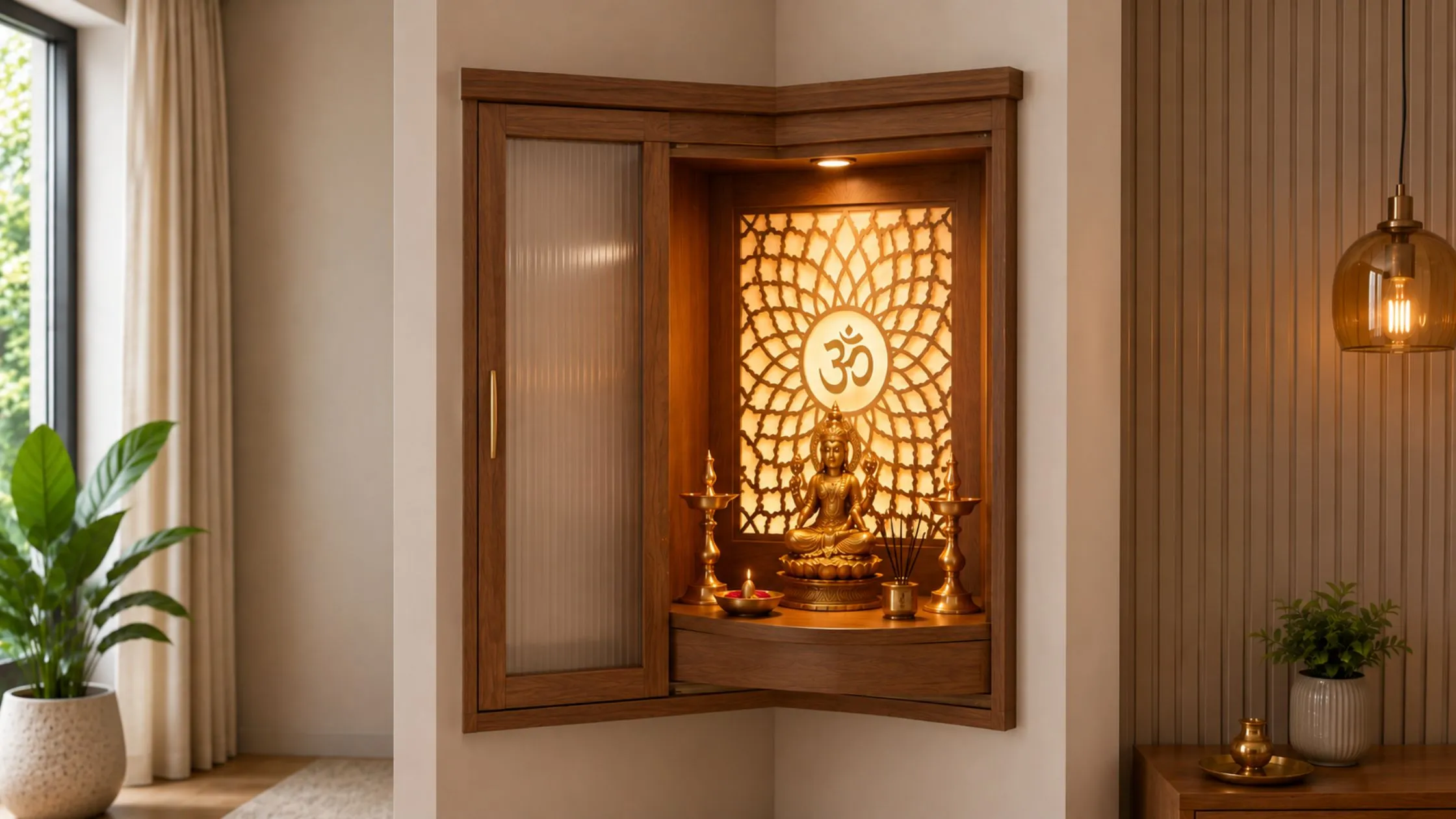
A corner nook with a sliding door is this clever, space-saving answer for those narrow hallways and kind of spare corners you get in compact Indian homes. It sort of fits right into any tight spot without making the space feel more crowded, which is exactly what small apartments seem to need.
Common features include:
- Sliding door panel with a traditional bell fixed to the frame
- Inner shelf for idols and a small storage unit for prayer books
- Compact footprint that works in as little as 3 × 3 feet of space
- Laminate or wood finish that blends with surrounding walls naturally
Benefits include:
- Minimal space requirement with maximum spiritual functionality
- Works in both modern and traditional home interiors
- Sliding door eliminates the need for swing-door clearance
- Easy to set up without major carpentry or construction work
Estimated Cost: ₹18,000 – ₹40,000
Materials: Plywood with laminate and sliding track hardware
7. Integrated Pooja Unit with Storage
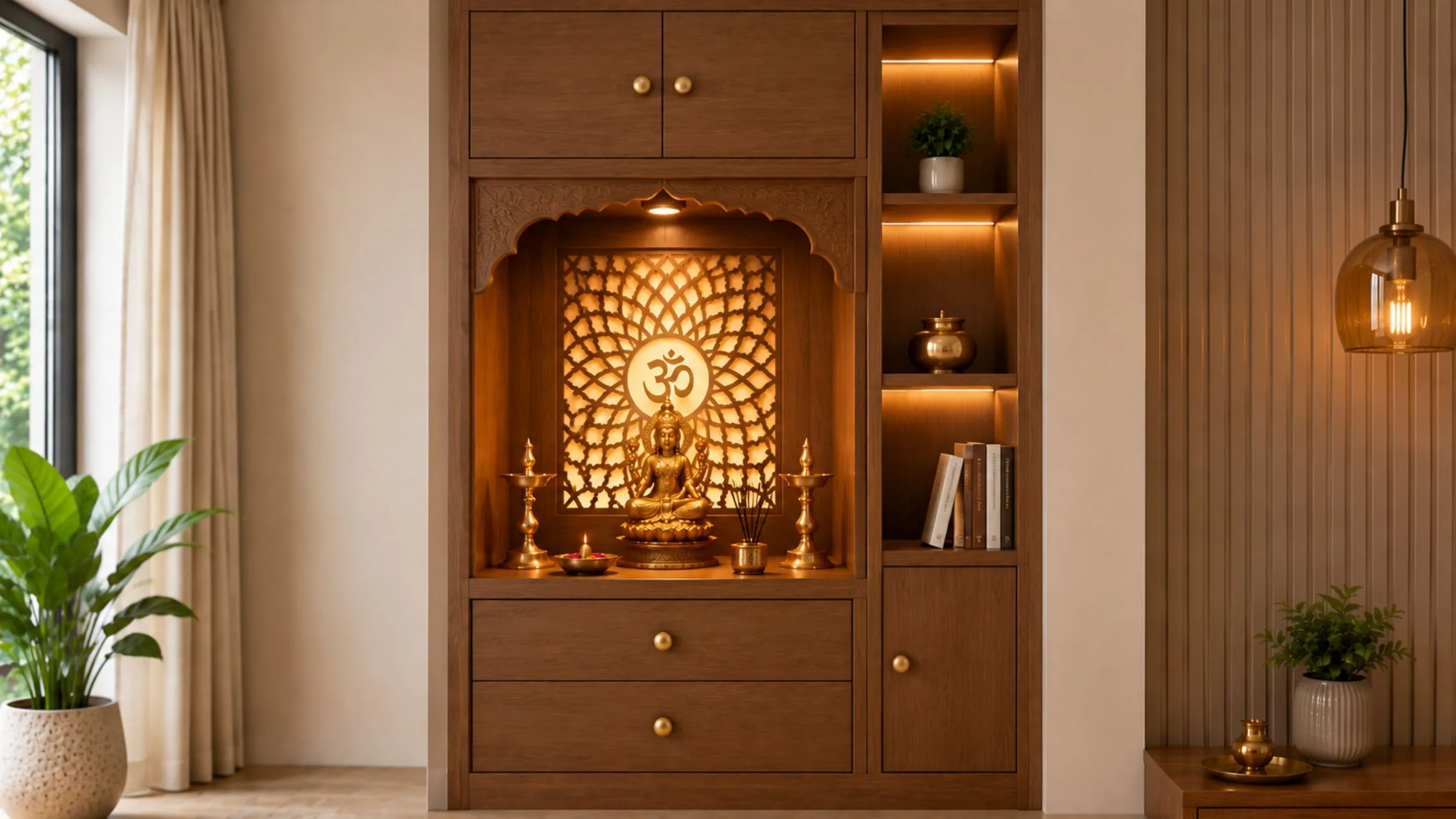
The integrated pooja unit with storage is the smartest pick for 2BHK homes where every square foot actually matters. Closed cabinets below hold samagri and scriptures, open shelves above display the idols, and pull-out trays for pooja thalis completely eliminate countertop clutter.
Common features include:
- Patterned wooden side panels for a traditional aesthetic
- Open upper shelves for idols and closed lower cabinets for storage
- Pull-out trays for thalis, agarbatti holders, and oil lamps
- PU or laminate finish for durability and easy maintenance
This design works best for:
- 2BHK and 3BHK apartments and independent homes
- Families with a large collection of pooja items
- Walls in the dining area or bedroom where dual-purpose units work well
Estimated Cost: ₹30,000 – ₹70,000
Materials: Plywood, MDF, PU finish
8. Backlit Jaali Panel Mandir
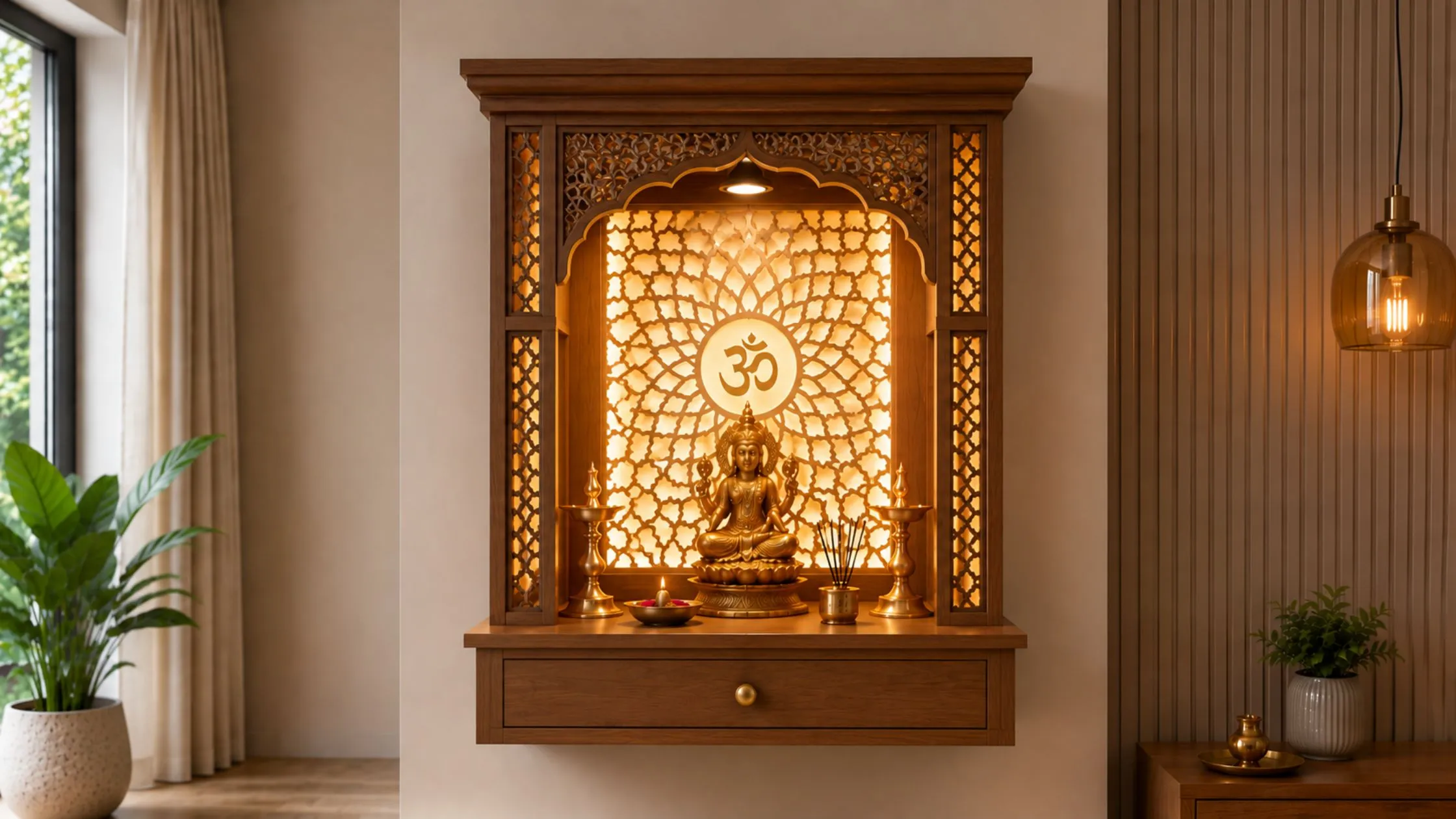
Laser-cut jaali panel mandirs are honestly one of the most striking Mandir designs trending across Indian homes in 2026. The CNC-etched Om, lotus, or swastik motifs cast beautiful light patterns on surrounding walls when a diya is lit inside, and that effect is really something special during evening aarti.
Common features include:
- MDF or teak wood panel with CNC or laser-cut jaali work
- Sacred motifs including Om, lotus, swastik, or geometric patterns
- Warm LED backlighting that highlights both the idol and the jaali pattern
- Compact wall-mounted frame that fits living rooms and open-plan homes
Benefits include:
- High visual impact at a moderate cost
- Dramatic lighting effect during prayer time
- Works beautifully in both contemporary and traditional interiors
- Easy to combine with floating shelves and a marble or wooden base
Estimated Cost: ₹25,000 – ₹55,000
Materials: MDF with CNC jaali, warm LED lighting
9. Wooden Mandir with South Indian Carving Influence
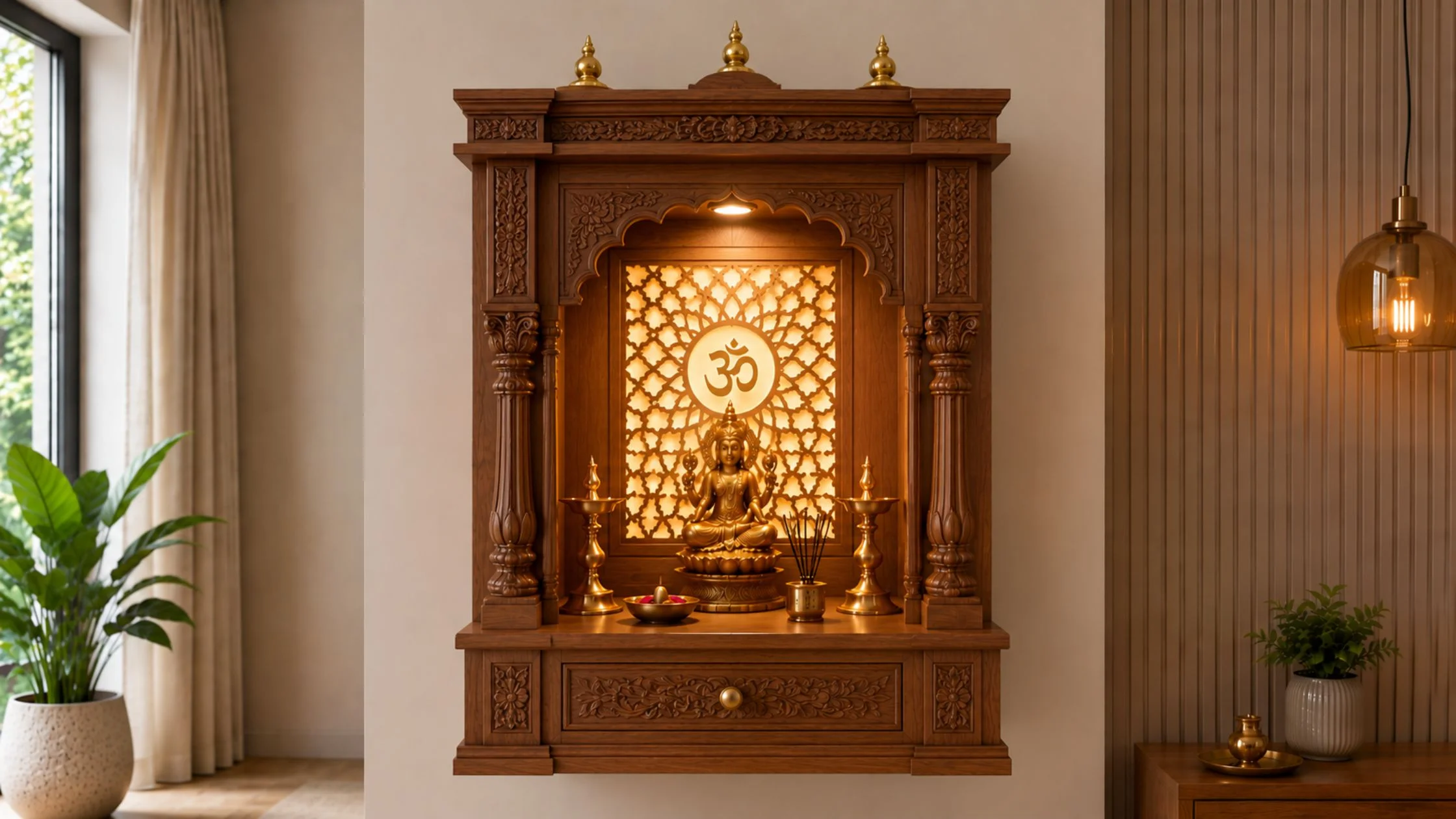
Inspired by South Indian temple architecture, this design uses teak wood with quite intricate pillar carvings, plus a decorative shikara canopy above the deity platform, and solid wooden doors with ornate entrance frames, like really. It is the sort of Mandir design that somehow becomes a centrepiece of the home, you know.
Common features include:
- Teak wood structure with CNC-assisted traditional carvings
- Decorative shikara canopy above the idol platform
- Solid double-door entry with brass handle and detailing
- Brass wall hangings and copper diyas for authentic regional character
This design works best for:
- South Indian families and those who love heritage aesthetics
- Independent homes with a dedicated Mandir
- Families who want the mandir to serve as the architectural focal point
Estimated Cost: ₹35,000 – ₹80,000
Materials: Teak wood with CNC-assisted carvings, brass accents
10. Multifunctional Pooja Alcove in the Living Room
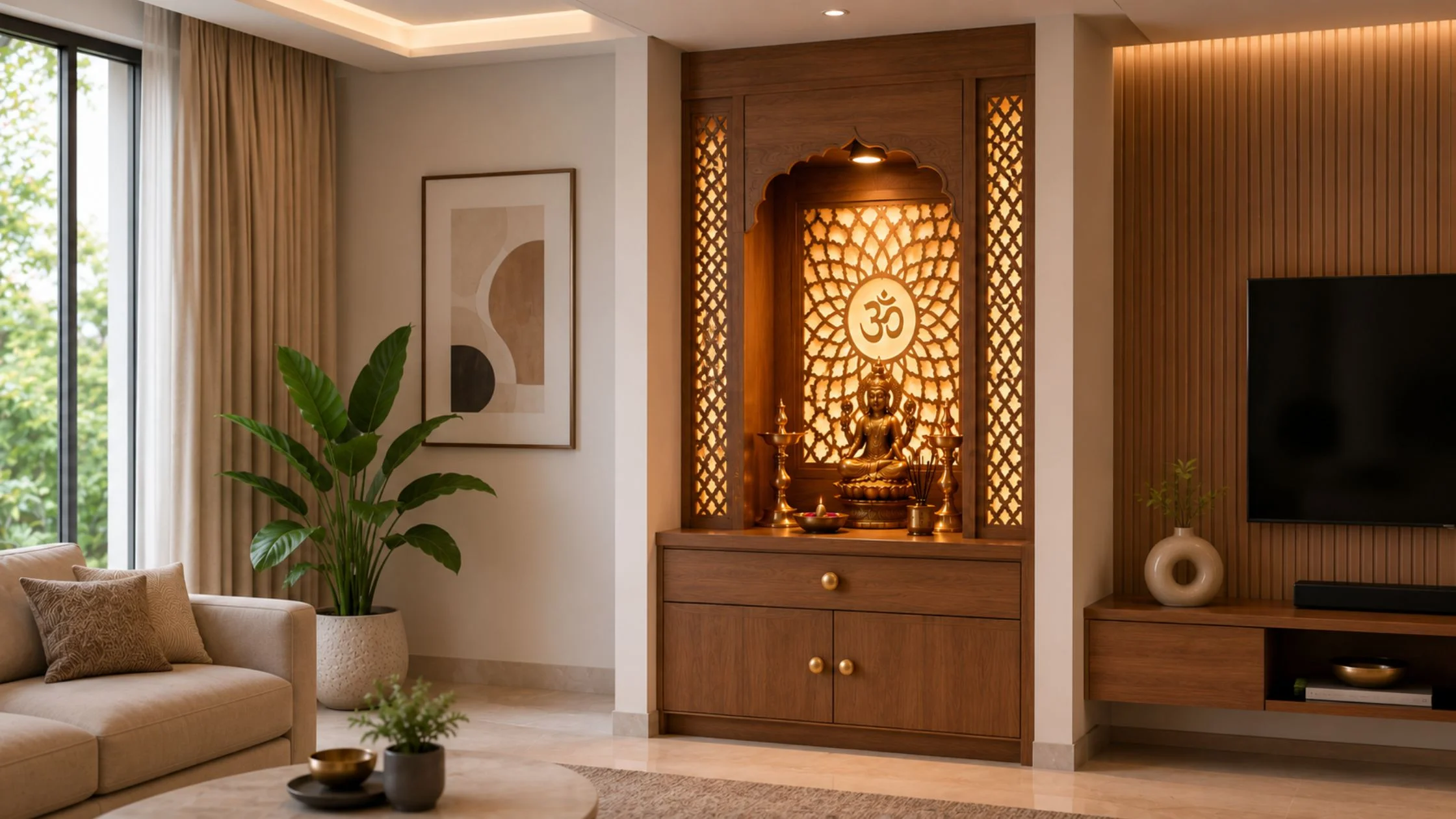
For studio apartments and compact 1BHKs, a built-in pooja alcove in the living room wall is the most practical and budget-friendly solution among all simple Mandir designs for middle-class Indian homes. It doesn't require a separate room at all, but still delivers a genuinely sacred and visually defined prayer corner.
Common features include:
- Built-in wall niche with engineered wood shelves and white paint finish
- Brass accents and a small threshold (umbartha) at the base
- Compact LED strip light behind the idol niche for a warm glow
- Optional curtain or sliding panel to close the alcove during non-prayer hours
Benefits include:
- Lowest cost option among all 10 designs
- No dedicated room needed — fits any living room or bedroom wall
- Easy to Vastu-comply by choosing the northeast wall
- Feels intentional and devotional, not like an afterthought
Estimated Cost: ₹12,000 – ₹25,000
Materials: Engineered wood, white paint, brass accents
Also Read: 10 Modern Parapet Wall Designs for Independent Houses
Quick Budget & Best-For Reference
|
Mandir Design |
Estimated Cost |
Best For |
|---|---|---|
|
Compact wall-mounted unit |
₹20,000 – ₹50,000 |
1BHK/2BHK apartments |
|
Minimalist wooden corner altar |
₹15,000 – ₹20,000 |
Studio/small homes |
|
Traditional carved mandir |
₹60,000 – ₹1,20,000 |
Joint families / dedicated room |
|
Backlit marble mandir |
₹40,000 – ₹90,000 |
Mid-range homes |
|
Glass door pooja cabinet |
₹15,000 – ₹35,000 |
Modern flats |
|
Corner nook with sliding door |
₹18,000 – ₹40,000 |
Compact corners / hallways |
|
Integrated unit with storage |
₹30,000 – ₹70,000 |
2BHK / storage-heavy families |
|
Backlit jaali panel mandir |
₹25,000 – ₹55,000 |
Contemporary homes |
|
South Indian carved mandir |
₹35,000 – ₹80,000 |
Heritage-style independent homes |
|
Living room pooja alcove |
₹12,000 – ₹25,000 |
Studio / 1BHK apartments |
Final Thoughts
Simple Mandir designs often show that even a smaller home can still build something that feels powerful and truly devotional, if the whole plan is done thoughtfully, and yeah, with a bit of patience. Picking the right Mandir design is not only an interior choice, it’s basically an expression of faith, family priorities, and a cultural identity that remains with the household for generations, in a very quiet way.
Whether you prefer the straightforward practicality of a wall-mounted unit, the richer vibe of a backlit marble mandir, or the long-lasting heritage charm found in a South Indian carved style, the best option will slowly lift your home’s spiritual atmosphere and also its visual value, for many years ahead. First, get your Vastu direction right, then match the design with what you can reasonably spend, and finally choose materials that feel suited to your home’s climate, plus your everyday routines.




Ans 1. Compact wall-mounted units, minimalist wooden corner altars, and glass door pooja cabinets are the most popular simple pooja room designs for middle-class Indian homes in 2026. These designs combine affordability, Vastu compliance, and clean aesthetics, making them ideal for apartments and independent homes on a moderate budget.
Ans 2. The northeast direction, called "Ishan Kon," is the most auspicious placement for a pooja room as per Vastu Shastra. If northeast is not possible, north-facing or east-facing walls are the next best options. Avoid placing the mandir near a bathroom, directly under a staircase, or in the south direction.
Ans 3. As per Vastu, a dedicated pooja room should measure at least 5 feet × 7 feet to comfortably accommodate rituals. For compact homes and apartments, a wall-mounted mandir unit of minimum 3 × 3 feet is a fully practical and Vastu-friendly alternative.
Ans 4. Costs range from ₹12,000 for a simple living room alcove to ₹1,20,000 or more for a traditional carved wooden mandir. Most middle-class families can create a beautiful, Vastu-compliant pooja room design between ₹20,000 and ₹55,000 depending on materials and complexity.
Ans 5. Teak wood and sheesham wood are the most durable and spiritually preferred materials for a mandir. Engineered wood and MDF are practical budget alternatives. Marble is ideal for a premium look. Natural materials are always recommended over synthetic or plastic options as per Vastu guidelines.
Ans 6. Yes. A wall-mounted compact unit, a glass door cabinet, or a built-in living room alcove are all excellent pooja room designs for 1BHK apartments. These require as little as 3 × 3 feet of wall space and can be fully Vastu-compliant with the right northeast placement.
Ans 7. Warm LED lighting in the 2700K to 3000K range is ideal for a pooja room. LED strip lights installed behind idols or marble backdrops create a calm, devotional glow. Always combine artificial LED lighting with a traditional brass or clay diya for a complete spiritual ambience.
Ans 8. The top trending pooja room designs in 2026 include backlit marble mandirs, laser-cut jaali panel units, compact wall-mounted mandirs with foldable shutters, and minimalist wooden altars with floating shelves and warm LED lighting. Combination designs using wood, marble, and brass are also very popular.
Ans 9. Both serve different needs. Wood especially teak and sheesham offers warmth, traditional carvings, and long durability, making it ideal for a classic heritage aesthetic. Marble gives a premium, temple-like finish. Many of the best 2026 pooja room designs combine both materials for a refined balance of tradition and modernity.
Ans 10. Place the mandir unit on the northeast wall, ensure idols face north or east during prayers, use natural materials like teak or sheesham, choose light and soothing colours like white or pale yellow, and maintain proper ventilation near the space. Even a 3 × 3 feet wall-mounted pooja unit can be fully Vastu-compliant with the right placement and intention.