
✦ AI Summary
Table of Content
▲- How Delhi Meerut RRTS Is Changing NCR Real Estate
- How Property Prices Have Increased Along the RRTS Corridor
- What Is Transit Oriented Development (TOD) and Why It Matters
- Meerut Emerging as NCR’s New Bedroom Community
- Best Investment Locations Along the Delhi Meerut RRTS Corridor
- How Developers Are Responding to the RRTS Boom
- Commercial Real Estate Also Expected to Benefit
- Comparison Between Traditional Suburbs and RRTS Driven Growth Corridors
- What Buyers and Investors Should Carefully Evaluate
- Final Thoughts
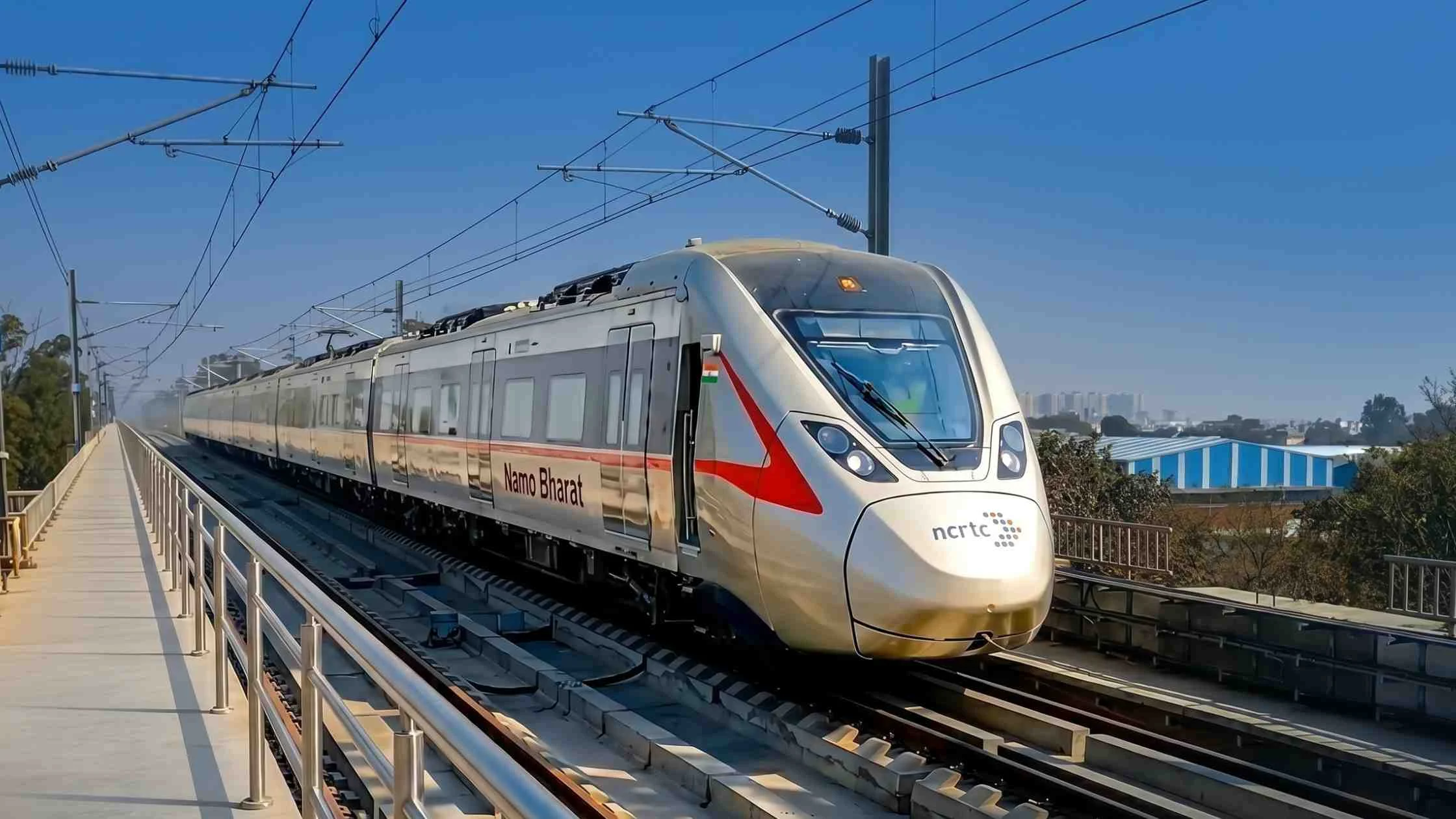
The Delhi Meerut RRTS corridor is swiftly changing the real estate landscape throughout NCR. The fully functioning 82 km Namo Bharat corridor has cut travel time between Delhi and Meerut to less than one hour, enhancing the appeal of previously remote areas for homebuyers and investors.
Current property demand in Ghaziabad, Sahibabad, Indirapuram, Modipuram, and Shatabdi Nagar areas now experiences major increases because the area has better transportation links and its infrastructure works have been completed and Transit Oriented Development (TOD) has been established. The Delhi Meerut RRTS project has transformed from its original function as a public transit system into an essential element for developing residential and business properties throughout North India.
How Delhi Meerut RRTS Is Changing NCR Real Estate
The residential development in western Uttar Pradesh faced restrictions for many years because residents needed to travel through the area for extended periods. Commuters from Meerut to Delhi experienced daily travel delays of almost three hours because of severe traffic jams and insufficient public transportation services. The Namo Bharat RRTS corridor launch has transformed the entire situation.
Key Reasons Behind Rising Demand
- Travel time reduced to less than 60 minutes
- Better connectivity to Delhi business hubs
- Growing demand for affordable larger homes
- Expansion of Transit Oriented Development zones
- Increased interest from national developers
- Rise of integrated townships and gated communities
Professionals working in Delhi can now live in larger and more affordable homes in Meerut or Ghaziabad without sacrificing commuting convenience.
Also Read: How Noida International Airport Will Boost Real Estate Prices from 2026 Onwards
How Property Prices Have Increased Along the RRTS Corridor
The biggest impact of the RRTS project can already be seen in property price appreciation across key micro markets.
Property Price Appreciation Along Delhi Meerut RRTS
|
Location |
Property Appreciation |
Average Price Range 2026 |
Major Growth Drivers |
|
Ghaziabad |
131% |
₹7500 to ₹12000 per sq ft |
Connectivity and premium housing |
|
Meerut |
54% |
₹4500 to ₹6500 per sq ft |
RRTS and Meerut Metro |
|
Indirapuram |
73% |
₹9000 to ₹13000 per sq ft |
Sahibabad RRTS access |
|
Modipuram |
40% |
₹3500 to ₹5000 per sq ft |
Greenfield township projects |
|
Shatabdi Nagar |
Rapid growth |
Emerging market |
TOD infrastructure |
Land prices near several RRTS stations have also increased sharply. In some areas, rates have doubled over the last four years due to infrastructure driven demand.
Ghaziabad's 131% increase over four years stands out as the most striking figure, highlighting the city's status as the closest RRTS station to Delhi's eastern job hubs. Land values close to RRTS stations in Ghaziabad increased twofold during this time, as investors foresaw the demand has now become apparent.
What Is Transit Oriented Development (TOD) and Why It Matters
The government dedicated its resources to Transit Oriented Development which became the primary driver for the real estate market expansion. Transit Oriented Development refers to high density mixed development near major transport hubs. The designated areas develop different zones that include residential, commercial and office spaces which people can reach through walking distance to rapid transit stations.
The Uttar Pradesh government has designated thousands of hectares along the RRTS corridor for development based on TOD, which has resulted in a complete transformation of both the economic systems and development patterns throughout those locations.
Main Features of TOD Zones
- High rise residential towers
- Commercial office spaces
- Retail and entertainment hubs
- Walkable urban layouts
- Better public infrastructure
- Reduced traffic congestion
The Uttar Pradesh government has already earmarked thousands of hectares around the corridor for TOD based urban expansion. This strategy is expected to create self-sustaining urban clusters instead of unplanned suburban growth.
Meerut Emerging as NCR’s New Bedroom Community
Delhi Meerut RRTS corridor is also changing buyer preferences across NCR. The people of Meerut now prefer to establish their homes in the city because it provides them with large living spaces, environmentally friendly areas and more affordable housing options which they can use while they work in Delhi.
The property prices in Meerut start at ₹4,500 and reach ₹6,500 per sq ft for projects situated in prime locations while Noida and Gurugram impose charges of ₹9,000 to ₹15,000 per sq ft for their identical locations. The budget of ₹1.5 crore which allows for the purchase of a basic 2BHK in a developed NCR suburb enables buyers to acquire a spacious 3BHK or 4BHK home in a sought-after gated community located in Meerut.
RRTS connectivity enables commuters to reach Delhi within one hour while people who prefer spacious areas and affordable prices have started to choose residential areas outside Noida and Gurugram.
Why Homebuyers Are Considering Meerut
- Lower property prices compared to Delhi NCR
- Larger apartments and plotted developments
- Better air quality and less congestion
- Premium gated communities
- Faster daily commute through RRTS
Numerous developers are currently introducing upscale residential projects, plotted townships, and smart housing communities aimed at buyers in Delhi.
Best Investment Locations Along the Delhi Meerut RRTS Corridor
Identifying the areas in the corridor that offer the most promising investment prospects, analyzing the micro-market dynamics of each RRTS station instead of concentrating solely on the broader corridor story.
High Potential Real Estate Hotspots
|
Location |
Investment Potential |
Key Advantage |
|
Sarai Kale Khan |
High commercial potential |
Multimodal transport hub |
|
Sahibabad |
Strong residential demand |
Quick Delhi connectivity |
|
Indirapuram |
Premium housing growth |
Established social infrastructure |
|
Modipuram |
Emerging investment zone |
Terminal station advantage |
|
Shatabdi Nagar |
Future growth corridor |
TOD based expansion |
These areas are attracting both end users and long term investors looking for future capital appreciation.
How Developers Are Responding to the RRTS Boom
Large real estate developers have started accelerating project launches near RRTS stations to capitalize on rising demand. Well-established national developers, who traditionally concentrated on Gurugram, Noida, and Greater Noida, are now proactively purchasing land and initiating projects along the RRTS corridor, a sign of assurance supported by significant investment that indicates sincere belief in demand potential.
Popular Development Trends
- Integrated townships
- Luxury gated communities
- Smart homes
- Mixed-use developments
- High-rise apartments
- Branded plotted developments
Developers are now marketing projects based on one hour connectivity to Delhi, which has become a major selling point.
Also Read: Noida vs Gurgaon: Which City Offers Better Infrastructure and Quality of Life?
Commercial Real Estate Also Expected to Benefit
The impact of the Delhi Meerut RRTS is not limited to residential housing. Commercial real estate demand is also expected to increase significantly.
Improved regional connectivity often attracts:
- Office developments
- Retail centers
- Warehousing hubs
- Hospitality projects
- Educational institutions
- Healthcare infrastructure
Experts believe Ghaziabad and Meerut may eventually evolve into secondary business districts for NCR.
Comparison Between Traditional Suburbs and RRTS Driven Growth Corridors
|
Feature |
Traditional NCR Suburbs |
RRTS Growth Corridors |
|
Travel Time |
Long and traffic heavy |
Fast regional connectivity |
|
Infrastructure Growth |
Gradual |
Rapid infrastructure expansion |
|
Property Appreciation |
Moderate |
High growth potential |
|
TOD Planning |
Limited |
Large scale implementation |
|
Buyer Demand |
Mostly local |
Regional and investor demand |
|
Urban Planning |
Fragmented |
Integrated mixed use planning |
This shift highlights why infrastructure projects now play a critical role in determining real estate value.
What Buyers and Investors Should Carefully Evaluate
The real potential along the Delhi-Meerut RRTS corridor does not imply that each project or location is similarly advantageous. Mandatory assessment continues to be crucial:
Developer credibility constitutes the primary factor that determines whether developers will work on the corridor because their track record fails to match the trustworthiness of their marketing. It is important to investigate the delivery history of particular developers prior to making any commitments to their contributions on comparable projects.
RERA registration should be obligatory; every project that surpasses the specified thresholds must have RERA registration, and buyers ought to verify the up-to-date compliance status on the UP-RERA portal rather than depending on developer statements.
Infrastructure completion timelines for specific locations, some TOD zones and connectivity promises are at different stages of actual delivery. The RRTS itself is operational, but surrounding road connectivity, civic infrastructure, and social facilities in emerging micro-markets like Modipuram and Shatabdi Nagar vary significantly by specific location.
Speculative price risk is real in early-stage markets. Some micro-markets may have seen price acceleration that has outrun underlying fundamentals. Comparing current prices to historical norms and to comparable markets elsewhere helps calibrate whether you're buying at reasonable value or at a speculative peak.
Final Thoughts
The Delhi Meerut RRTS corridor has become one of the biggest infrastructure driven real estate transformations in NCR. Faster regional connectivity, rising property prices, TOD based planning, and expanding urban infrastructure are turning Ghaziabad and Meerut into major residential and investment destinations.
Namo Bharat corridor expansion project which enhances transportation options throughout the NCR region will create continuous demand for residential properties as well as investment opportunities and development projects near RRTS stations. The Delhi Meerut RRTS corridor has become one of India's most promising real estate markets because it offers affordable modern housing to buyers who want strong long term value growth.

_1792140859.webp)



_1792151285.webp)
Ans 1. The Delhi Meerut RRTS is an 82 km high speed regional transit corridor connecting Delhi, Ghaziabad, and Meerut through Namo Bharat trains.
Ans 2. Property prices near RRTS stations have increased significantly due to improved connectivity, rising demand, and infrastructure development.
Ans 3. Ghaziabad, Sahibabad, Indirapuram, Modipuram, and Shatabdi Nagar are seeing major real estate growth.
Ans 4. Investors expect long term appreciation because of faster connectivity, TOD projects, and rising residential and commercial demand.
Ans 5. TOD is a planning model where residential, commercial, and retail spaces are developed around major transit stations for better urban living.
Ans 6. Ghaziabad property prices have reportedly appreciated by around 131% over the last four years.
Ans 7. Meerut offers larger homes, lower prices, cleaner surroundings, and less than one hour connectivity to Delhi through RRTS.
Ans 8. RRTS improves connectivity, supports infrastructure development, increases buyer demand, and boosts commercial activity.
Ans 9. Sarai Kale Khan is expected to become a major commercial hub due to multimodal transport connectivity.
Ans 10. Buyers should verify developer credibility, RERA registration, infrastructure status, and actual market pricing before investing.