
✦ AI Summary
Table of Content
▲- Why Marble is Preferred for Home Mandirs
- What is Makrana Marble?
- What is Italian Marble?
- Makrana Marble vs Italian Marble Comparison
- Why Makrana Marble is Ideal for Home Mandir
- Why Italian Marble is Chosen for Modern Home Mandirs
- Factors to Consider Before Choosing Marble
- Cost Comparison Between Makrana and Italian Marble
- Future Trends in Home Mandir Design
- Conclusion
A home mandir is not just a way to decorate an area of your house; it is a space in your house that feels sacred for families to pray, meditate, and find peace together. One of the key things in the making or design of a mandir is picking the proper kind of marble because it does more than just shape the entire look of it. It also quietly decides how long it will last , how often you’ll need to handle maintenance , and even how spiritually inviting it will feel to you in everyday life.
There are many types of marble to choose from when selecting a stone to build your home mandir; however, two of the most well-known and commonly-used types are Makrana Marble and Italian Marble. There are many differences between these two types of marbles, and knowing how each one is different will allow homeowners to pick the right type of marble for their own home mandirs.
Why Marble is Preferred for Home Mandirs
Marble has been used in temples and religious structures for centuries due to its elegance, purity, and long lifespan. Many homeowners continue this tradition by choosing marble for their home temples. Marble creates a naturally cool, clean surface that feels appropriate for a sacred space. It holds carved detail beautifully, the kind of intricate floral and figurative work that temple architecture demands. It doesn't deteriorate quickly under regular cleaning with water and mild solutions. And its visual purity, particularly in white varieties, carries an association with sanctity that few other materials can match.
Benefits of Marble for Home Mandirs
- Creates a serene and spiritual atmosphere
- Offers long-lasting durability
- Enhances the aesthetic appeal of the prayer space
- Easy to carve into intricate religious designs
- Resistant to heat and aging
- Adds premium value to interiors
The choice of marble often depends on budget, design preference, and maintenance expectations.
Also Read: Marble vs. Vitrified Tiles: Which is Best and Cheapest for a Middle-Class Home?
What is Makrana Marble?
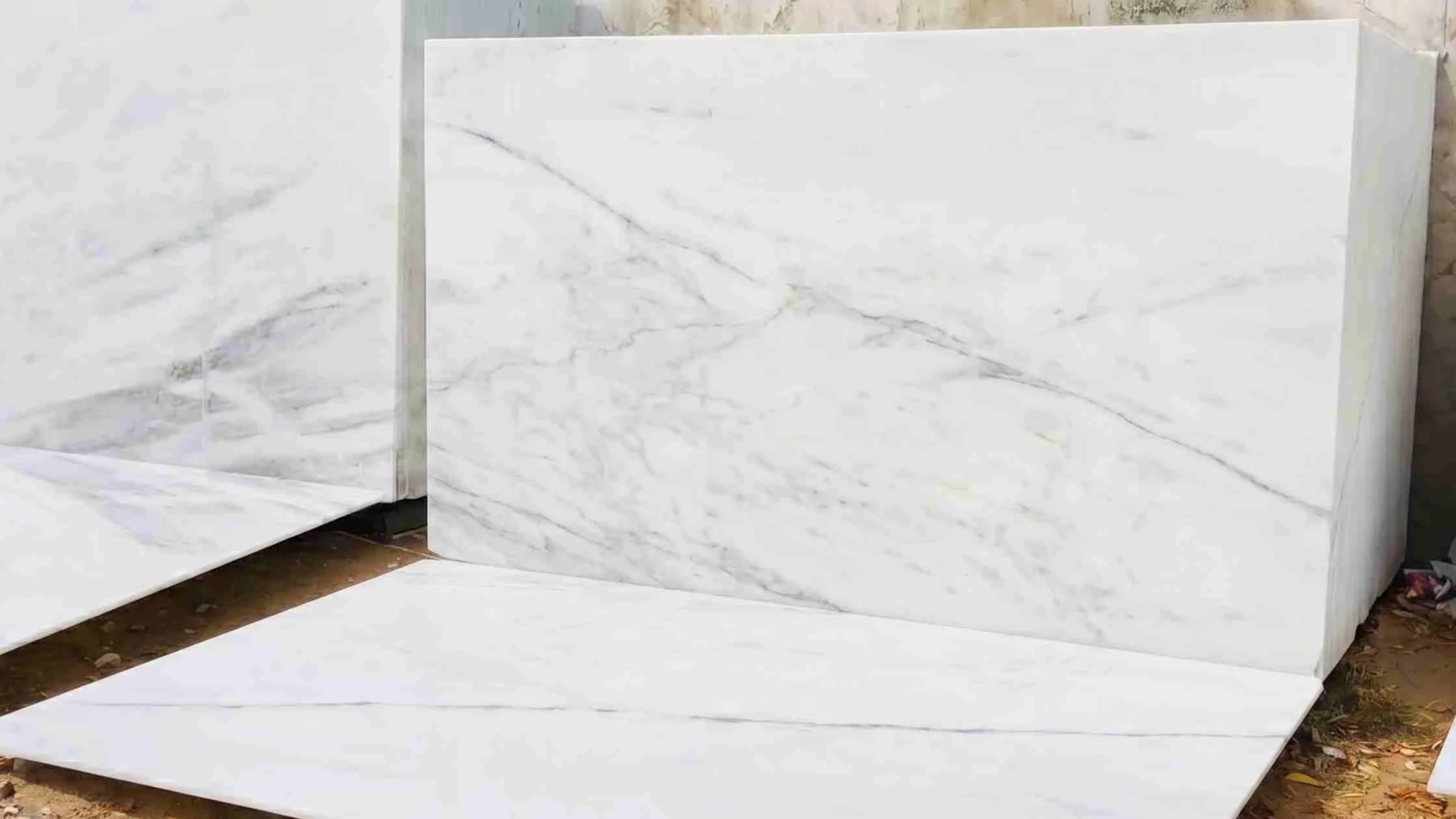
Makrana marble is sourced from Makrana, in the Nagaur district of Rajasthan, India. This kind of marble has been quarried for more than five hundred years and it really got its iconic reputation via the Taj Mahal and the Victoria Memorial in Kolkata, not through effective marketing for the stone itself, it’s more like it just kind of endured. Instead, it has slowly turned into one of the most respected materials to build structures with and still look good after the years so it stays structurally sound and beautiful for decades, even when everything else around it changes.
Additionally, this stone is a dolomitic marble that contains an exceptionally high level of calcium carbonate, which is what gives the stone its very bright natural color and long-lasting qualities. Most other types of white marbles eventually develop a yellow or grey tint with age, however, authentic Makrana marble has shown that it can hold its color remarkably well after being used for years upon years.
Features of Makrana Marble
- Naturally white appearance
- High calcium content
- Exceptional durability
- Low water absorption
- Long-lasting shine
- Traditional Indian aesthetic
Its natural purity makes it a preferred choice for temples, idols, and religious architecture.
What is Italian Marble?
Italian marble is a broad classification that encompasses natural stone mined (quarried) mainly from locations in Italy including Carrara, Statuario, Calacatta and Botticino. The various types of Italian marble vary widely regarding their appearance; examples include creamy white with grey vein lines and very dramatic gold or green patterned tops. However, they are all consistent in that they provide a visually complex and deep surface which unmistakably identifies them as premium decorative stones.
Italian marble has become an increasingly popular material for luxurious finish in high-end Indian residential interiors over the last 20 years because it is very prestigious in appearance and works harmoniously with the modern, contemporary language of interior decorating. The attractiveness and elegance of Statuario marble surfaces or Calacatta slabs are like few products available for creating an elevated level of sophistication within any given space.

Key Features of Italian Marble
- Smooth and glossy finish
- Unique vein patterns
- Contemporary appearance
- Available in multiple shades
- Premium luxury appeal
- Popular in modern interior design
Italian marble is often chosen by homeowners seeking a stylish and high-end aesthetic.
Makrana Marble vs Italian Marble Comparison
The following table highlights the major differences between the two marble types.
|
Feature |
Makrana Marble |
Italian Marble |
|
Origin |
Rajasthan, India |
Italy |
|
Appearance |
Pure white and natural |
Patterned and luxurious |
|
Durability |
Extremely high |
Moderate to high |
|
Water Absorption |
Very low |
Relatively higher |
|
Maintenance |
Low |
Moderate |
|
Longevity |
Can last for generations |
Good but requires care |
|
Cost |
Moderate to premium |
Premium to luxury |
|
Traditional Appeal |
Excellent |
Limited |
|
Modern Appeal |
Moderate |
Excellent |
|
Best Use |
Temples and idols |
Modern interiors and decor |
Both marbles have their strengths, but their suitability depends on the purpose and design preference.
Why Makrana Marble is Ideal for Home Mandir
Makrana marble has long been associated with religious structures across India.
1. Symbol of Purity
White colour has been a symbol of spiritual purity and peace across Indian religious traditions for centuries. Makrana is natural, unblemished white isn’t just aesthetically pleasing in a mandir, it carries real cultural and spiritual weight for most Hindu households. And this isn’t just sentiment that overrules practicality , there’s a solid, grounded reason why this stone has been picked for temples for about 500 years.
2. Exceptional Durability
A home mandir gets daily cleaning, water used for abhishek, milk offerings, little floral petals, camphor smoke, and that warmth from diyas over years, decades. In Makrana, the low water absorption and that high density helps it resist staining, it also doesn’t go dull from the same kind of washing done repeatedly.
3. Low Maintenance
Lower material porosity means less sealing required over the years. The stone's hardness means the surface wears less quickly, so it retains its finish without professional polishing for longer. And because it's quarried domestically, sourcing isn't subject to import variations or rupee-dollar fluctuations that affect Italian marble pricing.
4. Perfect for Religious Carvings
If your mandir design has carved pillars, decorative jaalis, sculpted deity niches or even a very intricately worked frame then Makrana is the material most skilled artisans will point you toward. The grain structure is what really matters because it lets artisans handle fine detail work while imported marble, which is usually softer, doesn’t offer the same reliable support.
Also Read: Wall Putty vs. White Cement: Which is Better for Your Home Exterior?
Why Italian Marble is Chosen for Modern Home Mandirs
Many homeowners today prefer contemporary temple designs that blend seamlessly with modern interiors.
1. Luxury Appearance
Italian marble genuinely delivers something Makrana doesn't; rich pattern-driven visual depth that photographs beautifully and creates a statement piece within the home.
2. Attractive Patterns
Natural veining creates a unique visual appeal that cannot be replicated.
3. Modern Design Compatibility
Italian marble works well with minimalist and designer mandir concepts.
4. Variety of Finishes
Available in multiple shades and textures, Italian marble allows greater design flexibility.
Factors to Consider Before Choosing Marble
Selecting the right marble involves more than appearance alone.
Budget
- Makrana marble is generally more cost-effective.
- Italian marble often involves higher material and installation costs.
Design Style
- Traditional mandirs suit Makrana marble.
- Contemporary mandirs complement Italian marble.
Maintenance Requirements
- Makrana marble is easier to maintain.
- Italian marble may require periodic polishing and sealing.
Durability Expectations
- For long-term usage, Makrana offers excellent performance.
- Italian marble is suitable when aesthetics are the primary priority.
Cost Comparison Between Makrana and Italian Marble
While pricing varies by quality and availability, the general trend remains consistent.
|
Cost Factor |
Makrana Marble |
Italian Marble |
|
Material Cost |
Moderate |
High |
|
Installation Cost |
Moderate |
Higher |
|
Maintenance Cost |
Low |
Moderate |
|
Long Term Value |
Excellent |
Good |
|
Resale Appeal |
High |
High |
Homeowners seeking durability and value often find Makrana marble more economical over the long term.
Future Trends in Home Mandir Design
Modern home temples are evolving with changing interior preferences.
Emerging Trends
- Customized marble mandirs
- Minimalist temple designs
- LED-lit prayer spaces
- Handcrafted marble carvings
- Eco-friendly stone materials
- Space-saving wall-mounted mandirs
Both Makrana and Italian marble continue to remain popular choices as homeowners seek a balance between spirituality and design.
Conclusion
The decision of whether to use Makrana marble or Italian marble for your home mandir will come down to what is most important to you in this decision. If you are looking for a marble with a sense of tradition, durability, low maintenance, and spiritual significance then Makrana Marble remains the choice that is normally chosen. Not only does it have purity, but it also has a timeless quality that makes it one of the best options for shrines and religious idols.
Conversely if you want to create a luxurious looking space with modern aesthetics then Italian Marble may fulfill your desire for unmatched visual elegance through the use of this beautiful natural stone. Based upon your design choice, you must select a stone that will enhance the overall appearance of your house but also provide a peaceful and sacred environment in which to worship.









Ans 1. For a traditional home mandir, Makrana marble is generally the stronger choice. Its natural white colour, low water absorption, high durability, and suitability for detailed religious carving make it better suited to the practical demands of a prayer space. Italian marble is a strong alternative when a contemporary or luxury aesthetic is the priority, but it requires more maintenance under puja conditions such as regular water exposure, oil lamps, and floral offerings.
Ans 2. Makrana marble's spiritual reputation comes from its centuries-long association with India's most revered religious and historical structures including the Taj Mahal, the Somnath Temple, the Victoria Memorial, and the Birla Mandir chain across India. Its pure white colour aligns with cultural associations of purity, peace, and sanctity in Hindu religious tradition. For many families, using the same marble as these iconic structures adds a layer of religious authenticity to their home mandir.
Ans 3. Yes, Italian marble can be used in a home puja room, particularly for mandirs designed around contemporary or luxury interior aesthetics. However, Italian marble is generally more porous than Makrana, which means it is more susceptible to staining from water, turmeric, kumkum, oil, and floral offerings that are common in daily puja. If Italian marble is chosen, regular sealing and careful cleaning with pH-neutral products are essential to maintain its appearance.
Ans 4. With reasonable care, Makrana marble can last for generations, decades and even centuries in stable indoor environments. Its high density, low porosity, and natural hardness make it exceptionally resistant to wear, staining, and surface deterioration under normal mandir conditions. The Taj Mahal's exterior marble, despite centuries of exposure to the elements, is one of the most cited examples of Makrana marble's long-term durability.
Ans 5. Makrana marble is generally more cost-effective than Italian marble in terms of material cost, installation, and long-term maintenance. Italian marble typically commands a higher purchase price per square foot and involves higher installation costs due to specialist handling requirements. Additionally, Italian marble requires periodic professional sealing and polishing that adds to the total ownership cost over time. For a full mandir project, the cumulative cost difference can be significant over a 10–15 year period.
Ans 6. Makrana marble is the preferred choice for traditional deity idol carving. Its fine grain structure, consistent density, and natural white colour make it ideal for the detailed and delicate work required for religious sculptures. Most experienced temple sculptors and idol makers specifically work with Makrana marble for serious religious commissions. Italian marble can be used for decorative figurines or contemporary idol concepts but is generally not the first choice for traditional religious idol carving.
Ans 7. Italian marble is more porous than Makrana marble, which makes it more vulnerable to staining from substances commonly used in puja including water, turmeric, kumkum, coconut milk, oil, and flower juices. Without proper sealing, these materials can penetrate the surface and create permanent stains. Regular sealing every 6–12 months is advisable for Italian marble used in mandir settings, along with prompt cleaning after puja rituals.
Ans 8. Yes, and it can work beautifully when done thoughtfully. A common approach is to use Makrana marble for the structural elements, carved frames, and idol base where durability and carving quality matter while using Italian marble for the flooring or decorative accents within the mandir alcove. This combines the functional strengths of Makrana with the visual richness of Italian marble and allows the design to reference both traditional and contemporary aesthetics simultaneously.
Ans 9. Genuine Makrana marble has a consistent, bright white colour with very minimal grey veining and a fine-grained surface texture. When polished, it achieves a clean, even sheen without the pronounced pattern variations typical of Italian varieties. One practical test is to check for uniform whiteness across the slab; inferior grades or non-Makrana white marbles often show more variation, yellowing patches, or visible crystal formations. Purchasing from reputable Rajasthan-based suppliers or established marble dealers with verifiable sourcing is the safest approach. Ask specifically for a certificate of origin or sourcing documentation for high-value purchases.
Ans 10. Makrana marble requires significantly less maintenance than Italian marble in a mandir setting. Its low water absorption means it resists staining without regular sealing, and its surface can be cleaned with plain water or mild soap without damaging the finish. Italian marble, being more porous, needs periodic sealing, careful product selection for cleaning, and professional polishing every few years to maintain its characteristic high-gloss appearance. For families who want a beautiful mandir without intensive upkeep, Makrana is the more practical choice.