
Table of Content
▲- PMAY-U: Accelerating Affordable Housing Delivery
- Policy Support Strengthening the Housing Ecosystem
- Smart Cities Mission and Urban Infrastructure Growth
- PM SVANidhi and Urban Livelihood Revival
- Shift of Affordable Housing to Peripheral Areas
- Housing Finance Boom and Market Financialisation
- Future Urban Policy Vision
- Implications for the Real Estate Sector
- Conclusion
India’s housing sector continues to witness significant transformation, driven by policy reforms, government schemes, and rising formal credit. According to the Economic Survey 2025–2026, more than 96 lakh homes have been delivered to beneficiaries under the Pradhan Mantri Awas Yojana–Urban (PMAY-U), marking a major milestone in addressing the country’s urban housing shortage.
The Economic Survey also highlights the rapid expansion of housing finance, with individual home loans crossing ₹37 lakh crore in March 2025. Together, these developments underline the growing importance of housing in India’s economic and social framework.
PMAY-U: Accelerating Affordable Housing Delivery
The Economic Survey reports that under the two phases of PMAY-U, a total of 122.06 lakh houses have been sanctioned nationwide. Out of these, 96.02 lakh homes have already been completed and handed over to beneficiaries as of November 24, 2025.
This progress reflects the government’s sustained focus on expanding access to affordable housing in urban areas. The Economic Survey emphasises that PMAY-U has played a critical role in bridging the housing gap for low- and middle-income households, while also stimulating real estate activity across cities.
By significantly increasing housing supply, the scheme has contributed to stabilising property prices and improving homeownership opportunities in urban India.
Also Read: Economic Survey: RERA and GST Drive Sustained Real Estate Growth and Sales
Policy Support Strengthening the Housing Ecosystem
The Economic Survey highlights several government interventions that have strengthened the affordable housing ecosystem. These include tax incentives, GST benefits, priority sector lending, and the granting of infrastructure status to housing projects.
Priority sector lending has enabled higher loan-to-value ratios, reducing the initial financial burden on homebuyers. Similarly, tax benefits and GST concessions have improved project viability for developers.
According to the Economic Survey, these measures have collectively enhanced housing affordability and encouraged greater participation from both developers and buyers in the real estate market.
Smart Cities Mission and Urban Infrastructure Growth
Beyond housing, the Economic Survey draws attention to the progress made under the Smart Cities Mission (SCM). As of May 2025, more than 90 per cent of approximately 8,067 planned projects have been completed, with investments nearing ₹1.64 lakh crore.
These projects include smart roads, improved water and sewerage systems, command and control centres, cycle tracks, and upgraded public spaces. The Economic Survey notes that such infrastructure development is crucial for improving urban liveability and supporting sustainable real estate growth.
PM SVANidhi and Urban Livelihood Revival
The Economic Survey also acknowledges the role of the Pradhan Mantri Street Vendor’s Atmanirbhar Nidhi (PM SVANidhi) scheme in strengthening urban livelihoods. The scheme has helped street vendors regain financial stability and access formal credit, thereby supporting the broader urban economy.
By improving income security for informal workers, the Economic Survey suggests that PM SVANidhi indirectly contributes to housing demand and urban consumption patterns.
Shift of Affordable Housing to Peripheral Areas
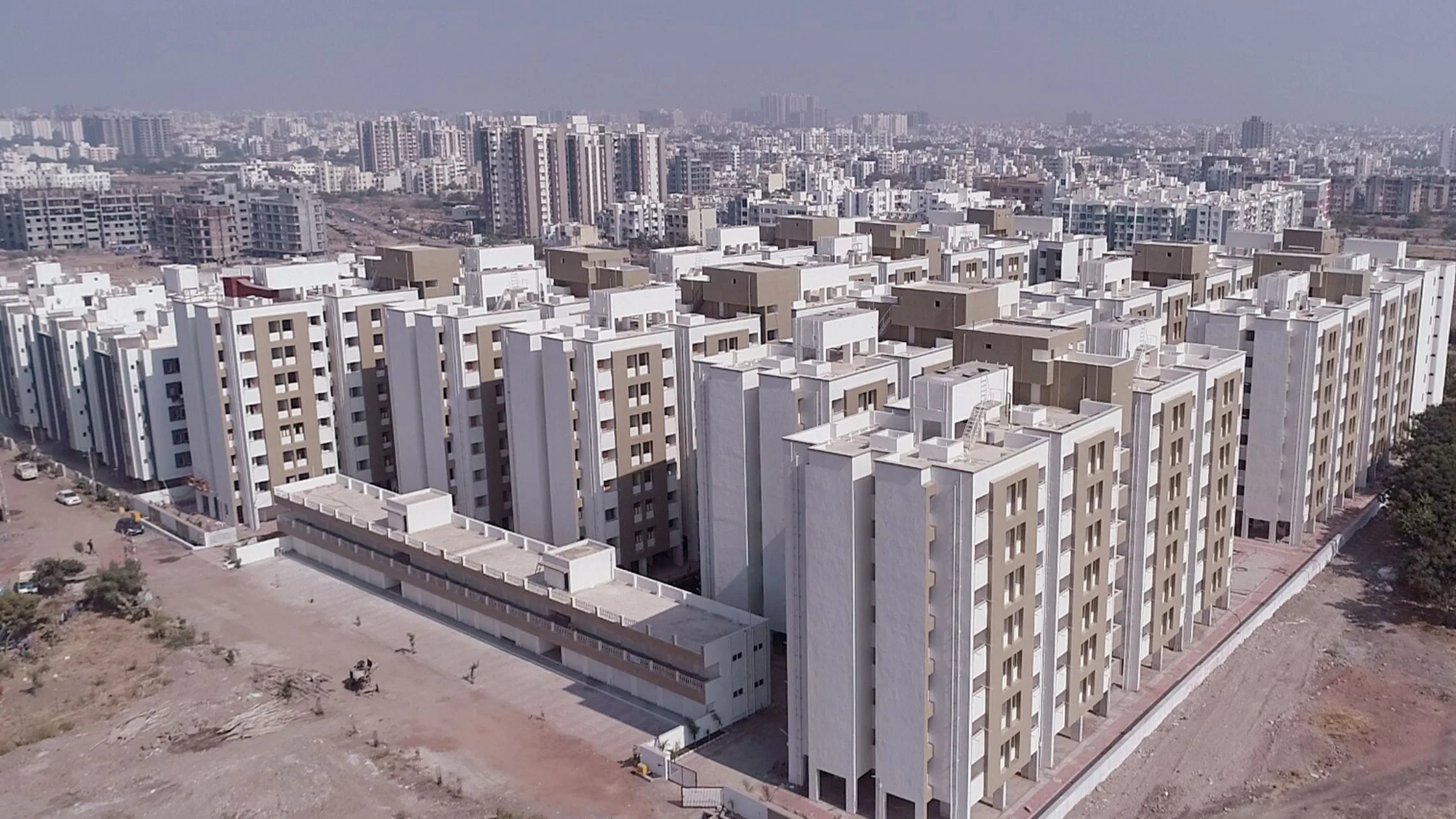
One of the key insights from the Economic Survey is the growing trend of affordable housing development in peripheral urban areas. Developers increasingly move projects to city outskirts due to lower land costs and easier land acquisition.
However, the Economic Survey cautions that these locations often lack adequate infrastructure, including poor connectivity to employment hubs, limited mass transit systems, and insufficient civic amenities.
As a result, while peripheral areas offer lower housing costs, their long-term liveability remains a concern. The Economic Survey highlights this as a critical challenge for sustainable urban development.
Housing Finance Boom and Market Financialisation
The Economic Survey points to a major shift in India’s housing market: increasing financialisation. Outstanding individual housing loans have more than tripled over the past decade, rising from around ₹10 lakh crore in March 2015 to over ₹37 lakh crore in March 2025.
Housing loans now account for more than 11 per cent of India’s GDP, compared to 8 per cent a decade earlier. The Economic Survey interprets this trend as evidence of growing reliance on formal credit to finance home purchases.
This expansion of housing finance has played a significant role in sustaining housing demand, even amid economic fluctuations.
Also Read: Metro Link Between Mumbai and Navi Mumbai Airports Gets Cabinet Nod
Future Urban Policy Vision
The Economic Survey stresses that future urban policies must focus on integrated system performance rather than isolated projects. It calls for coordinated planning across housing, mobility, sanitation, climate resilience, and urban finance.
According to the Economic Survey, India’s urban future depends on building cities that are economically vibrant, socially inclusive, environmentally sustainable, and institutionally robust.
Implications for the Real Estate Sector
The findings of the Economic Survey have important implications for India’s real estate sector. For developers, the continued expansion of affordable housing and infrastructure investment creates new growth opportunities. For homebuyers, improved access to credit and government support schemes enhances affordability.
Investors, meanwhile, may view the sustained housing demand and rising formalisation as indicators of long-term stability in the real estate market. The Economic Survey thus reinforces the perception of housing as a key driver of economic growth.
Conclusion
The Economic Survey 2025–2026 underscores the transformative impact of government policies and financial reforms on India’s housing sector. With more than 96 lakh homes delivered under PMAY-U and housing loans reaching record levels, the country’s real estate landscape is evolving rapidly.
At the same time, the Economic Survey highlights the need for integrated urban planning and infrastructure development to ensure sustainable growth. As India continues its urbanisation journey, the housing sector is set to remain a central pillar of economic and social progress.




Ans 1. PMAY-U (Pradhan Mantri Awas Yojana–Urban) is a government scheme to provide affordable housing in urban areas. As of November 2025, over 96 lakh homes have been completed and handed over to beneficiaries.
Ans 2. A total of 122.06 lakh houses have been sanctioned nationwide under the two phases of PMAY-U.
Ans 3. PMAY-U helps bridge the urban housing gap for low- and middle-income households, promotes homeownership, stabilises property prices, and stimulates real estate activity.
Ans 4. Individual housing loans have risen from around ₹10 lakh crore in March 2015 to over ₹37 lakh crore in March 2025, reflecting the growing financialisation of housing.
Ans 5. Housing loans now account for over 11% of India’s GDP, compared to 8% a decade earlier.
Ans 6. Policies include tax incentives, GST benefits, priority sector lending, and granting infrastructure status to housing projects, all of which enhance project viability and housing affordability.
Ans 7. Developers are increasingly moving affordable housing to city outskirts due to lower land costs, though these areas often lack adequate infrastructure and connectivity.
Ans 8. Smart Cities Mission projects, such as smart roads, upgraded public spaces, and improved utilities, support urban liveability and sustainable real estate growth.
Ans 9. By strengthening urban livelihoods and providing formal credit to street vendors, PM SVANidhi indirectly boosts housing demand and urban consumption.
Ans 10. The Economic Survey recommends integrated planning across housing, mobility, sanitation, climate resilience, and urban finance to ensure sustainable and inclusive urban growth.
Ans 11. Developers gain growth opportunities through affordable housing and infrastructure projects, homebuyers benefit from improved credit access, and investors see long-term market stability.
Ans 12. Expansion of formal housing loans enables homebuyers to afford properties, supports developers’ project execution, and maintains housing demand even during economic fluctuations.
Ans 13. It marks a major milestone in reducing India’s urban housing shortage and demonstrates the effectiveness of government policy in promoting affordable housing.