
✦ AI Summary
Table of Content
▲- Why Does a Walk-In Wardrobe Make Such a Difference?
- What Are the Most Popular Walk-In Wardrobe Layouts?
-
15 Walk-In Wardrobe Ideas for Modern Homes
- 1. The Full-Height Fitted System
- 2. The Open Concept Wardrobe Room
- 3. The His-and-Hers Split Layout
- 4. The Capsule Wardrobe
- 5. The Luxury Island Wardrobe
- 6. The Mirror-Everything Approach
- 7. The Built-In Vanity Corner
- 8. The Smart Lighting Layered System
- 9. The Shoe Wall
- 10. The Modular Flat-Pack Build
- 11. The Colour-Blocked Interior
- 12. The Seasonal Rotation System
- 13. The Integrated Laundry Zone
- 14. The Natural Material Finish
- 15. The Tech-Integrated Wardrobe
- What Are the Most Common Walk-In Wardrobe Design Mistakes?
- Conclusion
Looking for walk-in wardrobe ideas that actually work provide actual storage space while implementing intelligent lighting systems and customized room designs that match your everyday needs. The redesign of your unused space through proper design techniques will enhance your everyday activities. The study presents 15 functional and fashionable design solutions which experts back through actual design principles and spatial organization methods and financial details and professional advice.
Why Does a Walk-In Wardrobe Make Such a Difference?
Walk-in wardrobes are no longer limited to large homes. Many homeowners now see them as practical upgrades that save time, cut clutter, and boost property appeal.
Their advantages go beyond looks:
- Separate zones for clothing categories make outfit choices faster
- Clear visibility helps you use more of what you own
- Proper storage protects garments, especially tailoring and seasonal pieces
- Strong resale appeal, agents often highlight built-in wardrobe space in mid to premium homes
Also Read: 15 Trending Living Room Themes in 2026: Design Ideas & Inspiration
What Are the Most Popular Walk-In Wardrobe Layouts?
Before selecting materials or finishes, focus on layout. The room shape decides how efficiently you can use the available space.
The Four Core Layout Types
|
Layout Type |
Best For |
Minimum Space Required |
Storage Efficiency |
|
Single-Wall (Linear) |
Narrow rooms, corridors |
1.5m × 2.5m |
Moderate |
|
L-Shaped |
Corners, medium rooms |
2m × 2m |
Good |
|
U-Shaped |
Dedicated wardrobe rooms |
2.5m × 3m |
Excellent |
|
Island Layout |
Large walk-ins, luxury homes |
3m × 4m |
Maximum |
Interior designers often prefer the U-shaped layout for dedicated wardrobe rooms. It uses every wall effectively while keeping the center open for movement and dressing.
15 Walk-In Wardrobe Ideas for Modern Homes
1. The Full-Height Fitted System
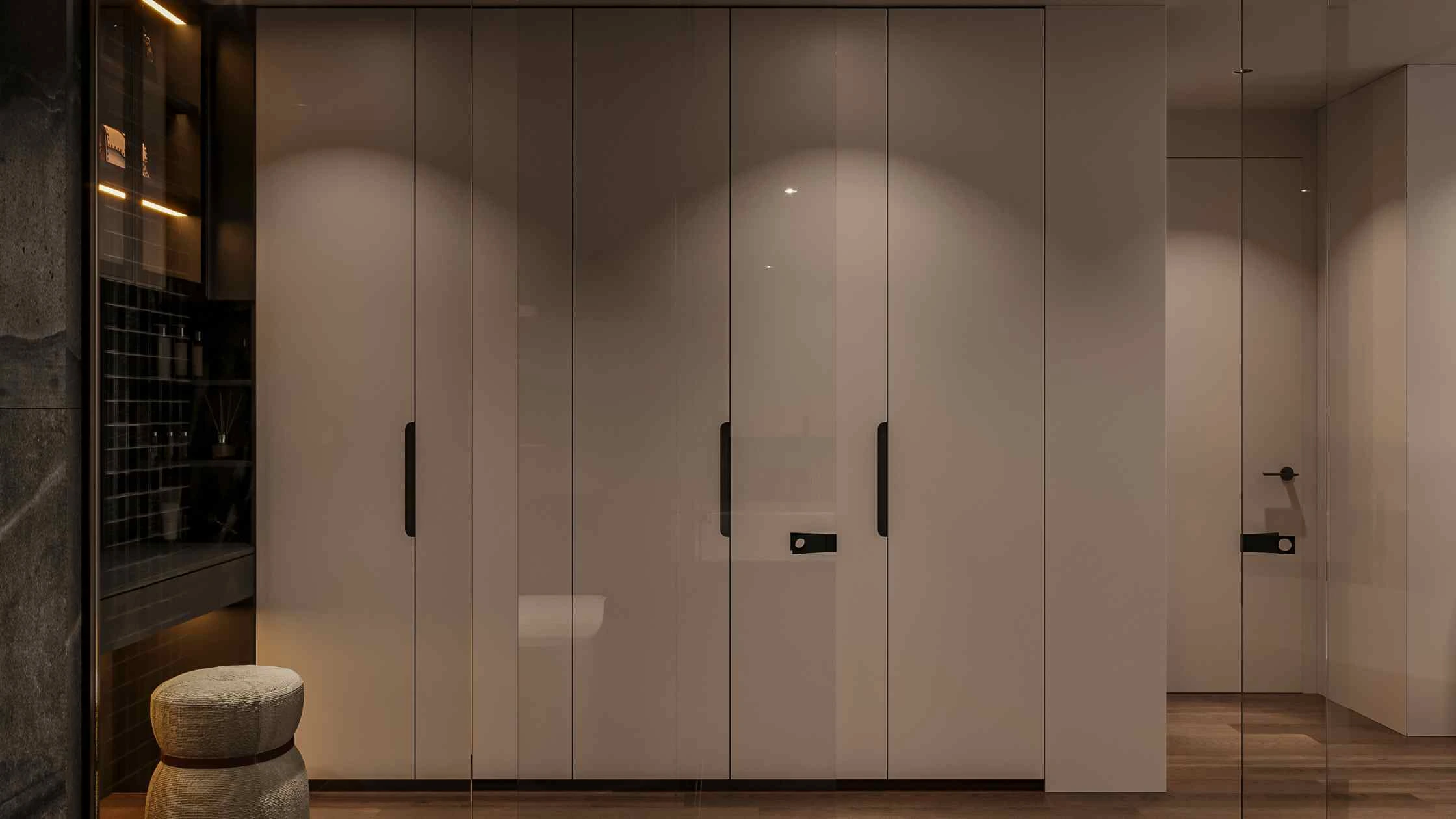
Forgetting about extra space that sits above a standard rail is often overlooked in the design process, like having units that go from floor to ceiling. With companies such as IKEA (economical), Sharps (average priced) and California Closets (top line), you can create a custom or semi-custom closet system that can be tailored to fit your ceiling height.
Best for: Rooms with standard 2.4m–3m ceilings where vertical space matters.
2. The Open Concept Wardrobe Room
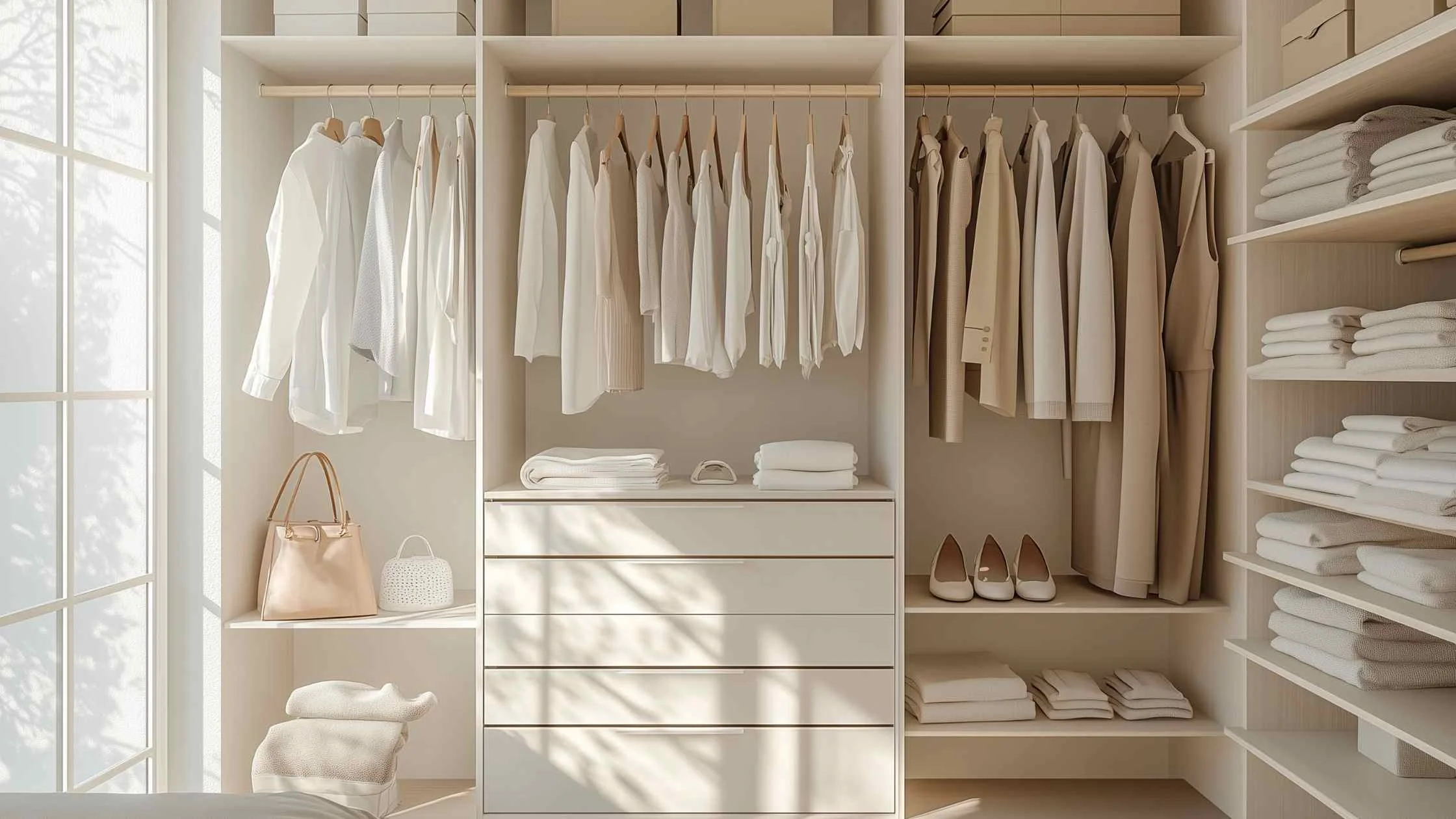
Modern interior design uses door removal to establish boutique-style displays. The design of open wardrobes functions effectively in spaces that receive natural light and for users who want to display their stored items.
Pro tip: Use matching slim hangers and keep colours coordinated within sections to maintain a clean, curated look.
3. The His-and-Hers Split Layout
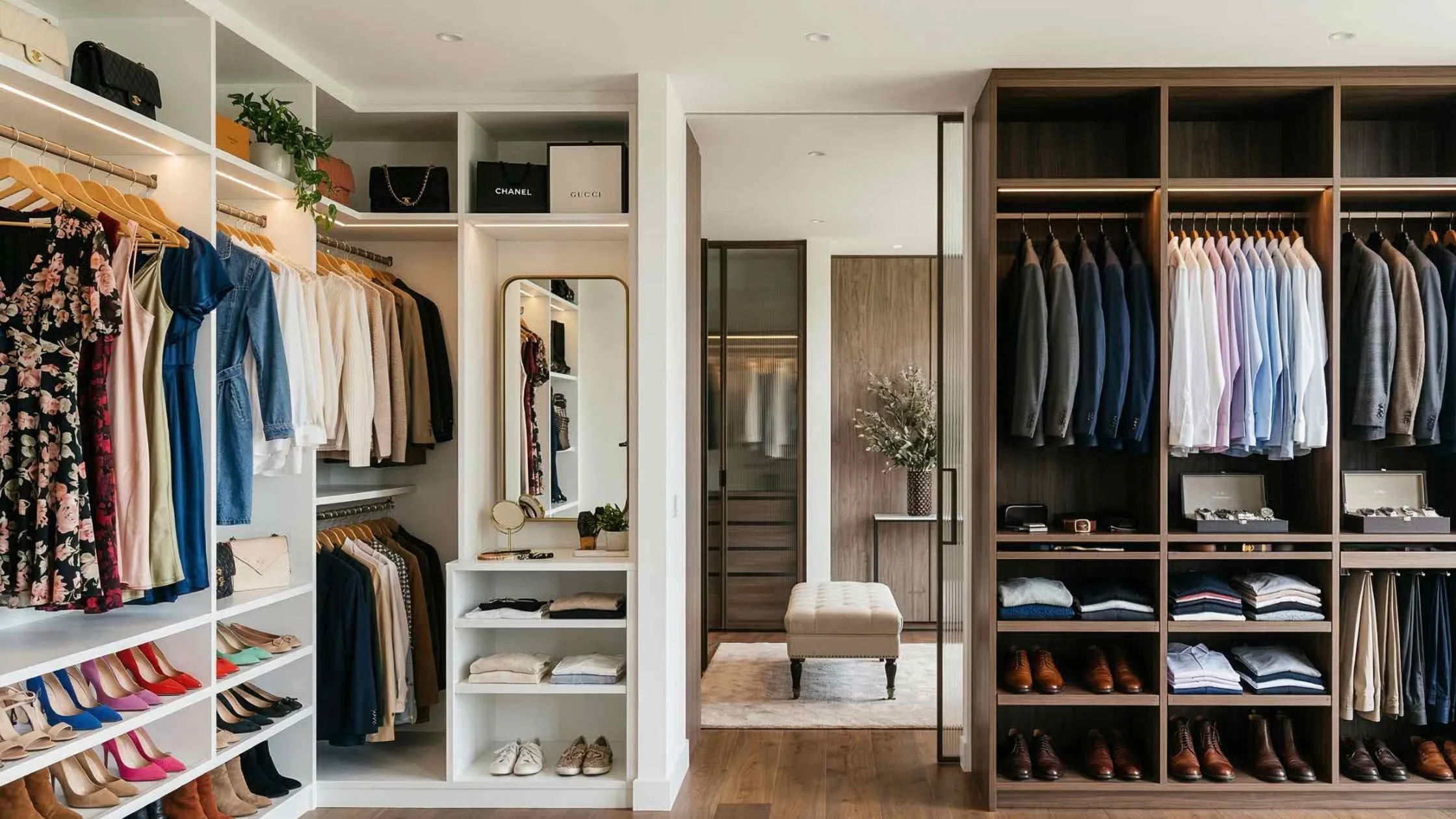
Dividing the wardrobe into personal zones helps couples stay organised and avoid clutter conflicts. U-shaped rooms make this easy, one wall per person and a shared section.
- Allocate deeper hanging areas for suits and dresses
- Use distinct finishes or handles for each side
- Store shared items like travel gear in the most accessible area
4. The Capsule Wardrobe
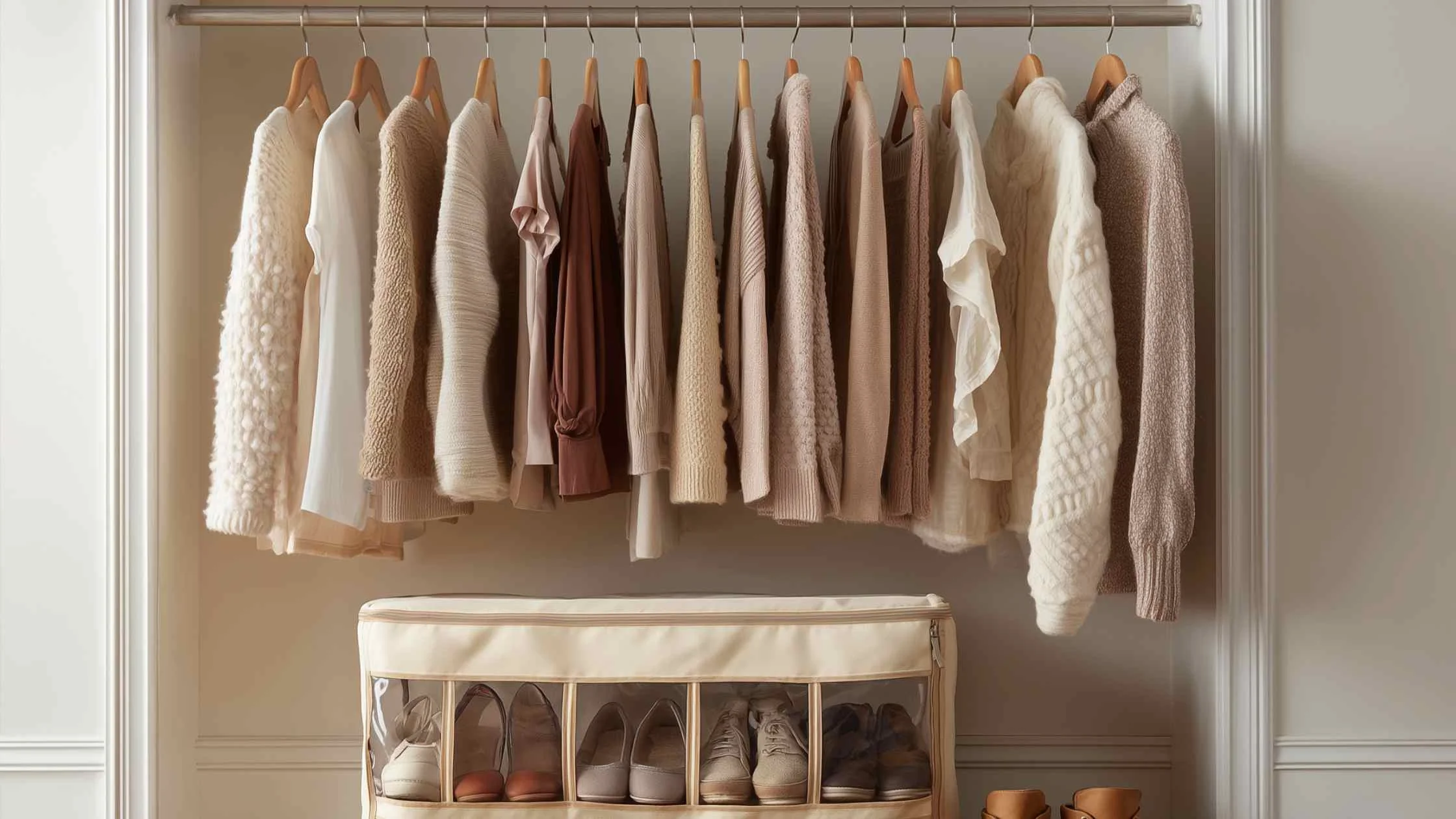
Compact walk-ins perform best with a minimalist clothing approach. A capsule wardrobe of 30–50 versatile pieces fits comfortably in a 2m × 2.5m layout when storage is planned well.
Ideal storage mix:
- Short hanging: 60–80cm width
- Long hanging: 60–80cm width
- Folded shelving: 4–6 shelves, 35cm depth
- Shoes: space for 12–20 pairs
- Drawer unit: 3–4 drawers for essentials
5. The Luxury Island Wardrobe
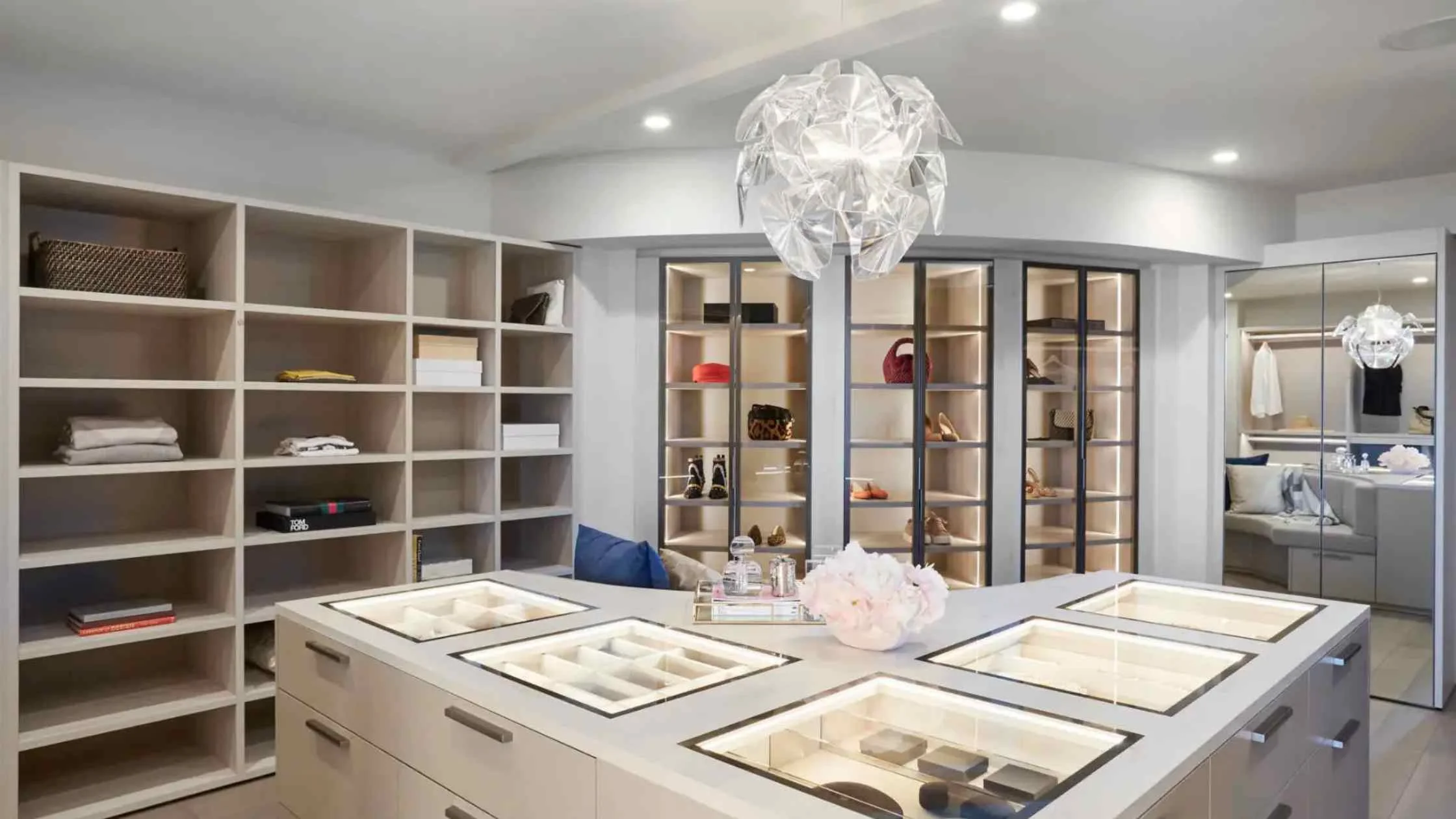
A central island instantly signals a premium wardrobe. It’s ideal for storing knitwear, jewellery trays, or pull-out ironing boards. Stone tops like marble or quartz elevate the finish.
Property data from Rightmove shows homes with dressing rooms can command up to a 10% premium in mid-to-high segments in UK cities, a trend increasingly seen in Indian metros.
6. The Mirror-Everything Approach
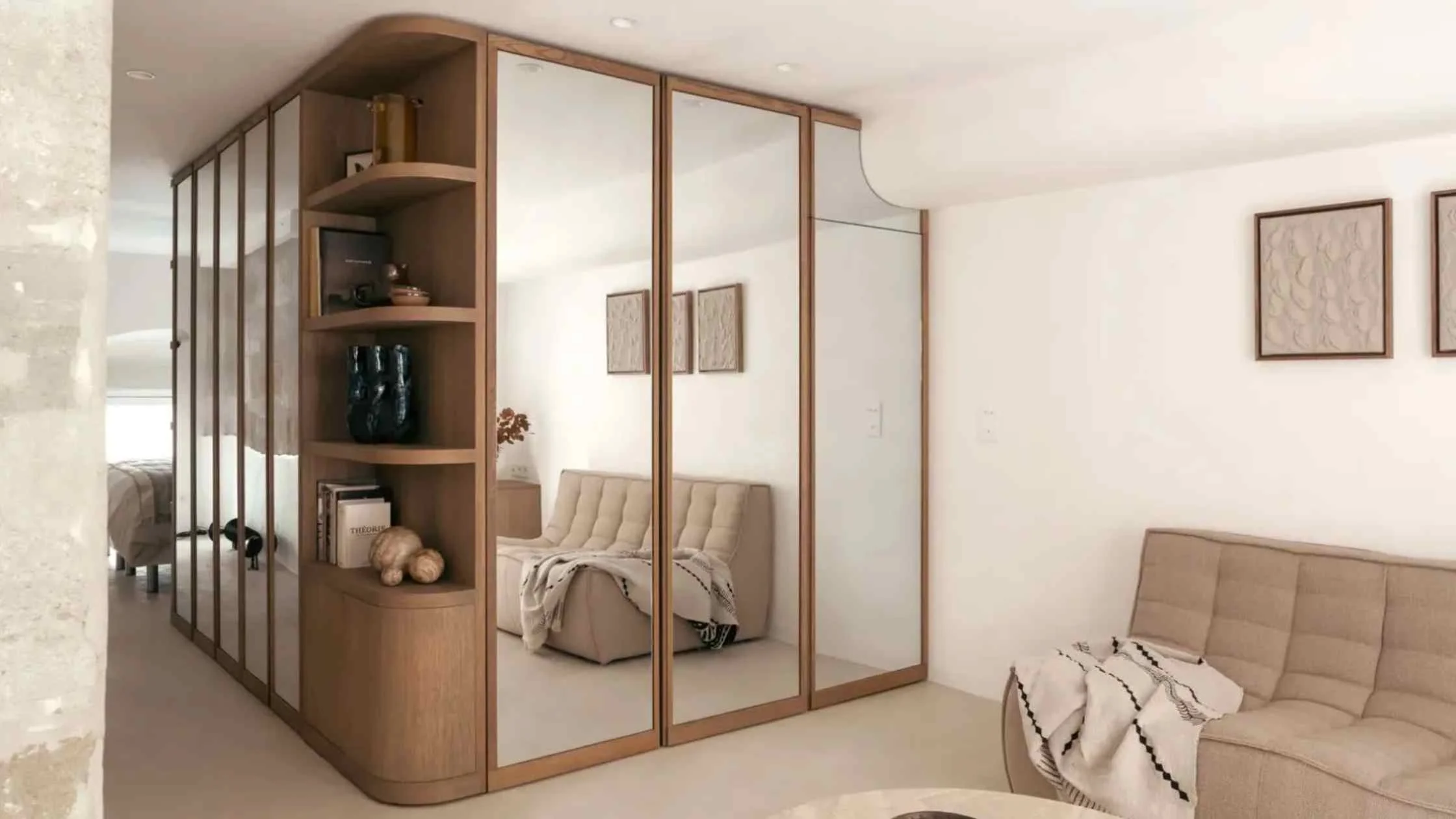
Full-length mirrors built into doors or panels serve both style and function. They simplify dressing while making tight spaces feel larger.
Options:
- Sliding mirrored doors
- Full-height mirror at the aisle end
- Backlit mirrors for vanity-style setups
7. The Built-In Vanity Corner
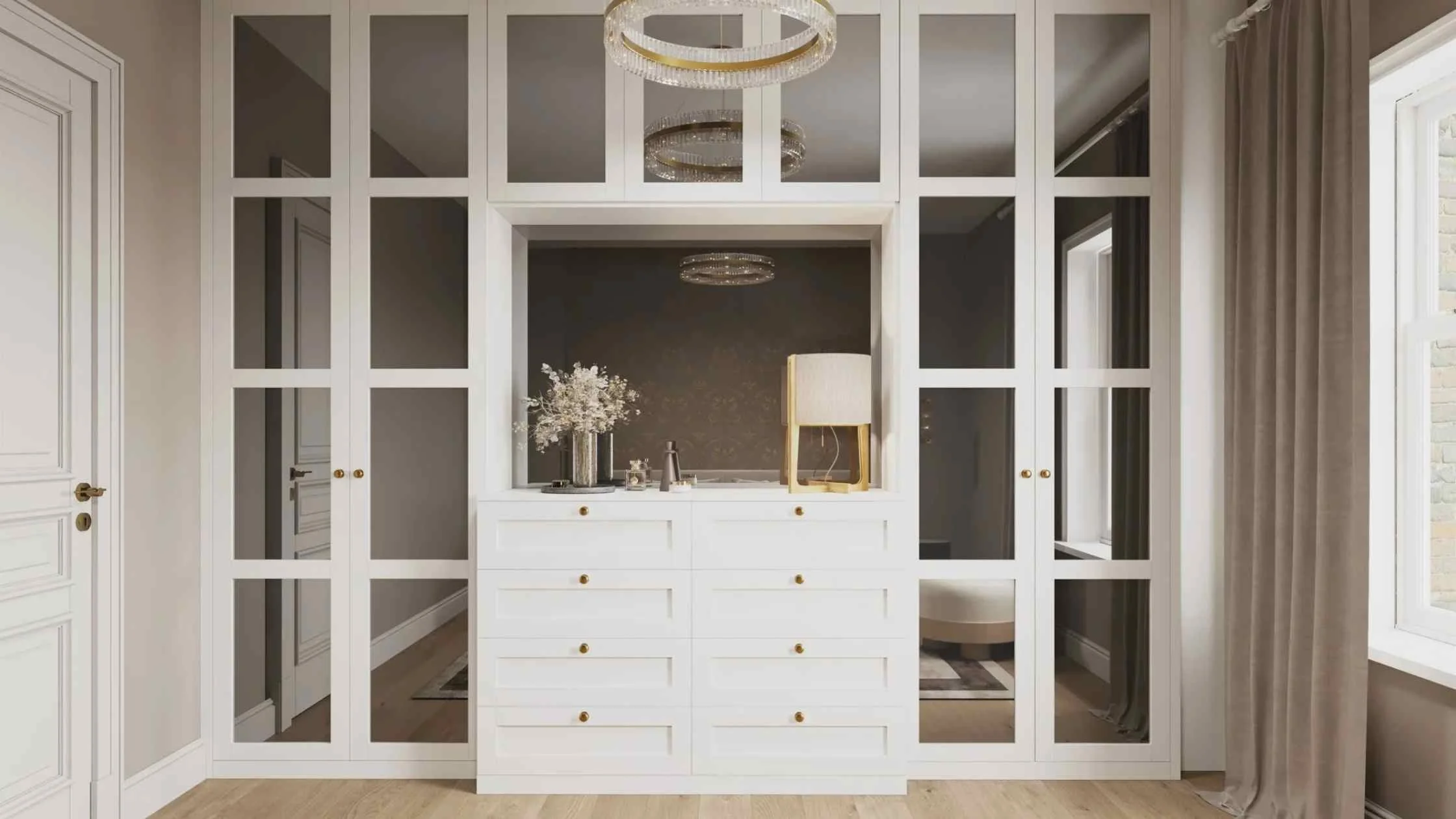
By placing a vanity unit in your wardrobe, you create a hub to make your daily routine easier to complete. This solution works particularly well in L-shaped rooms where corners frequently go unused. Having your mirror, lighting and storage inside an installed vanity unit means you also do not require a separate dressing table.
8. The Smart Lighting Layered System
.webp)
Lighting is often overlooked but has the biggest visual impact. A strong setup includes three layers:
- Ambient: Ceiling downlights for overall brightness
- Task: LED strips under shelves and rails for colour accuracy
- Accent: Display lighting for shoes, bags, or feature shelves
Motion-sensor LEDs are an affordable upgrade that greatly improve usability.
9. The Shoe Wall
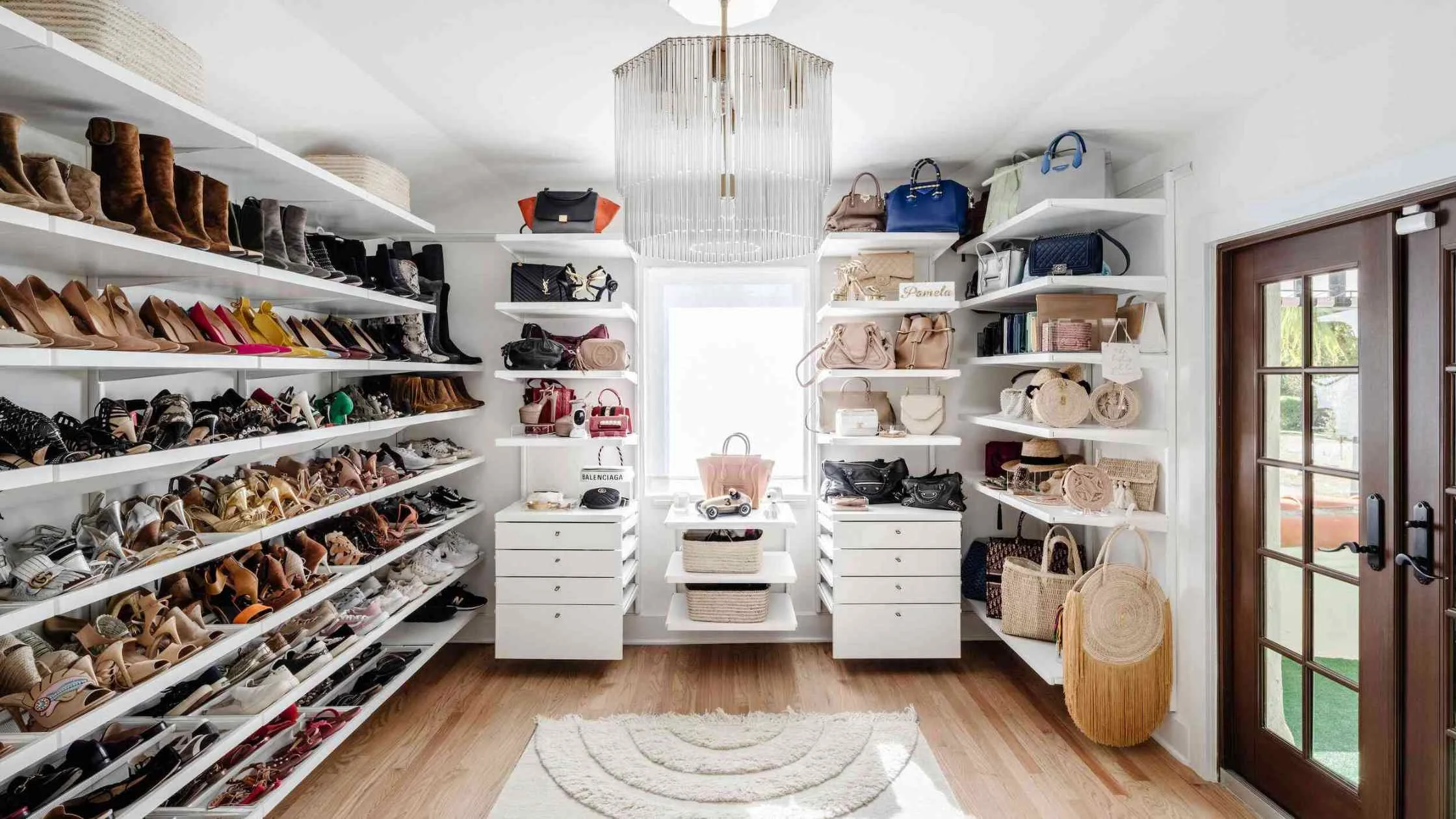
Dedicated shoe walls combine storage and display. Open racks, angled shelves, or deep cubbies make collections easy to manage and visually appealing.
Benchmarks:
- Flat shelf: 1 pair per 30cm width
- Angled shelf: 1 pair per 20cm width
- Pull-out drawer: 2–3 pairs, dust protection
10. The Modular Flat-Pack Build
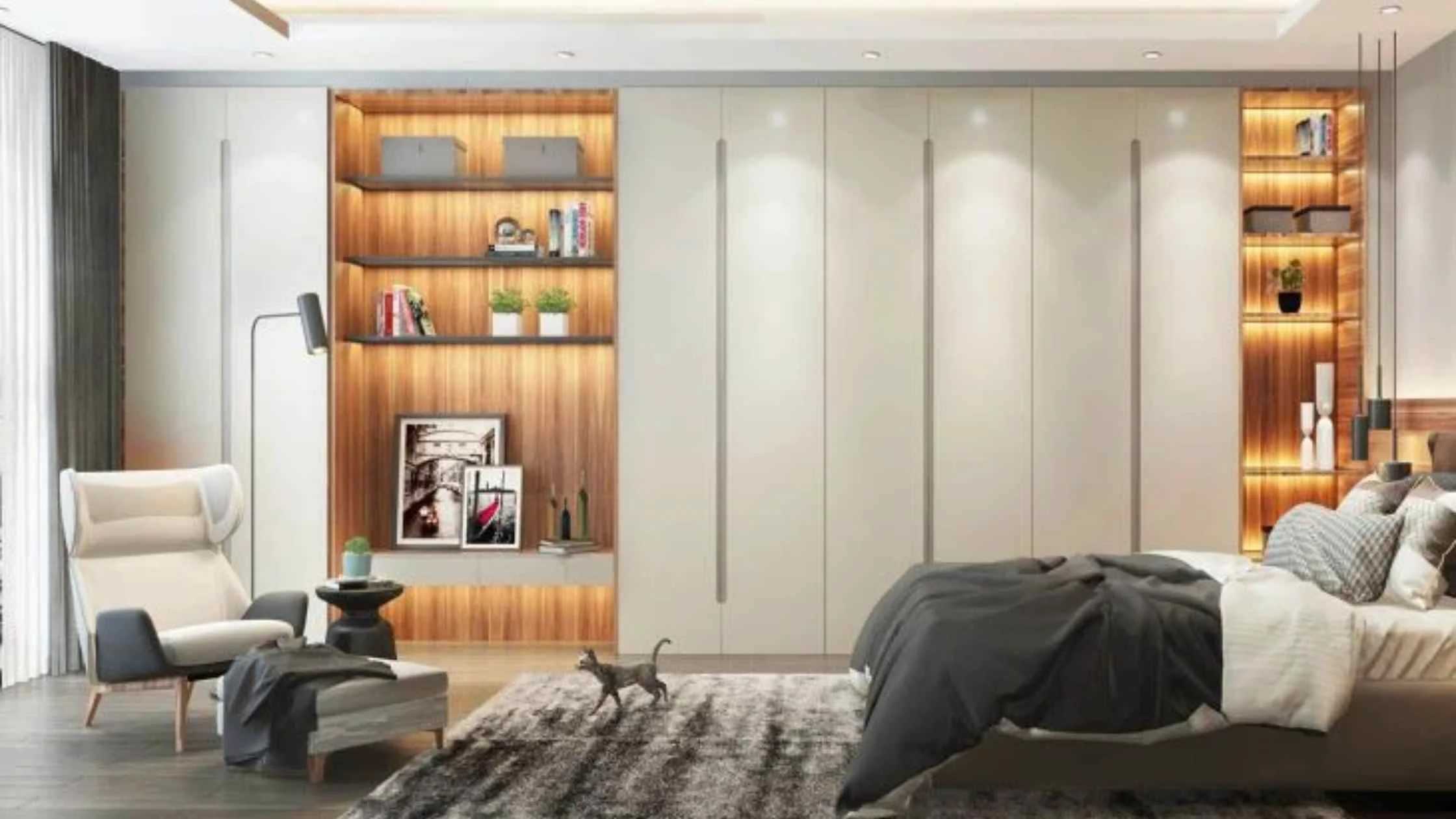
Not every walk-in needs custom carpentry. Systems like IKEA PAX offer flexibility, strong capacity, and easy reconfiguration. A well-designed PAX setup in a 2m × 3m space can deliver nearly 80% of custom functionality at about 20–30% of the cost.
11. The Colour-Blocked Interior
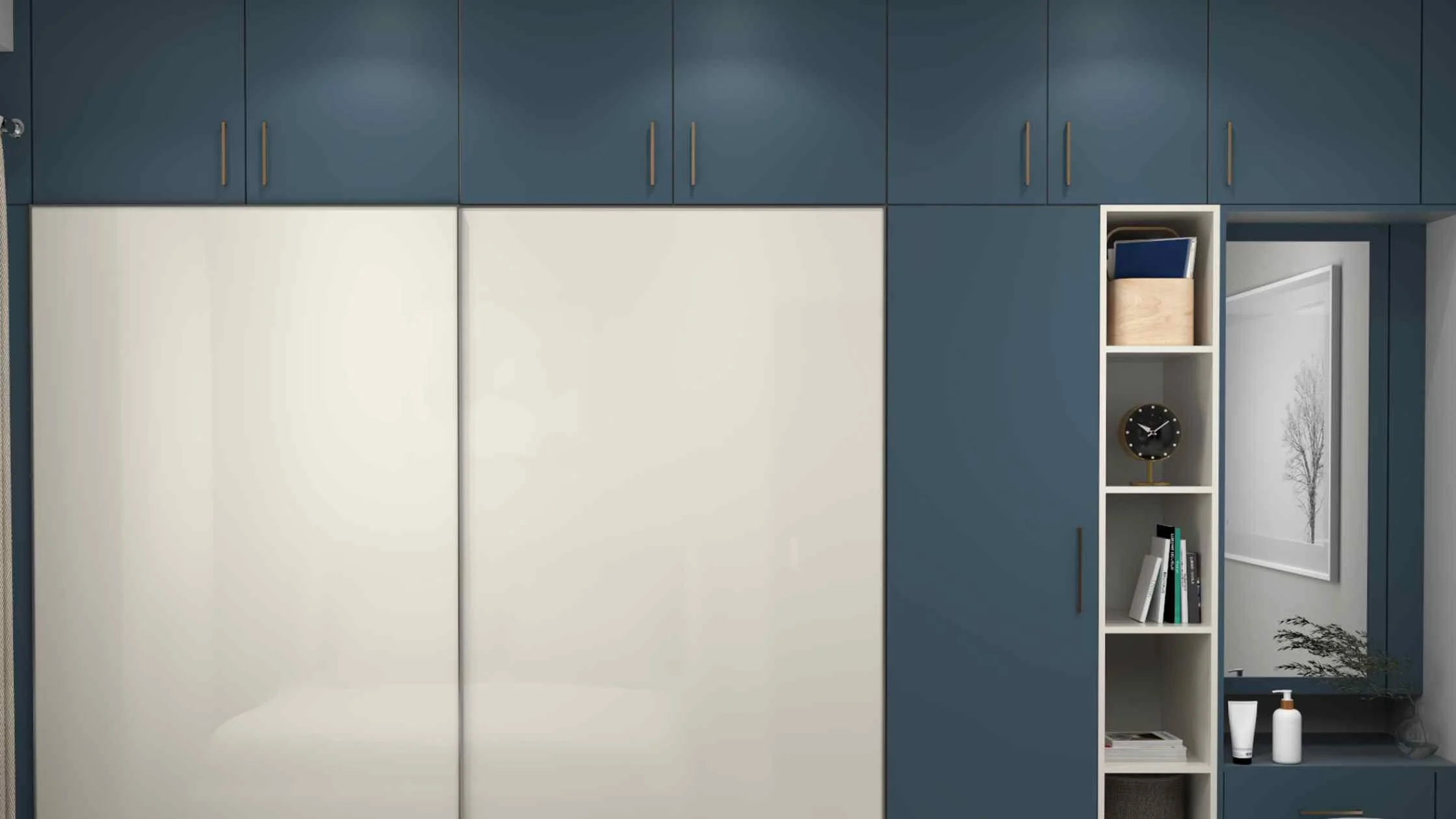
White serves as a timeless selection which endures through all fashion trends. The use of colored wall panels which include dark blue and sage green and medium grey and terracotta, creates a backdrop that enables you to establish spatial depth for your main white elements which include cabinets and counter tops.
This can be especially helpful when taking photos of your home for rental or resale purposes.
12. The Seasonal Rotation System
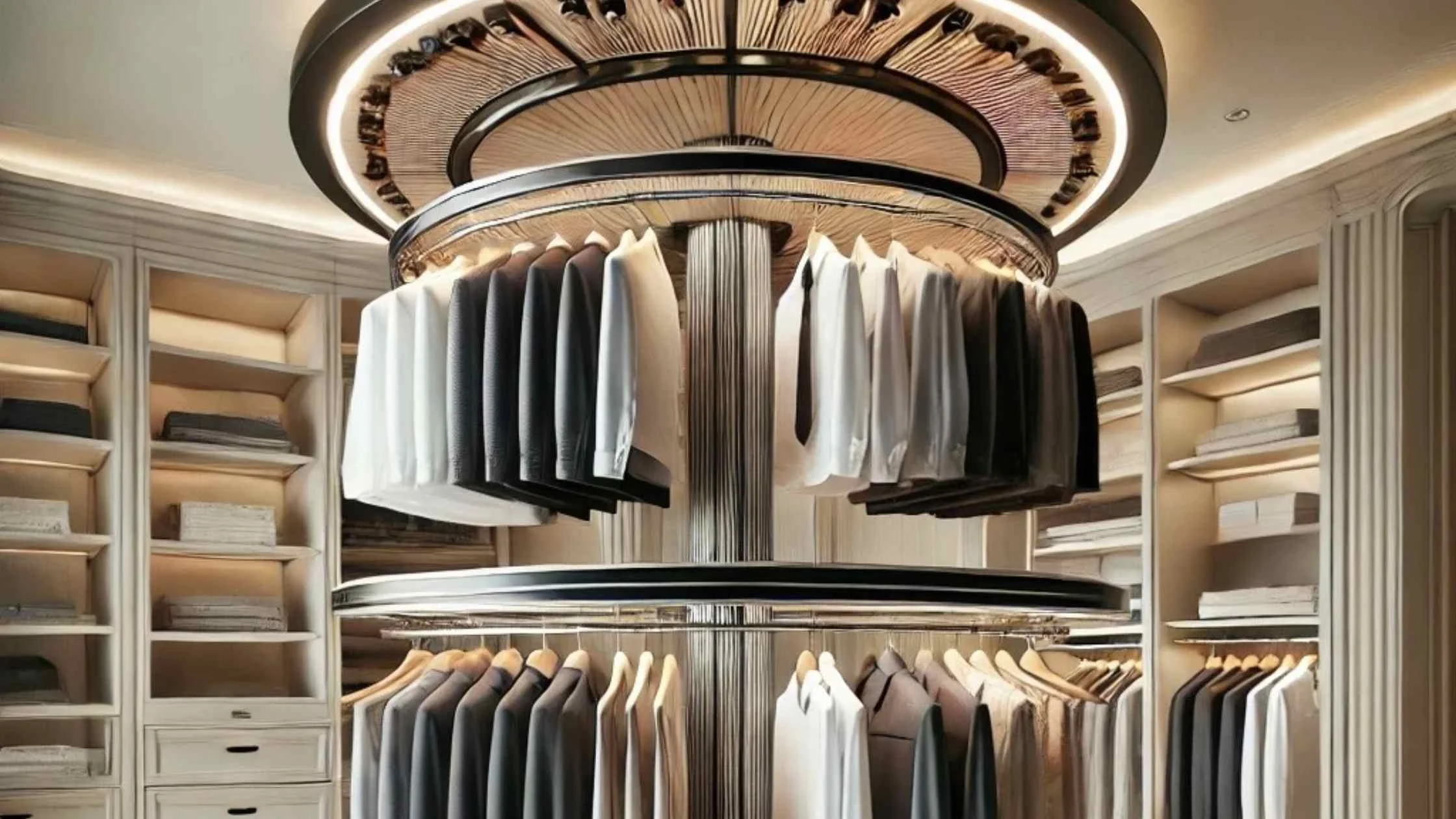
Functional wardrobes plan for off-season storage. Use top shelves or separate upper sections for items not in daily use.
Essentials:
- Vacuum bags for bulky garments
- Labelled fabric bins for accessories
- Cedar or lavender for natural fibre protection
13. The Integrated Laundry Zone
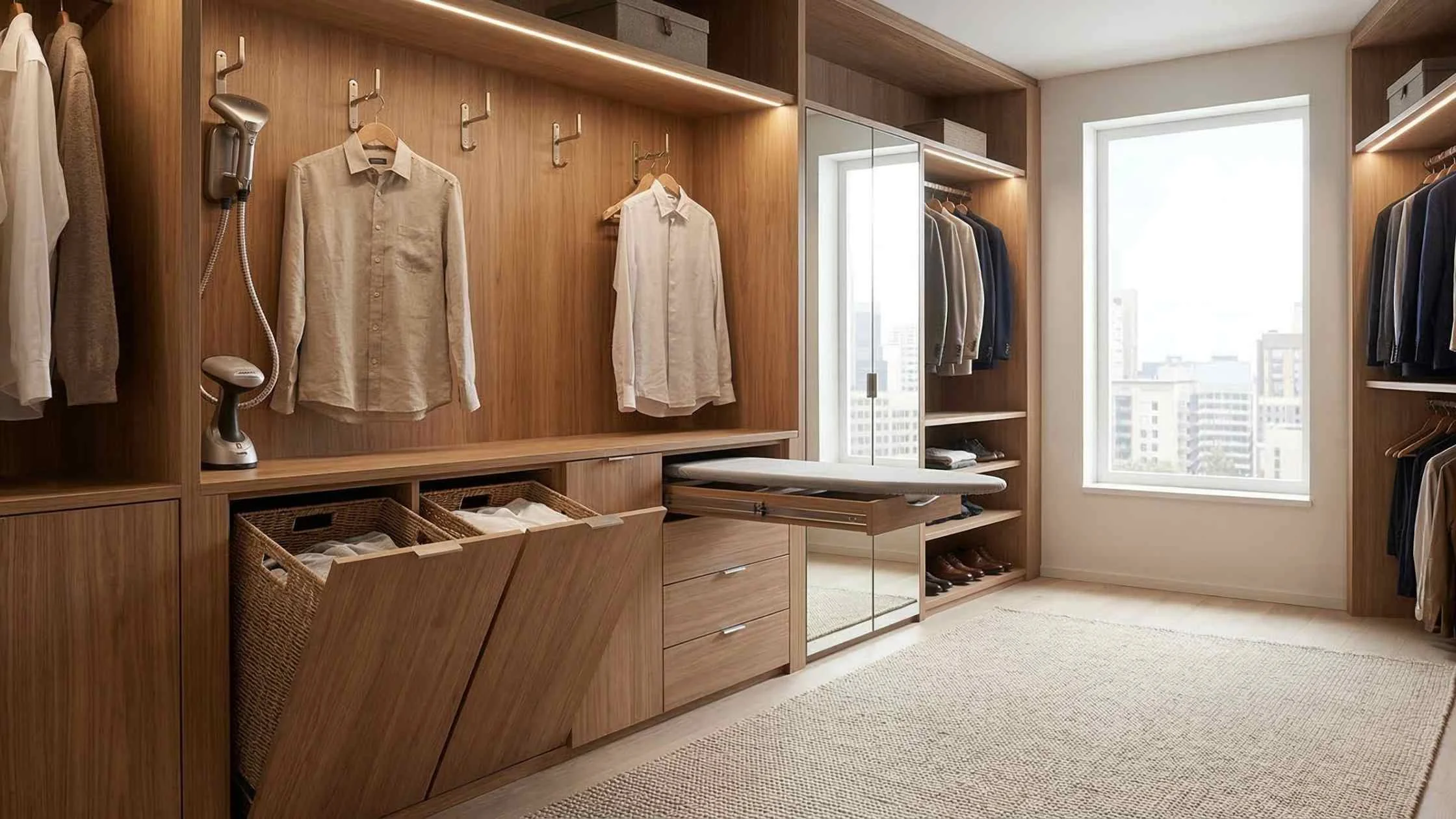
Larger walk-ins can include clothing care features like pull-out hampers, steamer hooks, and fold-out ironing boards. This turns the space into a complete wardrobe management hub. Ideal for apartments without utility rooms.
14. The Natural Material Finish
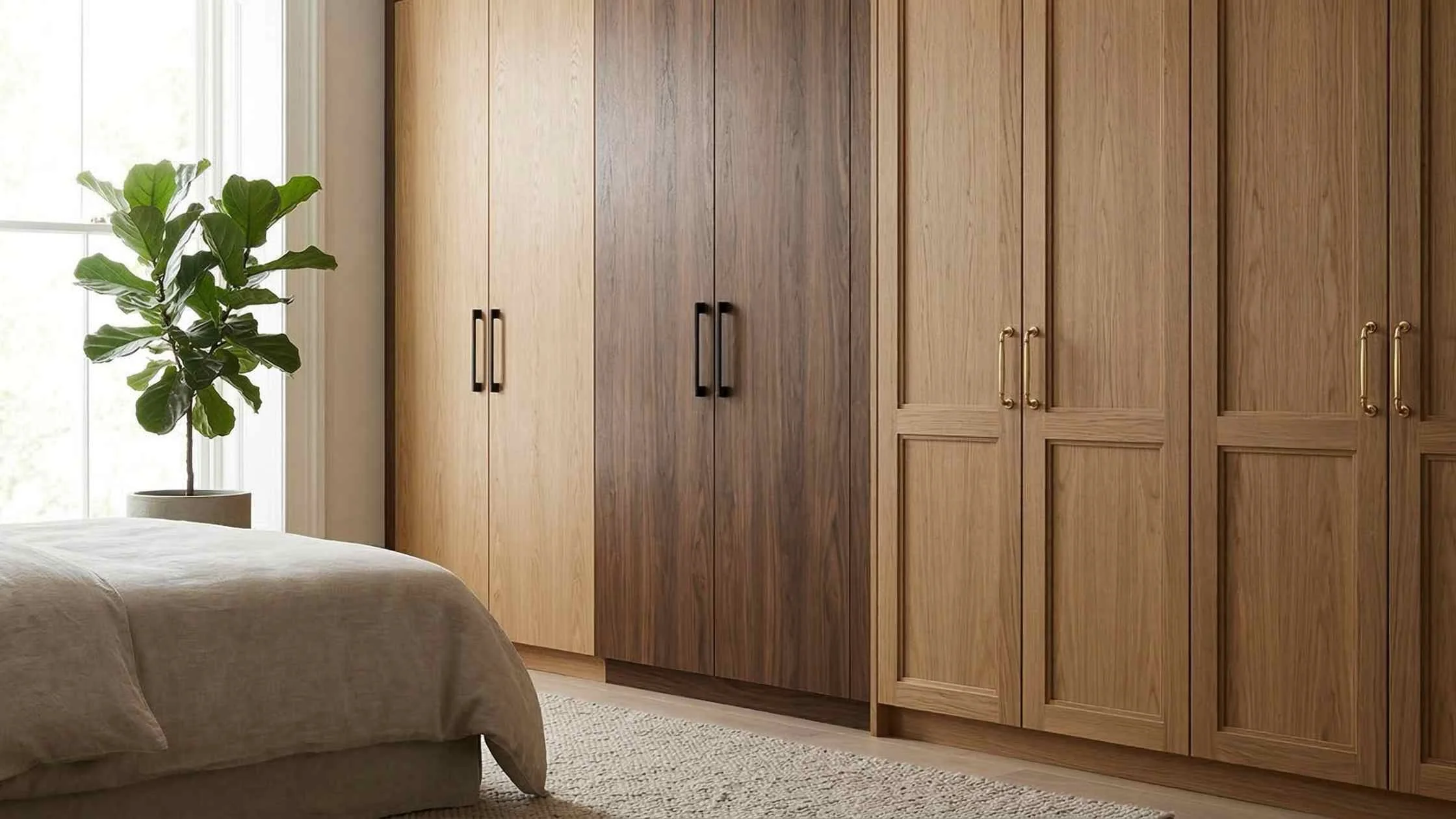
Timber finishes like oak, walnut and ash veneer that provide both warmth and durability which glossy laminates do not provide. The materials develop their appearance over time while maintaining a sophisticated aesthetic which does not require higher expenses. The furniture design achieves a contemporary appearance when combined with matte black hardware while polished brass hardware achieves a traditional aesthetic.
15. The Tech-Integrated Wardrobe
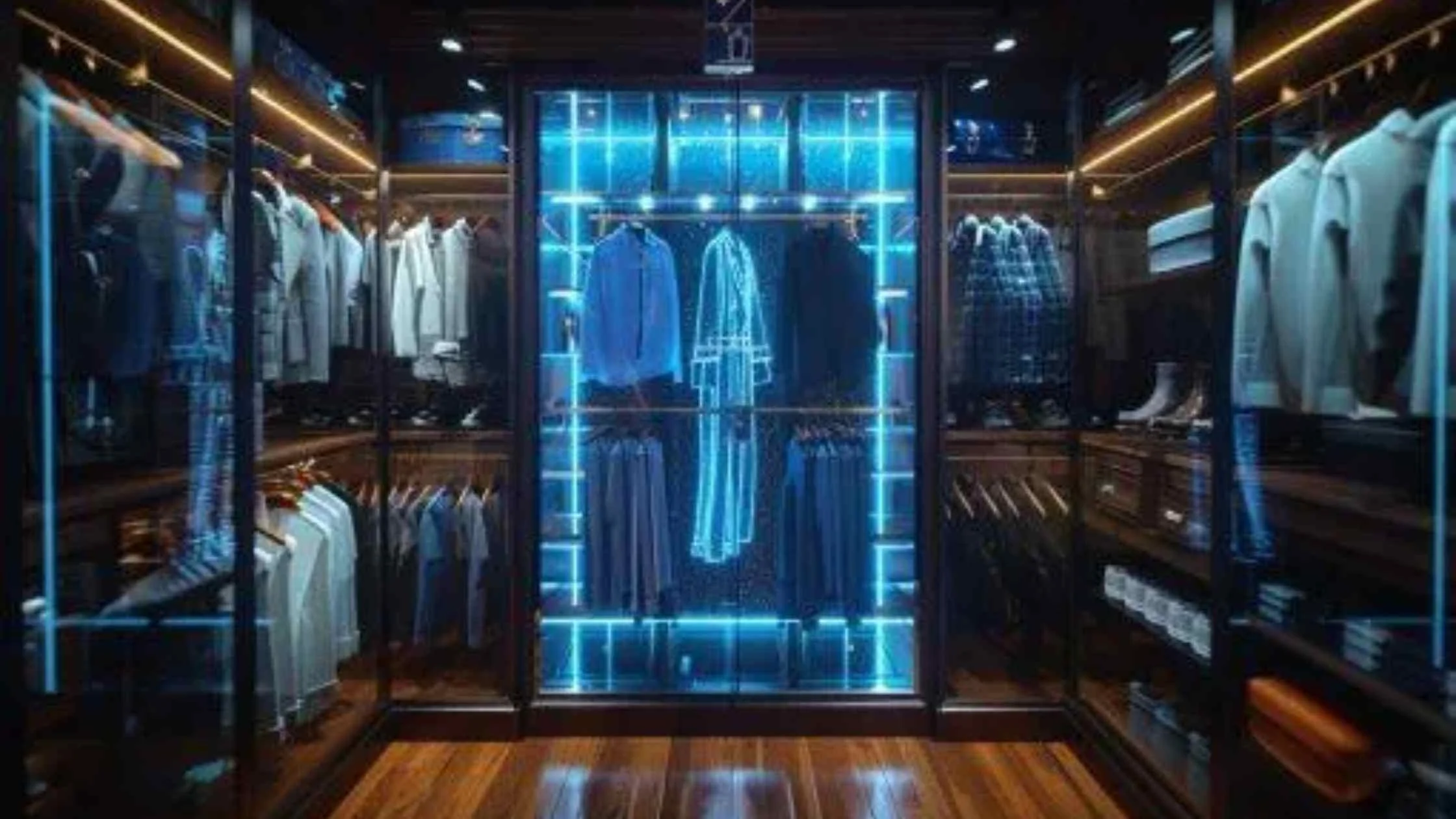
Premium wardrobes now include practical technology upgrades:
- Motorised pull-down rails for easier access
- App or voice-controlled smart lighting
- Tablet mounts for outfit planning
- Climate-controlled compartments for leather and tailoring material
The luxury homes in Mumbai, Delhi, and Bangalore feature these facilities because homeowners want their residences to provide the same level of comfort found in hotels.
Also Read: 10 Best Bedroom Lighting Ideas for Indian Homes
What Are the Most Common Walk-In Wardrobe Design Mistakes?
Even good designs can fail due to common oversights:
- Too little hanging space most people need 1.5–2m of rail per person
- Delayed lighting plans post-installation fixes are costly
- Excess drawers, limited shelves shelves adapt better over time
- No full-length mirror essential for a dressing space
- Poor ventilation trapped moisture causes odours and damage
- Gloss finishes in high-use zones marks and scratches show quickly
Conclusion
A well-planned walk-in wardrobe is one of the most practical and visually rewarding home upgrades. The 15 ideas which you can see here include both budget-friendly modular systems and premium custom designs. Your budget does not affect the fundamental design principles which include efficient layout and layered lighting and clearly defined storage zones.





Ans 1. A walk in wardrobe is a dedicated storage room where you can walk inside and organize clothes shoes and accessories unlike standard built in closets.
Ans 2. A functional walk in wardrobe can be created in a space as small as about 1.5m by 2.5m using a single wall or L shaped layout.
Ans 3. U shaped layouts are considered most efficient because they use three walls for storage while keeping the center open for movement.
Ans 4. Yes compact layouts modular systems and smart storage planning make walk in wardrobes practical even in small apartments.
Ans 5. Layered lighting with ceiling lights LED strip task lighting and accent lights improves visibility aesthetics and daily usability.
Ans 6. Natural finishes like oak walnut and ash veneer offer durability and warmth while matte laminates provide a sleek contemporary look.