

✦ AI Summary
Table of Content
▲- What Is SBI MaxGain?
- What Is Home Loan Prepayment?
- SBI MaxGain vs Prepayment: Head-to-Head Comparison
- The Maths: A Realistic Example
- When SBI MaxGain Is the Smarter Choice
- When Prepayment Is the Smarter Choice
- The Tax Angle (Often Overlooked)
- The Hybrid Strategy Most Experts Actually Recommend
- Conclusion: Which Is the Smarter Choice?
SBI's MaxGain home loan was built precisely for people stuck on this fence it promises the interest savings of prepayment without giving up access to your money. But is that flexibility actually worth it? Having analysed home loan structures and borrower behaviour for years, I can tell you the honest answer; it depends less on the product and more on your financial discipline and cash-flow pattern. This guide breaks down both options with numbers, trade-offs, and clear recommendations so you can decide which is smarter for you.
What Is SBI MaxGain?
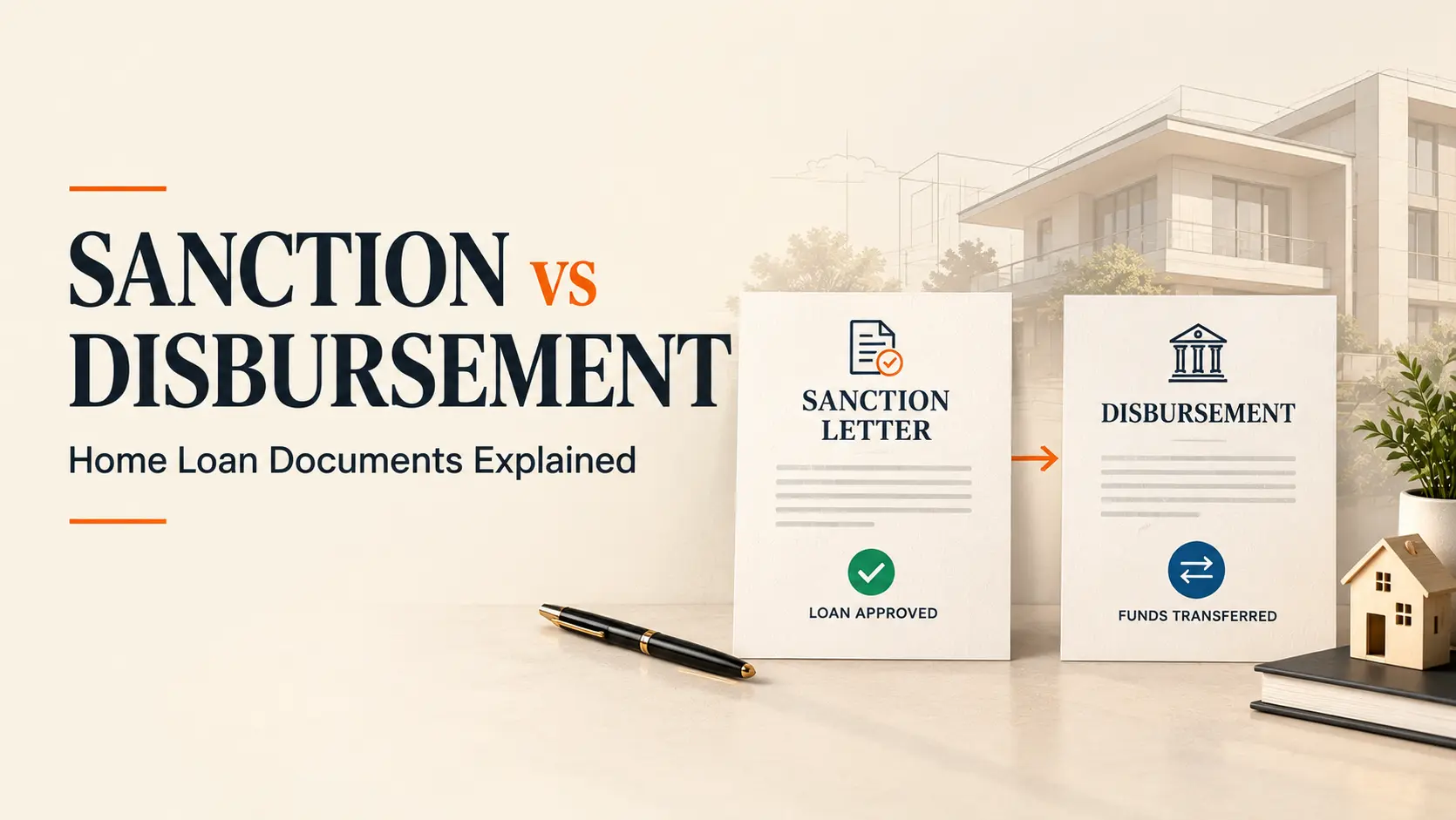
SBI MaxGain is a home saver loan a home loan sanctioned as an overdraft (OD) facility rather than a plain term loan. It works through two linked components:
- Your regular loan account, where you pay EMIs exactly like a normal home loan.
- A linked overdraft account that behaves like a savings/current account with cheque book, ATM card, and net banking access.
Here's the magic: any surplus money you park in the OD account is offset against your outstanding principal for the purpose of daily interest calculation. If your outstanding loan is ₹50 lakh and you park ₹5 lakh in the OD account, you pay interest only on ₹45 lakh while the ₹5 lakh remains fully withdrawable at any time.
Key features at a glance:
- Interest is calculated on the net outstanding (loan balance minus OD balance) on a daily basis.
- Your EMI stays the same; the surplus reduces the interest portion, so more of your EMI effectively works against principal over time.
- The drawing power reduces every month in line with your principal repayment, so the account is fully liquidated by the end of the tenure.
- MaxGain typically carries a small rate premium of around 0.05%–0.10% over SBI's standard home loan rate the price of flexibility.
- It is generally offered for ready-to-move-in properties; withdrawal restrictions may apply for under-construction homes until possession.
Also read: EBLR vs MCLR: Why You Must Link Your Home Loan to the Repo Rate
What Is Home Loan Prepayment?
Prepayment is the traditional route you pay a lump sum over and above your EMI directly into your loan account, which permanently reduces your outstanding principal. You can then either reduce your EMI or (the smarter choice for most) keep the EMI the same and shorten your tenure, which slashes total interest dramatically.
Key characteristics:
- Irreversible: Once prepaid, the money is gone from your reach. You cannot withdraw it back.
- Zero prepayment penalty on floating-rate home loans for individual borrowers, as per RBI rules.
- Maximum psychological and financial closure: Every prepayment takes you visibly closer to a debt-free home.
- Works with any lender no special product needed.
SBI MaxGain vs Prepayment: Head-to-Head Comparison
|
Parameter |
SBI MaxGain (OD Parking) |
Regular Prepayment |
|
Interest savings |
Same effect as prepayment while funds stay parked |
Permanent reduction in interest |
|
Liquidity |
Full withdraw parked funds anytime |
None money is locked into the loan |
|
Interest rate |
Slightly higher (≈0.05%–0.10% premium) |
Standard home loan rate |
|
Discipline required |
High easy access can tempt withdrawals |
Low forced discipline built in |
|
Emergency fund utility |
Doubles as an emergency corpus |
Separate emergency fund still needed |
|
Loan closure speed |
Only if surplus keeps growing |
Fastest route to debt-free status |
|
Effort |
Requires active fund management |
One-time transactions |
|
Best for |
Variable income, bonus earners, business owners |
Salaried borrowers who want closure |
The Maths: A Realistic Example
Assume a ₹50 lakh loan at ~8.5% for 20 years (EMI ≈ ₹43,400), and you have ₹5 lakh surplus.
Option A – Park ₹5 lakh in MaxGain OD: Your interest is now calculated on ₹45 lakh instead of ₹50 lakh. At 8.5%, that saves roughly ₹42,000–₹43,000 in interest in the first year alone effectively earning you a tax-free "return" equal to your loan rate on idle money, which beats most fixed deposits post-tax. And the ₹5 lakh remains yours to withdraw.
Option B – Prepay ₹5 lakh (keep EMI same, reduce tenure): A ₹5 lakh prepayment early in a 20-year loan can cut your tenure by roughly 2.5–3 years and save ₹10–13 lakh in total interest over the loan's life. The catch: that ₹5 lakh is no longer available for emergencies or opportunities.
The honest verdict from the numbers: If the surplus stays parked for the full tenure and you never withdraw it, MaxGain and prepayment produce nearly identical interest savings (MaxGain marginally less due to the rate premium). The real difference is liquidity vs. discipline.
When SBI MaxGain Is the Smarter Choice
- You have irregular or variable income. Business owners, freelancers, and professionals with lumpy cash flows can park money during good months and withdraw during lean ones.
- You receive large annual bonuses or incentives. Park the bonus, save interest all year, and still keep it accessible.
- You maintain a large emergency fund anyway. Instead of earning 3–4% in a savings account (taxable), your emergency corpus effectively "earns" your home loan rate, tax-free, while sitting in the OD.
- You anticipate big planned expenses a child's education, a business investment, a car purchase within a few years. Prepaying and then taking a personal loan later at 11–14% would be self-defeating.
- You are financially disciplined. This is non-negotiable. MaxGain rewards those who treat the OD as a one-way street.
When Prepayment Is the Smarter Choice
- You struggle with spending discipline. If accessible money tends to get spent, the OD account becomes a leaky bucket. Prepayment's irreversibility is a feature, not a bug, for such borrowers.
- You want guaranteed, permanent debt reduction. Prepayment with tenure reduction is the single most powerful interest-killer available to a borrower.
- Your loan is with a lender other than SBI and switching isn't worthwhile prepayment works everywhere.
- You're in the final third of your tenure. Late in the loan, EMIs are mostly principal anyway; the OD's advantage shrinks, and simple closure often makes more sense.
- You value peace of mind over optimisation. For many families, a loan-free home outweighs any spreadsheet advantage.
The Tax Angle (Often Overlooked)
- Money parked in the MaxGain OD is not treated as principal repayment, so it does not qualify for Section 80C deduction (relevant only if you're still on the old tax regime).
- Your Section 24(b) interest deduction actually shrinks with MaxGain, because you're paying less interest a good problem to have, but worth noting for old-regime taxpayers on let-out properties.
- Interest "saved" via the OD is effectively a tax-free benefit, unlike FD interest, which is fully taxable. For someone in the 30% bracket, saving 8.5% interest is equivalent to earning over 12% pre-tax on a deposit.
- Under the new tax regime (which most taxpayers have now moved to for self-occupied homes), home loan deductions matter far less which strengthens the case for both MaxGain parking and aggressive prepaymen
Also read: Home Loan Tax Benefits in India 2026: How Section 24b and 80C Reduce Tax
The Hybrid Strategy Most Experts Actually Recommend
In practice, the smartest borrowers don't choose one they sequence both:
- Build your emergency fund inside the MaxGain OD (6–12 months of expenses). It saves interest while staying accessible.
- Park short-term surpluses and bonuses in the OD rather than in savings accounts or short-term FDs.
- Once a year, review the OD balance. Any amount you're confident you won't need for 3+ years,convert into a formal prepayment (or simply leave permanently parked, mentally ring-fenced).
- Never withdraw from the OD for consumption only for genuine emergencies or higher-return opportunities.
This gives you prepayment-level savings with MaxGain-level flexibility the best of both.
Conclusion: Which Is the Smarter Choice?
SBI MaxGain is smarter if you have fluctuating income, hold significant liquid savings, may need funds in the medium term, and trust your own discipline. Prepayment is smarter if you want guaranteed debt reduction, find accessible money tempting, or simply prize the peace of a shrinking loan above all else.
Mathematically, a fully-parked MaxGain and a prepayment save almost the same interest. Behaviourally, they are worlds apart. Choose the option that matches your money personality because the best financial product is the one you'll actually use correctly. And before acting, confirm current rates and terms with SBI directly, and consider consulting a SEBI-registered financial adviser for your specific situation.



Ans 1. Neither is universally better. MaxGain offers the same interest savings as prepayment while keeping your money withdrawable, but demands discipline. Prepayment locks in permanent debt reduction. Choose MaxGain for flexibility and prepayment for guaranteed closure.
Ans 2. No. Parked funds reduce the balance on which daily interest is calculated, but the principal itself reduces only through your regular EMIs or formal prepayments. That's why parked money remains fully withdrawable.
Ans 3. Yes, marginally. MaxGain typically carries a premium of around 0.05%–0.10% over SBI's standard home loan rate the cost of the overdraft flexibility. Verify the current applicable rate with SBI before applying.
Ans 4. Yes, for ready-to-move-in properties, parked surplus can be withdrawn anytime through cheque, ATM, or net banking without penalty. For under-construction properties, withdrawals are usually restricted until possession.
Ans 5. As a rule of thumb, the product starts paying for its small rate premium when you consistently hold roughly ₹2–3 lakh or more in surplus. The larger and longer the parked amount, the greater the benefit.
Ans 6. No. Parked surplus is not treated as principal repayment, so it doesn't qualify under Section 80C. Only the principal component of your regular EMI qualifies and only if you're on the old tax regime.
Ans 7. No. As per RBI guidelines, floating-rate home loans for individual borrowers carry zero prepayment or foreclosure charges, whether you prepay partially or close the loan entirely.
Ans 8. Reduce the tenure if you can afford the current EMI. Tenure reduction saves several times more interest than EMI reduction for the same prepayment amount, because it cuts short the years over which interest compounds.
Ans 9. SBI has historically allowed conversion of eligible regular home loans to MaxGain, typically involving a conversion fee and fresh documentation. Policies change, so confirm the current process and charges at your home branch.
Ans 10. For most borrowers, yes. Interest saved in MaxGain equals your home loan rate (roughly 8–9%) and is effectively tax-free, whereas FD interest (typically 6–7%) is fully taxable at your slab rate. Unless an investment reliably beats your loan rate post-tax, parking in the OD usually wins.