
Table of Content
▲- Launch of the New Delhi Metro Corridors
- Pink Line Extension: Majlis Park to Maujpur-Babarpur
- Magenta Line Extension: Deepali Chowk to Majlis Park
- Infrastructure Highlights of the New Delhi Metro Corridors
- Foundation Stone for Three Additional Metro Corridors
- Impact on Connectivity in Delhi-NCR
- Other Development Projects Announced
- Conclusion
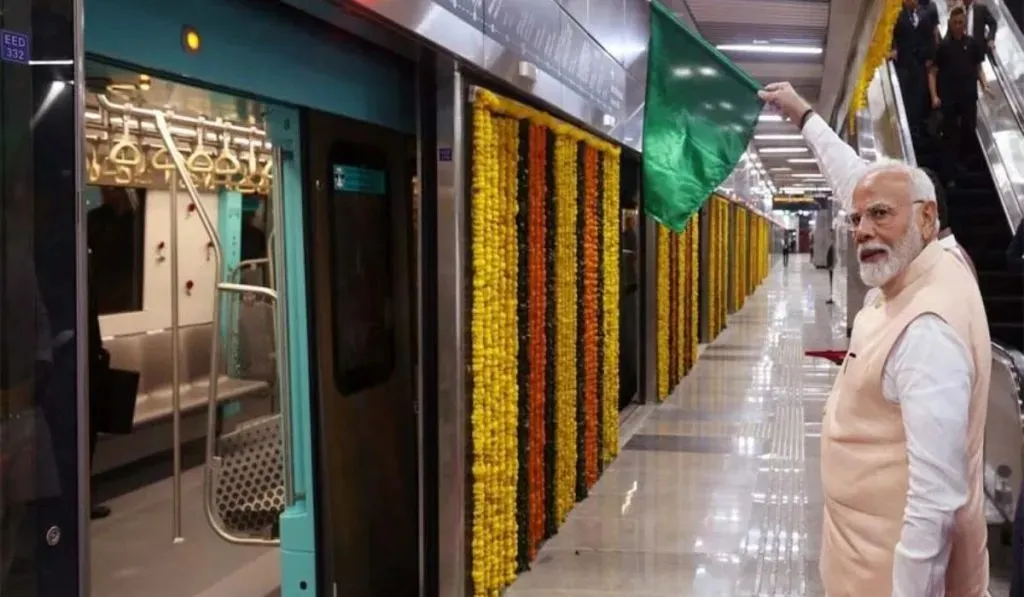
India’s capital continues to strengthen its public transportation network with the inauguration of new Delhi Metro corridors aimed at improving urban mobility and connectivity. Prime Minister Narendra Modi recently launched two important metro stretches in the city, marking a major step toward expanding Delhi’s rapid transit infrastructure.
The inauguration of these new Delhi Metro corridors includes the Majlis Park–Maujpur-Babarpur extension of the Pink Line and the Deepali Chowk–Majlis Park extension of the Magenta Line. These projects are expected to enhance travel convenience, reduce congestion, and improve connectivity across multiple parts of the national capital.
Alongside the metro expansions, the prime minister also laid the foundation for additional infrastructure projects worth thousands of crores, underscoring the government’s focus on strengthening Delhi’s urban transport network.
Launch of the New Delhi Metro Corridors
The newly inaugurated new Delhi Metro corridors form part of the continuous expansion of the capital’s metro network, which is already one of the largest in the world.
These two corridors extend existing metro lines and connect several densely populated areas that previously lacked efficient rail-based public transport. Officials believe that the new Delhi Metro corridors will significantly reduce travel time for thousands of daily commuters.
The metro expansion also aligns with broader efforts to encourage the use of public transport and reduce traffic congestion in Delhi.
Also Read: Maharashtra May Increase Ready Reckoner Rates by Over 5% from April 2026
Pink Line Extension: Majlis Park to Maujpur-Babarpur
One of the major highlights among the new Delhi Metro corridors is the extension of the Pink Line from Majlis Park to Maujpur-Babarpur.
With this expansion, the Pink Line now stretches approximately 71.56 kilometers, completing India’s first fully operational “Ring Metro” system. The ring corridor connects several major parts of Delhi, making cross-city travel easier and more efficient.
Important stations along this stretch include:
- Burari
- Jharoda Majra
- Jagatpur–Wazirabad
- Soorghat
- Nanaksar–Sonia Vihar
- Khajuri Khas
- Bhajanpura
- Yamuna Vihar
- Maujpur-Babarpur
The completion of this section of the new Delhi Metro corridors is expected to strengthen connectivity between north-east and north-west Delhi, allowing commuters to travel between these regions more quickly.
Magenta Line Extension: Deepali Chowk to Majlis Park
Another important development in the new Delhi Metro corridors initiative is the extension of the Magenta Line between Deepali Chowk and Majlis Park.
This stretch increases the total length of the Magenta Line to nearly 49 kilometers. The corridor serves as an extension of the existing Botanical Garden–Krishna Park Extension route.
Key stations along the elevated section include:
- Madhuban Chowk
- Uttar Pitampura–Prashant Vihar
- Haiderpur Village
- Haiderpur Badli Mor
- Bhalswa
By improving connectivity in north-west Delhi, this part of the new Delhi Metro corridors will make commuting more convenient for residents of nearby neighborhoods.
Infrastructure Highlights of the New Delhi Metro Corridors
The construction of the new Delhi Metro corridors also includes several significant engineering features.
One of the most notable elements is a newly built bridge over the Yamuna River, which helps connect the Pink Line across previously difficult terrain. Additionally, the project features a double-decker viaduct that supports both a metro track and a road flyover.
These infrastructure developments demonstrate the advanced engineering involved in building the new Delhi Metro corridors, enabling efficient use of limited urban space while improving transportation capacity.
Foundation Stone for Three Additional Metro Corridors
In addition to inaugurating the new Delhi Metro corridors, Prime Minister Narendra Modi also laid the foundation stones for three upcoming metro projects under Phase 5(A) of Delhi Metro expansion.
These projects include:
- A 9.9 km underground Central Vista corridor connecting Ramakrishna Ashram Marg and Indraprastha
- A 2.26 km underground extension of the Golden Line between Aerocity and Indira Gandhi Airport Terminal 1
- A 3.9 km elevated extension from Tughlakabad to Kalindi Kunj
Once completed, these corridors will further enhance connectivity between Delhi and surrounding NCR cities such as Noida, Faridabad, and Ballabhgarh.
Impact on Connectivity in Delhi-NCR
The inauguration of the new Delhi Metro corridors is expected to bring significant benefits for daily commuters across Delhi and the wider NCR region.
Improved metro connectivity will:
- Reduce travel time between key areas of the city
- Ease pressure on road transport systems
- Encourage more people to switch to public transportation
- Strengthen links between Delhi and nearby NCR cities
As the metro network continues to expand, the new Delhi Metro corridors will play a crucial role in shaping the future of urban mobility in the region.
Also Read: Haryana Proposes Mandatory Registration for Property Sale Agreements
Other Development Projects Announced
Alongside the metro expansion, the government also announced redevelopment initiatives under the General Pool Residential Accommodation (GPRA) programme.
These projects are part of a broader infrastructure push valued at approximately ₹33,500 crore. The redevelopment of residential colonies alone accounts for projects worth around ₹15,200 crore.
Such initiatives complement the new Delhi Metro corridors by supporting urban development and improving the overall quality of infrastructure in the capital.
Conclusion
The inauguration of the new Delhi Metro corridors marks another milestone in Delhi’s rapidly expanding metro network. With new stretches of the Pink and Magenta Lines now operational, commuters across several parts of the city will benefit from faster, more efficient travel options.
Combined with additional metro projects currently under development, the new Delhi Metro corridors reflect the continued focus on strengthening public transportation and supporting sustainable urban growth in India’s capital.



Ans 1. Prime Minister Narendra Modi inaugurated two new Delhi Metro corridors: the Majlis Park–Maujpur-Babarpur extension of the Pink Line and the Deepali Chowk–Majlis Park extension of the Magenta Line, improving connectivity in North and Northeast Delhi.
Ans 2. After the new extension, the Pink Line now stretches around 71.56 km, making it India’s first fully operational Ring Metro corridor connecting multiple parts of Delhi.
Ans 3. Key stations on the Pink Line extension include Burari, Jharoda Majra, Jagatpur–Wazirabad, Soorghat, Nanaksar–Sonia Vihar, Khajuri Khas, Bhajanpura, Yamuna Vihar, and Maujpur-Babarpur.
Ans 4. The Magenta Line has been extended from Deepali Chowk to Majlis Park, with stations such as Madhuban Chowk, Uttar Pitampura–Prashant Vihar, Haiderpur Village, Haiderpur Badli Mor, and Bhalswa.
Ans 5. The new Delhi Metro corridors will reduce travel time, improve connectivity between North, Northeast, and Northwest Delhi, ease road congestion, and encourage greater use of public transport.
Ans 6. The projects include a new Yamuna River bridge, a double-decker viaduct with metro tracks and road flyover, and elevated metro sections, showcasing advanced urban transport engineering.
Ans 7. Under Delhi Metro Phase 5(A), three new projects were announced: 9.9 km Central Vista underground corridor (Ramakrishna Ashram Marg–Indraprastha) 2.26 km Golden Line extension (Aerocity–IGI Airport Terminal 1) 3.9 km elevated corridor (Tughlakabad–Kalindi Kunj)
Ans 8. The corridors will improve connectivity between Delhi and NCR cities like Noida, Faridabad, and Ballabhgarh, reduce road traffic, and strengthen the capital’s public transportation network.