

✦ AI Summary
Table of Content
▲- Understanding Ancestral Property and Intestate Succession
- Legal Framework Governing Property Transfer Without a Will
- Who Inherits Ancestral Property Under Hindu Law?
- Step-by-Step Process to Transfer Ancestral Property Without a Will
- Documents Required for Property Transfer
- Legal Remedies in Case of Disputes
- Common Mistakes to Avoid
- Expert Tips for Smooth Property Transfer
- Conclusion
When someone passes away without a will, the transfer of inherited property turns into a legal procedure regulated by succession law. This situation occurs more frequently in India as many property owners never write a will, either because they believe it's unnecessary, they continually delay it, or the topic feels too awkward to discuss. Upon their passing, their families must manage a legal process for which they were unprepared.
In India, this situation is referred to as intestate succession, wherein property is allocated to legal heirs according to laws based on religion. Understanding the legal structure and procedures is crucial to prevent conflicts between the family and delays.
Understanding Ancestral Property and Intestate Succession
Ancestral property refers to property that has been inherited through up to four generations of a family, typically from great-grandfather to grandfather to father to son. The critical distinction is that rights in ancestral property arise by birth, not by the death of the previous owner. The law grants children an immediate right to inherit ancestral property that exists from their birth according to their father's or grandfather's death even if no will exists.
Modern Indian law establishes equal rights for both sons and daughters to receive ancestral property which Hindu Succession Act amendments have made into a stronger legal right.
Intestate succession refers to the legal process that takes place when someone dies without leaving behind a valid will. The intestate succession process in India varies according to the religious beliefs of the deceased because it does not have a uniform procedure. The governing law establishes the inheritance rights of all heirs along with their respective shares and the sequence of their inheritance distribution.
Also Read: Power of Attorney for Property in India: A Complete Legal Guide 2025
Legal Framework Governing Property Transfer Without a Will
The laws that govern property transfer after death depend on the religion of the person who has passed away. Understanding which law applies to your situation is the necessary first step. It follows a structured legal framework:
Key Laws in India
- Hindu Succession Act 1956
Governs inheritance rights throughout India as its primary version underwent significant changes when the 2005 amendment granted daughters equal coparceny rights in Hindu Undivided Family property. - Indian Succession Act 1925
Governs inheritance for Christians and Parsis. It provides its own structure of heirs and their respective shares, which differs from the Hindu succession framework. - Muslim Personal Law 1937
Governs inheritance for Muslims in India. Muslim inheritance law has its own distinct structure with fixed shares for different categories of heirs and does not follow the same framework as the Hindu Succession Act. - Transfer of Property Act 1882
Regulating the process of property ownership transfer between two individuals requires legal documentation, according to this rule which applies to all religious groups when their members transfer property ownership through documentation and registration.
Who Inherits Ancestral Property Under Hindu Law?
Legal Heirs Under Hindu Law
Class I Heirs (Primary Rights)
- Spouse
- Sons and daughters
- Mother
- Children of deceased children
All Class I heirs inherit equally. If a person dies leaving behind a spouse, two sons, and one daughter, each of the four receives an equal 25% share of the property.
Class II Heirs (Secondary Rights)
- Father
- Siblings
- Extended family members
They inherit only if Class I heirs are absent.
Step-by-Step Process to Transfer Ancestral Property Without a Will
Transferring property without a will involves legal documentation and administrative steps that can be done in a proper way.
Step 1: Obtain Death Certificate
This is the first and mandatory legal proof of death. It is issued by the local municipal authority or gram panchayat and is required for every subsequent step.
Step 2: Identify Legal Heirs
All rightful heirs must be identified as per applicable succession law, proper identification will follow with the original official government IDs.
Step 3: Apply for Legal Heir Certificate
It is required for most property-related transactions and is typically applied for at the tehsildar's office or local municipal office.
Step 4: Apply for Succession Certificate
A succession certificate is a court-issued document that is primarily required for transferring movable assets; bank accounts, fixed deposits, shares, and securities
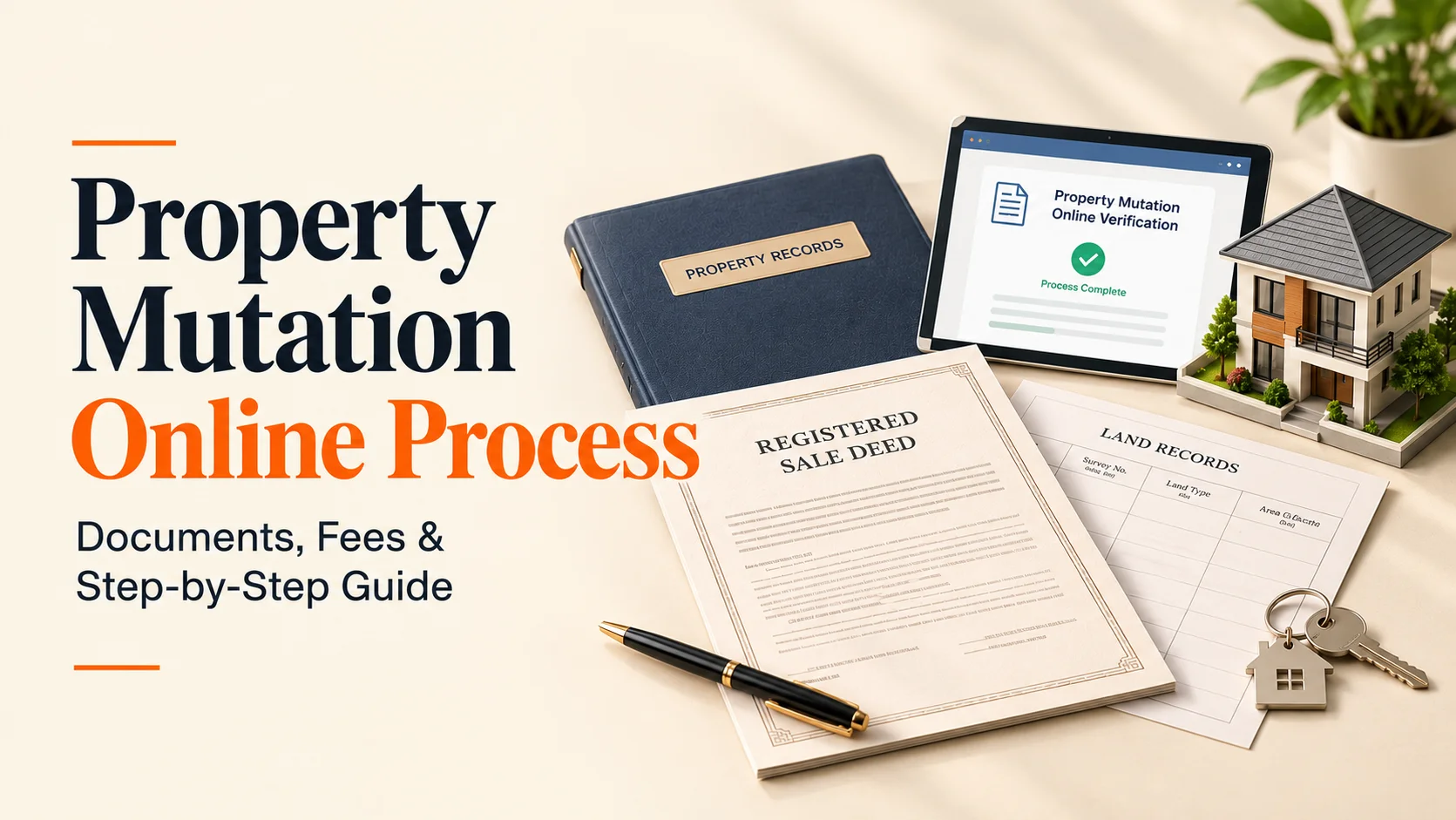
Step 5: Property Mutation
It is done at the local tehsildar's office for agricultural land or the municipal authority for urban property
Step 6: Partition or Settlement
If multiple heirs exist, property is divided through:
- Mutual agreement
- Partition deed
- Court order if dispute arises
Proper execution of these steps ensures legal ownership transfer.
Also Read: Property Registration and Mutation: What Every Homebuyer Should Know
Documents Required for Property Transfer
The mandatory documents required for property transfer includes:
- Death certificate
- Legal heir certificate
- Identity proof of heirs
- Property documents
- Family tree affidavit
- No objection certificate from other heirs
Incomplete documentation can delay the process significantly.
Legal Remedies in Case of Disputes
Family disputes over property are unfortunately common, and inheritance situations without a will create disagreement among family members. When heirs cannot reach an agreement, several legal options are available:
- Mediation among family members, a neutral third party helps the family work toward an agreement without the cost and time of court proceedings. Many disputes that seem irreconcilable actually get resolved through structured mediation.
- Civil suits for partition can be filed in the appropriate civil court when mediation fails. The court will determine each heir's share based on the applicable succession law and issue an order for partition.
- Letter of administration from court particularly for movable assets which authorises a specific heir to manage and distribute the estate on behalf of all heirs.
Common Mistakes to Avoid
Some common mistakes you should avoid to fasten your entire process:
- Not applying for legal heir certificate on time
- Ignoring mutation process
- Assuming nominee is owner
- Not documenting family consent
- Delaying legal action in disputes
Avoiding these mistakes can save years of litigation.
Expert Tips for Smooth Property Transfer
- Always maintain clear property records
- Ensure all heirs are included in documentation
- Use registered partition deed for clarity
- Seek legal advice in complex cases
- Keep communication transparent among family
Conclusion
Transferring inherited property upon death without a will is a legal procedure that can be straightforward if executed properly. Indian inheritance laws provide precise guidelines for determining heirs who will receive property distribution. The process of transferring heritage property without any issues requires you to take proper legal steps and create essential documents while understanding your legal rights.





Ans 1. It is transferred through intestate succession based on legal heir laws applicable to the deceased religion.
Ans 2. It is the legal process of property distribution when a person dies without leaving a will.
Ans 3. Spouse children and mother are primary heirs under Hindu law and inherit equally.
Ans 4. Death certificate legal heir certificate property documents ID proof and no objection certificate.
Ans 5. It is mainly required for transferring movable assets like bank accounts and securities.
Ans 6. It is updating ownership details in land or municipal records after property transfer.
Ans 7. It is divided equally among Class I heirs unless a different law applies.
Ans 8. Yes if all heirs agree and proper documents are submitted.
Ans 9. Avoid missing documents delays ignoring mutation and unclear agreements.
Ans 10. It identifies rightful heirs and is required for property transfer and ownership claims.