
Table of Content
▲
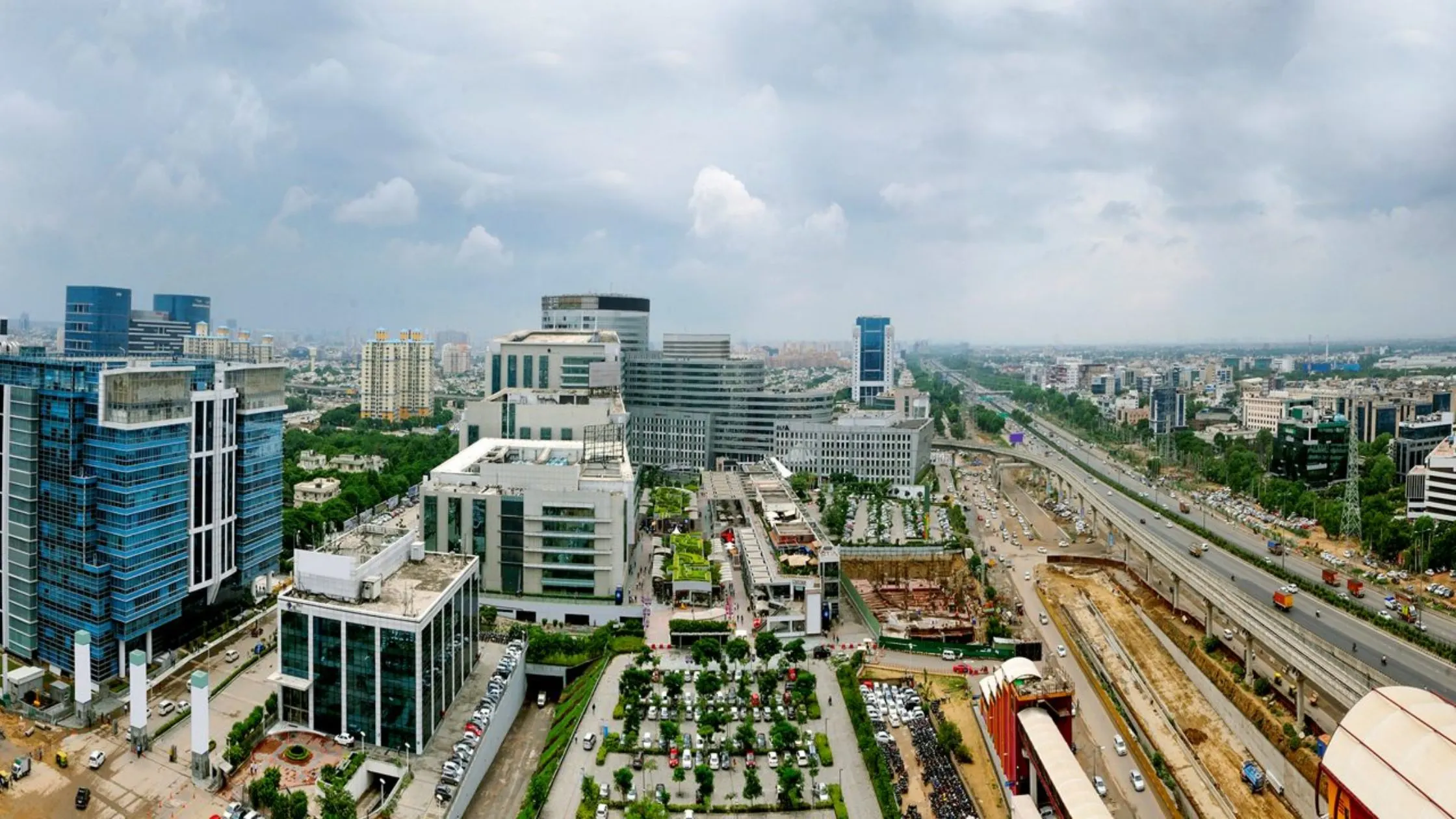
Gurugram has overtaken Mumbai to emerge as India’s leading luxury housing hub, signalling a significant shift in the country’s ultra-premium residential landscape. High-net-worth individuals (HNIs) and non-resident Indians (NRIs) are increasingly gravitating toward the Millennium City, drawn by expansive developments, lifestyle-driven projects, and stronger value propositions compared to Mumbai’s traditionally dominant market.
While Mumbai has long been synonymous with ultra-luxury living, recent transaction data suggests that the Gurugram luxury housing hub narrative is gaining momentum. However, industry observers are also closely watching whether this surge in demand can remain sustainable amid rising supply.
Gurugram Surpasses Mumbai in Ultra-Luxury Sales
Recent market reports indicate that the Gurugram luxury housing hub has surpassed Mumbai in total sales value of homes priced at ₹10 crore and above. Gurugram recorded ultra-luxury transactions worth over ₹24,000 crore during the year, outpacing Mumbai’s corresponding figures.
This milestone reflects a structural change in buyer preference, with affluent investors and end-users shifting focus toward the National Capital Region (NCR).
Also Read: Property Liable for Seller’s Arbitral Debt Despite Change in Ownership: SC rules
Landmark Deals Signal Market Strength
A major highlight reinforcing the Gurugram luxury housing hub status was a high-profile ₹85 crore apartment purchase at a premium residential development in the city. The deal set a new benchmark price per square foot, underlining strong appetite for trophy assets.
Such transactions demonstrate that ultra-wealthy buyers view Gurugram not merely as a residential market but as a destination for global-standard luxury living.
Why HNIs and NRIs Are Choosing Gurugram
Several factors explain the rapid rise of the Gurugram luxury housing hub:
1. Larger Homes and Gated Communities
Unlike Mumbai’s space-constrained projects, Gurugram offers expansive apartments, penthouses, and villas within integrated townships featuring golf courses, landscaped greens, and clubhouse amenities.
2. Value for Money
In premium Mumbai neighbourhoods, buyers often pay significantly more for comparatively smaller homes. In contrast, the Gurugram luxury housing hub provides larger living spaces at competitive per-square-foot rates.
3. Lifestyle-Centric Living
Modern gated communities offer privacy, security, recreational facilities, and social ecosystems where affluent families prefer to reside.
Changing Buyer Demographics
The growth of the Gurugram luxury housing hub is closely linked to wealth creation across sectors such as technology, start-ups, and financial services. A younger class of entrepreneurs and corporate leaders is actively investing in high-end properties.
Additionally, NRI demand continues to play a crucial role. Many overseas Indians find Gurugram’s new developments aligned with global residential standards, reinforcing its international appeal.
Gurugram vs Mumbai: The Space Advantage
The debate over whether Gurugram has eclipsed Mumbai as India’s top luxury market is intensifying. While Mumbai remains iconic, limited land availability and already elevated pricing have constrained large-format developments.
The Gurugram luxury housing hub benefits from:
- Availability of sizeable land parcels
- Master-planned projects
- Wider roads and better parking infrastructure
- Proximity to corporate offices
Connectivity via major corridors such as NH-8 and the Dwarka Expressway has further strengthened Gurugram’s position within NCR.
Developer Interest Expands
The rapid expansion of the Gurugram luxury housing hub has attracted prominent developers, including firms traditionally focused on Mumbai. Faster sell-outs and strong absorption rates in Gurugram’s premium launches have encouraged developers to allocate fresh investments to the region.
In contrast, some Mumbai projects face longer sales cycles due to relatively higher inventory levels.
Can Demand Sustain the Momentum?
Despite strong growth, experts caution that the Gurugram luxury housing hub could face challenges if supply increases too rapidly.
The ₹50 crore-plus segment, often considered the true ultra-luxury category, is entering a stabilisation phase after a period of heightened activity. Limited supply in this bracket may help sustain price stability.
However, the ₹10 crore-plus segment has seen substantial new launches in recent years. If supply outpaces genuine end-user demand, inventory build-up could moderate price growth.
Also Read: Karnataka to Distribute 10 Lakh e-Khata Certificates in Bengaluru in April
Outlook for Premium Segments
Market analysts suggest:
- Homes priced above ₹50 crore may maintain steady appreciation if supply remains controlled.
- The ₹10 crore segment could see moderated growth due to rising availability.
- End-user HNIs and NRIs are likely to drive future sales rather than speculative investors.
The long-term trajectory of the luxury housing hub will depend on maintaining a balance between exclusivity and expansion.
Conclusion
Gurugram’s emergence as India’s leading Gurugram luxury housing hub reflects evolving buyer priorities centred on space, lifestyle, and community-driven living. While Mumbai retains its prestige, Gurugram’s master-planned developments, competitive pricing, and strong corporate ecosystem have shifted the dynamics of India’s premium residential market.
The key question now is sustainability. If supply is carefully calibrated and demand remains supported by continued wealth creation, the Gurugram luxury housing hub could consolidate its leadership position in India’s ultra-luxury real estate landscape.

Ans 1. Gurugram offers larger homes, master-planned communities, competitive pricing, and lifestyle-focused developments, attracting HNIs and NRIs seeking spacious and secure residences.
Ans 2. Ultra-luxury transactions in Gurugram crossed ₹24,000 crore in the ₹10 crore-plus category, surpassing Mumbai in total sales value.
Ans 3. Expansive apartments, gated communities, golf courses, clubhouse amenities, better connectivity, and value-for-money compared to Mumbai drive demand.
Ans 4. Corridors like NH-8 and the Dwarka Expressway, along with master-planned townships, are key hotspots for ultra-luxury developments.
Ans 5. Yes, several prominent developers are expanding investments in Gurugram due to faster sales, strong absorption rates, and availability of large land parcels.
Ans 6. Sustained demand depends on careful supply management, especially in the ₹50 crore-plus segment, and continued end-user interest from HNIs and NRIs.
Ans 7. Gurugram offers larger apartments, wider roads, better parking, and more open areas, while Mumbai faces land constraints and higher costs for smaller units.
Ans 8. Homes above ₹50 crore are likely to maintain steady appreciation if supply remains limited, while the ₹10 crore-plus segment could see moderate growth due to rising inventory.
Ans 9. They provide integrated amenities, lifestyle-oriented living, and secure environments, which are key factors influencing buyer decisions in the luxury segment.
Ans 10. A growing base of entrepreneurs, corporate leaders, and NRI investors strengthens demand for high-end residences, supporting the city’s position as India’s top luxury housing hub.